

.webp)

 Mathan Allington


1 min read
HR tech comparison for mid-market businesses
 Mathan Allington
Comparing HR tech for a mid-market business (60 to 1,000 staff) comes down to one question: does the platform only manage your processes, or does it...

Finding the right HR software mid-market solution means bridging the gap between basic small-business tools and overly complex enterprise systems to scale your growing workforce efficiently.
Key takeaways
- Mid-market companies need HR platforms that move beyond basic payroll to offer strategic workforce insights and talent management.
- Cloud-based HR systems are dominating the mid-market, offering rapid scalability without enterprise-level overhead.
- Effective mid-market HR software must simplify recruitment, onboarding, and employee engagement in a single, cohesive set-up.
- Implementing the right technology reduces administrative bloat and equips HR leaders to focus on culture and performance.
When your company crosses the threshold from a scrappy startup to a thriving mid-sized organisation, everything changes. The informal processes and spreadsheets that once held your team together suddenly become liabilities. You are officially in the "messy middle", too large for basic small-business tools, yet too agile to justify the sluggish implementation and astronomical costs of legacy enterprise software.
This transition period is critical. If your human resources technology does not evolve with your headcount, your HR team risks becoming an administrative bottleneck rather than a strategic partner. The stakes for getting this right are surprisingly high. Mid-market HR software implementations can cost USD 10,000 to USD 150,000 before processing a single paycheck, according to an industry summary citing Nucleus Research. Choosing a platform that aligns with your specific growth trajectory is essential to avoid costly missteps.
Today's mid-market organisations need platforms that offer deep functionality without the bloat. They require systems that can handle complex compliance, sophisticated recruitment workflows, and continuous employee engagement, all while remaining intuitive for the end user.
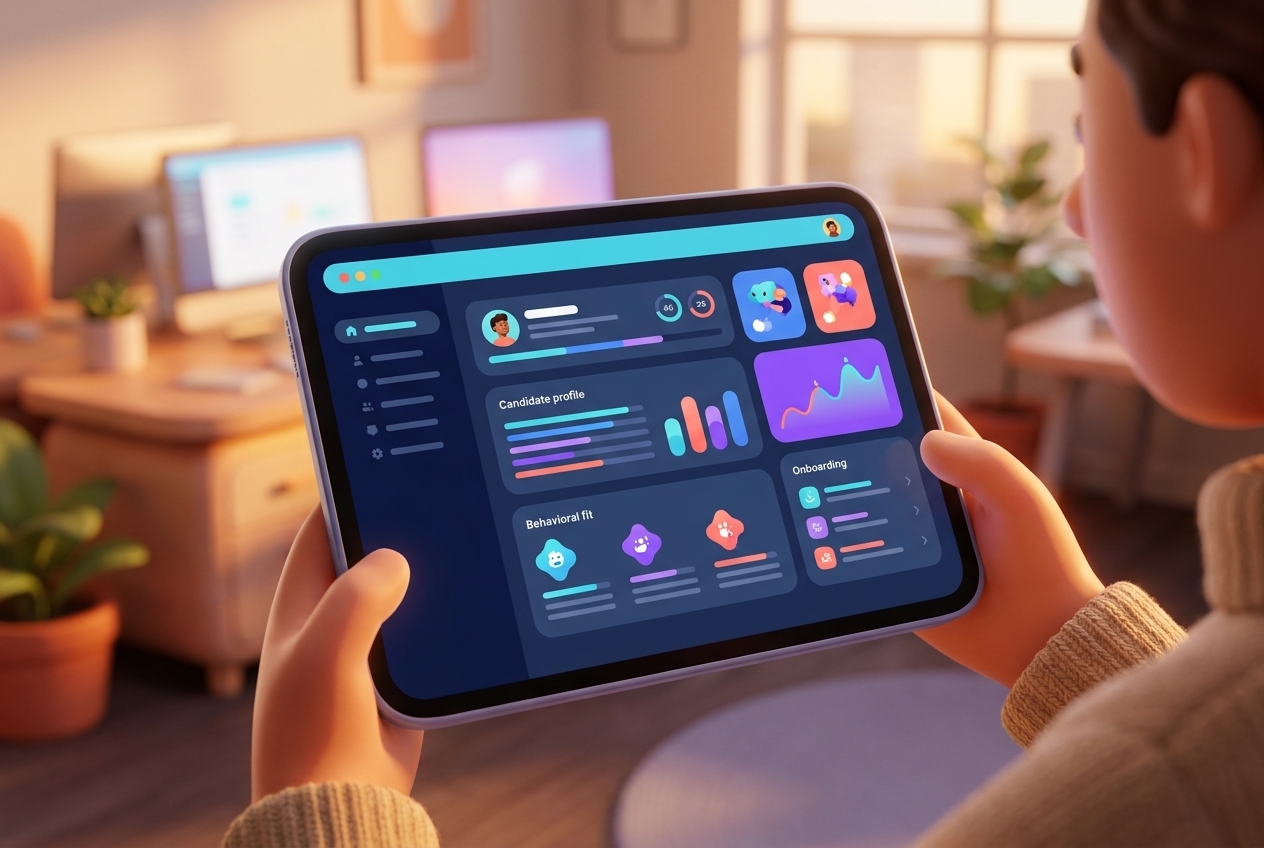
In a mid-sized business, HR professionals wear multiple hats. On any given Tuesday, a single HR manager might handle a complex employee relations issue, launch a new wellness program, and finalise a quarterly workforce report. When their time is consumed by manual data entry or toggling between disconnected systems, strategic initiatives inevitably stall.
The primary mandate for any HR software mid-market investment is to simplify these core processes. By automating routine administrative tasks, such as leave approvals, benefits enrolment, and basic compliance tracking, you free up your team to focus on high-impact work. This shift from transactional to strategic is driving massive investment in the sector. In fact, the mid-sized business HR software market was valued at USD 4.37 billion in 2024 and is projected to reach USD 10.0 billion by 2035, implying a 7.8% CAGR.
A simplified system also dramatically improves the employee experience. When staff can easily access their own data, request time off, or review their performance goals through a self-service portal, it build a culture of transparency and autonomy. It is about creating a frictionless environment where technology supports your people, rather than getting in their way.
Basic HR platforms excel at keeping records and ensuring people get paid. But as your organisation scales, simply keeping the lights on is no longer enough. You need to actively cultivate your culture, develop your talent, and ensure your workforce remains engaged and aligned with your broader business objectives.
This requires moving your technology stack to the cloud, allowing for greater flexibility and integration. In the broader HR management software market, cloud-based deployment held 68.05% share in 2025, while hybrid models are growing fastest at a 12.14% CAGR. Cloud solutions allow mid-market companies to access enterprise-grade security and continuous feature updates without the need for a massive internal IT team.
Growing beyond the basics means implementing systems that support continuous performance management, peer recognition, and targeted learning and development. It means having the tools to listen to your employees regularly, rather than relying on a single, outdated annual survey. When you invest in comprehensive platforms, you signal to your workforce that you are invested in their long-term growth and success.
For mid-market companies, talent acquisition is highly competitive. You are often competing against larger enterprises with deeper pockets and established employer brands. To win the talent war, your recruitment process must be flawless, engaging, and remarkably fast.
A solid Applicant Tracking System (ATS) is the foundation of mid-market HR software. It should do more than just parse résumés; it needs to help you identify candidates who truly align with your company culture and the specific demands of the role. This is where behavioural hiring as a necessity for mid-market companies becomes apparent. By assessing work personality and organisational fit early in the process, you significantly reduce the risk of a bad hire.
The Compono Hire platform, for example, integrates intelligent behavioural assessments directly into the recruitment workflow. This ensures that you are not just filling seats, but strategically building high-performing teams. the software must facilitate a smooth transition from candidate to employee. A disjointed onboarding experience can severely damage a new hire's enthusiasm. Your HR software should automate onboarding workflows, ensuring new starters have everything they need, from IT access to cultural immersion materials, on day one.
Data is the currency of modern HR leadership. If you cannot measure the impact of your people initiatives, you cannot improve them. Mid-market companies often struggle with fragmented data, recruitment metrics live in one system, performance data in another, and engagement scores in a third. This siloing makes it nearly impossible to identify meaningful trends or predict future workforce needs.
The right HR software consolidates this data, providing a single source of truth. It allows HR leaders to generate strategic insights that resonate in the boardroom. Instead of simply reporting on headcount, you can present data on turnover risks, time-to-productivity for new hires, and the correlation between employee engagement and team performance.
When you have access to real-time workforce intelligence, you transition from reacting to problems to proactively designing solutions. You can identify which departments are at risk of burnout, understand the traits of your top performers to refine your hiring criteria, and ensure your compensation strategies remain competitive in a shifting market.
Scaling your mid-market business requires tools that grow with you, providing deep workforce intelligence without the enterprise bloat.
Related reading
HR software for mid-market businesses typically caters to organisations with 100 to 1,000 employees. These platforms offer more advanced features than small-business tools, such as strategic workforce planning, talent acquisition, and performance management, without the prohibitive costs, lengthy implementation times, and complexity of legacy enterprise systems.
Cloud-based HR software offers superior scalability, flexibility, and security. It allows mid-market companies to access continuous updates and enterprise-grade infrastructure without requiring a large internal IT department to manage on-premise servers. This model also supports remote and hybrid workforces by providing secure access from anywhere.
Modern mid-market HR platforms include advanced Applicant Tracking Systems (ATS) that automate administrative tasks, simplify communication, and reduce hiring bias. By incorporating tools like behavioural assessments and automated interview scheduling, these systems help growing companies compete for top talent by offering a faster, more engaging candidate experience.
When upgrading, prioritise platforms that offer a unified set-up rather than disjointed point solutions. Look for strong integration capabilities, intuitive user interfaces to drive high adoption rates, and solid analytics that provide actionable workforce intelligence. It is also crucial to partner with a vendor that understands the specific challenges of mid-market growth.
1 min read
Comparing HR tech for a mid-market business (60 to 1,000 staff) comes down to one question: does the platform only manage your processes, or does it...
1 min read
The ideal HR tech stack for 100 to 500 employees moves away from fragmented spreadsheets and centres on three to five well-integrated platforms...

1 min read
Compono Australia provides mid-market businesses with a workforce intelligence platform that combines behavioural science and intelligent software to...
 Compono