

.webp)

 Mathan Allington


1 min read
Choosing the right HRIS software for your growing team
 Mathan Allington
HRIS software (human resource information system software) is the central database for your employee records, holding contracts, personal details,...
Human capital management (HCM) software runs the full employee lifecycle, from hiring through development to exit, while talent management software is the slice of that lifecycle concerned with attracting, assessing, developing and keeping people. Most vendors sell both under one name, so when you are choosing, the category label matters far less than which of four things the product genuinely does: connects hiring, engagement and development data in one place, captures how people actually work rather than only their records, assesses fit during recruitment, and personalises development instead of serving the same modules to everyone.
Last reviewed September 2026.
Strip the category names away and an HCM platform is doing some combination of six jobs.
Almost nobody buys all six from one vendor and is happy with all six. The realistic question is which two or three matter most for the decisions your leadership team keeps getting wrong, and which of the rest you can accept as adequate.
Fragmentation is where the trouble starts. When hiring data does not talk to performance data, you lose the ability to see why some people thrive while others struggle. Plenty of organisations hire for skills and then lose people over poor culture fit without ever seeing the pattern, because no system holds both halves.
The labels overlap heavily and vendors use them loosely. The differences that matter are what each type was built to do first, because that original purpose is usually still the strongest part of the product.
| System type | Built to do | Typical modules | Best fit |
|---|---|---|---|
| HRIS or core HR | Hold the system of record for employment, pay and leave, and keep it compliant | Employee records, payroll or payroll integration, leave, org chart, document storage | Any organisation past about 50 staff; the administrative spine everything else plugs into |
| HCM suite | Cover the whole lifecycle from one vendor with one login | Core HR plus recruitment, onboarding, performance, learning and basic analytics | Organisations that value one contract and one data model over depth in any single module |
| Talent management software | Attract, assess, develop and keep people, usually without touching payroll | Applicant tracking, assessment, performance, succession, learning, career pathways | Organisations whose real problem is quality of hire, capability or retention rather than admin |
| Workforce intelligence platform | Explain why people behave as they do, then feed that back into hiring and development decisions | Assessment, culture and engagement measurement, capability development, people analytics | Leaders who can already run payroll cleanly and now need evidence behind people decisions |
Two of those four are frequently confused at shortlist stage. If you want a sharper line between the recruitment and record-keeping halves, this comparison of where an ATS ends and an HRIS begins covers it, and there is a fuller treatment in the guide to choosing a talent management platform.
Feature lists are close to useless at this stage, because every vendor ticks every box. These are the tests that separate them.
A selection that holds up runs in five stages rather than starting with vendor demos.
Involve the people who will use it daily. Hiring managers, team leaders and payroll administrators will each find a different deal-breaker, and they will find it in a scripted demo rather than in a reference call.
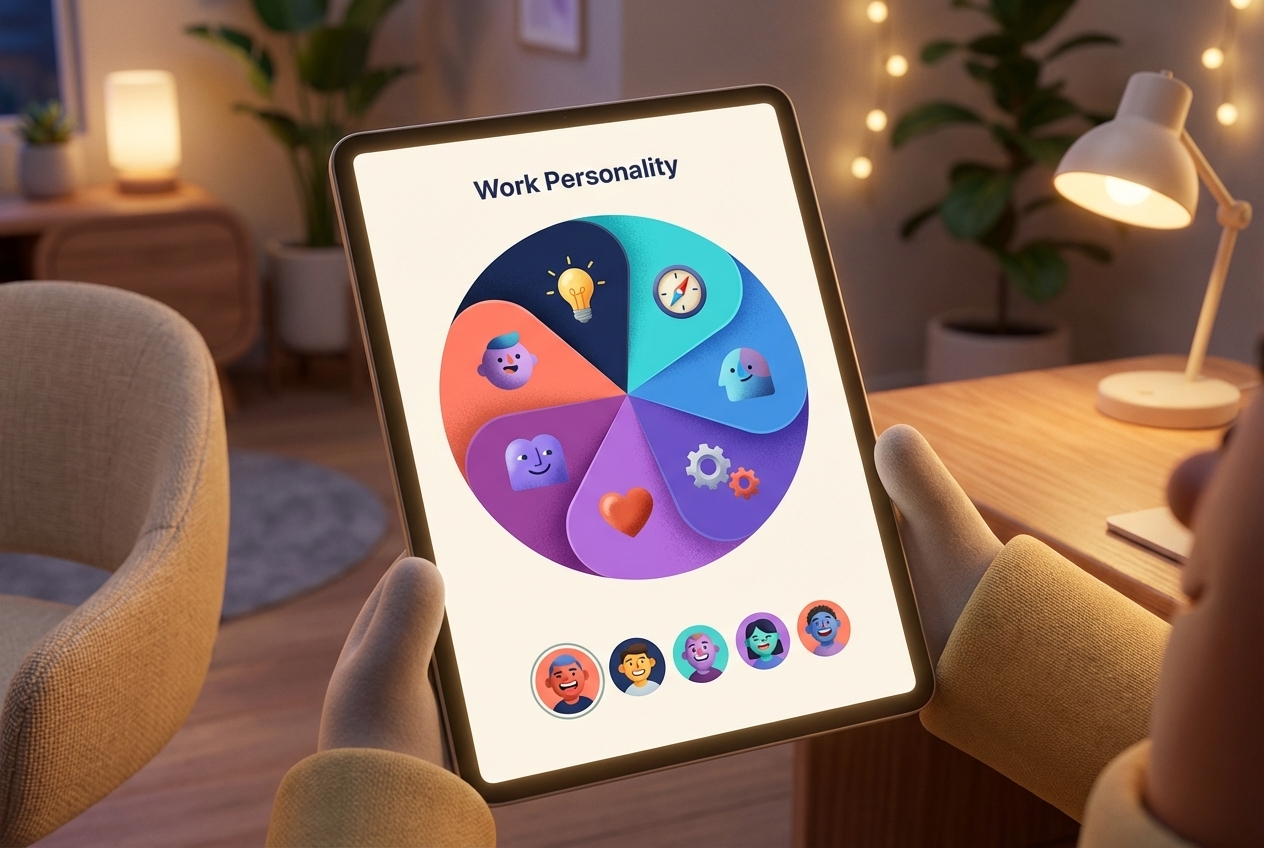
Managing human capital well means understanding the motivations of the people on the payroll, not only their administrative details. Compono's research into what makes teams work points to work personality as the single most useful data point an organisation can hold about someone at work. Compono's model describes eight types: Doer, Auditor, Helper, Advisor, Pioneer, Campaigner, Evaluator and Coordinator.
At an individual level, knowing how someone is wired lets you assign work that energises them rather than drains them. At team level it shows where you have five of one type and none of another. A team full of Campaigners will sell the vision brilliantly and struggle with the follow-through an Auditor supplies. Seeing that shape is the first step to fixing it.
The same data has a second life in development. A Helper in a customer-facing role grows by deepening how they handle difficult conversations. An Evaluator wants the advanced analytical work. Generic modules ignore both, which is how organisations end up with a large training spend and a flat capability curve.
Compono is a workforce intelligence platform rather than a payroll system. It covers hiring with assessment built in, culture and engagement measurement, capability development, and competency and credentialling, with the same people data running underneath all four.
The fit boundary is worth stating plainly. If your main problem is payroll accuracy, leave accrual or award interpretation, a core HRIS or payroll vendor is the right first purchase and Compono sits alongside it. If your payroll already works and the unanswered questions are about quality of hire, why good people leave, or whether training is building the capability you paid for, that is the problem Compono was built for. Mid-sized organisations of roughly 60 to 1,000 staff tend to feel the gap most sharply, because they have outgrown manual processes and cannot yet fund a people analytics function.
Compono holds a 4.8 out of 5 rating on Capterra and was named in the Deloitte Fast 50. Read that as evidence the platform is well regarded and growing, not as proof it suits your particular stack. That part you test in the scripted demo.
Compono connects the whole employee lifecycle to the people data underneath it, so every decision is one you can defend.
Talk to usHuman capital management covers the whole employee lifecycle including core records, pay and compliance. Talent management covers the people side of that lifecycle: attraction, assessment, performance, development and retention, usually without touching payroll. Many vendors sell both under one name, so compare what the product does rather than what the category is called.
An HRIS is the system of record for employment data and administration such as payroll, leave and documents. HCM software is broader, adding recruitment, performance, learning and engagement on top of that record. An HRIS answers what happened; an HCM platform is supposed to help you decide what to do next.
Start by writing down the decisions you currently cannot make, audit the tools you already own, shortlist on the two or three jobs that matter most, run the same scripted scenarios with every vendor, and check the data export terms before signing. Involve hiring managers and administrators in the demos, because they find the deal-breakers.
By connecting engagement data to the hiring and development record, so managers can see which teams are drifting and why, rather than learning about a problem at the exit interview. Development plans built around someone's role and capability gaps also give good people a reason to stay.
Often yes, between roughly 60 and 1,000 staff, because that is the range where manual processes stop coping and a dedicated analytics team is not yet affordable. Below that, a core HR system plus a good applicant tracking system usually covers the ground for less.

1 min read
HRIS software (human resource information system software) is the central database for your employee records, holding contracts, personal details,...

1 min read
An HR platform is the system where an organisation keeps its employee data and runs the work of managing people: hiring, onboarding, records, pay,...
1 min read
Talent management software is one system for hiring, engaging, developing and retaining people, built on a shared record of each employee so every...