
.webp)

 Mathan Allington
How to choose the right talent management software
 Mathan Allington
What talent management software covers across hiring, engagement and development, the features that matter, and the questions to ask before you buy.

HCM software is one system for the whole employee lifecycle, holding hiring, onboarding, payroll and time, performance, learning and engagement against a single record for each person rather than across six disconnected tools. In Australia it also has to cope with award interpretation, superannuation, Single Touch Payroll reporting and long service leave rules that change by state, which is where platforms built for other markets tend to come unstuck.
Last reviewed September 2026.
Human capital management began as a payroll and records system with extra screens bolted on. The category has widened a long way since then. A current HCM platform keeps one employee record from the first application through to the exit interview, and every module reads from that record instead of keeping its own copy.
The practical test is whether a manager can answer a question without exporting anything. How long did this role take to fill. Who has finished the training the site requires. Which teams are carrying the most leave liability into June. If the answer involves three logins and a spreadsheet, what you have is a set of tools sharing a login page.
Vendors carve the modules up differently and almost nobody sells the full set equally well. The parts that show up on most requirement lists:
The line between HCM and an HR information system is mostly a marketing choice. HRIS tends to mean records and payroll first; HCM tends to mean those plus the talent modules. If you are working out where recruitment software sits against a core HR record, our guide to an ATS compared with an HRIS sets out the split.
Plenty of well-known HCM systems were designed for the United States and adapted afterwards. The adaptation usually holds for records and reporting, and strains at payroll. Award interpretation is the clearest example, because the rules for penalty rates, allowances and overtime vary by award and are updated regularly.
The other local obligations worth testing in a demo are the superannuation guarantee and its contribution calculations, Single Touch Payroll reporting to the ATO, long service leave, which differs across states and territories, and the record-keeping requirements under the Fair Work Act. Ask the vendor who maintains those rules, how quickly they ship changes, and whether the work happens in Australia or offshore.
This is general information rather than advice. Confirm the payroll and compliance detail with your provider or an employment law adviser before you sign anything.
For companies between roughly 100 and 1,000 staff, shortlists come down to four shapes of platform more than four brand names. The trade-offs travel with the shape, so knowing which one you are buying tells you more than a feature grid does.
| Platform shape | Strongest at | Where it falls short | Best fit |
|---|---|---|---|
| Payroll-led suite | Pay runs, awards, leave accruals and statutory reporting, with HR modules added around the payroll engine | Talent modules are often thin. Hiring and learning feel like afterthoughts because they were added later | Organisations where payroll complexity is the main risk, such as multi-award or shift-heavy workforces |
| HR-admin-led suite | Employee records, workflows, approvals, documents and self-service in one clean interface | Measurement. You get tidy process data and very little insight into why teams perform the way they do | Companies replacing paper and spreadsheets for the first time |
| Best-of-breed stack | Depth in each function, because every tool was built for one job and does it properly | Integration and cost. Every new tool adds another contract, another login and another data sync to maintain | Teams with the internal capacity to own integrations and vendor management |
| Workforce intelligence platform | Connecting hiring, culture, engagement and capability to the same people data, so decisions carry evidence | Payroll. These platforms sit alongside a payroll system rather than replacing it | Leaders whose main problem is people decisions rather than pay runs |
Most mid-sized Australian companies end up running two of these shapes together, commonly a payroll-led system for pay and compliance with something sharper sitting over hiring and culture. That is a reasonable answer as long as you decide which system owns the employee record before you buy the second one.
Writing the requirement list before the demos keeps the process honest, because vendors will happily demo the module they are proudest of rather than the one you need. Our HR tech requirements builder helps you put that list together and send the same questions to everyone.
The phrase covers two quite separate searches. Technology teams use it when they are weighing up building or heavily customising an HCM system in house. That path looks cheaper on the first estimate and rarely stays that way, because payroll rules, award updates and reporting formats keep changing and someone has to maintain them forever. Configuring a platform and using its API for the parts that are genuinely yours is usually the better trade.
HR teams use the same phrase for the development side of the platform: learning, capability frameworks and career pathways. If that is your reading, the questions to ask are whether the learning module tracks capability rather than course completions, and whether it connects to the performance and hiring data already in the system.
HR carries two kinds of risk. Process risk is the one every HCM platform was built for: late pay runs, missing records, onboarding forms nobody signed, compliance gaps. People insight risk is the other half: the wrong hire, the top performer who quietly stopped caring, training that never turned into capability, a culture that drifted while the dashboards looked fine.
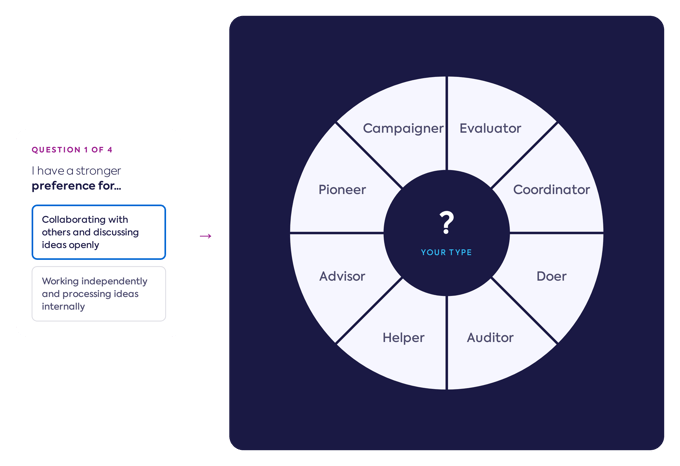
Reducing the first without touching the second is how organisations end up with tidy systems and the same people problems. Compono's workforce intelligence platform is built for the second half, measuring how people actually work and how teams fit together. Work personality sits underneath that: eight ways people prefer to work, being Doer, Auditor, Helper, Advisor, Pioneer, Campaigner, Evaluator and Coordinator. Knowing the mix in a team explains a lot of friction that turnover reports only describe.
The fit boundary is worth stating plainly. Compono does not run your payroll. If a single login for pay is non-negotiable, say so on day one and plan for two systems that talk to each other.
If your shortlist is drifting towards records and payroll first, our guide to choosing an HRIS in Australia covers that side of the decision in more detail.
Compono connects hiring, culture, capability and engagement to the same people data, so the decisions you make can be defended.
Talk to usAn HR information system is built around employee records, payroll data and compliance reporting. HCM software usually means that same core plus the talent modules: recruitment, onboarding, performance, learning and engagement. Many vendors use the two labels for the same product, so compare module lists rather than category names.
Most HCM platforms include some form of applicant tracking, though the depth varies a lot. Some give you a requisition and a candidate list; others run the full hiring process including assessment and structured scoring. If hiring quality is the reason you are buying, test the recruitment module properly rather than assuming it matches the rest of the suite.
Award interpretation, the superannuation guarantee, Single Touch Payroll reporting to the ATO, long service leave rules that differ by state and territory, and record-keeping obligations under the Fair Work Act. This is general information rather than advice, so confirm the detail with your payroll provider or an employment law adviser.
It usually pays off once headcount passes the point where one person can hold the process in their head, which for most Australian businesses is somewhere between 100 and 250 staff. Below that, a smaller set of connected tools often serves better than a full suite you only half use.
Two things, depending on who is searching. Technology teams use it for building or heavily customising an HCM system in house, which is rarely worth the ongoing compliance burden. HR teams use it for the development side of the platform, meaning learning, capability building and career pathways.
What talent management software covers across hiring, engagement and development, the features that matter, and the questions to ask before you buy.
What human capital management software should do: connect hiring, engagement and development data, assess organisation fit, and personalise growth...

What HRIS software covers, the core features to compare, and how to connect it with your hiring and development data as the team keeps growing.