

.webp)

 Mathan Allington


Are CVs Losing Their Edge? Why Psychometrics are Set to Redefine Recruitment
 Mathan Allington
AI has made every CV look polished. Here is why employers are turning to psychometric assessments to find real fit, and how to build them into hiring.
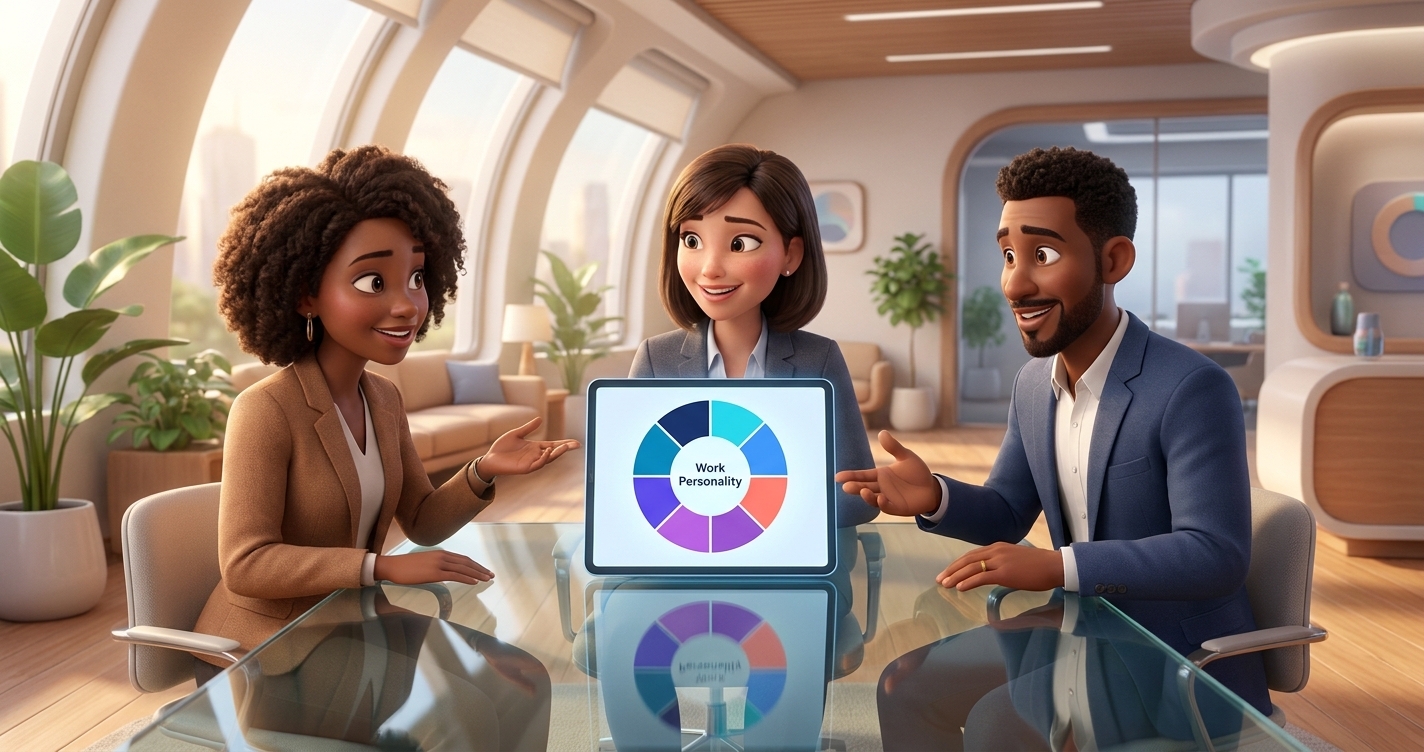
Psychometric testing for recruitment is a standardised scientific method used to measure a candidate's mental capabilities, behavioural style, and underlying personality traits to determine their suitability for a specific role and team culture.
Key takeaways
- Traditional psychometric testing measures cognitive ability and personality, providing objective data to reduce human bias in hiring.
- Up to 80% of candidates are filtered out at the psychometric assessment stage in modern recruitment pipelines, highlighting the high stakes of these tests.
- While effective at scale, traditional pass/fail aptitude tests can trigger severe test anxiety and unintentionally screen out capable neurodivergent talent.
- Gamified assessments attempt to solve test fatigue, but often fail to measure true contextual workplace behaviour and team alignment.
- Modern HR teams are shifting toward contextual behavioural science and "Work Personality" profiling to build high-performing, balanced teams.
Today's workplace is moving faster than ever, and the traditional tools we use to evaluate talent are struggling to keep up. For decades, the resume was the gold standard of recruitment. But in 2026, relying solely on a CV is a risky game. Candidates are highly polished, AI-generated applications are flooding applicant tracking systems, and the true capabilities of a candidate are easily hidden behind a well-formatted PDF.
This is where psychometric testing for recruitment steps in. HR leaders and talent acquisition teams are desperate for objective, quantifiable data to help them make smarter decisions. They need to know not just what a candidate has done in the past, but how they will think, behave, and solve problems in the future. They need to understand how a new hire will communicate with their manager, handle workplace conflict, and complement the existing team dynamics.
However, it is a high-stakes game. In fact, Graduates First reports that 50%–80% of candidates are sifted out at the psychometric assessment stage by healthcare and top global employers. When you are filtering out up to 80% of your talent pool before a human conversation even takes place, you need to be absolutely certain that your assessment tools are measuring the right things.

At its core, psychometric testing for recruitment is the psychological measurement of a person's mental capabilities and behavioural style. These tests are designed to be objective, standardised, and scientifically validated, offering a level playing field where all candidates are measured against the exact same criteria.
Generally, these assessments fall into three main categories. First, there are aptitude or cognitive ability tests. These measure a candidate's raw intellectual horsepower, their numerical reasoning, verbal reasoning, and logical problem-solving skills. They are timed, high-pressure, and typically have definitive right and wrong answers.
Second, there are personality questionnaires. These explore a candidate's preferred behaviours, motivations, and values. Unlike aptitude tests, there are no right or wrong answers here. Instead, they map out whether a candidate is naturally introverted or extroverted, detail-oriented or big-picture focused, and how they might respond to stress.
Finally, situational judgement tests (SJTs) present candidates with hypothetical workplace scenarios and ask them to choose the most effective course of action. These are highly contextual and are designed to see if a candidate's natural instincts align with the organisation's culture and operational procedures.
The reliance on psychometric testing is not just a passing trend; it has become deeply embedded in global hiring infrastructure. As application volumes skyrocket, organisations are leaning heavily on these tools to manage the load and identify top talent efficiently.
Look at the Wheebox, India Skills Report 2026, where psychometric testing is highlighted as a core module for assessing educational and technical employability. It is no longer just a corporate luxury; it is a fundamental benchmark for workforce readiness on a national scale.
Major enterprise employers are also doubling down. For example, the Tata Consultancy Services (TCS) NQT 2026 announcement confirms that TCS uses its National Qualifier Test, which includes a rigorous psychometric assessment, as the primary hiring test for 2024–2026 freshers. We are seeing similar patterns across the board, with multiple 2026 off-campus hiring drives explicitly including psychometric tests as Round 1 in their recruitment pipelines.
Even in the public sector, the standardisation is clear. Psychometric assessments are a mandatory hurdle in the Fast Stream 2025–2026 civil service recruitment applications. The message is clear: if you are hiring at scale in 2026, psychometric testing is likely a foundational pillar of your strategy.
There is a reason these assessments are so ubiquitous. When implemented correctly, psychometric testing for recruitment offers several powerful advantages that traditional interviews simply cannot match.
Human beings are naturally biased. We tend to favour candidates who look like us, sound like us, or share our hobbies. Psychometric tests strip away this subjectivity. They do not care about a candidate's age, gender, background, or alma mater. They provide a cold, hard data point that helps recruiters make equitable decisions based solely on capability and behavioural fit.
When a graduate program receives 10,000 applications for 50 roles, it is physically impossible for a recruitment team to interview everyone. Psychometric testing allows organisations to evaluate thousands of candidates simultaneously, rapidly identifying those who possess the baseline cognitive skills and behavioural traits required for the role.
Decades of organisational psychology research have shown that cognitive ability tests are among the strongest predictors of future job performance. While an interview tells you how well a candidate can talk about a job, a psychometric test gives you a reliable indication of how quickly they will learn the job, adapt to new challenges, and process complex information.
Despite their widespread use, traditional psychometric tests are far from perfect. In fact, leaning too heavily on rigid, pass/fail cognitive exams can severely damage your employer brand and cost you exceptional talent.
Traditional aptitude tests often measure a candidate's ability to take a test, rather than their ability to do the job. There is an undeniable preparation gap. Studies show that 54%–84% of candidates who do not practice assessments fail at the first hurdle of psychometric tests in recruitment (Graduates First). If your hiring process filters out brilliant candidates simply because they didn't spend their weekend practising abstract reasoning puzzles, your process is broken.
The same research indicates that 60%–80% of candidates are rejected based on their aptitude test results in hiring processes. While this is great for narrowing down a talent pool, it inevitably creates "false negatives", highly capable individuals who perform poorly under the artificial constraints of a timed exam. This is especially problematic for neurodivergent candidates, who may possess incredible skills but struggle with the rigid format of standard psychometric testing.
Traditional tests often evaluate candidates in a vacuum. A personality test might tell you that a candidate is highly assertive and detail-oriented, but it doesn't tell you if your current team actually needs those traits. If you already have a team full of highly assertive leaders, adding another one might create conflict rather than fit. This is why understanding why new hires fail is so critical, it is rarely a lack of skill, but almost always a lack of contextual alignment with the team and culture.
To combat test anxiety and candidate drop-off, many HR tech vendors have turned to game-based assessments. The pitch is enticing: replace boring questionnaires with engaging, interactive games that measure cognitive traits while the candidate is having fun.
While gamification certainly improves the candidate experience and reduces test fatigue, it often falls short of delivering deep, contextual insights. A candidate might demonstrate excellent risk-taking behaviour in a balloon-popping mini-game, but does that truly translate to how they will manage a multi-million-dollar project budget? Often, the leap from game mechanics to complex workplace behaviour is too wide.
This is why modern teams are shifting away from both rigid cognitive exams and superficial gamification, moving instead toward contextual behavioural science. Rather than asking "Is this candidate smart enough?" (a pass/fail metric), the better question is "How does this candidate prefer to work, and does that preference align with what our team is currently missing?"
At Compono, we believe that evaluating talent should not feel like an academic exam. Instead of putting candidates through high-stress aptitude tests that eliminate 80% of your talent pool, we advocate for an "Inside-Out" hiring approach. This means looking deeply at the behavioural gaps within your existing team and assessing candidates based on their natural work preferences.
This is the foundation of the Work Personality framework. By fusing academic research into high-performing teams with personality theory, we have identified eight key work activities that all successful teams must perform. Every individual has a dominant preference for certain activities, which dictates how they will naturally behave in the workplace.
When you use a platform like Compono Hire, you aren't just administering a psychometric test; you are evaluating candidates across Organisation Fit, measuring how their natural Work Personality will complement your existing team structure. Let's explore these eight distinct profiles and how they replace the need for traditional pass/fail testing.
Famed for their quest to weigh up alternatives and test new ideas, The Evaluator thrives on data-backed decisions. They bring unmatched objectivity to risk evaluation and are the maestros of strategising. Instead of testing them on abstract math, recognise that their natural preference is to provide logical, critical, and realistic problem-solving to your team.
Vibrant and magnetic, The Campaigner is a big-picture thinker who naturally inspires and persuades. They thrive on variety and excitement over routine. If your team is lacking energy and forward-thinking vision, a Campaigner will fill that gap perfectly, even if they aren't the best at meticulous data entry.
Organised, prepared, and dependable, The Coordinator is the backbone of any efficient workplace. They love setting priorities, implementing targets, and enforcing deadlines. They bring structure to chaos and ensure that the visionary ideas of others are actually executed methodically.
A perpetually reliable force, The Doer is practical, task-oriented, and focused on the present moment. They emphasise meeting deadlines and achieving tangible outcomes. When you need someone to put their head down and reliably deliver high-quality work without getting distracted by abstract theories, you need a Doer.
Thorough, accurate, and exacting, The Auditor is naturally drawn to fact-based, intricate tasks. They are cautious and risk-averse, ensuring that standards and compliance are strictly maintained. They are the ultimate safety net for your team's output.
Empathetic, persuasive, and perceptive of others' feelings, The Helper is driven by deep-seated personal values. They excel in creating inclusive spaces and ensuring that team harmony is maintained. A high-performing team cannot survive on logic alone; it needs the emotional intelligence and support that a Helper provides.
Flexible, open-minded, and collaborative, The Advisor loves to investigate problems and guide others. They balance guidance with collaboration, allowing team members to contribute to decision-making while ensuring the group stays focused on the overarching goals.
Imaginative, innovative, and spontaneous, The Pioneer is the ultimate risk-taker. They challenge the status quo and push the team to do things differently. While they might struggle with strict routines, their out-of-the-box thinking is essential for long-term business evolution and growth.
If you are moving away from traditional psychometric testing for recruitment and embracing behavioural profiling, implementation is key. You cannot simply deploy an assessment and hope for the best. It requires a strategic shift in how your hiring managers view talent.
First, use assessments as a data point, not a guillotine. Do not automatically reject a candidate because their profile doesn't perfectly match your preconceived notion of the role. Use the insights to guide your interview questions and explore how they might adapt to the challenges of the job.
Second, map your existing team before you hire. You cannot hire for contextual fit if you don't know what context you are hiring into. Assess your current employees to identify which Work Personalities are dominant and which are missing. If you have a team of Pioneers and Campaigners, you likely need a Coordinator or an Auditor to balance the scales.
Finally, ensure a phenomenal candidate experience. Traditional psychometric tests are stressful and opaque. Behavioural assessments should be engaging, fast, and offer value back to the candidate. When a candidate completes a Work Personality assessment, they should receive immediate insights into their own working style, making the process feel like a two-way exchange of value rather than an interrogation.
Key insights
- Traditional psychometric testing for recruitment often relies on stressful, pass/fail cognitive exams that eliminate up to 80% of candidates and fail to account for neurodiversity.
- While gamified assessments offer a more engaging candidate experience, they frequently lack the depth required to predict complex, real-world workplace behaviour.
- The most effective modern recruitment strategies use contextual behavioural science to assess candidates based on their natural work preferences and alignment with existing team dynamics.
- By understanding the eight distinct Work Personalities, HR leaders can move beyond measuring raw intellect and start building balanced, high-performing teams designed for long-term success.
If you are ready to stop losing great candidates to outdated, high-stress aptitude tests and want to start hiring for true team alignment and behavioural fit, it is time to upgrade your assessment strategy.
Related reading
Aptitude tests measure cognitive abilities like numerical, verbal, and logical reasoning under timed conditions, and they have definitive right and wrong answers. Personality tests, on the other hand, explore a candidate's natural behavioural preferences, motivations, and working styles, with no strict right or wrong outcomes.
Yes, decades of research indicate that well-designed cognitive and behavioural assessments are strong predictors of future job performance. However, they are most effective when combined with structured interviews and assessed within the context of the specific team and company culture.
While candidates can attempt to "game" personality questionnaires by answering how they think the employer wants them to, modern assessments use sophisticated algorithms and ipsative (forced-choice) questioning to detect inconsistencies and minimise faking. pretending to be a different personality type usually leads to poor job satisfaction long-term.
Traditional psychometric tests are designed to be objective and reduce human bias in hiring. However, timed cognitive tests can inadvertently disadvantage neurodivergent candidates or those who experience severe test anxiety. This is why many modern employers are shifting toward more inclusive behavioural and work personality assessments.
To prevent candidate drop-off and test fatigue, modern psychometric and behavioural assessments should ideally take no longer than 15 to 20 minutes to complete. Lengthy exams that take over an hour often result in high abandonment rates and a poor candidate experience.
.png)
AI has made every CV look polished. Here is why employers are turning to psychometric assessments to find real fit, and how to build them into hiring.

Cut application friction, stop ghosting, assess fairly and handle rejection well, with the specific changes candidates notice and tell others about.

Where psychometric testing sits under Australian law in 2026: anti-discrimination risk, compliance, and how to choose defensible hiring tools.