


 Mathan Allington


LMS for healthcare Australia: 2026 buyer's guide
 Compono
Compare the best LMS for healthcare in Australia. Learn how modern platforms manage compliance, verify knowledge, and build workforce capability in...
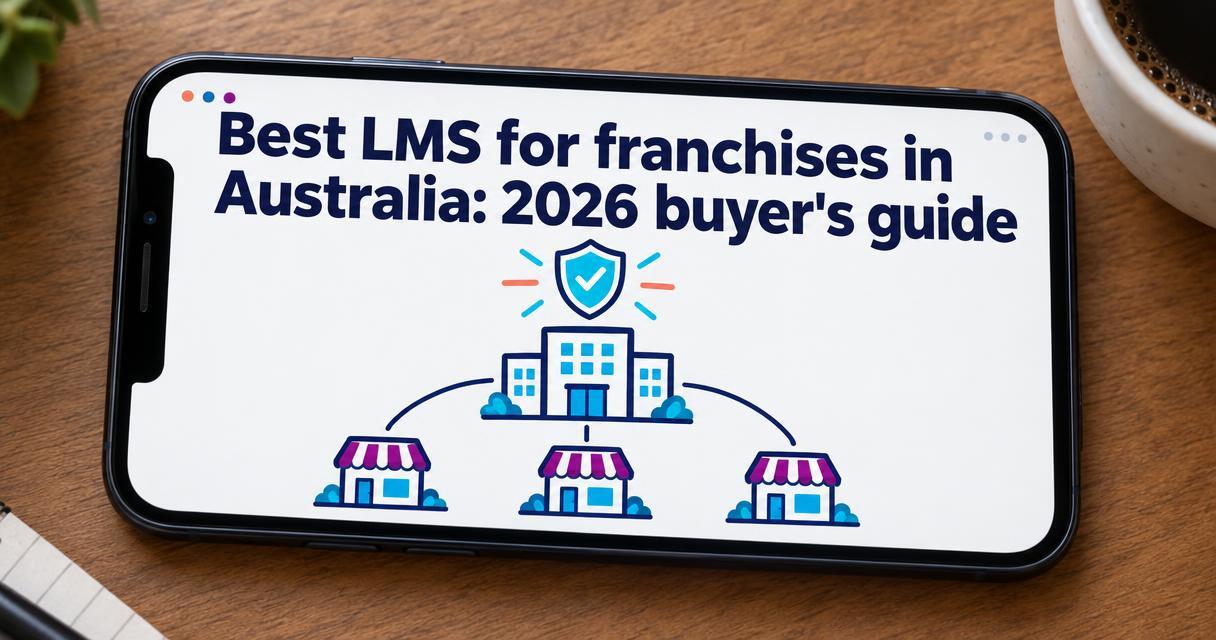
The best learning management system (LMS) for Australian franchises balances head office standardisation with independent local control, keeping your network compliant while building real capability across every location.
Last reviewed November 2026
Quick answer
- Compono Develop: Best for tracking compliance and building actual team capability.
- Docebo: Best for massive global enterprise networks with complex logic.
- ELMO Software: Best for large corporate environments seeking a single suite.
- Tribal Habits: Best for capturing internal knowledge and fast course creation.
- Go1: Best for networks wanting a vast library of off-the-shelf courses.
- Price: Expect $4 to $15 per user per month depending on your network scale and tier.
- Best for: Franchise operations requiring true multi-tenancy to separate head office compliance from local store autonomy.
- Verdict: Choose an LMS that manages process risk for the franchisor and builds practical, behavioural capability for the franchisee.
Franchising supports more than 500,000 Australian jobs, according to the Australian Treasury in 2025. That scale creates a massive operational hurdle for network leaders. You need to protect the brand and ensure consistent customer experiences across hundreds of separate locations. However, you cannot treat franchise employees like direct corporate staff.
Most traditional learning platforms fail in a franchise environment because they are built for single top-down corporations. They manage process risk well enough by tracking completions and storing policies in one big bucket. They fall apart when an independent franchisee wants to assign their own local onboarding checklist or safety procedure without exposing it to the rest of the country.
When you force a rigid corporate tool onto independent business owners, adoption plummets. When franchisees ignore the system, head office loses visibility over critical compliance gaps. You need a learning management system that handles the process risk of network-wide compliance and the people insight risk of building actual capability. Learning how others do this is helpful, such as observing how The Coffee Club successfully balanced head office needs with franchise partners.

Selecting the right platform means filtering out systems built only for traditional corporate structures. This corporate LMS buyer's guide offers a broader look, but for franchises, multi-tenancy and audit readiness are the top priorities.
Compono Develop handles both the process risk of compliance and the people insight risk of actual performance. It offers true multi-tenancy architecture. Head office can push mandatory training down, while franchisees can manage their own teams locally. Compono Develop boasts 4.7 out of 5 stars from learners and has helped major clients like VicRoads deliver $34M in operational savings through digitised compliance and capability tracking.
Docebo is a heavyweight contender in the global learning space. It provides extensive reporting features and deep integrations with enterprise software. However, the system is notoriously complex to set up and manage, often requiring dedicated internal administrators to maintain the platform effectively.
ELMO Software offers a comprehensive suite covering payroll, rostering and learning. It excels at centralising data for corporate head offices. The downside is that the learning module is often viewed as a compliance checklist rather than a tool for driving behavioural change on the front line.
Tribal Habits is an Australian-built platform focused heavily on user-generated content. It shines when local experts need to capture their knowledge and turn it into a short course. While it is excellent for peer-to-peer learning, it may lack the rigid structural controls required by highly regulated franchisors.
Go1 provides immediate access to thousands of courses from various providers. It is the right solution for a franchise network that needs standard compliance content quickly without hiring an instructional designer. Most networks choose to integrate Go1's content into a dedicated LMS platform rather than using it as their only system.
| Platform | Best for | Key strength |
|---|---|---|
| Compono Develop | Compliance and capability | True multi-tenancy and behavioural mapping |
| Docebo | Global enterprise networks | Deep customisation and AI features |
| ELMO Software | Single HR buyers | Centralised corporate reporting |
| Tribal Habits | Knowledge capture | Fast course creation for local experts |
| Go1 | Off-the-shelf courses | Vast pre-built compliance library |
Compono makes Compono Develop. We've included it and kept every entry's strengths and limits honest.
True multi-tenancy is the non-negotiable feature for any franchise LMS. A standard corporate learning platform uses basic groups or folders to separate teams. That architecture breaks down immediately in a franchise network. A multi-tenant platform provides a master portal for the franchisor and separate, distinct sub-portals for each independent franchisee.
This means the franchisor can publish mandatory brand training, menu updates or national safety standards directly into every franchisee portal. At the same time, the franchisee retains administrative control over their own local environment. They can upload their specific store opening procedures without cluttering the national database.
This separation is critical for data privacy and security. A franchisee in Perth should never be able to access the training records, employee details or completion rates of a franchisee in Brisbane. Multi-tenancy ensures that head office sees everything they need for brand compliance, while local owners only see their own teams.
Compliance in an Australian franchise is a shared burden. The remade Franchising Code of Conduct commenced on 1 April 2025, with further provisions taking effect on 1 November 2025. The Australian Treasury notes this places increased scrutiny on how networks operate. Regulators expect clear, audit-ready records of safety and compliance training across the entire network.
If a safety incident occurs at a franchised site, investigators will look for proof that the employee received proper training. An LMS centralises these records, ensuring that head office can produce documentation instantly. Relying on paper checklists stored in a local manager's filing cabinet is a massive process risk you can easily avoid.
However, franchisors must walk a legal tightrope to avoid joint-employer liability under Fair Work laws. If head office uses the LMS to dictate precise daily rosters or control how local staff are disciplined, they risk crossing the line from franchisor to employer. A well-configured multi-tenant LMS allows head office to provide standard training while leaving the actual employment relationship and performance management entirely to the franchisee.
Franchise networks rely heavily on retail, hospitality and trade workers. These employees rarely sit at desks, making traditional desktop e-learning completely impractical. If training is difficult to access on the floor, completion rates drop and compliance gaps open up across your stores.
The data reflects this friction clearly. Work-related training participation fell to 19 percent in 2024–25, according to the Australian Bureau of Statistics. To reverse this trend in your network, you must meet frontline workers where they are. In the same year, 49 percent of Australians who undertook work-related training completed their most recent course online or virtually.
A strong franchise LMS delivers bite-sized, mobile-improved modules that staff can complete on their own phones during a commute or a quiet shift. It replaces long, tedious seminars with accessible microlearning. This approach builds real behavioural capability instead of just chasing a compliance tick on a spreadsheet.
Funding a network-wide LMS requires a clear commercial strategy. Australian employers provided roughly eight hours of work-related training for every 1,000 hours worked in 2024, the highest ratio in a decade. The Australian Industry Group reports that employer investment in paid training time reached at least A$3.7 billion that year.
Franchisors typically handle the cost of the LMS in one of two ways. Some fund the platform entirely from head office using a technology or marketing levy. This guarantees network-wide adoption because franchisees do not face a separate direct invoice. Others split the cost, requiring franchisees to pay a per-user licence fee for their active staff.
If you pass costs down to franchisees, you must prove the platform's value to their specific business. If the LMS only serves head office compliance needs, franchisees will resent the expense. When the platform helps them onboard staff faster, reduce turnover and improve customer service, it becomes an indispensable operational tool.
An LMS should never operate in a silo. To eliminate manual data entry and reduce administrative friction, your learning platform must integrate with the tools your network already uses. This starts with the applicant tracking systems used for hiring and extends to the payroll platforms used to pay staff.
When a franchisee hires a new team member, their details should flow automatically from the recruitment software into the LMS. Providing effective franchise recruitment strategies for consistent hiring ensures you bring the right people in before training even begins. This integration triggers the correct onboarding pathways and compliance modules before the employee's first shift.
Look for an LMS that communicates smoothly with popular Australian payroll platforms like Xero and MYOB, as well as dedicated Franchise Management Software (FMS). Connecting these systems gives head office a clear view of how training completion correlates with store performance, revenue and staff retention across the entire network.
Rolling out new technology to independent business owners requires a specific change management strategy. You cannot simply mandate a new system and expect enthusiastic adoption. You have to sell the operational benefits to the franchisees first and show them exactly how it saves them time.
Start by running a pilot program with a small group of highly engaged, influential franchisees. Use their feedback to refine the onboarding pathways and fix any local administration issues. You can even run a franchise recruitment scorecard check with them to align hiring standards before launch. When you roll out to the wider network, use these pilot owners as champions who can speak directly to the time and money the system saved them.
Provide clear, simple documentation on how to use the sub-portals. Franchise managers are incredibly busy running their operations. If learning to use the LMS takes more than ten minutes, they will abandon it. Focus your initial training on the features that solve their immediate problems, such as automated compliance reminders and standard onboarding checklists.
Compono Develop gives head office the compliance control they need and franchisees the local autonomy they want, turning mandatory requirements into genuine capability.
True multi-tenancy means the LMS has a master account for the franchisor and separate, independent sub-accounts for each franchisee. This allows head office to share global brand courses while keeping individual franchisee employee data strictly separate and secure.
An effective franchise LMS lets you assign specific learning pathways based on location. This means a retail worker in Queensland automatically completes their specific local safety modules, while a worker in Victoria completes theirs, all tracked centrally by head office.
Yes. A strong franchise learning management system allows individual franchise owners to create and upload their own site-specific procedures, such as lock-up steps or local waste management rules, without altering the national brand content.
Data ownership depends on your specific franchise agreement and the LMS architecture. Generally, the franchisor retains the brand training completion records for audit purposes, while the franchisee retains their independent employee records. Multi-tenant platforms make this legal separation easy to manage.
Using an LMS to deliver standard brand, safety and compliance training does not inherently create joint-employer liability. The risk arises when a franchisor uses systems to dictate local shift rosters, precise daily task allocation or direct disciplinary action. A multi-tenant LMS maintains the necessary legal boundary by leaving team administration in the hands of the franchisee.

Compare the best LMS for healthcare in Australia. Learn how modern platforms manage compliance, verify knowledge, and build workforce capability in...
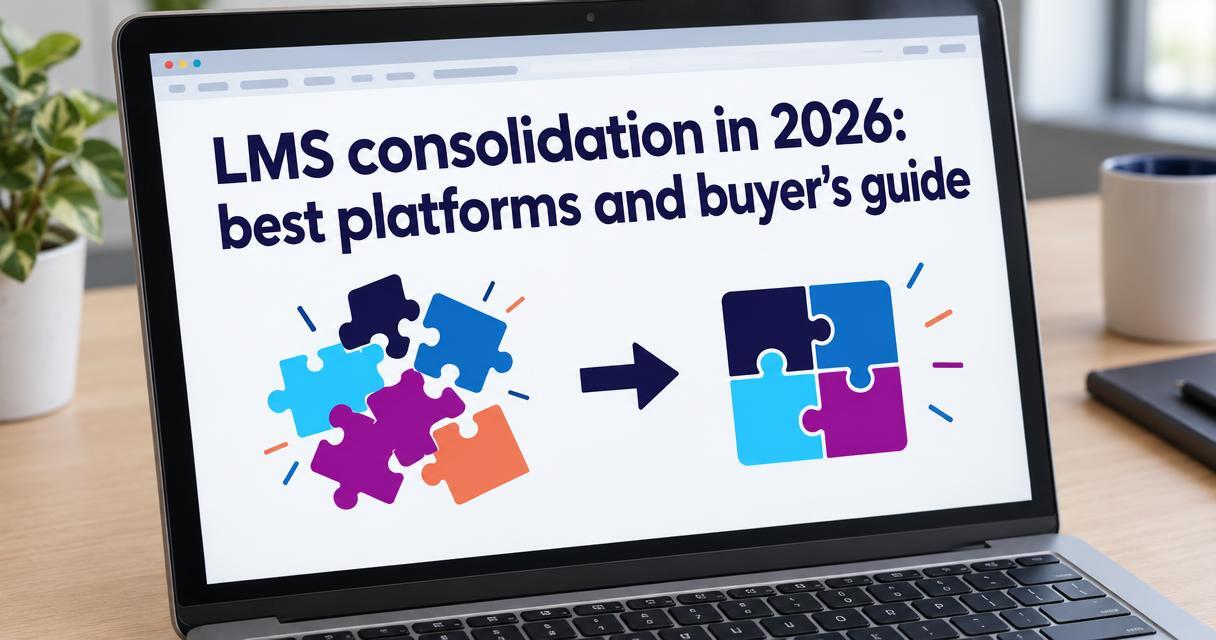
Planning an LMS consolidation? Discover the hidden costs of platform sprawl, migration checklists, and the best learning management systems for 2026.

Compare the top 360Learning alternatives in 2026. Discover pricing, features, and which learning management system fits your workforce best.
 Mathan Allington