


 Mathan Allington


Best AG5 alternatives 2026: Skills Management buyer's guide
 Mathan Allington
Compare the best AG5 alternatives for 2026. Discover how top skills management platforms and LMS integrations help modern teams track and build...
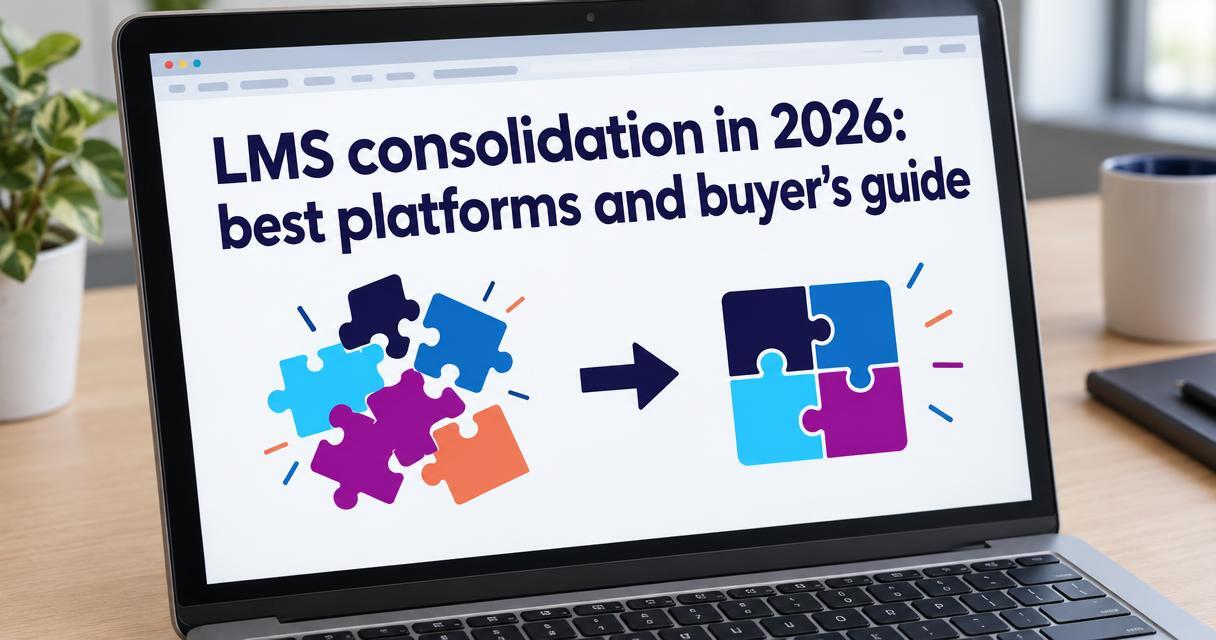
LMS consolidation is the strategic process of replacing multiple overlapping learning systems with a single platform to cut costs, secure compliance data, and link employee training directly to workplace capability.
Last reviewed October 2026
Quick answer
- Price: Compono Develop pricing is tailored to mid-market needs; enterprise platforms like Cornerstone and Docebo typically require custom quotes.
- Best for: Mid-market organisations that need to track compliance while actively building capability across their teams.
- Verdict: Choose a multi-tenant platform that handles both internal employee training and external extended enterprise requirements without demanding separate systems.
Enterprises run more than 125 software as a service applications on average. This fragmentation costs approximately $1,040 per employee annually according to Gartner, creating immense pressure for technology buyers to consolidate their tools. Human resources and learning and development teams are directly affected by this bloat. Research from Bersin by Deloitte reveals that 27 percent of organisations manage between two and five learning management systems simultaneously.
Running disparate learning platforms is rarely a deliberate strategy. It usually happens organically through company mergers, departmental silos, or shadow IT where different teams procure their own tools. This fragmentation creates severe compliance risks. When training records live across four different systems, auditing regulatory requirements becomes a manual nightmare.
It is important to distinguish between internal technology stack rationalisation and industry vendor consolidation. Vendor consolidation happens when large software providers acquire smaller learning platforms in the market. Internal LMS consolidation is your response to a bloated technology stack. It is the active choice to centralise learning data, reduce software licence fees, and simplify the user experience for your staff.
Many organisations try to serve distinct audiences with completely separate systems. They use one platform for internal employee onboarding and another for customer or partner training. This extended enterprise model often leads to redundant content, complicated data integration problems, and doubled administration costs.
According to Seertech, 37 percent of organisations want to replace their current LMS, and nearly half of those plan to complete the replacement within one year. The most common trigger is administration fatigue. When your learning administrators spend their days managing user accounts and resetting passwords across three systems rather than designing effective training, it is time to consolidate.
A unified multi-tenant architecture solves this problem directly. It allows you to maintain one core system while setting up distinct, secure environments for employees, franchisees, or external partners. Each group sees only their relevant branding and content, but reporting rolls up into a single dashboard. Seertech noted that Trane Technologies successfully consolidated four separate partner training portals into one multi-tenant platform while keeping user segmentation intact.
When deciding to rationalise your software stack, choosing the right foundational system is critical. We recommend reviewing the best Australian LMS options to see the wider market, but for specific consolidation projects, these are the top contenders.
Compono Develop is a learning management system that goes beyond tracking compliance checkboxes. Most platforms can tell you if an employee watched a video. Compono Develop helps you understand if that training actually translated into workplace capability. By supporting complex compliance requirements alongside career development pathways, it allows mid-market businesses to retire basic compliance trackers and standalone upskilling tools simultaneously.
Foundation is a heavyweight in the enterprise learning space. It offers massive scalability and deep functional modules. A Forrester consulting study cited by Foundation OnDemand found that organisations using their platform achieved a reported 443 percent return on investment with a payback period of less than six months. The same study found that content consolidation generated $2.1 million in savings over three years for a modelled organisation.
Docebo uses a strong artificial intelligence engine to recommend content and personalise the learning experience. It is particularly effective for organisations that need to consolidate internal employee portals and external customer academies into one unified environment.
| Platform | Best for | Key strength |
|---|---|---|
| Compono Develop | Capability and compliance | Connecting learning directly to performance data |
| Foundation OnDemand | Global enterprise | Deep enterprise HRIS integrations |
| Docebo | Extended enterprise | Customer and partner training portals |
Compono makes Compono Develop. We've included it and kept every entry's strengths and limits honest.
Moving away from legacy platforms requires a careful approach to data integrity. You cannot afford to lose historical compliance records or regulatory certifications during the transition. If you are preparing for this move, a structured LMS migration checklist is essential.
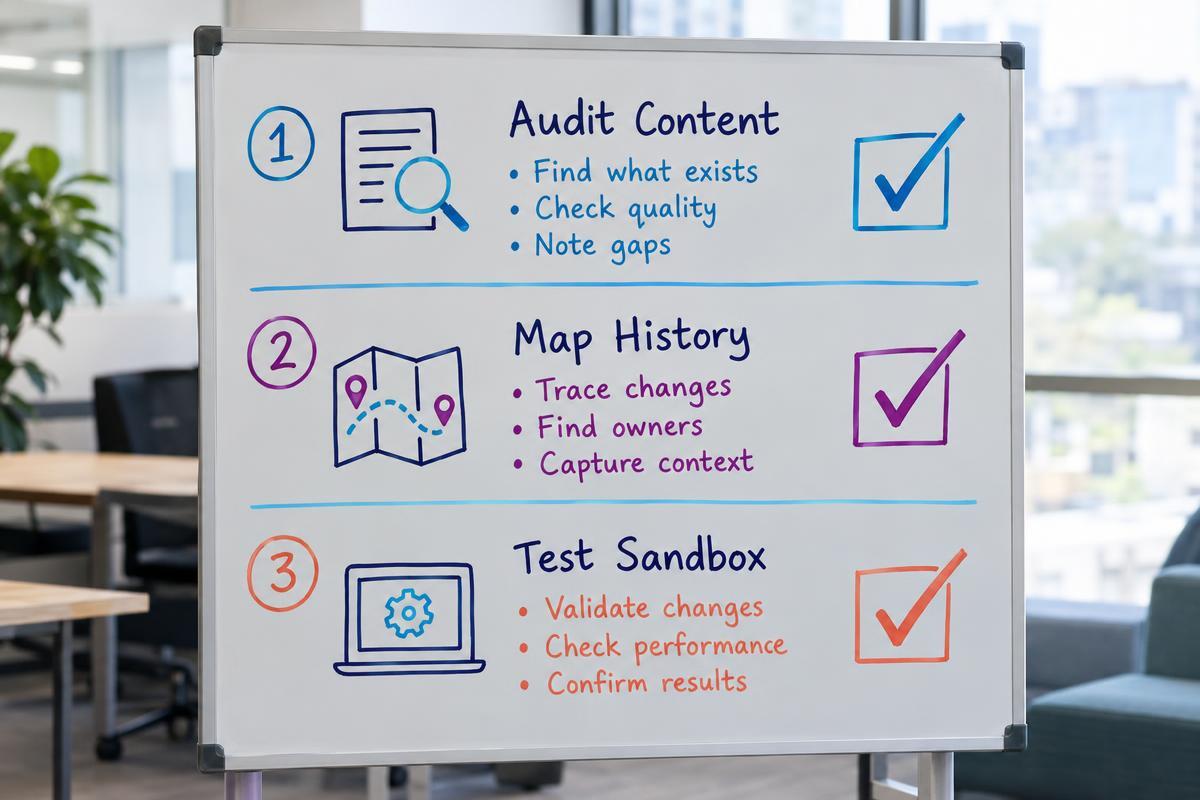
First, audit your existing content. Consolidation is the right time to archive outdated materials. When Trane Technologies consolidated its learning portals, it reduced the number of content types by approximately 79 percent, according to Seertech. Decide which SCORM packages and video files actually serve current business goals.
Second, map your historical audit trails. Regulatory bodies require proof of past compliance, not just current status. Ensure your new platform can ingest historical transcript data and map it to new user profiles accurately. It is critical to test this data mapping in a sandbox environment before switching off your legacy systems.
Finally, evaluate integration capabilities. Your consolidated platform must talk to your core human resource information system and payroll software. If you are unsure where your current tech stack stands, running it through an LMS evaluation scorecard will highlight the gaps your new system needs to fill.
Technology migration is only half the project. Managing user resistance and driving platform adoption determines the actual success of your LMS consolidation project. Employees who are comfortable with an old interface often resist learning a new one, even if the old one is inefficient.
Clear communication is your most effective change management tool. Explain exactly why the consolidation is happening and how it benefits the end user. Frame the change around simplified access. Employees appreciate having one login instead of three different passwords for compliance, leadership training, and technical skills development.
Post-consolidation, track your return on investment through both financial and operational metrics. Measure the reduction in software licensing fees and help desk tickets. As Kassi Zehr from Trane Technologies explained to Seertech, "My LMS administrators are much happier since the portal consolidation as it has freed up time that was used for technical support for strategic planning."
A successful platform rationalisation requires a phased approach. Before you cancel any vendor contracts, establish a clear timeline that accounts for overlap. You will need to run your legacy systems concurrently with your new platform during the testing phase. If you are ready to start planning, reading a dedicated guide on how to migrate to a new LMS will help structure your transition smoothly.
Begin with a pilot group. Move a single department or a specific training program onto the consolidated platform first. This allows you to identify data migration errors and workflow bottlenecks without disrupting the entire organisation. Collect feedback from this pilot group to refine your training materials and support documentation.
Once the core system is stable, begin migrating the more complex extended enterprise environments. Pay special attention to user permissions and data privacy, ensuring that external partners cannot access internal proprietary training. A methodical, phased rollout ensures that your LMS consolidation project delivers on its promise of reduced complexity and improved capability.
Consolidating your learning technology should simplify your operations while giving you clearer visibility into your team's real capability. Our platform brings compliance, upskilling, and performance data into one central system, allowing you to retire redundant tools with confidence.
LMS consolidation involves replacing multiple learning management systems and training tools with a single, unified platform. This strategy reduces software licensing costs, centralises compliance data, and simplifies the learning experience for employees who no longer have to work through multiple portals.
Return on investment is measured by tracking direct financial savings from cancelled software licences and reduced IT infrastructure costs. You should also measure operational efficiency, such as the reduction in help desk tickets and the time administrators save by managing a single system instead of several.
The biggest risk is the loss or corruption of historical compliance data. If regulatory training records are not accurately mapped and transferred to the new platform, your organisation could fail compliance audits. Thorough testing in a sandbox environment is critical before retiring legacy systems.
Yes. Modern learning platforms use multi-tenant architectures to serve different audiences. This allows you to manage internal employee development and external customer or partner training from one central system, while keeping user environments, branding, and content completely separate.
Compare the best AG5 alternatives for 2026. Discover how top skills management platforms and LMS integrations help modern teams track and build...

Looking for Docebo alternatives in 2026? Compare top competitors like LearnUpon, TalentLMS, and Compono to find the right learning platform for your...

The 12 best LMS platforms for Australian organisations in 2026, compared: five local players, the global suites, how to choose, and who each one fits.