

.webp)

 Mathan Allington


Buyer's Guide: Choosing a SCORM Compliant LMS in Australia (2026)
 Mathan Allington
How to choose a SCORM compliant LMS in Australia, with the integration, compliance tracking and team development features to check first.

An LMS implementation checklist is a step-by-step roadmap that guides organisations through planning, configuring, testing, and launching a new Learning Management System.
Key takeaways
- Start with 3–4 pass/fail KPIs to measure success from day one.
- Treat your HRIS as the single source of truth and make SSO the default for user access.
- Never launch an empty platform; prepare a day-one content launch pack.
- Use role-based User Acceptance Testing (UAT) to block go-live if critical defects remain.
- Plan for post-launch hypercare and continuous improvement based on usage data.
Implementing a new learning platform is a major investment of time and resources. Yet, many rollouts stumble because they focus too much on the technology and not enough on the people using it. Without a structured LMS implementation checklist, teams risk data integration failures, poor user adoption, and a platform that sits empty on launch day.
Whether you are upgrading an outdated system or launching your first digital learning environment, success requires meticulous planning. You need to align stakeholders, migrate data securely, and ensure your workforce actually wants to use the new tools.
A successful Learning Management System rollout is rarely a simple plug-and-play exercise. It requires coordination across IT, HR, learning and development (L&D), and department leaders. A structured checklist ensures that critical steps, from data privacy checks to user training, are not overlooked in the rush to go live.
Best-practice checklists from 2026 sources consistently include stakeholder alignment, content migration, integrations, admin training, user testing, and post-launch improvement as core LMS implementation steps, according to industry research from AllenComm.
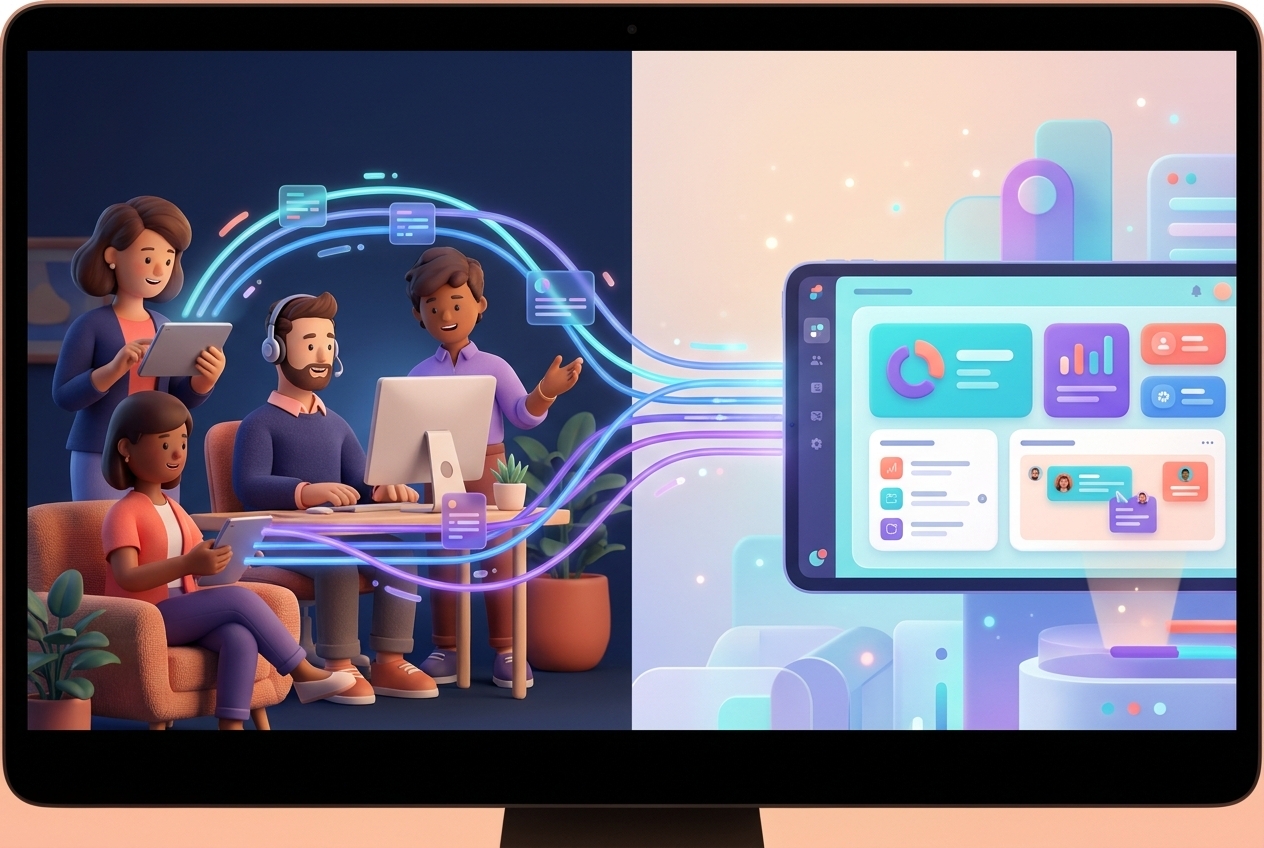
To ensure your rollout is smooth, we have broken down the process into nine actionable phases. Follow these steps to guide your team from initial planning through to post-launch success.
Before touching any software configurations, you must define what a successful launch looks like. A common mistake is setting vague goals like "improve training". Instead, you need concrete, measurable targets.
Start every LMS implementation project by translating organisational goals into 3–4 pass/fail KPIs so the rollout has measurable success criteria from day one. These might include achieving a 90% login rate within the first month, reducing onboarding time by two weeks, or ensuring 100% compliance training completion.
An LMS impacts the entire organisation, so your project team needs cross-functional representation. At a minimum, your team should include a project manager, an IT lead for integrations, an HR representative for data governance, and an L&D specialist for content strategy.
It is also crucial to involve department heads early. When leaders understand the platform's value, they become champions who drive adoption within their teams. If you are still evaluating vendors, this is the time to finalise your decision by choosing the right learning management software for your organisation.
Your LMS cannot operate in a silo. It needs to communicate smoothly with your existing tech stack, particularly your Human Resources Information System (HRIS).
Experts recommend that you treat your HRIS as the source of truth and make Single Sign-On (SSO) the default, with identity rules tested before scaling to reduce access and provisioning errors. This ensures that when a new employee joins the company, their learning profile is automatically created with the correct role-based permissions.
A beautiful new platform is useless if there is nothing for employees to learn. Content migration and creation should begin weeks before your target launch date. Audit your existing training materials, update outdated courses, and format them for the new system.
A strong launch plan should include a day-one content "launch pack" so the LMS does not go live empty and immediate value is visible to users. If you are using Compono Develop, you can easily build engaging, science-backed learning pathways that captivate your team from their very first login.
With your team in place and content prepared, it is time to set up the system. This phase involves customising the user interface to match your brand colours and logos, establishing user roles and permissions, and configuring automated notifications.
Ensure that your learning paths are logically structured. The goal is to make the user experience as intuitive as possible, reducing friction so employees can focus on learning rather than navigating a complex interface.
Never launch an LMS without rigorous testing. Your IT team and a small pilot group of end-users should thoroughly test every aspect of the platform. This includes checking login flows, course completions, quiz grading, and automated emails.
Strict testing protocols are essential. In fact, UAT should block go-live if any Severity 1 defects remain, using role-based scripts to validate real user journeys before launch. Recent implementation guidance from AppVerticals also emphasises sandbox testing, workflow validation, and pilot runs with target users before full deployment to ensure a flawless experience.
Before rolling out the platform to the wider company, ensure your administrative team knows how to manage it. They need to understand how to pull reports, assign courses, and troubleshoot basic user issues.
For the broader workforce, create simple quick-start guides or short video tutorials. The more confident your employees feel using the new system, the faster your adoption rates will climb.
When launch day arrives, you have two main strategic options: a big-bang launch or a phased rollout. Your choice depends entirely on the size and complexity of your organisation.
For multi-department or high-risk deployments, a phased rollout is the recommended model; big-bang launches are best reserved for low-complexity environments. A phased approach allows you to release the platform to one department at a time, gathering feedback and resolving minor issues before expanding to the rest of the company.
The work does not stop once the platform is live. In the weeks following the launch, monitor your predefined KPIs closely. Are people logging in? Are they completing their assigned modules? Are there common support tickets being raised?
The implementation should be managed as an ongoing operations process: hypercare, support, and continuous improvement should continue after go-live based on usage and completion data. Regular feedback loops will help you refine the content and adapt to the evolving learning management system environment.
Key insights
- Successful LMS implementations require cross-functional teams, including IT, HR, and L&D leaders.
- Data integrity is paramount, always use your HRIS as the single source of truth for user data.
- Testing is non-negotiable; role-based UAT ensures the platform works for real-world scenarios.
- Post-launch hypercare ensures long-term adoption and allows for continuous platform improvement.
Ready to transform your organisation's learning experience with a platform designed for modern, high-performing teams?
Related reading
The timeline for implementing an LMS typically ranges from 6 to 12 weeks, depending on the complexity of your organisation, the amount of data being migrated, and the number of integrations required. Phased rollouts may extend this timeline but often result in smoother transitions.
High user adoption starts with communication and relevance. Ensure the platform is pre-loaded with a valuable "launch pack" of content so users see immediate benefits. secure leadership buy-in so managers encourage their teams to use the system, and provide clear, simple training resources.
An LMS pilot phase should include a diverse group of end-users testing real-world scenarios. They should work through the platform, complete courses, test SSO logins, and provide feedback on the user interface. This phase helps identify bugs and usability issues before the company-wide launch.
Your core team should include a project manager, an IT specialist for technical integrations, an HR representative to oversee data accuracy, and an L&D professional to manage content. Executive sponsors and department heads should also be involved to champion the rollout.

How to choose a SCORM compliant LMS in Australia, with the integration, compliance tracking and team development features to check first.

How to choose an LMS in Australia, from compliance and engagement to the learning trends worth paying attention to this year.

Planning a platform move? Use this comprehensive LMS migration checklist to audit data, map content, and ensure a smooth transition for your...
 Compono