

.webp)

 Compono


Training Register Template Australia: Compliance Guide 2026
 Compono
Need a training register template in Australia? Learn what to include, how to meet WHS and NDIS compliance standards, and when to automate your...

Finding the right LMS for healthcare in Australia means looking past generic corporate training tools to find a system that handles complex clinical rosters, automated compliance reporting, and targeted knowledge verification.
Key takeaways
- Generic learning platforms fail in healthcare because they cannot adapt to shift work or track role-specific clinical competencies.
- Modern systems automatically map training records to Australian regulatory frameworks like the NSQHS and Strengthened Aged Care Quality Standards.
- The best approach verifies what staff already know and only trains them on the gaps, respecting their limited time.
- Mobile accessibility is non-negotiable for clinical teams who rarely sit at a desk during their shifts.
The Australian healthcare sector operates under intense pressure. Clinical staff face high patient loads, complex shift patterns, and strict regulatory requirements. When you introduce a generic corporate learning platform into this environment, it usually fails. A system designed for office workers sitting at desks from nine to five simply does not work for an ICU nurse on a rotating night roster.
Healthcare organisations need dedicated infrastructure. The Asia-Pacific region is currently the fastest-growing market for healthcare learning systems, with a projected 13.41% CAGR through 2031. This growth is driven by a stark reality: paper-based compliance tracking and clunky legacy software are no longer enough to protect patients or satisfy regulators.
The global shift toward specialised technology is undeniable, with the broader healthcare learning market projected to reach USD 6.5 billion by 2035. For Australian providers, the challenge is finding a platform that actually supports the workforce rather than just functioning as an expensive filing cabinet for PDF certificates.
A major hospital or aged care provider employs a vast array of professionals. You have registered nurses, allied health workers, administrative staff, and facility managers. Treating their learning requirements as a single block is a mistake.
An effective Australian learning management system allows you to build specific pathways for different roles. A new administrative hire needs data privacy and fire safety training. A new clinical hire needs those same modules, plus medication management, infection control, and manual handling assessments.
When you tailor the learning pathway to the exact requirements of the role, you reduce frustration. Staff only see the modules they actually need to complete. This targeted approach drives engagement. Research into medical education settings shows that 85% of learners complete 90% or more of their assigned online modules when the platform delivers relevant, accessible content.
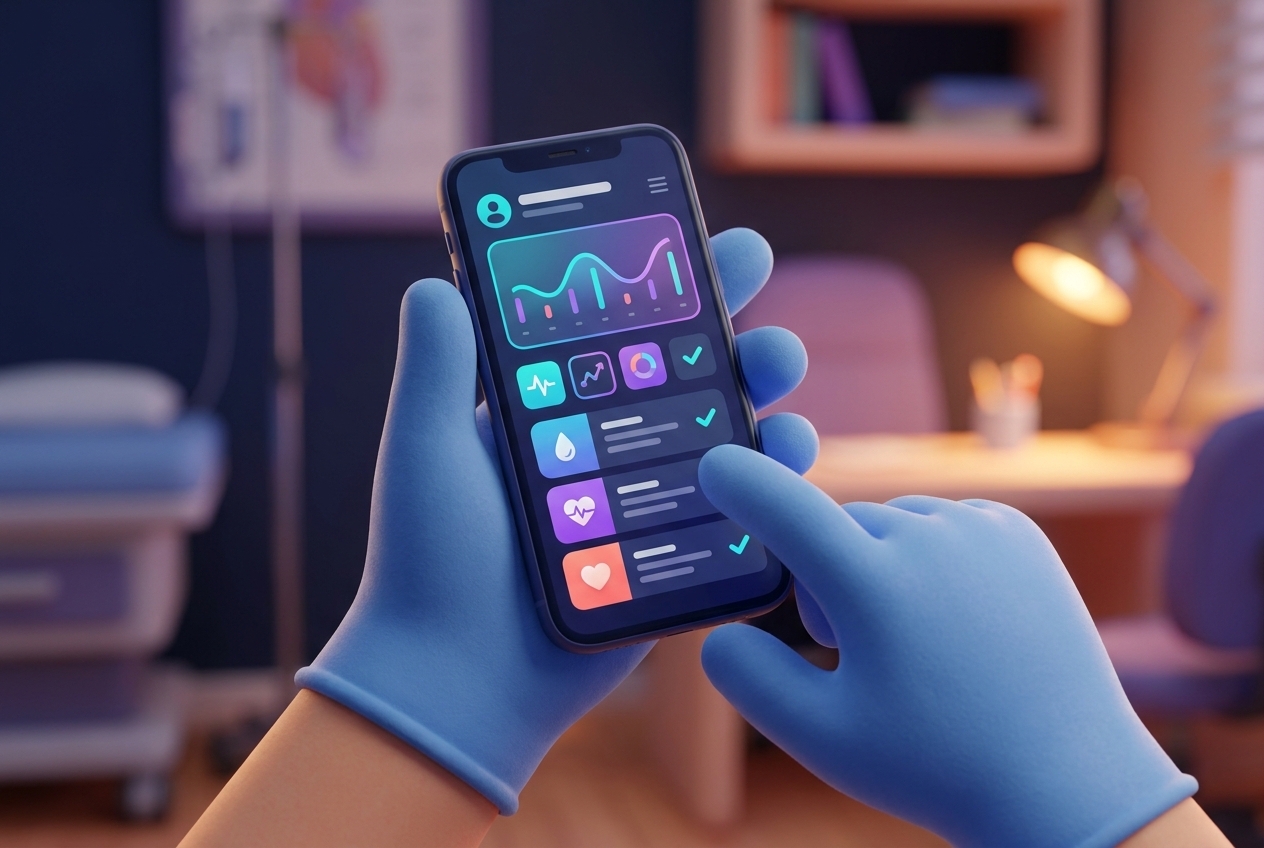
Compliance in Australian healthcare is not a theoretical exercise. Failing an audit against the National Safety and Quality Health Service (NSQHS) Standards or the Aged Care Quality Standards has serious operational consequences.
Your LMS must speak the language of Australian regulators. When an auditor walks into your facility, your education managers should not have to manually cross-reference spreadsheets to prove that 100% of your clinical staff have completed their mandatory hand hygiene updates.
The system should automatically map completed modules to the relevant standard. If a specific ward falls behind on its mandatory training, the platform should alert unit managers before it becomes a compliance breach. This proactive reporting is what separates a basic training tool from a true workforce capability platform.
One of the biggest complaints from experienced healthcare workers is being forced to sit through basic training they already know by heart. Making a senior nurse watch a 40-minute video on basic infection control is a waste of their valuable clinical time.
Modern platforms flip this model. Instead of forcing everyone through the same content, they start by verifying existing knowledge. If a staff member can pass the assessment upfront, they are marked as compliant. If they struggle with specific questions, the system directs them only to the learning materials that address those exact gaps.
This is where Compono Assure changes the approach. It moves organisations away from basic tick-box completion rates and focuses on verifying actual capability. By assessing what your people already know, you give them time back to focus on patient care.
Healthcare does not stop. Finding time for training during a busy shift is incredibly difficult. If your LMS requires a staff member to find an available desktop computer in a busy ward, log in, and complete a 60-minute module in one sitting, your completion rates will suffer.
Training needs to fit into the reality of clinical work. This means mobile accessibility is mandatory. Modules should be broken down into micro-learning segments that take five to ten minutes to complete. A worker should be able to start a module on a tablet in the break room, pause it when they are called away, and finish it on their phone during their commute home.
We are already seeing this scale across the country. Dedicated learning infrastructure is now considered critical operational software, with over 90 Australian public hospitals heavily relying on these systems to manage their workforce capability.
As healthcare providers grow – whether through acquiring new aged care facilities or expanding clinic networks – managing training becomes exponentially harder. You need a system that can handle multiple locations with different local requirements, while still reporting up to a central dashboard.
If you are exploring the evolving learning management system landscape, look for platforms that allow parent-child hierarchies. The head office needs visibility over the entire organisation, but local facility managers need the autonomy to assign specific training relevant to their site's unique patient demographic.
Key insights
- Generic corporate learning tools cannot handle the complexity of clinical rosters or strict regulatory reporting.
- Targeting training to specific roles increases completion rates and reduces staff frustration.
- Verifying existing knowledge before forcing staff through basic modules saves valuable clinical time.
- Mobile access and micro-learning are essential for staff who cannot leave the ward to sit at a desktop.
Building a capable healthcare workforce requires systems that respect your team's time and verify their actual skills. When you move away from basic compliance tracking and focus on targeted capability building, you improve both staff confidence and patient outcomes.
Related reading
A healthcare LMS is built to handle the specific regulatory frameworks, complex shift rosters, and clinical competency tracking required in medical and care settings. Standard platforms usually lack the ability to map training directly to standards like the NSQHS.
They replace manual spreadsheets with automated reporting. When an auditor requests proof of compliance, managers can instantly generate reports showing exact completion rates mapped to specific regulatory standards across the entire organisation.
Yes. Modern healthcare platforms prioritise mobile access so clinical staff can complete short micro-learning modules during breaks or transit, rather than fighting for access to a shared ward computer.
Verification tests what an employee already knows before making them sit through a course. This respects the expertise of senior staff, saves hours of unnecessary training time, and focuses educational efforts only on the areas where knowledge is lacking.

Need a training register template in Australia? Learn what to include, how to meet WHS and NDIS compliance standards, and when to automate your...

Looking for a microlearning platform in Australia? Discover how short, targeted training boosts completion rates and upskills your workforce in 2026.
Why workforce credentialing software is replacing spreadsheets in 2026, and how to automate compliance, reduce risk and deploy staff with confidence.