

 Mathan Allington
The Best Competency Management Software 2026: Complete Buyer's Guide
 Mathan Allington
The best competency management software in 2026 by type: compliance-led, healthcare and nurse competency tracking, LMS hybrids and talent suites.

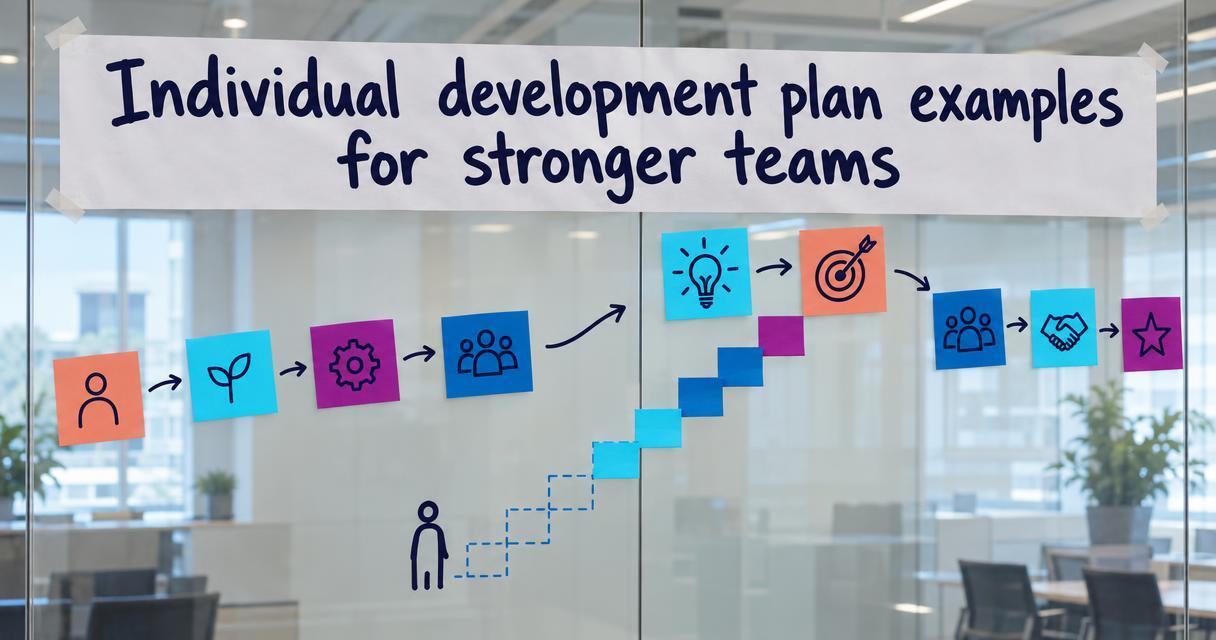
An individual development plan (IDP) is a structured agreement between an employee and their manager that outlines specific career goals, current capability gaps, and the exact learning experiences required to close them.
Last reviewed November 2026
Key takeaways
- An effective individual development plan measures capability improvements rather than just tracking course completion rates.
- The best plans blend formal training with on-the-job application and mentoring to build real competence.
- Managers must actively co-design these plans with their team members to ensure alignment with both personal ambitions and business objectives.
- Development plans fail when they act as an annual tick-box exercise instead of a continuous feedback loop.
Most companies treat employee development as a compliance exercise. HR builds a template, managers email it out once a year, and employees fill it with vague goals. The process is complete, the forms are filed, and everyone goes back to their daily work. This approach manages process risk perfectly. You have a record that a development conversation took place. However, it completely ignores people insight risk.
People insight risk is the danger of not understanding what your people are capable of, what they want to achieve, and where their skill gaps threaten your business. When you rely on a static document to manage human ambition, you lose talent. Research from Gartner's Top 5 Priorities for HR Leaders in 2024 shows that 89% of HR leaders say career paths are unclear for many employees, while 66% say those paths are not compelling.
A genuine individual development plan connects business needs to personal growth. It tells an employee exactly what competence looks like for their target role and provides a realistic map to get there. When you get this right, the results are obvious. The LinkedIn Workplace Learning Report 2024 found that learners who set career goals engage with learning four times more than those who do not set goals.
Many managers confuse individual development plans with performance improvement plans (PIPs). A PIP is a corrective tool used when an employee fails to meet the basic requirements of their current role. It is heavily documented, carries a specific deadline, and usually precedes termination if the employee does not improve.
An individual development plan focuses on the future. It is aspirational and assumes the employee is already meeting or exceeding baseline expectations. An IDP prepares someone for a promotion, helps them master a new technology, or transitions them into a completely different department. Merging these two concepts creates anxiety and damages trust.
If you hand a high-performing employee a document that looks exactly like the form used to manage out poor performers, they will disengage. Keep your development tools clearly separated from your disciplinary tools.
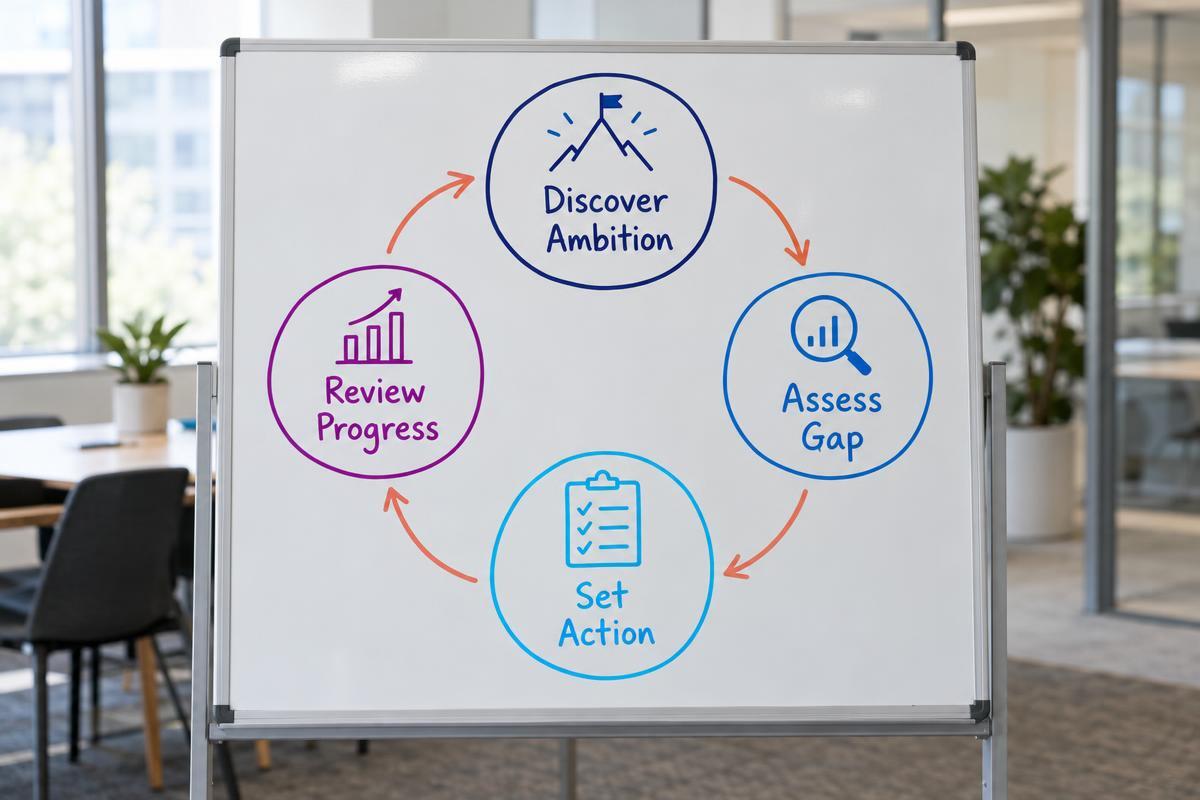
A functional IDP relies on clarity. Vague goals like "improve communication skills" or "learn more about leadership" cannot be measured. A strong plan breaks development down into specific, actionable components.
First, it requires a clear destination. This could be a specific job title, a new technical capability, or a leadership milestone. Second, it needs a brutal assessment of current reality. You must identify the exact gap between what the employee can do today and what they need to do tomorrow.
Third, the plan requires targeted interventions. The best frameworks use the 70:20:10 model for learning. This means 70% of the development comes from on-the-job experience, 20% from mentoring and feedback, and 10% from formal training. Most poor development plans invert this ratio and rely entirely on formal courses.
Finally, an IDP needs a measurement cadence. You cannot review a development plan annually. It requires regular check-ins to assess whether the on-the-job experiences are actually building the required competence. If you want to connect these goals to daily performance, you need a clear learning and development strategy that managers actually understand.
Templates are only useful when you apply them to real scenarios. Below are three specific individual development plan examples spanning different career stages. These examples demonstrate how to move away from generic goals and focus on measurable capability.
This plan suits a senior marketing specialist who wants to become a team lead within the next 12 months. The gap here is not technical marketing knowledge. The gap involves people management, delegation, and strategic planning.
| Development Area | Goal | Action Steps (70:20:10) | Measurement & Timeline |
|---|---|---|---|
| People Management | Learn to delegate effectively and manage team output. | 70%: Lead the upcoming Q3 campaign launch, assigning tasks to two junior designers. 20%: Shadow the Marketing Director during weekly 1-on-1s. 10%: Complete the internal "First-Time Manager" online module. | Successfully deliver Q3 campaign on time without burnout. Review at end of October. |
| Strategic Thinking | Shift from executing tasks to planning departmental strategy. | 70%: Draft the initial budget proposal for next year's trade shows. 20%: Present the budget draft to the CFO for direct feedback. 10%: Read "Good Strategy, Bad Strategy" and present key findings to the team. | Budget draft accepted with fewer than three major revisions by November 15. |
Not every employee wants to manage people. This plan fits a software engineer who wants to become a principal systems architect. The focus is on mastering complex systems and influencing technical decisions without having direct reports.
| Development Area | Goal | Action Steps (70:20:10) | Measurement & Timeline |
|---|---|---|---|
| Technical Mastery | Master cloud infrastructure scaling techniques. | 70%: Redesign the data pipeline for the legacy billing system. 20%: Weekly code reviews with the current Principal Architect. 10%: Complete the AWS Certified Solutions Architect qualification. | Billing system pipeline handles 2x current load during December stress testing. Certification passed by Q4. |
| Technical Influence | Improve ability to explain complex architecture to non-technical stakeholders. | 70%: Present the monthly engineering update to the executive board. 20%: Role-play presentations with the Product Manager to practice plain English. 10%: Attend a technical writing workshop. | Executives approve the Q1 architecture roadmap without requesting a simplified translation. Review in January. |
This plan is for a customer success manager transitioning into product management. This is a common but difficult move because it requires unlearning reactive habits and adopting proactive, analytical frameworks.
| Development Area | Goal | Action Steps (70:20:10) | Measurement & Timeline |
|---|---|---|---|
| Data Analysis | Learn to make product decisions based on user data rather than isolated customer complaints. | 70%: Build a dashboard tracking feature usage for the new reporting module. 20%: Pair with a data analyst for two hours every Friday. 10%: Complete an intermediate SQL course. | Dashboard built and actively used by the product team by the end of August. |
| Product Discovery | Conduct structured user interviews to uncover core problems. | 70%: Run five discovery calls with churned clients using the new interview script. 20%: Have the Senior Product Manager review the call recordings. 10%: Complete the "Continuous Discovery" internal training pathway. | Present a synthesis of the five calls to the product team, resulting in one validated problem statement by September. |
A template is useless if the manager lacks the skill to help the conversation. According to the LinkedIn Workplace Learning Report 2025, only 15% of employees said their manager helped them build a career plan during the previous six months. Managers often avoid these conversations because they fear making promises they cannot keep, or they simply do not know what to ask.
Managers need specific prompts to uncover what their team members actually want. A good discovery conversation starts broad and narrows down to concrete actions. You can use specific goal setting performance review phrases to keep the discussion focused on outcomes.
Start by asking about their energy. Questions like "What projects gave you the most energy this quarter?" and "What tasks drained you?" reveal natural affinities. Then, move to their ambition. Ask "Where do you want to be an expert in two years?" rather than the cliché "Where do you see yourself in five years?"
Once you identify the ambition, you must ground it in reality. The manager's job is to define the gap. If an employee wants to be a director but struggles to run a basic team meeting, the manager must point that out clearly. True development requires honest capability assessments, which is why having the right capability development software matters. It replaces subjective opinions with objective competency frameworks.
Individual development plans die in filing cabinets because companies tie them to the annual performance review cycle. A goal set in January is often irrelevant by June. Business priorities shift, clients leave, and internal structures change. If the IDP remains static, it becomes a historical document rather than a working tool.
You must review development goals at least quarterly, and ideally integrate them into monthly 1-on-1s. If an employee's goal is to improve their public speaking, the manager should ask about that specific goal after every team presentation. This continuous feedback loop reinforces the learning and proves to the employee that their development actually matters to the business.
The public sector often struggles with this execution gap. Minnesota Management and Budget noted in their 2025 Employee Engagement and Inclusion Survey that 74% of surveyed public-sector employees reported having an individual development plan, but only 46% said it identified meaningful skill and career goals supporting advancement. Having the plan is not enough. The plan must contain relevant goals and receive regular attention.
Writing a good IDP takes time, which is the one resource most managers lack. Generative AI tools can drastically reduce the administrative burden of creating these plans. A manager can input the employee's current role, their target role, and ask the AI to suggest a list of specific, measurable on-the-job experiences that bridge the gap.
However, AI cannot replace the human conversation. The tool can generate the framework, but the manager and employee must negotiate the specifics. An AI might suggest that an employee leads a cross-functional project, but only the manager knows which specific project is politically safe and operationally viable for that person to lead.
When you combine AI brainstorming with hard people data, you get a highly accurate development path. HR teams can use succession planning analytics to identify which roles will be critical in three years, and then guide managers to build IDPs that prepare current staff for those exact positions.
Employees quickly abandon their development plans when those plans conflict with their day-to-day targets. If you tell an employee to spend 10% of their week learning a new software system, but you penalise them for missing a sales quota because they were studying, the IDP is dead.
Development goals must align with business objectives. If the company's annual OKR is to expand into the enterprise market, a marketing manager's IDP should include goals related to enterprise lead generation or account-based marketing tactics. When the employee's growth directly serves the company's growth, managers are far more likely to protect the time required for learning.
The LinkedIn Workplace Learning Report 2024 notes that about 40% of organisations have mature career-development initiatives that produce positive business results. These mature initiatives do not treat development as an extracurricular activity. They embed it into the core business strategy.
Even with right templates and aligned goals, development plans face significant hurdles in the real world. The most common obstacle is a lack of budget. Many managers believe development requires expensive conferences or external executive coaches.
This is where the 70:20:10 model saves you. The most effective development happens on the job and costs nothing but time. Assigning a junior employee to shadow a senior executive during a complex negotiation is free, yet it provides far more practical value than a costly two-day seminar.
The second major obstacle is remote and hybrid work. In a fully office-based environment, junior staff absorb knowledge by overhearing conversations and observing body language in meetings. In a remote setting, this passive learning disappears. Remote IDPs must intentionally schedule these observational moments. Managers must actively invite developing employees into virtual client calls and strategic planning sessions, specifically tasking them to observe and report back.
Building real capability requires more than a template on a shared drive. You need a system that defines what competence looks like, maps your team's current skills against those requirements, and delivers the exact learning pathways to close the gaps.
An individual development plan provides a structured roadmap for an employee's career growth. It identifies their current capability gaps, outlines specific learning objectives, and details the on-the-job experiences and training required to reach their next career milestone.
The creation of the plan is a shared responsibility. The employee must drive the process by identifying their career ambitions and interests. The manager is responsible for providing honest feedback on current capability gaps and ensuring the proposed goals align with the needs of the business.
While the plan might outline goals for a 12-month period, you should review progress at least quarterly. Best practice involves checking in on specific action items during monthly 1-on-1 meetings to ensure the employee is actually applying their new skills on the job.
No. If an employee is failing to meet the basic expectations of their current role, you should use a performance improvement plan (PIP). An IDP is designed for employees who are already performing well and want to prepare for future roles or take on new responsibilities.
Success is measured by changes in capability and business impact, not just course completion. If the goal was to improve strategic thinking, success looks like the employee successfully submitting and executing a strategic project without requiring heavy manager intervention.

The best competency management software in 2026 by type: compliance-led, healthcare and nurse competency tracking, LMS hybrids and talent suites.

How proficiency levels work in insurance: what each level means, how to assess it, and where clear levels cut regulatory risk and claims leakage.
The most effective 9 box grid alternatives. Learn why continuous feedback, skills matrices, and four-box models outlast subjective potential ratings.
 Compono