

.webp)

 Mathan Allington


Best recruitment CRM software for 2026: a complete guide
 Mathan Allington
The best recruitment CRM software for 2026 by use case: agency, enterprise and in-house. An honest comparison, including where Compono does not fit.
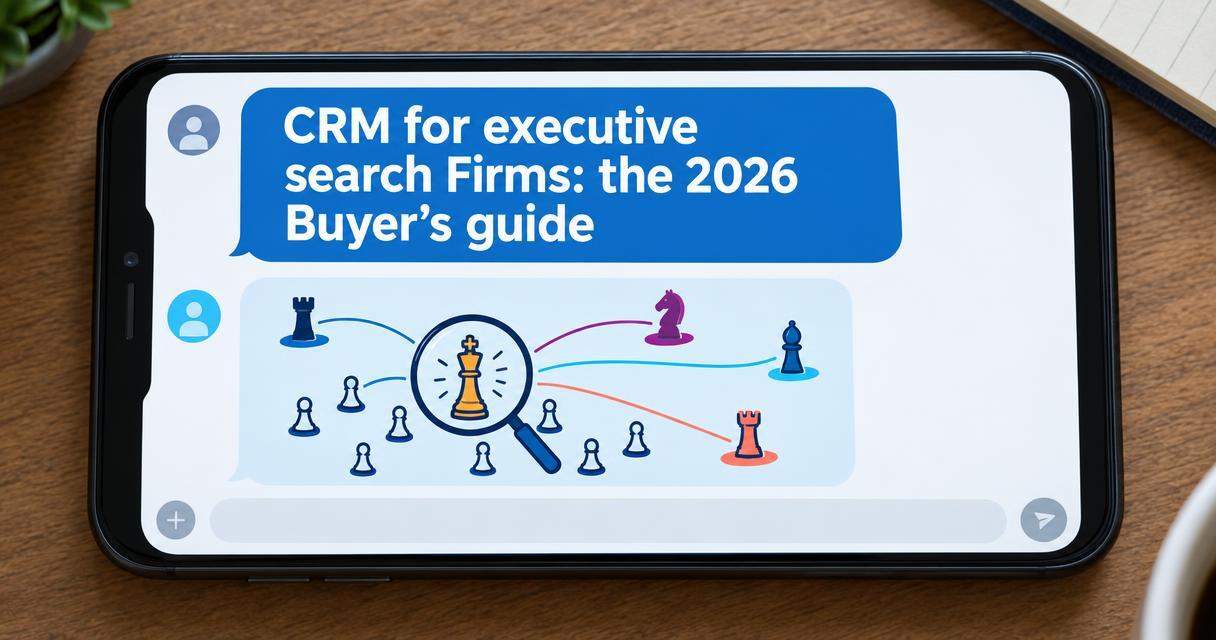
A CRM for executive search firms is a specialised relationship and talent intelligence platform built for low-volume, high-stakes leadership placements rather than rapid candidate processing.
Last reviewed October 2026
Standard recruitment tools are built for speed and mass applications. Executive search requires the exact opposite. You need a system that maps complex relationships, tracks off-market talent over years, and provides the behavioural evidence required to defend a retained brief.
Key takeaways
- Generic recruitment CRMs optimise for volume and speed, which actively works against the precision required in executive search.
- Modern executive search firms win by proving candidate fit with behavioural data rather than relying solely on industry networks.
- The best platforms combine long-term relationship mapping with deep candidate intelligence to secure retained work.
- Client experience is a major differentiator, meaning your CRM must offer secure and transparent reporting on the talent pool.
Most recruitment software is built to solve a specific problem. That problem is usually how to process thousands of resumes as quickly as possible. The software assumes you are dealing with active job seekers, high turnover, and a need to fill seats yesterday.
Executive search operates in a different reality. You are dealing with passive candidates who are already successful in their current roles. You are managing long-term relationships that might not result in a placement for three years. You are selling your judgement to clients who are making critical leadership decisions.
When you force an executive search process into a volume-based applicant tracking system, the cracks show immediately. You cannot map complex corporate structures. You lose track of informal conversations. You struggle to present a compelling, data-backed case to your client about why a specific candidate is the right cultural fit for their board.
This is why understanding the difference between an ATS vs Recruitment CRM is critical. An ATS manages applications for an open job. A true executive CRM manages the entire talent market before the job even exists.

The core function of an executive search CRM is market mapping. You need to visualise the leadership structures of target organisations and identify the top performers within them. This requires a database architecture that understands relationships.
A standard database treats every candidate as an isolated record. An executive platform connects them. It shows you who worked together at a previous firm and which board members share common history. This relational data is how you uncover the off-market talent that your clients are paying you to find.
You also need a system that supports long-term nurturing. A chief financial officer might not be ready to move today, but they might be open to a conversation in eighteen months. Your software must help you maintain that relationship through strategic touchpoints without treating the executive like a sales prospect.
If you are unsure what capabilities your agency actually requires, using an HR tech requirements builder helps clarify the gap between standard recruitment features and executive search necessities.
The days of winning retained work based purely on who you know are ending. Clients expect you to have a black book. What they want to see is evidence that the person you recommend will actually succeed in their specific corporate culture.
This is where candidate intelligence becomes your competitive advantage. You need to evaluate leadership styles and cultural alignment. When you can present a client with objective data showing how a candidate's work personality complements the existing executive team, you move from being a resume broker to a trusted advisor.
We see this shift constantly. At Compono, we built our platform for agencies that pride themselves on finding great talent off-market. Compono Hire operates as a working recruitment tool first, giving you a ranked pipeline, but it adds a culture and team-fit layer that standard CRMs cannot see. You get the instinct, and now you have the evidence to back it.
This approach transforms how you pitch. You do not just present a shortlist. You present a comprehensive analysis of how each candidate will impact the business.
When evaluating the best recruitment CRM software for your firm, certain features are non-negotiable. First is the client portal. Executive search clients want transparency. They want to log in, review longlists, and read your interview notes without waiting for a weekly status email.
Data privacy and security are equally critical. You are handling highly sensitive information about corporate restructuring and executive compensation. Your CRM must have enterprise-grade security and granular access controls to make sure confidentiality is never breached.
Integration capability is another major factor. Your CRM needs to talk to your communication tools and your assessment platforms. It should reduce administrative work so your consultants can spend their time on the phone building relationships.
Firms that partner with specialists, like our executive search partner Thirdway, understand that the right technology stack amplifies human judgement rather than replacing it.
The ultimate goal of upgrading your technology is to change your market positioning. A generic CRM keeps you operating as a transactional recruiter. A specialised platform allows you to step up as the talent architect.
Talent architects do not just fill empty chairs. They help clients design their future workforce. They use data to identify capability gaps in the current leadership team and find the exact profiles needed to bridge them.
This requires a CRM that captures more than work history. It requires a system that captures potential. When your database becomes a source of strategic insight, your firm becomes indispensable to your clients.
You win on judgement and precision, not volume. Compono gives you the recruitment workflow you need alongside the behavioural intelligence required to prove candidate fit and secure retained work.
An applicant tracking system processes active applications for open roles. An executive search CRM maps the entire talent market, tracks passive candidates, and manages long-term relationships over years before a specific role even exists.
Standard CRMs are designed for high-volume, transactional hiring. They lack the ability to map complex corporate hierarchies, manage highly confidential client portals, and track the nuanced behavioural data required for C-suite placements.
Clients expect you to know the market. Behavioural data allows you to go further by proving exactly how a candidate will align with the existing leadership team's culture and work style. It provides objective evidence to back up your professional judgement.
Executive search involves highly sensitive corporate data, including succession plans and executive compensation. Essential security features include granular user access controls, encrypted data storage, and secure client portals that prevent unauthorised sharing of confidential information.

The best recruitment CRM software for 2026 by use case: agency, enterprise and in-house. An honest comparison, including where Compono does not fit.

Talent pipeline software keeps warm candidates ready before roles open. What the tools actually do, the features that matter, and how to choose one.

Where manual hiring breaks as headcount climbs, what an ATS fixes first, and the effect on time to hire, culture and how long people stay.
 Compono