
.webp)

 Mathan Allington


Choosing talent acquisition software Australia
 Mathan Allington
How to compare Australian recruitment and talent acquisition software on culture fit, behavioural assessment and candidate experience.
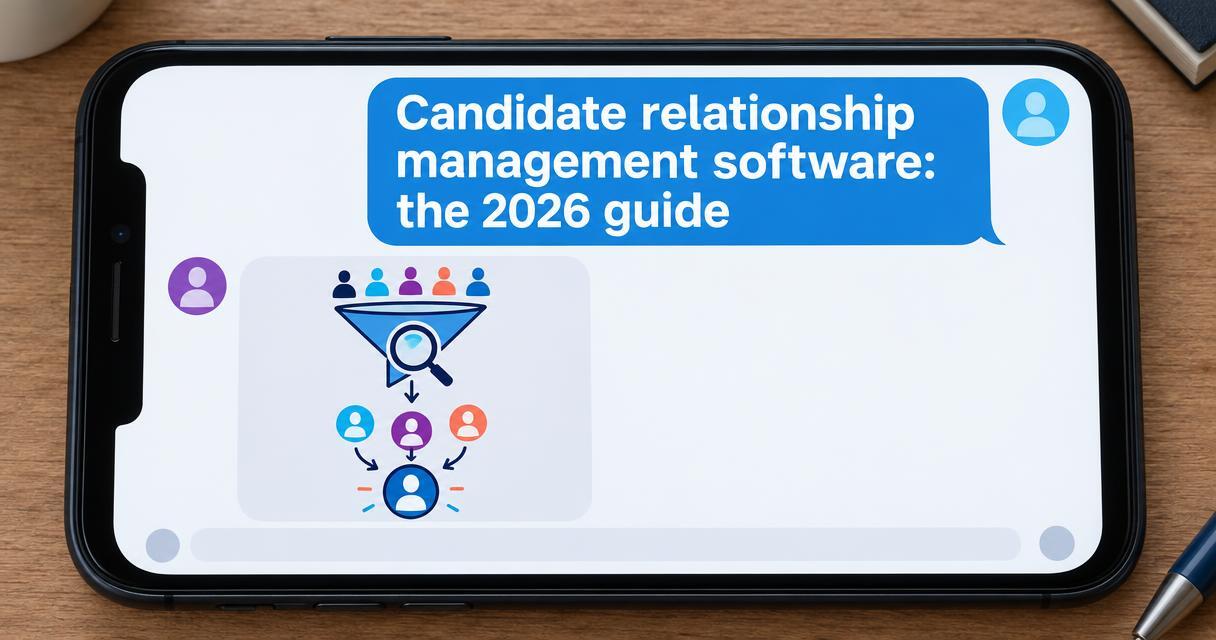
Candidate relationship management software is a dedicated platform designed to build, organise and nurture a network of potential candidates before they even apply for a job.
Last reviewed October 2026
Key takeaways
- A recruitment CRM focuses on passive talent and pipeline nurturing, whereas an ATS manages the active application workflow.
- Organisations using direct sourcing and CRM tools yield four times the hiring success from a fraction of the application volume.
- Modern platforms combine process automation with people intelligence to ensure candidates match your culture and work style.
- Protecting candidate data requires strict compliance with privacy frameworks like GDPR when storing passive profiles.
Finding good people is difficult. Finding them when you are desperate to fill an open role is almost impossible. Most HR teams wait for a resignation to open a requisition, post an advertisement and hope the right person applies. This reactive approach leaves you entirely at the mercy of the active job market.
It also creates a terrible experience for the candidates who do engage with you. If someone makes it to the final interview stage but misses out on the role, they usually fall into a black hole. According to an analysis of the 2024 ERE/CandE Global Candidate Experience Benchmark study, 29 percent of North American candidates reported not hearing back from employers one to two months after applying. You lose the relationship and the future opportunity.
Forward-thinking teams treat talent acquisition like sales. They build relationships over time. They keep silver-medallist candidates warm. This is where a dedicated system becomes essential.
Candidate relationship management software gives HR and recruitment teams the tools to build, segment and nurture talent pools. It shifts the focus from managing a transaction to managing a relationship.
The business appetite for these tools is growing rapidly. The U.S. talent acquisition software market was valued at $6.89 billion in 2025 and is projected to reach $13.55 billion by 2032. This explosion in investment reflects a fundamental shift in priority. Companies realise that process-only tracking systems are no longer enough to secure top talent in a competitive market.
A CRM allows you to capture expressions of interest, tag candidates by skill or location, and send automated email or SMS campaigns to keep your brand top of mind. When a role finally opens, you already have a warm audience to contact.
The line between a CRM and an applicant tracking system (ATS) often blurs in vendor marketing. However, they serve two distinct stages of the hiring funnel.
As Sapia.ai notes, a CRM nurtures potential job candidates before they apply, while an ATS manages the hiring workflow once they do. You can think of the CRM as your sourcing and marketing engine. The ATS is your compliance and selection engine.
| Feature | Candidate Relationship Management (CRM) | Applicant Tracking System (ATS) |
|---|---|---|
| Primary Audience | Passive candidates and past applicants | Active applicants for an open requisition |
| Core Purpose | Sourcing, nurturing and marketing | Screening, interviewing and compliance |
| Communication Style | Personalised campaigns and bulk nurturing | Transactional updates and interview scheduling |
| Success Metrics | Pipeline growth, open rates, conversion to applicant | Time to hire, quality of hire, interview conversion |
Many modern recruitment management systems combine both functions. A unified platform ensures data flows seamlessly from the first marketing touchpoint through to the final employment contract.
Investing in new HR technology requires a clear return on investment. A CRM delivers this by drastically reducing your reliance on expensive job boards and external recruitment agencies.
The data strongly supports proactive sourcing. In 2025, 46 percent of sourced hires came from candidates already in a company’s CRM or ATS. This figure is up from 26 percent in 2021. Furthermore, direct sourcing generated 11 percent of U.S. hires while accounting for only 2.6 percent of applications. This gives a massive fourfold yield advantage over raw application volume. These figures come from a 2026 benchmark that analysed more than 165 million applications to compare recruiting channel performance.
When you build a talent pipeline, you reduce your time to hire. Automated recruiting workflows can reduce time-to-hire by up to 63 percent. A shorter hiring cycle means less productivity lost to vacant roles and less burnout for the remaining team members picking up the slack.
Not all candidate management tools are created equal. When evaluating talent pipeline software for a mid-market organisation, you need specific capabilities that go beyond basic contact storage.
A static list of names is useless. You need the ability to segment candidates dynamically based on location, skill set, previous interview scores and engagement levels. Good segmentation allows you to send highly relevant messages to specific groups rather than spamming your entire database.
Candidates do not live exclusively in their email inboxes. The best platforms offer SMS capabilities, WhatsApp integration and LinkedIn messaging directly from the candidate profile. This omnichannel approach ensures your messages are seen where the candidate is most active.
Recruiters do not have time to send manual follow-ups to hundreds of passive candidates. Look for platforms that offer automated drip campaigns. You should be able to trigger a sequence of emails based on specific candidate actions, such as attending a webinar or downloading a company culture guide.
You cannot manage what you cannot measure. A strong CRM provides real-time dashboards showing pipeline health, email open rates, click-through rates and source of hire. This data proves the ROI of your sourcing efforts to the executive team.
A CRM that sits in isolation creates manual data entry and disjointed candidate experiences. Technical integration workflows are critical for success.
Your CRM must communicate bidirectionally with your ATS. When a passive candidate decides to apply for a role, their profile, interaction history and notes must flow instantly into the active hiring workflow. When a candidate is rejected in the ATS, they should automatically be routed back to the CRM for future nurturing.
Integration with your Human Resources Information System (HRIS) is equally important. When a candidate becomes an employee, their data should sync to create a unified employee record. Finally, ensure your CRM integrates with your assessment tools and job boards to capture every candidate interaction automatically.
Artificial intelligence is reshaping talent discovery. Modern CRMs use machine learning to scan your existing database and highlight past candidates who match the skills required for a newly opened requisition.
This automated matching saves hours of manual searching. However, relying purely on keyword-matching AI introduces severe process risk. If an algorithm only scans CVs for specific terms, it filters out highly capable people who use different terminology. It also ignores the behavioural traits required for success.
True people intelligence requires a deeper understanding of the individual. Using candidate matching software backed by behavioural science ensures you match people to your culture, not just your keywords. Assessing a candidate's Work Personality allows you to understand their intrinsic motivations and communication style before you make an offer. This reduces bias and protects your organisation from the fallout of a bad hire.
Storing the personal data of people who do not work for you carries significant regulatory responsibility. Frameworks like the General Data Protection Regulation (GDPR) in Europe and the California Consumer Privacy Act (CCPA) in the United States set strict rules for passive candidate data.
Your CRM must have built-in consent management. You need a lawful basis to store and process candidate data. The system should automatically capture consent when a candidate joins your talent community and provide an easy way for them to request data deletion.
Data retention policies must be automated. You cannot keep candidate data indefinitely just in case a role opens up. Your software should automatically flag or delete profiles that have been inactive for a specified period, ensuring you remain compliant without relying on manual audits.
Technology only facilitates communication. The actual words you use determine whether a candidate engages or unsubscribes. Avoid generic corporate speak. Write like a human speaking to another human.
Send this to a strong candidate who narrowly missed out on a previous role.
Subject: Staying in touch / Future roles at [Company Name]
Hi [First Name],
I know the recent news was disappointing, but our team was genuinely impressed by your experience with [specific skill/project discussed in interview].
We are growing our [Department Name] team over the next six months. I would love to keep you in our talent network and reach out directly when a role opens that matches your background. Let me know if you are open to hearing from us down the track.
Best regards,
[Your Name]
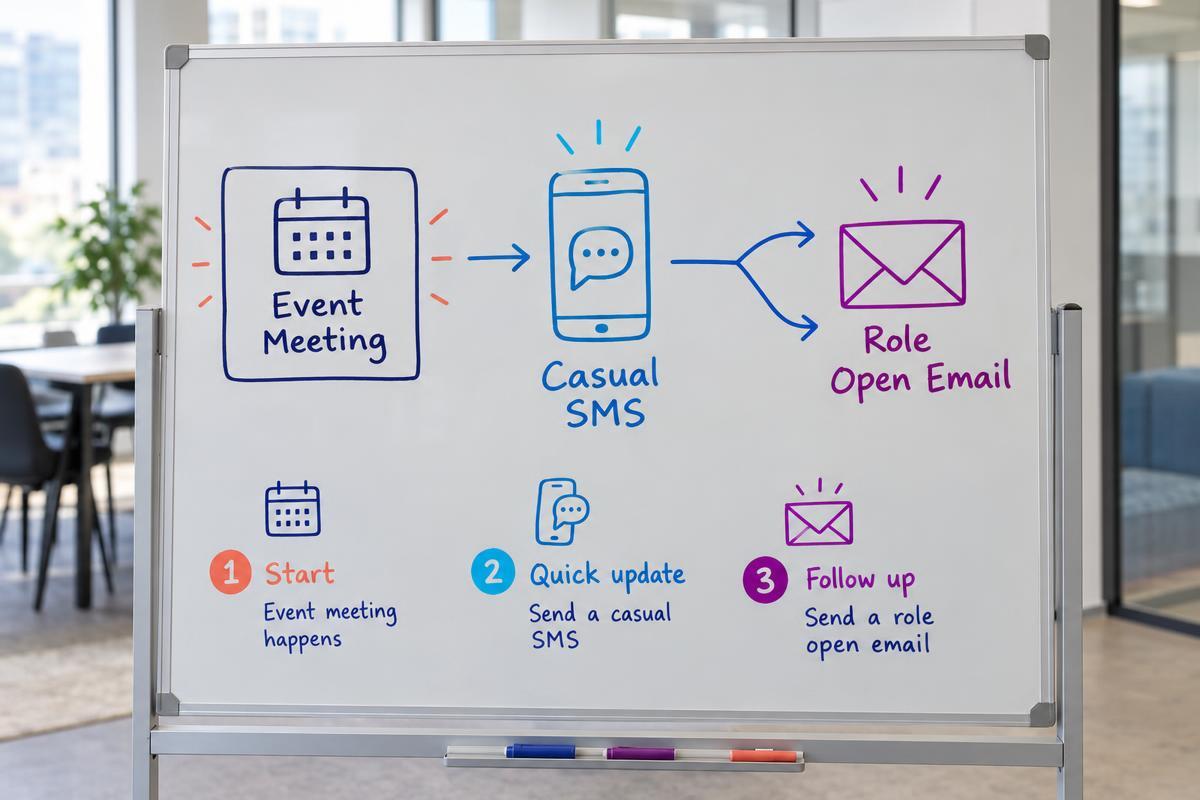
Send this to a passive candidate you have met previously at an industry event.
Hi [First Name], it's [Your Name] from [Company Name]. We met at [Event Name] last year. We are hosting a casual open day next Thursday to showcase some of our upcoming projects. Would love to see you there if you are free. Let me know and I can send through the details.
Send this to a segmented talent pool when a relevant requisition opens.
Subject: A new opportunity in the [Department Name] team
Hi [First Name],
Because you previously expressed interest in our work at [Company Name], I wanted to share a new role before we advertise it publicly.
We are looking for a [Job Title] to help us lead our new [Project/Initiative]. Based on your background, I thought this might be right up your alley. You can read the full details here: [Link]
If the timing is right for a move, reply to this email and we can set up a quick five-minute chat.
Best regards,
[Your Name]
Choosing the right platform requires careful evaluation. A system built for a massive global enterprise will be too complex and expensive for a mid-market team. Use this vendor selection checklist to guide your conversations.
First, evaluate the core functionality. Does the platform offer changing segmentation and automated email sequences? Can you easily search the database using multiple filters? Test the user interface extensively. If the system is clunky, your recruiters will simply revert to using spreadsheets.
Second, scrutinise the pricing model. Some vendors charge per seat, while others charge based on the total number of candidate profiles in the database. A database-sized pricing model punishes you for building a large talent pool. Look for transparent pricing that scales predictably with your hiring volume.
Finally, demand proof of integration. Do not accept a verbal promise that the CRM integrates with your existing ATS or HRIS. Ask to see a live demonstration of data flowing seamlessly between the two systems. Check the quality of their customer support and their implementation timeframes. A good vendor acts as a partner, guiding you through the change management required to make proactive sourcing a reality.
Compono Hire brings people intelligence into your recruitment process so you can track applicants and measure their culture fit in one single platform. You get the process efficiency of a traditional tracking system alongside the behavioural science required to build high-performing teams.
The main purpose is to build and nurture a pipeline of passive talent. It allows recruiters to stay connected with past applicants, industry contacts and potential future hires so that when a role opens, they already have a warm audience to engage.
A CRM is used for marketing and relationship building before a person applies for a job. An ATS is used for process management, compliance and workflow tracking after the person submits an application.
Yes. By maintaining a pool of pre-vetted, engaged candidates, you can bypass the traditional job board advertising phase. When a requisition opens, you can immediately contact candidates who are already familiar with your brand.
You must comply with local privacy regulations like GDPR or CCPA. This means obtaining consent to store their data, providing clear information about how their data will be used, and allowing them to request deletion of their profile at any time.
It can, especially if the AI relies purely on keyword matching or historical hiring data that reflects past biases. To prevent this, teams should use platforms that evaluate objective behavioural traits and work styles rather than relying solely on resume parsing.

How to compare Australian recruitment and talent acquisition software on culture fit, behavioural assessment and candidate experience.

How to build a recruitment metrics dashboard that tracks time-to-fill, cost-per-hire and quality of hire, and what to do with the numbers.

Comparing alternatives to Workable? See how to choose recruitment software that predicts fit, keeps talent pools and connects hiring to development.
 Compono