
.webp)

 Mathan Allington

Comparative Analysis of Software for Recruitment Solutions
 Mathan Allington
The five categories of recruitment software, what each one actually automates, and how to tell which fits the hiring problem you have.

Recruitment software is the system an organisation uses to advertise roles, collect and sort applications, assess candidates, schedule interviews and get a new starter through the door. In Australia the practical choice sits between four types of product: an applicant tracking system, a recruitment CRM built for agencies, an assessment platform, and a wider people platform with hiring built into it. Which one is right depends less on the feature list than on how many people you hire a year and how expensive it is when you get one wrong.
Last reviewed September 2026
At minimum, recruitment software gives you one place where every application lives, a defined set of stages each candidate moves through, and a record of who decided what and when. That alone replaces the shared inbox, the spreadsheet and the folder of resumes on someone's desktop, and it is usually enough to justify the first purchase.
Past that baseline the category splits. Some products are built to move high volume through a process quickly. Others are built to tell you which of the applicants is actually worth hiring. Very few do both well, which is why so many teams end up running two systems that do not talk to each other.

Start with volume and stakes rather than features. The table below maps the four patterns most Australian teams fall into.
| Your hiring pattern | What usually fits | What you can skip paying for | First question to ask a vendor |
|---|---|---|---|
| Fewer than 20 hires a year, mostly replacements | A light applicant tracking system, or the hiring module in the HR platform you already run | Sourcing campaigns, CRM pipelines, custom workflow engines | How long until our first role is live, start to finish? |
| Roughly 20 to 200 hires a year across mixed roles | A hiring platform with assessment built in, connected to onboarding and engagement | Enterprise approval hierarchies you will never configure | What is the assessment based on, and can we set our own benchmark? |
| High volume hourly, shift or seasonal hiring | Volume screening with short assessments, bulk scheduling and self-service booking | Long-form psychometric batteries early in the funnel | What completion rate do applicants achieve on mobile? |
| Agency or RPO placing candidates for clients | A recruitment CRM with client-side pipelines, talent pools and outreach | Internal onboarding, learning and engagement modules | How do candidate records stay separated between clients? |
If you are weighing a dedicated hiring system against the HR system of record you already own, the trade-offs are set out in our guide to how an ATS differs from an HRIS. For a market-level view of local products, our Australian ATS buyer's guide covers the selection process in more detail.
Four things separate an Australian purchase from a generic one, and none of them appear on an international feature comparison.
New Zealand teams face a near-identical list, with the same question about which side of the Tasman the support desk sits on.
Every product in this category is good at process risk: the admin, the audit trail, the compliance paperwork, the thing that goes wrong when a candidate falls through a gap. Almost none of them address the second risk, which is people insight. Knowing where an applicant sits in a pipeline is not the same as knowing whether hiring them is a good idea.
That gap is expensive in a specific way. A hiring process can be fast, tidy, fully documented and still produce someone who leaves in seven months because the way they work never suited the way the team works. Cost per hire looks excellent right up until you divide it by the people who stayed, which is why cost per hire is a weak metric on its own.
Assessment is what closes it. Behavioural assessment early in the funnel surfaces the traits that correlate with doing the job well in your organisation, and it does it before you have spent four rounds of interviews finding out the hard way. Compono Hire assesses candidates on organisation fit alongside skills and qualifications, so the shortlist arrives with the reasoning attached.
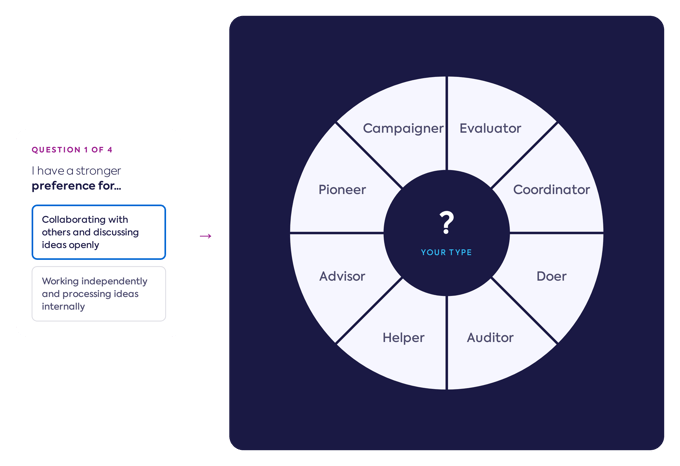
Compono reads working style through eight work personality types: Doer, Auditor, Helper, Advisor, Pioneer, Campaigner, Evaluator and Coordinator. A team full of Pioneers generates ideas and finishes very little. A team of Auditors ships clean work and misses the moment. Seeing the shape of the team you have tells you which type the next hire should be, which is a more useful question than who interviewed best on the day.
It also changes what happens after the offer. A new starter who is a Helper responds to collaborative early projects. An Auditor wants the detail, the process and time to check their work. Handing that to a manager in week one shortens the run-up to full productivity, and it is the cheapest retention work available.
Australian vendors price recruitment software in a handful of ways: per recruiter seat per month, per employee per month when hiring is bundled into a wider people platform, per active job advertised, or an annual licence with a separate implementation fee. Assessment may be included or charged per candidate, and per-candidate pricing is the line that surprises teams once volume climbs.
Compare on the two-year total rather than the monthly figure. Data migration, integration work, configuration and manager training are real costs and they are where quotes diverge most. Model the return before you sit down with a vendor using the recruitment ROI calculator, so the conversation starts from your numbers rather than theirs.
Ask each vendor the same closing question: what happens to this candidate data after we hire the person. If the answer is that the record closes with the requisition, you are buying a filing system.
Compono Hire assesses organisation fit alongside skills and qualifications, then carries the profile into onboarding and development.
Talk to usRecruitment software is the system used to advertise vacancies, collect and sort applications, assess and interview candidates, and record hiring decisions. Products range from a light applicant tracking system through to a wider people platform where hiring, onboarding, engagement and development share the same candidate data.
The terms overlap heavily in the Australian market. Recruitment software usually describes the process layer: advertising, tracking and scheduling. Talent acquisition software tends to imply the broader strategy layer as well, including sourcing, talent pools, assessment and the handover into onboarding.
Pricing follows one of four models: per recruiter seat, per employee, per active job advertised, or an annual licence with a separate implementation fee. Assessment is sometimes charged per candidate on top. Compare the two-year total including migration, integration and training rather than the monthly headline.
Under about 20 hires a year, a light applicant tracking system or the hiring module in an existing HR platform is usually enough. What pushes a small business past that point is the cost of a wrong hire, because in a team of fifteen one poor fit is a large share of the workforce.
Most established local vendors connect to SEEK and the major industry boards, but coverage varies and partner pages are not proof. Ask for the current list, ask when each connection was last updated, and ask to see a role posted live during the demo.
It can reduce some of it. Scoring every candidate against criteria agreed before applications open removes a share of the gut feel that shapes resume screening, and it leaves a record of why each decision was made. The benchmark you set still needs scrutiny, because the software will apply whatever you give it.

The five categories of recruitment software, what each one actually automates, and how to tell which fits the hiring problem you have.

What candidate management software does, how it differs from a full ATS, and the features that matter most when you compare systems.
The best recruitment CRM software for 2026 by use case: agency, enterprise and in-house. An honest comparison, including where Compono does not fit.