 Compono


Written feedback examples to improve team performance

Giving feedback can feel a bit like walking a tightrope without a safety net. You want to be honest enough to spark change, but supportive enough to...


Become the expert on delivering
valid and fair assessments for
your training and education.


.png?width=383&height=200&name=team%20(1).png)
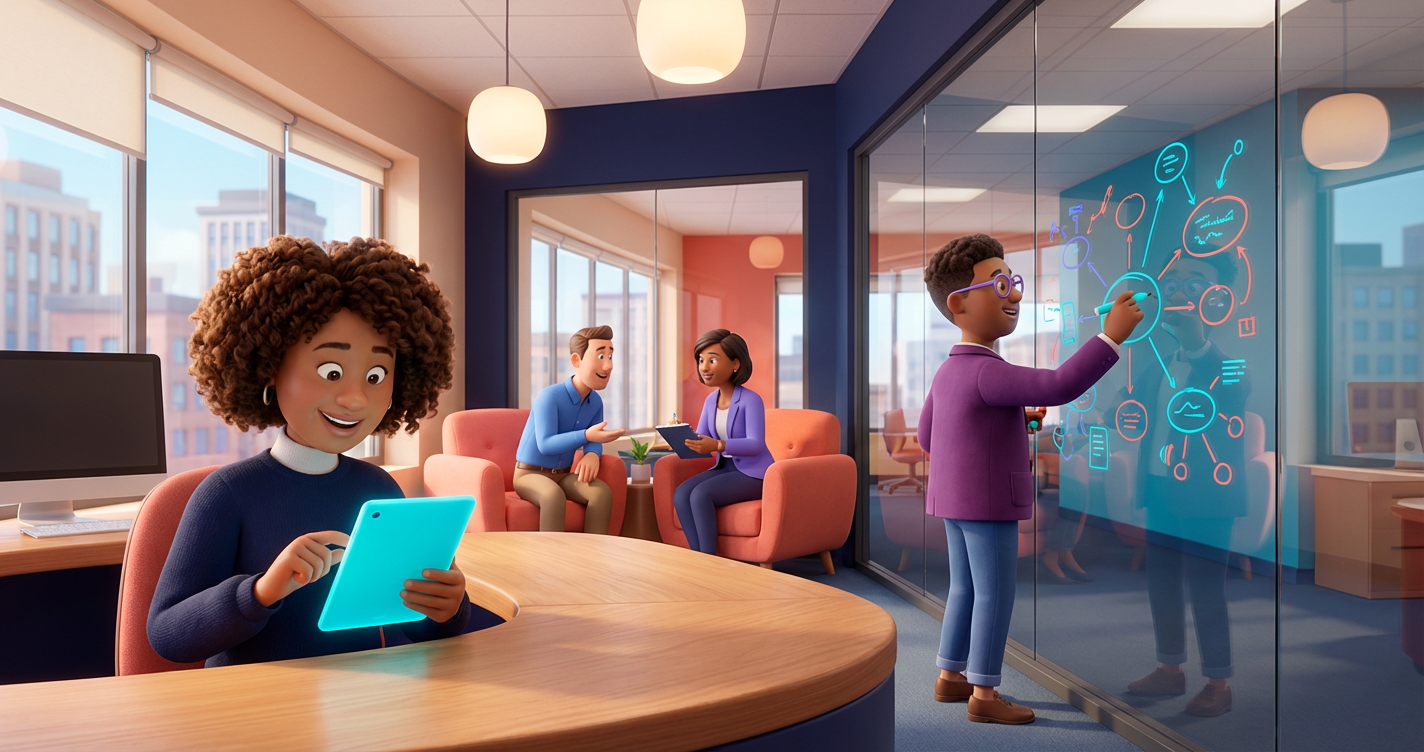
Employees are not learning because of a fundamental mismatch between traditional training methods and the natural work personality of the individual.
To bridge this gap, we must move away from one-size-fits-all modules and instead focus on how different people naturally process information and seek growth within their specific roles. When we align development with a person's innate strengths, we transform learning from a box-ticking exercise into a genuine driver of performance and engagement.
Key takeaways
- Learning stagnation often stems from a lack of relevance to an employee's daily tasks and long-term career aspirations.
- Effective development requires understanding individual work personality types to tailor delivery methods.
- Time poverty and cognitive overload are the primary physical barriers preventing teams from engaging with new material.
- A culture of psychological safety is essential for employees to feel comfortable admitting skill gaps and attempting new behaviours.
- Technology should serve as an enabler of personalized learning paths rather than a simple repository for content.
When you notice your employees are not learning, it usually isn't a lack of ambition. Most people want to be better at what they do, but they are often swimming against a tide of poorly designed programmes and competing priorities. We see this manifest as 'quiet quitting' or a plateau in productivity that no amount of traditional management seems to shift. The reality is that a team that stops growing is a team that is slowly becoming obsolete in a rapidly shifting market.
The problem often lies in the 'forgetting curve' – a concept that suggests we lose roughly 70% of new information within 24 hours if it isn't applied. If your staff are sitting through three-hour seminars and then returning to a mountain of emails, that knowledge never has a chance to take root. We need to rethink the 'how' and 'when' of development to ensure it sticks. At Compono, we believe that understanding the baseline of your team's current engagement is the first step to identifying where the learning blockages actually exist.
By using tools like Compono Engage, leaders can gather real-time insights into team sentiment and culture. This data helps you see if the issue is a lack of motivation or if there are systemic barriers – such as burnout or poor leadership – that are making it impossible for people to focus on self-improvement. Before you buy another expensive training licence, you need to know if your environment is actually fertile enough for that knowledge to grow.

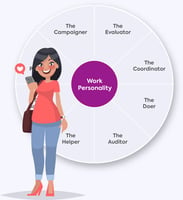
One of the biggest reasons employees are not learning is that the format doesn't match their work personality. Imagine asking The Doer to sit through a theoretical lecture on abstract strategy. They will likely switch off within minutes because they crave practical, hands-on application. Conversely, if you throw The Pioneer into a rigid, step-by-step compliance course, they will feel stifled and uninspired.
We have spent years researching how different personalities interact with work activities. We found that high-performing teams consistently perform eight key activities, including evaluating, campaigning, and advising. If your learning initiatives don't speak to these natural preferences, they will be ignored. A Helper might learn best through collaborative peer-to-peer mentoring, while The Auditor might prefer deep-dive technical documentation they can process independently.
Personalisation isn't just a nice-to-have; it is the bedrock of modern adult education. When we recognise that an Evaluator needs logical, data-driven reasons to learn a new skill, we can frame the training in a way that resonates with them. This is where Compono Develop becomes invaluable, as it allows organisations to create tailored pathways that respect individual learning styles while meeting business objectives.
Ask any manager why their employees are not learning, and the answer is almost always: "They don't have time." In the modern workplace, we are obsessed with 'busyness' as a proxy for productivity. When people are rewarded for the volume of tasks completed rather than the quality of their growth, learning is the first thing to be sacrificed. It is seen as an 'extra' rather than a core part of the job description.
To fix this, we have to move toward 'micro-learning' – the delivery of information in small, manageable chunks that fit into the natural flow of work. Instead of a day-long workshop, think about five-minute video insights or weekly 'learning bites' shared in team meetings. This reduces the cognitive load and makes development feel achievable rather than overwhelming. It also allows for immediate application, which is the only way to ensure the information is retained.
Leadership must also model this behaviour. If a Coordinator sees their manager skipping development sessions to clear a backlog, they will receive the message that learning is optional. We need to protect 'learning time' with the same ferocity we protect client meetings. This might mean 'no-meeting Fridays' or dedicated hours in the week where the team is encouraged to explore new skills without the pressure of immediate deliverables.

Sometimes, employees are not learning because they are afraid to admit they don't know something. In a high-pressure environment, vulnerability is often seen as a weakness. If an employee feels that acknowledging a skill gap will put their job at risk, they will hide that gap rather than seek to fill it. This leads to a stagnant workforce where everyone is pretending to be an expert while secretly struggling with outdated methods.
Creating psychological safety means celebrating the 'learning journey' rather than just the final result. It involves managers being open about their own mistakes and what they learned from them. When a leader says, "I tried this new approach and it didn't work, but here is what I discovered," it gives the rest of the team permission to experiment. This is a core component of The Compono Culture, Engagement & Performance Model, which highlights how trust and openness drive long-term business success.
We also need to ensure that the hiring process sets the right expectations. Using a platform like Compono Hire allows you to look for 'learnability' and 'growth mindset' during the recruitment phase. By assessing how a candidate handles feedback and new information before they even join the team, you can build a workforce that is inherently predisposed to continuous improvement. You aren't just hiring for what they can do today, but for what they are capable of learning tomorrow.
Key insights
- Learning fails when it is treated as a secondary task rather than a core business function integrated into daily workflows.
- Work personality is the most significant predictor of how an individual will engage with and retain new information.
- Time poverty is often a cultural issue rooted in a lack of prioritisation from senior leadership rather than a genuine lack of hours.
- Psychological safety is the 'secret sauce' that allows employees to move from a defensive posture to a growth mindset.
- Data-driven insights into team engagement are necessary to identify the root causes of learning stagnation before implementing solutions.
Understanding why your employees are not learning is the first step toward building a more resilient and capable organisation. By aligning development with individual personalities and creating a culture that values growth, you can unlock the full potential of your workforce.
The best indicator of learning is a change in behaviour or an improvement in task outcomes. You can also use engagement surveys to track how employees feel about their own professional development and whether they feel they have the tools to grow.
If a team is too busy to learn, they are at high risk of burnout and inefficiency. You must consciously design 'slack' into the system, encouraging micro-learning and protecting time for development as a non-negotiable part of the work week.
Neither is inherently better; it depends on the content and the work personality of the learner. A blended approach usually works best, providing the flexibility of digital modules with the social connection and depth of in-person workshops.
Focus on the 'why'. Ensure the learning is directly relevant to their experience and shows them how new skills can make their existing roles easier or more impactful. Avoid age-based assumptions and focus on individual work preferences instead.
Personality determines how we prefer to receive information, how we interact with peers during training, and what motivates us to apply new knowledge. Tailoring learning to these preferences significantly increases retention and engagement.

Giving feedback can feel a bit like walking a tightrope without a safety net. You want to be honest enough to spark change, but supportive enough to...

Effective employee training is no longer just a checkbox for compliance – it is the engine that drives modern business growth and talent retention....
Building a high-performing business requires more than just managing payroll and policies; it requires a seat at the table where the big decisions...