Skip to the main content.

Hey Compono!

A coach that actually gets you.

Get 10 minutes free, then $15 a month. Cancel anytime.

Get Started ≫

2 min read

What does the predictive index measure in 2026?

What does the predictive index measure in 2026?
What does the Predictive Index measure?
9:47

Behavioural assessments like the Predictive Index measure four core drives, dominance, extraversion, patience, and formality, alongside cognitive ability, to predict how a person will work rather than what they have already done. Together these show whether a candidate's natural style matches the real demands of a role.

Last reviewed July 2026.

The four behavioural drives

These assessments quantify patterns of behaviour that show up in everyday work. Dominance measures the need to influence people or events: some people are wired to take charge, others prefer consensus, and neither is better in isolation. Extraversion measures the need for social interaction and whether someone processes ideas out loud or internally. Patience measures the need for consistency and stability. Formality measures the need for structure and rules. Read together, the four create a behavioural pattern you can match against the actual demands of a job.

Why cognitive ability matters too

Behaviour tells you how someone will work; cognitive ability tells you how quickly they will learn. It is often the single best predictor of performance in complex or fast-changing roles, because it measures capacity to absorb new information and adapt, not existing knowledge. A candidate with slightly less experience but strong cognitive agility and the right behavioural fit will frequently outperform a veteran who is set in their ways.

From individual drives to team actions

Individual drives translate into how people contribute to a team. Compono's research points to eight work personalities that cover the range of work a high-performing team needs: Doer, Auditor, Helper, Advisor, Pioneer, Campaigner, Evaluator, and Coordinator. A Doer is task-focused, reliable, and precise. A Pioneer is imaginative and pushes for new approaches. A team full of Doers with no Pioneers will be efficient at repeating what it already does and will struggle to innovate. Mapping these preferences with Compono Engage shows you the gaps, so you can hire for what your team is missing rather than more of the same.

Using the insight in hiring

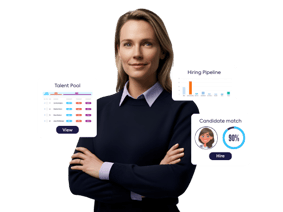
The value comes from moving these insights to the start of your process. Most companies run an assessment in the final round, after wasting hours interviewing people who were never going to fit. Profiling candidates earlier lets you shortlist on skills, cognitive ability, and behavioural fit together. Compono Hire uses behavioural profiles to rank candidates on how well their work personality suits the role and team, and it predicts culture fit with 92% accuracy. If you want to see how this works, you can try the free work personality assessment in the Compono resource library.

Work Personality

See what a work personality result looks like

Take the free four-question work personality assessment in about two minutes and see the kind of insight behavioural profiling gives you.

Take the Free Assessment

Frequently asked questions

What four drives does the Predictive Index measure?

It measures dominance (the need to influence), extraversion (the need for social interaction), patience (the need for stability), and formality (the need for structure and rules). Together they describe how a person naturally works.

Does it measure intelligence as well as behaviour?

Many behavioural assessments include a cognitive ability component. That measures capacity to learn and adapt rather than existing knowledge, and it is often the strongest single predictor of job performance in complex roles.

How is work personality different from a behavioural drive?

Behavioural drives describe individual tendencies. Work personality describes how those tendencies show up in a team, for example whether someone naturally coordinates, pioneers, or audits the work around them.

How should I use these results when hiring?

Use them at the start of the process, not the end. Profiling candidates early lets you shortlist on skills, cognitive ability, and behavioural fit together, so you spend interview time only on people likely to succeed.

Related

Cognitive ability test employment guide for better hiring

1 min read

Cognitive ability test employment guide for better hiring

A cognitive ability test for employment measures general mental ability: how quickly a candidate learns new information, solves problems and makes...


Read More
How to predict who will succeed in your team

1 min read

How to predict who will succeed in your team

To predict who will succeed in a role, measure the things that actually drive performance: work personality, culture alignment and team fit,...

Read More
Predictive hiring software: how to stop guessing and start deciding

1 min read

Predictive hiring software: how to stop guessing and start deciding

Predictive hiring software uses behavioural science, psychometric assessment and culture-fit data to forecast how a candidate will actually perform...

Read More