


 Mathan Allington

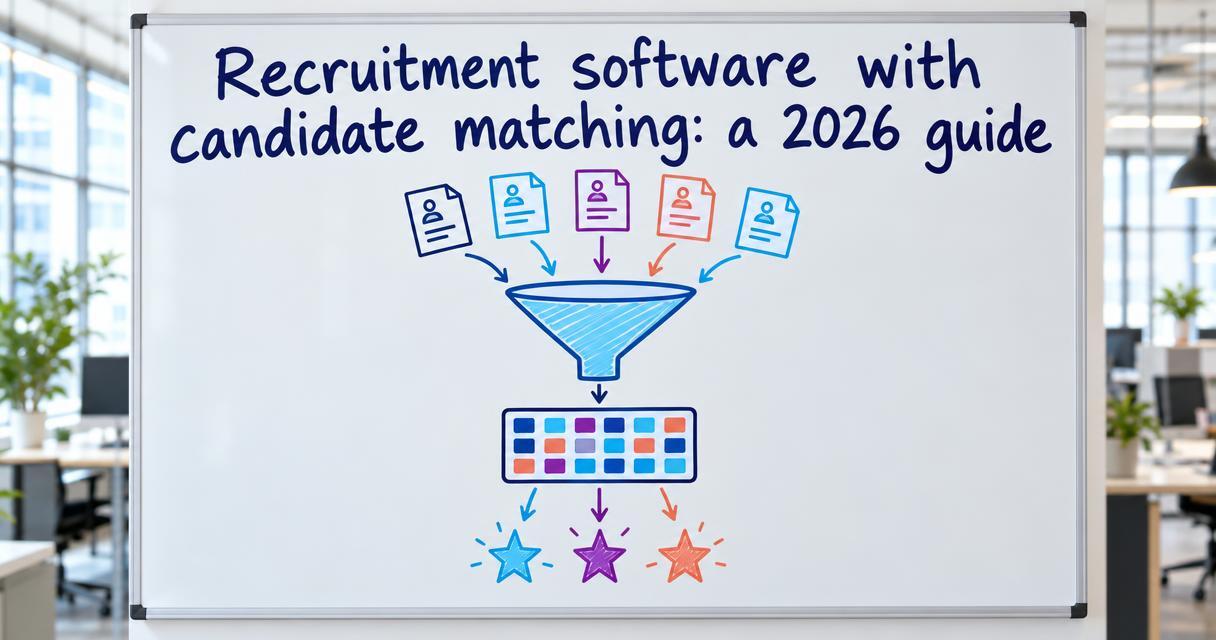
Recruitment software with candidate matching: a 2026 guide
 Mathan Allington
How recruitment software with candidate matching cuts hiring time, reduces bias and improves quality of hire. See how it works.
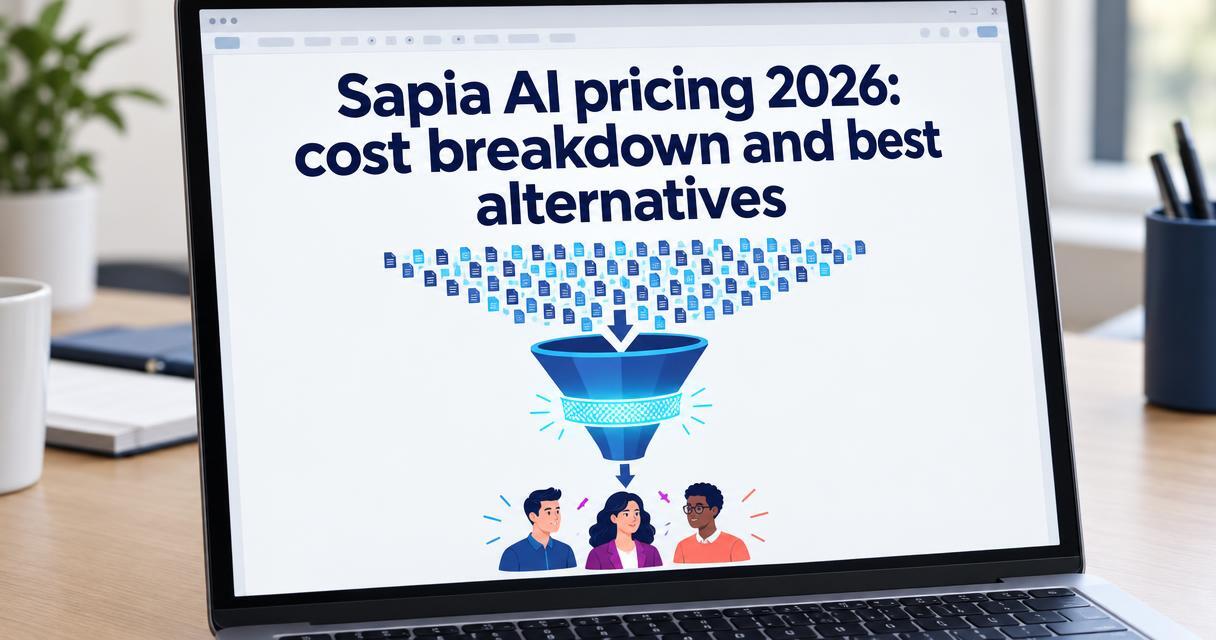
Sapia AI does not publish its pricing, but third-party estimates show enterprise contracts typically range from $25,000 to $145,000 a year based on your hiring volume.
Last reviewed October 2026
Quick answer
- Price: Custom pricing quoted by sales, estimated at $25,000 to $145,000 annually.
- Best for: High-volume retail and hospitality brands hiring more than 500 people a year.
- Verdict: Sapia AI is a strong chat-based screening tool for high-volume enterprise roles, but mid-market teams will likely find the minimum volume commitments too steep.
Budgets are tight, and recruitment teams are under immense pressure to do more with fewer resources. If you lead talent acquisition for a large organisation, you are likely drowning in applications. Candidates are using generative tools to apply for hundreds of roles at once. The résumé is dead, and screening applicants manually is no longer a viable strategy for enterprise brands.
You know you need an automated tool to screen candidates faster. The problem is working out what that tool actually costs. When enterprise software vendors hide their pricing behind a sales call, it usually means the entry price is high. If you work in a mid-market organisation, you need to know if the platform fits your budget before you spend weeks building a business case for procurement.
Sapia AI, formerly known as PredictiveHire, is a popular choice for massive retail brands looking to automate their screening process. However, buying an enterprise AI tool is completely different to buying a standard applicant tracking system. You need to understand the billing model, the volume floors, and the hidden costs of implementation before you sign a contract.
Sapia AI is built for scale. Because of this focus on enterprise clients, Sapia AI pricing is quote-based, with no public self-serve tier or published dollar amount. You cannot simply enter a credit card and start screening candidates.
Instead, the company uses a specific commercial structure tailored to high-volume recruitment. According to third-party data from InterviewFlow AI, Sapia AI reportedly uses a per-hire model with unlimited interviews, targeting organisations making at least 500 hires annually. This is an important distinction. Many software platforms charge by the number of recruiter seats or the total number of applicants. A per-hire model means your costs scale directly with your successful placements, which aligns the software expense with your actual business growth.
A separate third-party directory describes Sapia AI as sales-quoted, with unlimited interviews and billing based on successful hires. This model encourages you to put every single applicant through the chat assessment without worrying about hitting a usage cap. You only pay for the people who actually join your team.
While the company does not publish a price list, we can look at industry benchmarks to understand the total cost of ownership. A third-party estimate places Sapia AI contracts at approximately $25,000 to $145,000 or more annually, depending on hiring volume. This figure aligns with typical enterprise AI recruitment tools, though the estimate is not vendor-confirmed.
The minimum volume floor is the most important factor for buyers. If the vendor targets organisations making at least 500 hires annually, that floor dictates your entry price. If you only hire 150 people a year, you are essentially paying for capacity you will never use. For a company hiring 5,000 seasonal retail workers, a $100,000 annual contract breaks down to $20 per hire. That is highly cost-effective compared to paying human recruiters to conduct 5,000 phone screens.
However, if your mid-market business hires 100 people a year, an entry-level $25,000 contract equals $250 per hire. At that price point, the business case for automated chat screening falls apart. This is why understanding your exact annual hiring volume is the first step in any procurement conversation.
When you sign a contract for AI screening software, you are buying a specific set of capabilities designed to replace the manual phone screen. Sapia AI focuses heavily on conversational AI. The core feature is a chat-based interview where candidates answer open-ended questions via text messages. The natural language processing engine then analyses their responses for personality traits and behavioural indicators.
The platform also heavily promotes its diversity, equity and inclusion capabilities. The screening process is entirely blind. The AI does not look at the candidate's name, age, gender, or educational background. It only assesses the text they write in the chat. This feature is a major selling point for enterprise brands looking to reduce unconscious bias in their high-volume hiring funnels.
Additionally, the platform includes basic proctoring and fraud detection to ensure the person taking the assessment is actually the person applying. While these features are powerful for frontline roles, they may not be suitable for senior technical hires who expect a bespoke, human-led interview process.
The annual subscription fee is only part of the story. When you buy enterprise recruitment software, implementation and integration always add to the final bill. Your AI screening tool is useless if it does not communicate perfectly with your core applicant tracking system.
According to InterviewFlow AI, custom ATS integrations may involve additional fixed fees disclosed during the sales process. If you use a modern, API-first system, this integration might be straightforward. If you use a heavily customised legacy HRIS, building the data bridge to pass candidate profiles back and forth will cost you significant time and money.
You must also account for change management. Moving from manual phone screening to an automated chat assessment changes how your entire talent acquisition team works. You will need to rewrite your job advertisements, update your candidate communication templates, and train your hiring managers to interpret the AI scoring reports. This internal labour is a real cost that CFOs often overlook when evaluating software.
The divide between enterprise and mid-market hiring dictates whether this type of software makes financial sense. High-volume hiring involves massive applicant pools, low complexity roles, and a need for extreme speed. Think of supermarket cashiers, call centre operators, or hospitality staff. In these environments, automating the first round of interviews is the only way to survive.
Low-volume hiring involves fewer applicants, high complexity roles, and a need for deep cultural alignment. Think of software engineers, finance managers, or regional directors. In these scenarios, the cost-per-screen is less important than the quality of the match. Forcing a senior executive to complete a text-message interview might actually damage your employer brand and increase candidate drop-off.
If your organisation sits in the middle, you face a difficult choice. You might have one division that hires hundreds of seasonal workers, and another division that hires ten highly paid specialists a year. Before committing to a platform with a 500-hire floor, you must map out exactly which roles will use the tool and whether that subset meets the volume threshold.
To secure budget approval in 2026, you must prove the software saves more money than it costs. The business case for conversational AI relies entirely on time saved during the screening phase. You are buying back your recruiters' hours.
We can look at public case studies to see how this works in practice. Starbucks reportedly reclaimed approximately 1,900 screening hours per month using Sapia AI. In the supermarket sector, Woolworths reportedly saved about 5,000 recruitment hours during its first week using the platform. Finally, customer David Jones reportedly saved an estimated $179,000 in manual interview costs after implementation, according to the vendor.
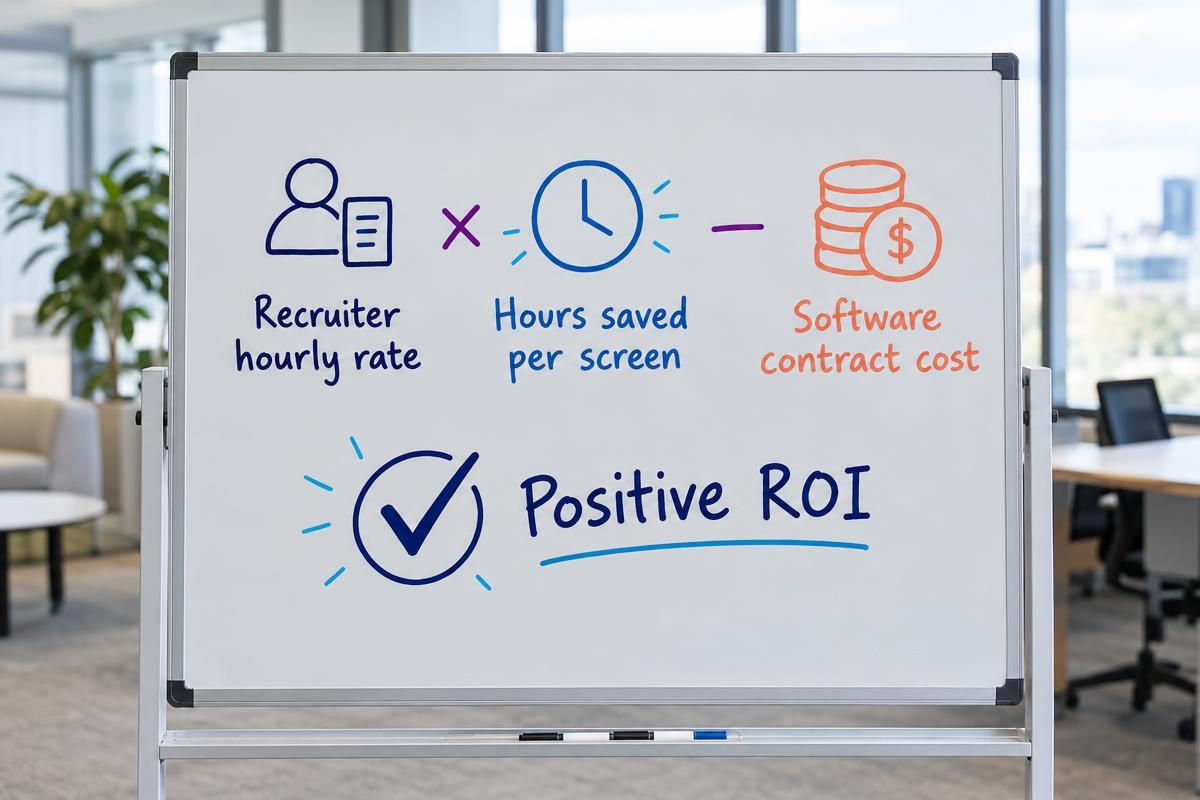
You can build your own ROI model using these concepts. First, calculate your current cost per phone screen. Multiply the hourly rate of your recruiters by the average time spent scheduling and conducting a first-round interview. Next, multiply that figure by your total annual applicant volume.
Finally, subtract the quoted annual cost of the AI software. If the resulting number is highly positive, you have a strong business case. If you need help running the numbers, calculating ROI for HR tech is much easier when you use a structured productivity calculator.
Procurement teams are increasingly skeptical of AI software claims. When you sit down to negotiate a contract for an AI recruitment tool, you must protect your organisation from paying for unused capacity. Technology is transforming recruitment rapidly, which means you should avoid locking yourself into a rigid five-year agreement.
Start by negotiating the baseline volume. If the vendor insists on a 500-hire floor, ask for a phased ramp-up. Propose a lower tier for the first six months while your team adopts the software, moving to the higher tier only when you hit specific usage milestones. Always demand a clear, fixed price for your ATS integration before you sign the main software agreement.
Finally, ask for detailed service level agreements regarding system uptime and candidate support. If the chat platform goes down on a Friday afternoon, hundreds of candidates could abandon their applications. Ensure your contract includes financial penalties if the vendor fails to maintain reliability during your peak seasonal hiring pushes.
When a platform targets massive global enterprises, mid-market organisations are often left behind. You might want a pricing model that fits a 200-person company, or you might want an assessment tool that measures deep cultural fit rather than just general behavioural traits. Here is how the top alternatives compare.
| Platform | Pricing Model | Best For |
|---|---|---|
| Compono Hire | Headcount-based subscription | Mid-market culture-fit hiring |
| Sapia AI | Per-hire (500+ minimum) | High-volume chat screening |
| HireVue | Pricing on request | Enterprise video interviewing |
| Modern Hire | Pricing on request | Volume text scheduling |
Compono makes Compono Hire. We've included it and kept every entry's strengths and limits honest.
If you need an applicant tracking system that gives you deep behavioural insights without the enterprise price tag or massive volume minimums, we can help. Compono Hire replaces the manual screening process by measuring culture fit, skills and qualifications from the moment a candidate applies, giving your team the insights they need to make the right choice.
No, the platform does not offer a public free trial or a self-serve tier for small businesses. It is an enterprise solution sold through a traditional sales process, requiring a custom quote and a minimum annual commitment.
Instead of paying for the number of candidates who apply or the number of recruiter logins you need, you pay based on the number of people you successfully hire. This allows you to screen thousands of applicants without worrying about usage caps, though vendors typically enforce a minimum annual floor.
It depends on your goals. Chat screening is highly effective for high-volume frontline roles because candidates can complete it quietly on their phones in a few minutes, leading to high completion rates. Video interviewing is better suited for roles where verbal communication and presentation skills are critical, though it often suffers from higher candidate drop-off.
Integration with your existing applicant tracking system is usually the largest hidden cost. If your systems do not communicate seamlessly, recruiters will waste hours manually moving data between platforms. Always secure a fixed price for your ATS integration before signing the primary software contract.
How recruitment software with candidate matching cuts hiring time, reduces bias and improves quality of hire. See how it works.

The five categories of recruitment software, what each one actually automates, and how to tell which fits the hiring problem you have.

Talent acquisition software covers sourcing, tracking, assessment and offers. What to check in 2026, prices from US$299 a month, and where fit comes...
 Compono