 Compono

Problems in a team: how to spot and solve them in 2026

The hidden cost of friction in your workplace We have all been there. You walk into the office - or log onto your first video call of the day - and...


Become the expert on delivering
valid and fair assessments for
your training and education.
Hire
|
Engage
|
Develop
|
|
Automatically match to candidates who are a great fit for your team culture and who are intrinsically motivated to succeed. |
Deeply understand your organisation with science-backed analytics on your culture, team design, and engagement. |
Back your onboarding, compliance and skill development with industry-leading credentialling, competency and capability expertise.
|


.png?width=383&height=200&name=team%20(1).png)

High employee turnover is more than just a recruitment headache – it is a quiet drain on your culture, productivity, and bottom line. When a talented team member walks out the door, they take years of institutional knowledge and established relationships with them, leaving the remaining team to pick up the pieces.
We have all felt that sinking feeling when a 'resignation' email hits the inbox. It is not just the cost of hiring someone new that hurts; it is the disruption to the rhythm of the business. In today's workplace, people are looking for more than just a paycheck. They want a sense of belonging, a clear path for growth, and a role that actually fits their natural strengths.
Before we look at how to reduce employee turnover, we need to understand the scale of the problem. Many leaders focus on the visible costs, such as recruitment agency fees or job board listings. However, the true cost of turnover is often estimated at 1.5 to 2 times the employee's annual salary when you account for lost productivity and training time.
Beyond the spreadsheets, there is the 'contagion effect'. When one person leaves, others start to wonder if they should be looking too. This uncertainty can lower morale and lead to a dip in performance across the board. To break this cycle, we need to move away from reactive hiring and start focusing on proactive retention strategies that address why people leave in the first place.

One of the most effective ways to reduce employee turnover is to get the hiring process right from the very beginning. Often, we hire based on a list of technical skills, only to find out six months later that the person isn't happy or doesn't gel with the team. This usually happens because their natural work preferences don't align with the actual day-to-day requirements of the role.
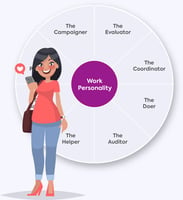
At Compono, we believe that understanding a candidate's work personality is just as important as checking their references. By identifying whether someone is a 'Doer' who thrives on practical tasks or a 'Pioneer' who loves imaginative problem-solving, you can ensure they are placed in a role where they will naturally succeed. When people are in roles that match their natural energy, they are far less likely to look for an exit.
Using a tool like Compono Hire allows you to look beyond the CV. It helps you score and rank candidates based on how well their work personality fits the specific needs of your team, ensuring a much higher chance of long-term retention.
The old saying that 'people don't leave jobs, they leave managers' still holds a lot of truth. However, it is usually not a case of 'bad' management, but rather a mismatch between a leader's natural style and what their team requires at that moment. A team of highly experienced 'Auditors' might feel micromanaged by a highly directive leader, while a group of junior staff might feel lost under a non-directive approach.
To reduce employee turnover, leaders need to be self-aware and adaptable. This starts with understanding your own default leadership style – whether that is Directive, Democratic, or Non-Directive – and knowing when to flex. For instance, in a crisis, your team might need you to be more directive, but during a creative brainstorming session, a democratic approach will yield better results and higher engagement.
We have spent over a decade researching how leadership impacts team performance. Our Compono Culture, Engagement & Performance Model highlights that when leaders adapt their behaviour to support their team's unique mix of personalities, engagement scores rise and turnover rates drop.
Unresolved conflict is a major driver of turnover. When tensions simmer under the surface, the workplace becomes a source of stress rather than a place of achievement. Often, conflict arises not from bad intentions, but from simple differences in how we communicate and process information. A 'Campaigner' who is focused on the big picture might accidentally irritate an 'Auditor' who is focused on the minute details.
Instead of avoiding these difficult conversations, we should provide teams with a common language to understand these differences. When a team understands that a colleague isn't 'being difficult' but is simply expressing their natural 'Evaluator' traits by weighing up risks, the frustration turns into appreciation for that person's perspective.
By using the Compono work personality framework, teams can map out these differences and learn how to collaborate more effectively. This reduces the friction that lead to people 'quiet quitting' or eventually handing in their notice. When people feel understood and respected for their unique contributions, they feel a much stronger connection to the organisation.

If your employees feel like they are stuck in a dead-end role, they will eventually find a new path elsewhere. Reducing employee turnover requires a commitment to long-term growth that goes beyond a yearly performance review. People want to know that you are invested in their future and that there are opportunities to learn and evolve within the company.
This development shouldn't be a one-size-fits-all programme. It should be tailored to what actually motivates the individual. A 'Helper' might find deep satisfaction in a mentoring role, while a 'Coordinator' might be driven by the chance to manage complex new systems. When you align development opportunities with an employee's natural work personality, the training feels relevant and rewarding rather than like another chore on their to-do list.
Many HR leaders find that centralising these insights helps them identify high-potential employees before they become a flight risk. By regularly checking in on engagement levels and providing clear milestones for growth, you create a culture of loyalty that is very hard for competitors to replicate.
Sometimes, the best way to reduce turnover is to take a step back and look at your entire recruitment and retention workflow with fresh eyes. Are you still using outdated processes that don't reflect the needs of a modern workforce? Modern teams require modern tools that provide deep people intelligence, helping you make data-driven decisions about who you hire and how you lead them.
Focusing on the 'fresh start' of a new hire's journey is vital. A smooth onboarding experience that immediately connects a new starter with the team's culture and work styles can set the tone for their entire tenure. It is about building a foundation of trust from day one.
Key Takeaways:
While salary is a factor, the most common reasons for high turnover include poor management, a lack of career development, and a 'misfit' between the employee's personality and the role requirements.
To calculate the rate, divide the number of employees who left during a specific period by the average number of employees during that same period, then multiply by 100 to get a percentage.
Yes, because it helps ensure people are doing work that aligns with their natural strengths. When employees are 'in flow' and using their natural preferences, they are significantly more engaged and less likely to leave.
Improving internal communication, offering flexible working arrangements, and providing regular, meaningful recognition are all effective ways to boost retention without a massive budget.
Instead of relying on a 'gut feeling', use structured assessments like those offered by Compono to objectively measure a candidate's work personality against your team's existing dynamics.

The hidden cost of friction in your workplace We have all been there. You walk into the office - or log onto your first video call of the day - and...

The Australian mining sector remains the backbone of the national economy, but for those working in mining industry HR in Australia, the challenges...

Have you ever walked into a meeting and felt a tension so thick you could almost touch it? When a dysfunctional team begins to drift, the signs...