Personality assessment hiring: how to build better teams
Have you ever hired someone who looked perfect on paper, only to find they clashed with the team within a month? Resumes show you what a person has...
Become the expert on delivering
valid and fair assessments for
your training and education.
Hey Compono helps you understand your personality and how to turn it into your superpower.
First 1,000 users get 10 minutes free.
Just $15 a month after that — cancel anytime.
5 min read
Compono
Updated on February 22, 2026
Measuring culture fit is best achieved by identifying the specific work behaviours and values required for a role and comparing them against a candidate’s natural work personality using objective, data-driven assessments.
Key takeaways
- Culture fit should be measured through objective alignment with team work styles rather than subjective 'gut feel' or personal similarities.
- Utilising a framework like the eight key work activities allows leaders to identify specific cultural gaps within a team.
- A data-driven approach to culture ensures diversity of thought while maintaining alignment on core organisational values and goals.
- The shift from 'culture fit' to 'culture add' helps organisations build more inclusive and innovative high-performing teams.
We have all been there – sitting in a debrief after an interview where someone says, "They just didn't feel like a culture fit." It is a common phrase, but it is also a dangerous one. When we rely on intuition to measure culture fit, we often accidentally prioritise 'people like us' over 'people who perform'. This subjective approach leads to homogenous teams, unconscious bias, and missed opportunities for innovation.
The problem isn't the desire for culture fit; it is the lack of a clear, measurable definition of what that actually looks like. Culture isn't just about who you would like to grab a coffee with. It is about how people work, how they solve problems, and how they interact with others under pressure. To build a high-performing team, we need to move away from vague feelings and toward a structured, evidence-based methodology.
At Compono, we have spent over a decade researching what makes teams thrive. We have found that when you can define the work behaviours that drive success in your specific environment, you can begin to measure alignment with surgical precision. This allows you to hire for what your team actually needs, rather than just more of what you already have.

To measure culture fit effectively, you must first deconstruct your existing team culture into tangible work preferences. Every team has a unique 'fingerprint' of how they operate. Some teams are highly structured and methodical, while others are fast-paced and visionary. If you don't know which one you are, you can't possibly know who will fit in – or who will provide the necessary 'culture add' to balance you out.
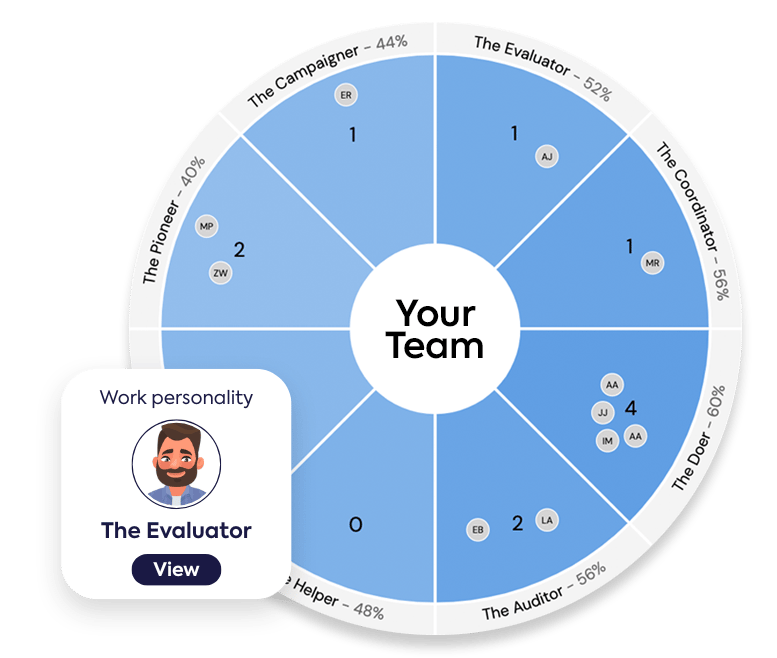
This is where work personality assessments become invaluable. By understanding the dominant traits of your current staff, you can see where the team naturally gravitates. For example, a team full of Doers will be excellent at execution but might struggle with long-term strategy. Measuring culture fit in this context means looking for someone who shares the team’s core values but perhaps brings a different work style to the table.
When we use data to map these preferences, the hiring process becomes much fairer. You are no longer judging a candidate on their hobbies or where they went to school. Instead, you are looking at how their natural tendencies align with the work activities required for the role. This objective lens is the only way to ensure that your culture remains a driver of performance rather than a barrier to diversity.
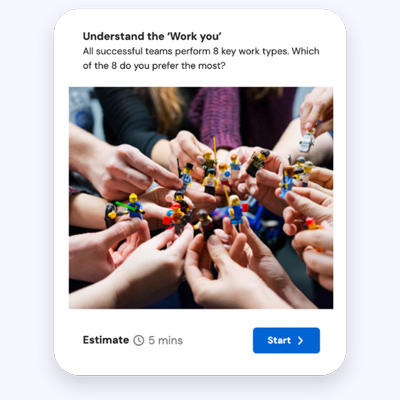
Our research at Compono has identified eight key work activities that define high-performing teams: Evaluating, Coordinating, Campaigning, Pioneering, Advising, Helping, and Doing. To measure culture fit, you need to identify which of these actions are currently being performed well and where the gaps lie. A truly 'fit' candidate is often the one who fills a missing piece of the puzzle.
Consider a scenario where a leadership team is highly analytical. They have plenty of Evaluators who are brilliant at weighing up options and identifying risks. However, they consistently struggle to get their ideas off the ground because they lack someone to sell the vision. In this case, measuring for 'fit' might actually mean looking for The Campaigner – someone who can bring the energy and persuasion needed to move the needle.
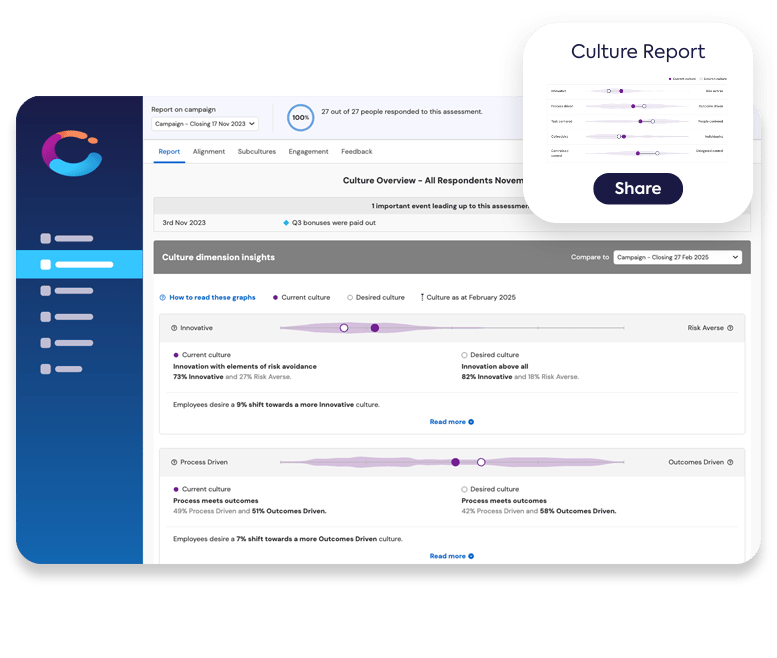
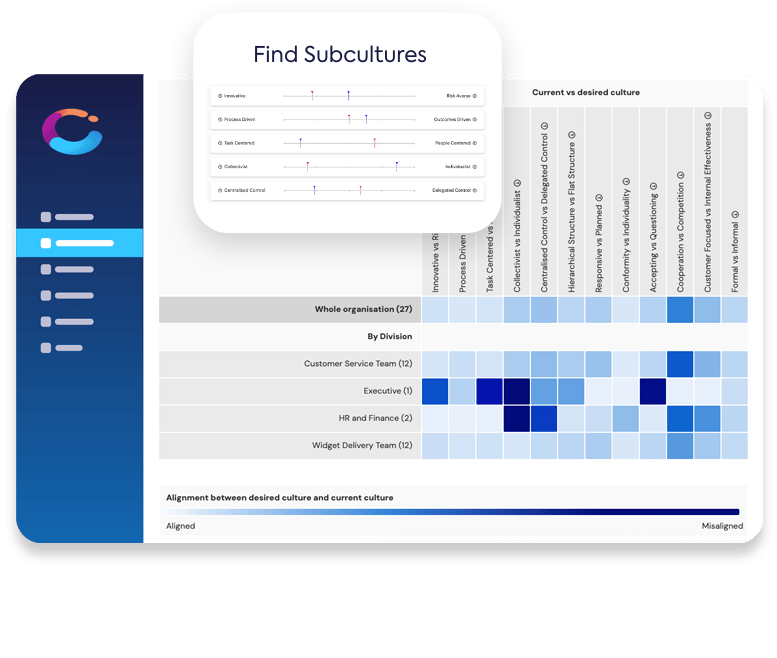
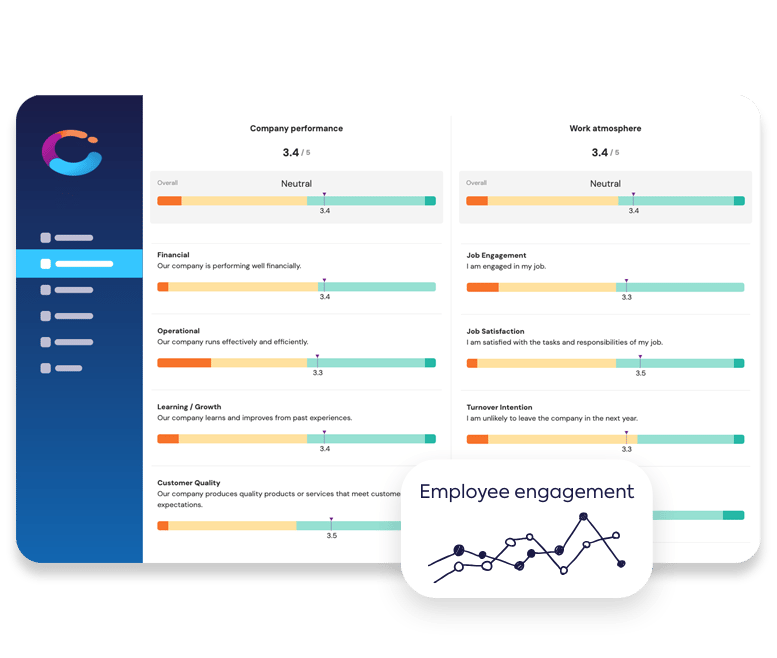
By using the Compono Culture, Engagement & Performance Model, organisations can move beyond the surface level. We help you visualise these eight actions across your entire workforce. This visibility ensures that 'culture fit' is defined by the team's functional needs and shared values, creating a more resilient and adaptable organisational structure.

One of the biggest myths in recruitment is that culture fit requires everyone to think the same way. In reality, the most successful cultures are those where people share the same 'why' but have different 'hows'. You want a team that is aligned on the mission and values of the company, but diverse in their problem-solving approaches. Measuring this balance is the key to sustainable growth.
When assessing candidates, we recommend looking for 'value alignment' first. These are the non-negotiables – things like integrity, customer-centricity, or a commitment to learning. Once that baseline is established, you should look for cognitive diversity in their work personality. A team of Coordinators will be incredibly organised, but they might find it hard to adapt to sudden market shifts without a few Pioneers to challenge the status quo.
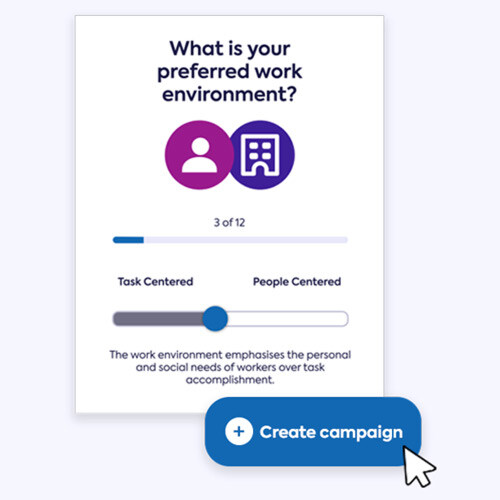
Compono Hire allows you to build these benchmarks directly into your recruitment workflow. You can select the specific work personality traits you need for a role and automatically see how candidates compare. This doesn't just speed up the process; it ensures that every hire is a strategic addition to your culture. You can see how this worked for others in The Coffee Club case study, where they used talent insights to scale effectively across multiple locations.
If you are ready to start measuring culture fit more effectively, begin by auditing your current team. Use a tool like Compono Engage to gather data on how your employees are currently feeling and working. This gives you a baseline of your existing culture – the good, the bad, and the missing. From there, you can create 'success profiles' for new roles based on data rather than assumptions.
During the interview stage, use behavioural questions that target specific work activities. Instead of asking "Tell me about yourself," ask "Describe a time you had to coordinate a complex project under a tight deadline." This forces the candidate to demonstrate their natural work style. When you pair these insights with objective personality data, you get a 360-degree view of how they will actually perform within your team's unique ecosystem.
Finally, remember that culture measurement is not a one-time event. It is an ongoing process of refinement. As your business grows and your goals change, the 'fit' you need will evolve too. By staying committed to a data-driven approach, you ensure that your culture remains your greatest competitive advantage, fostering an environment where every individual can do their best work.
Key insights
- Subjective culture fit leads to bias; objective measurement requires defining specific work behaviours and values.
- High-performing teams require a balance of the eight key work activities to remain adaptable and efficient.
- True culture fit involves alignment on organisational values while encouraging diversity in work personalities and problem-solving styles.
- Using data-driven tools like Compono allows leaders to identify cultural gaps and hire specifically to fill them.
We define it by focusing on objective work preferences and shared values rather than personal background or 'likability'. By using structured assessments like work personality mapping, we ensure the focus remains on how a person contributes to team goals and work activities.
Culture fit often implies finding someone who is exactly like the current team, which can limit growth. Culture add involves finding someone who shares the company’s core values but brings a new perspective or a missing work style – like a Pioneer joining a team of Doers – to improve overall performance.
Yes, by breaking culture down into measurable data points like work activity preferences, engagement levels, and value alignment. At Compono, we use academic research to turn these 'soft' concepts into hard data that leaders can use to make better hiring and management decisions.
Work personality determines how an individual naturally prefers to handle tasks, interact with colleagues, and solve problems. When you understand these natural tendencies, you can predict how well a person will integrate into the team's existing workflow and social dynamics.
Culture is dynamic, so we recommend regular check-ins. Using engagement tools allows you to monitor the health of your culture in real-time, helping you identify if a new hire has positively impacted the team or if new gaps have emerged as the business evolves.

Compono Hire helps you predict job-fit and team-fit using behavioural science, so you can shortlist with confidence.
Request a demoBuilt for mid-market hiring teams.

Voice-first coaching that adapts to your personality. Get actionable steps you can take this week.
Start freeBuilt by Compono. Not therapy — practical behaviour change.
Have you ever hired someone who looked perfect on paper, only to find they clashed with the team within a month? Resumes show you what a person has...
When it comes to recruitment, most organisations follow an “Outside-In” approach. Job descriptions are drafted, résumés are reviewed, and candidates...
Have you ever wondered why a group of high-performing individuals can sometimes fail to click as a team? The secret isn't just in their skills; it is...