

 Mathan Allington
How to identify skills gaps in your team
 Mathan Allington
A four-step way to find skill gaps in your team, how to tell a skill gap from a performance problem, and what to do once you know which is which.

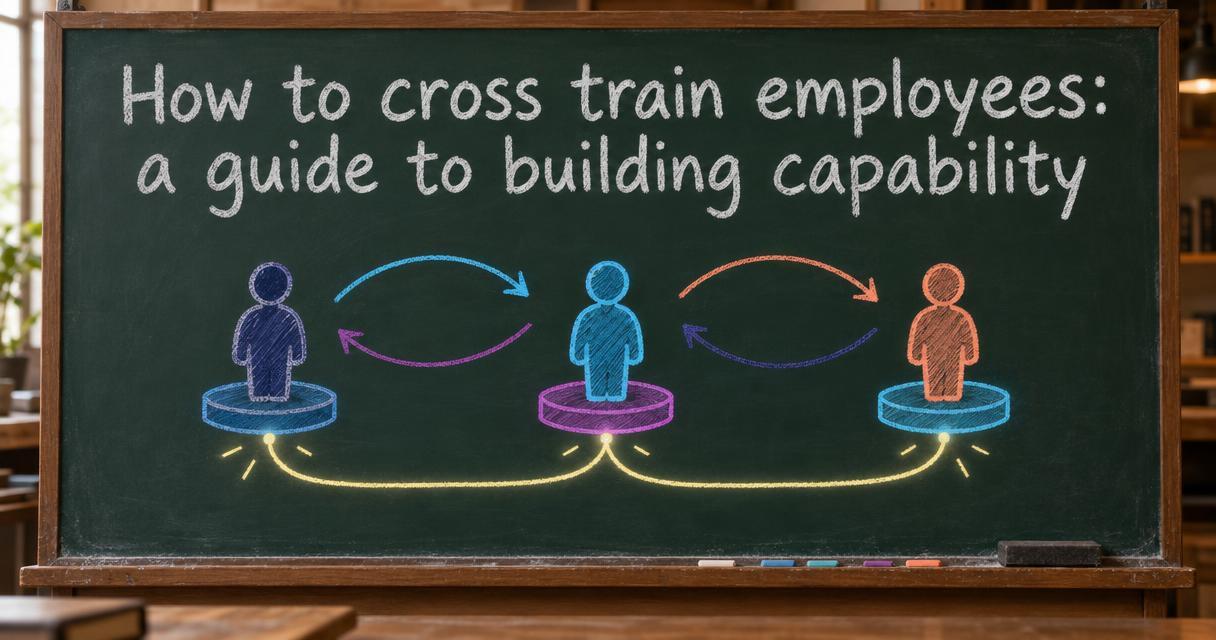
To cross train employees effectively, you must identify your organisation's capability gaps, assess your team's natural working styles, and design hands-on learning experiences that match people to adjacent roles.
Last reviewed November 2026
Key takeaways
- Cross-training protects your business from single points of failure by ensuring multiple people can handle critical tasks.
- Most cross-training programs fail when managers ignore personality fit and force employees into roles they resent.
- Effective capability building requires a clear skills matrix to map current talent against future business needs.
- You must address compensation and promotion paths clearly so employees do not feel penalised by taking on extra duties.
- Remote and hybrid environments require asynchronous learning tools and clear documentation to make cross-training work.
Many HR teams approach cross-training as a simple scheduling exercise.
They look at a spreadsheet, spot a coverage gap, and tell one employee to shadow another for an afternoon. This manages process risk. It ticks a compliance box and updates a workflow. It completely ignores people insight risk.
People insight risk happens when you force a highly analytical worker into a customer-facing support role without assessing their behavioural fit. The employee gets frustrated, the customer gets poor service, and the training fails. When you understand who people are, you can cross train them in areas where they will actually succeed.
The need for adaptable teams is growing rapidly. Research from the World Economic Forum in their Future of Jobs Report 2025 shows that 39% of workers’ existing skill sets are expected to be transformed or outdated by 2030. In response, 85% of employers plan to prioritise workforce reskilling over the next five years.
Cross-training is the practice of teaching an employee the skills and responsibilities of a different role within the organisation. It moves people laterally across different functions, giving them the ability to step in when a colleague is on leave, resigns, or experiences a sudden spike in workload.
It is more than just job shadowing. A proper cross-training program builds genuine competence. It ensures that if your payroll manager takes unexpected leave, someone else in the finance team can confidently run the system without causing delays.
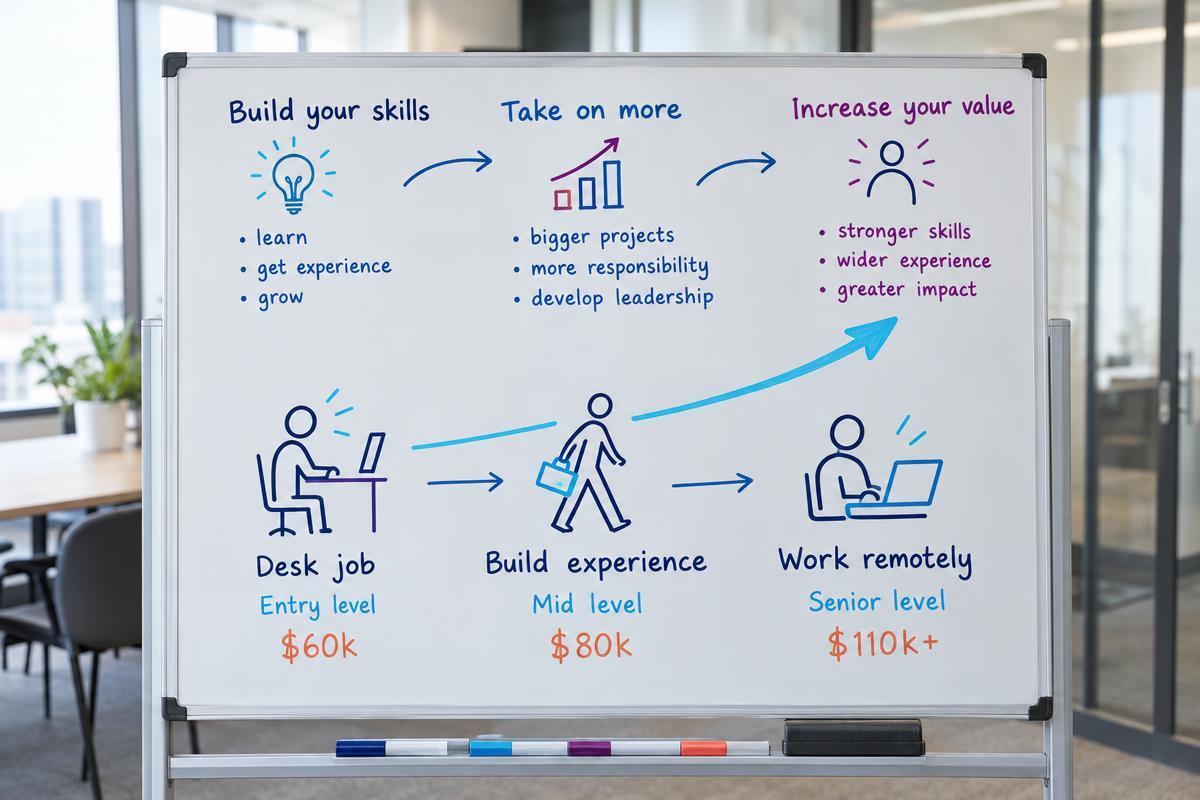
Building a cross-trained workforce offers significant advantages for both the business and the people doing the work. The primary benefit for employers is operational agility. When multiple people can perform critical tasks, your business does not grind to a halt when one person is absent.
For employees, cross-training provides variety and professional growth. LinkedIn Learning found in their Workplace Learning Report 2025 that 94% of employees say they would stay longer at a company that invests in their learning and development. Giving people the chance to learn adjacent skills breaks up the monotony of their daily routine.
Structured learning also creates clear paths for internal talent mobility. When you cross train staff, you build a pipeline of internal candidates who already understand your systems and culture. This drastically reduces the time and cost required to fill open positions.
Employees often resist cross-training because it feels like extra work for the same pay. If a manager simply dumps new responsibilities on a team member without a clear plan, the employee will see it as exploitation rather than development.
You can overcome this resistance by linking cross-training directly to career progression. Show the employee how learning a new skill makes them a stronger candidate for future promotions. Clear communication about expectations is required to prevent burnout.
Compensation is another major hurdle. If an employee is cross-training to perform duties that sit at a higher pay grade, you need a clear policy on remuneration. Paying someone a junior salary to perform senior duties will destroy engagement and drive your best people away.
Compliance and licensing also present challenges. In regulated industries like healthcare or finance, employees cannot simply shadow a colleague and start doing the work. You need a system that tracks formal certifications. Compono Assure handles this by verifying capability and managing compliance records before an employee steps into a high-stakes role.
Building a successful program requires a systematic approach. Here is how to design and execute a cross-training strategy that builds real capability.
Start by identifying your single points of failure. Look for tasks that only one person in the organisation knows how to do. These are your most urgent cross-training priorities.
Ask department heads to list the core processes that keep their teams running. Then, evaluate how many people are currently qualified to handle those processes. If a critical function relies on a single employee, that function is a major risk.
A skills matrix gives you a visual map of your current capability. It plots your employees against the skills required to run the business, showing you exactly where the gaps are.
You can use a training matrix template to track who is fully competent, who is currently in training, and who has no experience with a specific task. This data prevents managers from relying on guesswork when deciding who needs development.
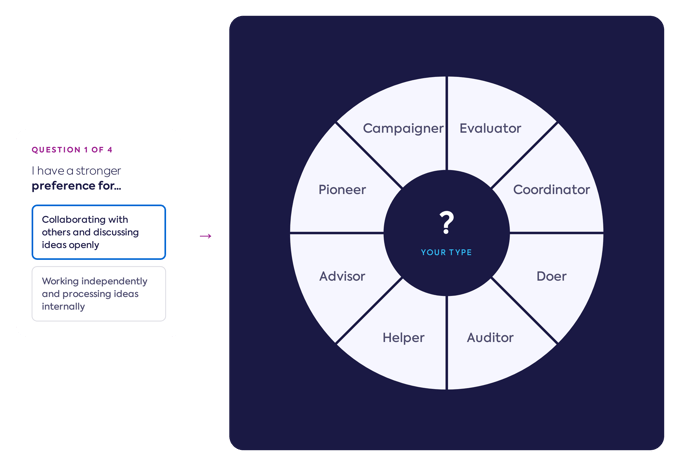
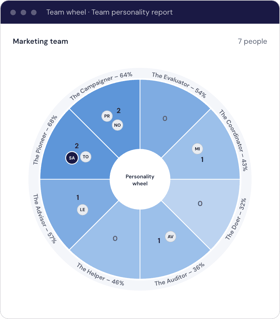
Do not pull names out of a hat. Use behavioural data to match employees to tasks that suit their natural working styles. An employee who prefers structured, predictable work will struggle if you cross train them in a highly reactive crisis-management role.
Look at your team's Work Personality profiles. If you need someone to learn a complex auditing process, choose an employee with an analytical, detail-oriented style. When the work fits the person, the training sticks.
To deliver effective employee training, blend formal instruction with practical experience. The 70-20-10 learning model suggests that employees gain skills primarily through hands-on experience and peer interaction, rather than classroom instruction alone.
Set a clear schedule. Dedicate specific hours each week to cross-training so the employee does not have to squeeze learning into their regular workload. Pair the learner with a skilled mentor and define exactly what competence looks like at the end of the program.
You need concrete metrics to prove your cross-training program works. Track the time to productivity for cross-trained employees when they cover a shift. Monitor your coverage ratio to ensure every critical task has at least two competent backups.
Employee retention and engagement scores are also strong indicators of success. When people feel invested in, they stay. Track internal promotion rates to see if cross-trained employees are advancing within the business.
Remote work requires a different approach to cross-training. You cannot rely on someone pulling up a chair next to a colleague to watch them work. Hybrid teams need structured, asynchronous learning tools.
Start by recording screen-share videos of critical processes. Build a central knowledge base where employees can access standard operating procedures on demand. This documentation serves as the foundation for remote cross-training.
Use collaborative platforms to help peer learning. Assign remote mentors and set up dedicated video calls for observation and feedback. LinkedIn Learning data indicates that 55% of organisations use cross-functional projects as part of their career-development strategy. Assigning remote workers to cross-departmental projects is a highly effective way to build adjacent skills without requiring them to be in the same room.
Compono Develop gives you the tools to track capability gaps, manage learning pathways, and measure the real impact of your cross-training efforts across the entire organisation.
Cross-training teaches an employee how to perform a different job function at a similar level to their current role, usually in another department. Upskilling gives an employee advanced skills to progress upward in their existing career path.
The timeline depends entirely on the complexity of the task. A simple administrative process might require two weeks of shadowing and practice. Cross-training someone to manage a complex software deployment could take six months of structured mentoring.
If the training is for a lateral skill that adds variety to their role, a pay increase is not always required. However, if they are cross-training to perform higher-level duties or permanently increasing their workload, compensation must reflect the new value they bring to the business.
You can measure ROI by tracking the reduction in external hiring costs, decreased downtime during staff absences, and improvements in employee retention. When internal staff can step into vacant roles immediately, the business saves significant recruitment and onboarding costs.
Find out why they are resisting. They might be overwhelmed by their current workload or fear they will not receive support. Address their concerns clearly, link the training to their career goals, and ensure they have dedicated time to learn without working overtime.

A four-step way to find skill gaps in your team, how to tell a skill gap from a performance problem, and what to do once you know which is which.

Build a skills audit template that finds capability gaps and points training where it counts, with a five-step workflow for modern teams.

Build a capability framework template that lines skills up with business goals: structure, scoring methods, and the steps to roll it out.
 Compono