

.webp)

 Mathan Allington


1 min read
Australian workplace safety training: a guide for leaders
 Compono
Australian workplace safety training is often viewed as a box-ticking exercise, but for high-performing teams, it is the bedrock of a thriving...

Staff training stops working when it is designed for an average employee who does not exist. Content that ignores how each person naturally works, a culture that never reinforces the new behaviour, and leaders whose style contradicts what was taught will sink any program, no matter how good the material is. The fix is alignment, not more workshops.
Last reviewed July 2026.
It is a familiar frustration for HR leaders. You roll out a new program, the initial feedback is positive, and three months later nobody is using any of it. Performance stays flat, the budget is spent, and the next request for development funding gets a harder conversation. The problem is usually not the content. It is the lack of alignment between the training and the humans receiving it.
People process information differently and are motivated by different things. A Doer gets frustrated with abstract, theoretical leadership training because they want practical steps they can use today. A Pioneer finds a rigid, structured module stifling because it leaves no room for the exploration they crave. When the delivery method clashes with the learner's work personality, the information does not land, and the investment is lost at the point of delivery.
Training also tends to happen in a vacuum. If the workplace culture does not support the new behaviours, the forgetting curve takes over almost immediately. Without practical application and reinforcement, most new information is gone within days.

Compono's research into high-performing teams identifies eight work personality types: Doer, Auditor, Helper, Advisor, Pioneer, Campaigner, Evaluator and Coordinator. Everyone has a dominant preference, and knowing it lets you teach in the learner's language.
Take a new project management tool. Training Coordinators, you emphasise structure: clearer priorities, enforced deadlines, better efficiency. Training Helpers on the same tool, you emphasise how it helps them support colleagues and keep the team in sync. Same tool, different why, and the why is what determines whether anyone uses it next month.
Personalised this way, training stops being a mandate and becomes a resource people actually want. Compono Develop builds learning pathways around these preferences, so development plans work with a person's strengths instead of ignoring them.
Even excellent training fails when a manager's style contradicts it. A directive style, high control and clear instructions, works in a crisis or with inexperienced staff. Applied to skilled Pioneers fresh from creative methodology training, it smothers exactly what the training was meant to produce.
Effective leaders shift between directive, democratic and non-directive styles depending on what the moment needs. If your Evaluators have just learned a new analytical framework but every decision is still made unilaterally above them, the training is redundant by design. Leaders have to make room for the new behaviour to be practised, or it will not survive contact with the first busy week.
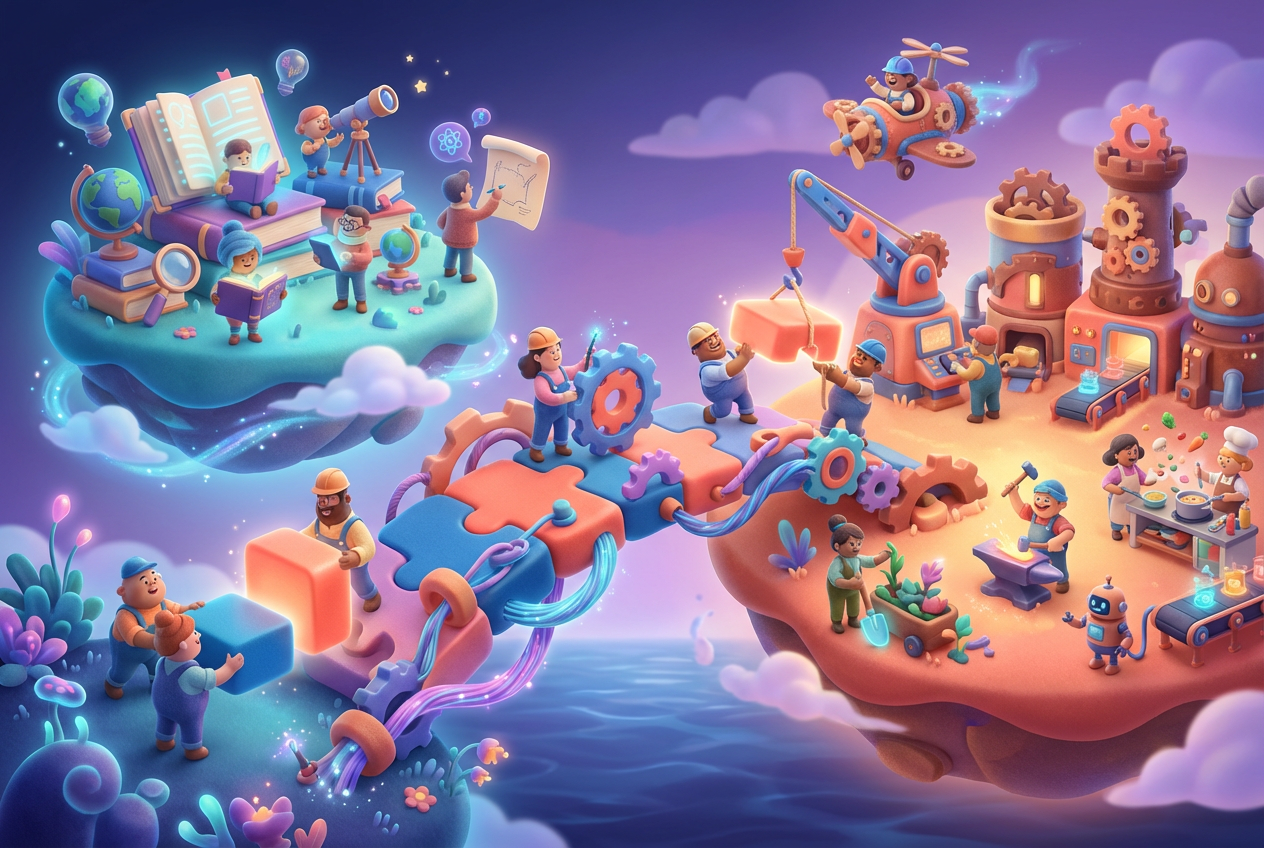
The application gap is the space between knowing what to do and doing it in the flow of work. Closing it means treating training as a continuous process rather than an event: regular check-ins, peer support, and a culture where trying a new technique and getting it slightly wrong is treated as learning rather than failure. If people expect to be penalised for imperfect first attempts, they revert to safe habits immediately.
Training works best when it is social. Teams that learn together, discuss how new skills apply to their live projects and hold each other accountable retain far more than individuals sent off to a workshop alone. The Compono Culture, Engagement and Performance Model shows where development effort is landing and where it is falling short, so you can direct spend at the gaps that matter instead of repeating what already failed.
Compono Develop matches learning pathways to each person's work personality, so new skills survive past the workshop.
Talk to usWatch for the application gap: employees can explain a concept but never use it in their daily work. If performance metrics have not shifted three to six months after a program, or sentiment about growth stays low, the training is not landing.
Without immediate practical application and reinforcement from leadership, most new information is lost within days. Aligning content with an individual's work personality makes it more relevant and easier to retain.
Yes. Knowing whether someone is a Doer or a Pioneer lets you tailor both the delivery and the reason for the training, which lifts buy-in and makes the learning feel like a tool for their success rather than a generic requirement.
There is no single best style. A leader might need to be directive while a team learns a new compliance process, then step back to a non-directive style so a skilled team can apply the skills their own way. Flexibility is the requirement.

1 min read
Australian workplace safety training is often viewed as a box-ticking exercise, but for high-performing teams, it is the bedrock of a thriving...

1 min read
A modern government training platform must prioritise accessibility, security, and personalised learning paths to effectively upskill a diverse...

1 min read
Effective employee training is training that changes behaviour on the job, not training that gets completed. It starts with a clear gap analysis,...
 Mathan Allington