

 Mathan Allington
A hiring debrief meeting template is a structured agenda and scoring framework that turns scattered interview feedback into a single, defensible hiring decision.
Last reviewed November 2026
Key takeaways
- A structured debrief stops dominant voices from overriding the data and forces the panel to rely on evidence.
- Interviewers must submit independent scores before the meeting begins to prevent groupthink.
- Time-boxed agendas ensure every candidate is evaluated fairly against the job criteria rather than against each other.
- Clear tie-breaker rules keep the process moving when the panel splits on a strong candidate.
Why unstructured debrief meetings fail
Most hiring debriefs follow the exact same broken pattern. The hiring panel logs onto a call, the hiring manager asks what everyone thinks, and people share their gut feelings. The loudest voice dictates the outcome, and the rest of the panel aligns to avoid conflict. This unstructured approach does not measure candidate capability. It measures who is best at arguing their point.
When you rely on unstructured feedback, you invite bias directly into your recruitment pipeline. According to a 2024 candidate experience report by Criteria Corp, 27% of job candidates say they have experienced bias during an interview, while another 35% are unsure whether they have. If your panel members are deciding on candidates based on vague feelings of culture fit, you are putting your organisation at risk.
A debrief meeting only works when it evaluates evidence gathered through structured scoring. Research published by Oll Academy in 2025 reported that structured interviews are more predictive of job performance than unstructured interviews, with correlations of 0.43 versus 0.24. Understanding what a structured interview actually is changes how you run the final review. The debrief meeting is simply the environment where you compile that structured data and apply standard rules to make a choice.
The pre-debrief checklist for interviewers
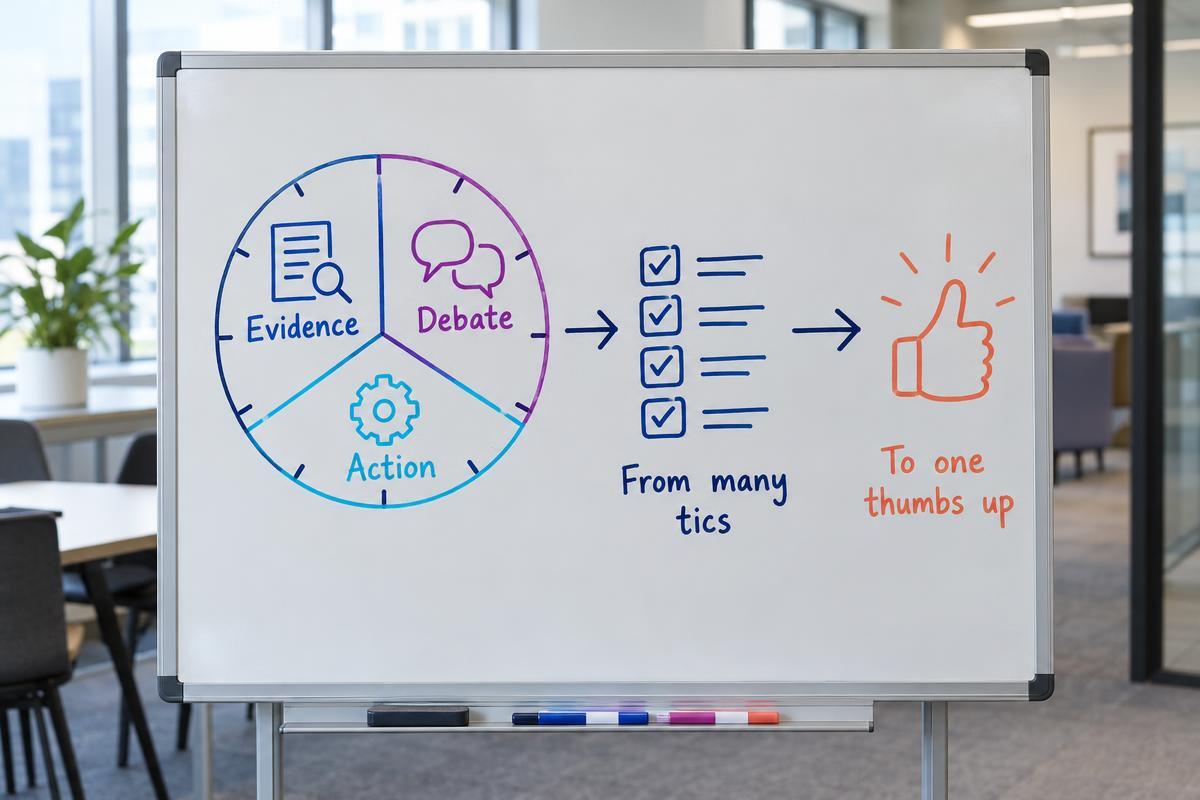
The success of your hiring debrief meeting depends entirely on what happens before the meeting begins. If interviewers arrive with blank scorecards and plan to fill them out during the discussion, the meeting is already compromised. You must establish strict rules for evidence submission.
First, every interviewer must submit their scores independently. If panel members can see how the hiring manager scored a candidate, they will consciously or unconsciously adjust their own scores to match. Independent submission removes the anchoring effect. A 2026 meta-analysis summary from the Journal of Applied Psychology showed that structured interviews provide every interviewer with the same questions and standardised rating scale, reducing inconsistent evaluation and inappropriate questioning.
Second, the facilitator must review the scores to spot outliers before the meeting starts. If one interviewer gave a candidate a top score for communication and another gave the lowest possible score, the facilitator highlights this gap. The meeting time is then spent resolving these specific discrepancies rather than recounting the entire interview.
This is where modern applicant tracking systems add immediate value. Compono Hire is an applicant tracking system (ATS) that matches candidates to culture, not just keywords. It forces panel members to submit their independent scores before the debrief meeting begins, removing the chance for a dominant manager to sway the room.
The step-by-step hiring debrief meeting agenda
A standard debrief meeting should take exactly 30 minutes for a single candidate or up to 60 minutes for a panel of candidates. You must enforce timeboxes for each section to prevent the conversation from drifting into irrelevant personal anecdotes.
Phase one: Align on the core criteria (5 minutes)
The facilitator opens the meeting by reminding the panel of the role requirements and the scoring rubric. This resets the room. The goal is to evaluate how the candidate performed against the specific competencies required for the job. You are not comparing candidates to each other at this stage. You are comparing them to the standard you set before you posted the job ad.
Phase two: Review the evidence (15 minutes)
The facilitator shares the aggregated scorecard data. Rather than asking for general thoughts, the facilitator directs the conversation to specific competencies. You discuss the areas where the panel agrees quickly, then spend the majority of this time on the areas where the scores diverge. Panel members must cite specific examples from the interview to defend their scores.
Phase three: Resolve outliers and misalignments (5 minutes)
When the panel disagrees, the facilitator steps in. You do not compromise by averaging a high score and a low score together. Instead, you look for the root cause of the disagreement. Did one interviewer ask a poorly phrased question? Did another interviewer misinterpret a technical response? You resolve the data discrepancy through discussion.
Phase four: Make the final call (5 minutes)
The meeting ends with a clear decision. The candidate advances, receives an offer, or is rejected. If the panel cannot reach a decision within the timebox, you do not schedule another meeting. You apply your predetermined tie-breaker rules to finalise the outcome.
Free copy-paste hiring debrief meeting template
You need a standard format to capture the output of your meeting. Copy the table below into your documentation platform to run a consistent, defensible debrief. When you build an interview scoring rubric template, you attach it directly to this document.
| Agenda Item | Facilitator Script | Expected Outcome |
|---|---|---|
| 1. Ground rules | "We are evaluating [Candidate] for [Role]. We will only discuss evidence related to our four core competencies." | Panel is aligned on the standard and aware that biased comments will be shut down. |
| 2. Score review | "Let us look at the technical assessment score. We have a split decision here. Can you share the specific answer that drove your low score?" | Discrepancies are surfaced and debated using facts, not feelings. |
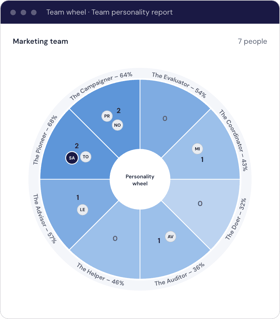
| 3. Culture and behaviour | "Based on the behavioural questions, how does this candidate align with our team's work personality benchmark?" | Evaluation of team fit using psychometric data and structured responses. |
| 4. The decision | "We have 5 minutes left. Do we make an offer, or do we reject based on the evidence we just discussed?" | A recorded final decision with a clear justification. |
Facilitation scripts for managing dominant voices
The hardest part of a hiring debrief is not the paperwork. It is managing the people in the room. A hiring manager often feels ownership over the role and will try to bulldoze the panel to get their preferred candidate across the line. A strong facilitator uses targeted scripts to redirect the conversation back to the evidence.
When someone uses vague, positive language like "I just had a really good feeling about them", the facilitator must challenge it. The correct response is, "Can you point to a specific competency in the rubric where they demonstrated that capability?" This forces the interviewer to translate their gut feeling into a measurable observation.
When someone introduces irrelevant criteria like "They went to the same university as me, so I know they will fit in", the facilitator must shut it down immediately. You say, "We are only evaluating the candidate against the agreed job criteria. University attendance is not on the rubric." This keeps the meeting compliant and fair.
Many organisations use an independent facilitator known as a Bar Raiser. This person is not on the hiring team and has no vested interest in filling the role quickly. Their only job is to ensure the process remains rigorous. They hold veto power over the hire if they believe the panel is settling for a mediocre candidate just to close the requisition.
Handling split decisions and tie-breaker rules
Even with structured scoring, you will face moments where the panel is perfectly split. Half the room issues a strong yes, and half issues a strong no. If you do not have a rule for this scenario, the debrief will drag on forever, and you will lose the candidate to a faster competitor.
The most effective rule for a split decision is the default-no policy. If a candidate cannot generate a clear consensus from the panel based on the evidence, you do not hire them. A split panel usually means the candidate has a significant flaw that half the team noticed and the other half overlooked. Hiring them introduces severe people insight risk into your business.
Alternatively, some teams grant the final tie-breaker authority to the hiring manager, provided the candidate meets the baseline technical requirements. The hiring manager is ultimately responsible for the new employee's performance, so they carry the risk of the decision. You must define this escalation path before you start interviewing so nobody feels undermined when the final call is made. You can read more about how to make hiring decisions you can defend to ensure these tie-breakers remain objective.
Compliance, documentation and audit trails
A hiring debrief is not an off-the-record chat. It is a formal business process that creates legal liability if handled poorly. Every note taken during the meeting, every score submitted, and every final decision justification becomes part of the candidate's employment record. Under guidelines provided by the Fair Work Ombudsman and the Australian Human Rights Commission, candidates have rights regarding how they are assessed.
You must adhere to federal and state anti-discrimination Acts (as they stand in 2026) by ensuring no discriminatory comments are recorded or discussed. Do not write down casual observations about a candidate's age, family status, or physical appearance. If a panel member brings up a candidate's upcoming parental leave, the facilitator must strike it from the discussion and ensure it does not appear in the official notes.
To maintain compliance, use a standard interview notes template for hiring managers that only captures facts. If a candidate challenges a rejection, your debrief documentation is your only defence.
You want to present a clear audit trail showing that the candidate scored a 2 out of 5 on technical capability, while the successful candidate scored a 4 out of 5. A study published by the National Library of Medicine in 2025 found that when a company started strict guidelines, 80% of positions used structured interview guides and 80% of assessed candidate skills received scores from hiring team members.
When you use structured scoring, you get consistent outcomes that protect the business. The Coffee Club achieved consistent hiring across 400 outlets by standardising how they capture and evaluate candidate data. They moved away from gut feel and relied entirely on structured, defensible information.
How Compono can help with structured hiring
If your hiring team struggles to reach consensus or relies on gut feel instead of evidence, you need a system that enforces structure. Compono Hire provides the scorecards, culture alignment and workflow you need to run fair, data-driven debriefs that result in better hiring decisions.
Frequently asked questions
What should we do if the panel is completely split on a candidate?
When a panel is split, you should rely on your predetermined tie-breaker rules. Most high-performing teams use a default-no policy, meaning a lack of consensus automatically results in a rejection. This prevents you from making risky hires just to fill a seat quickly.
Should the hiring manager have the final say in the debrief?
The hiring manager usually makes the final decision, but only within the boundaries of the structured data. If the candidate fails the technical assessment or scores poorly across the board, the hiring manager should not have the authority to override the evidence and hire them anyway.
How long should a hiring debrief meeting take?
A debrief for a single candidate should take no longer than 30 minutes. If you are reviewing a panel of candidates, you should cap the meeting at 60 minutes. If the conversation takes longer than this, your panel is likely debating opinions instead of reviewing the structured scores.
Can we use an ATS to automate the debrief process?
You cannot fully automate the human discussion, but an ATS makes the process significantly faster and fairer. The software handles the collection of independent scores before the meeting, highlights the areas of disagreement automatically, and provides a permanent audit trail of the final decision.
Why is it so important to submit scores before the meeting?
Submitting scores before the meeting eliminates groupthink. If panel members hear a senior leader praise a candidate before they write down their own thoughts, they are highly likely to change their scores to match the leader's opinion. Pre-scoring ensures you capture genuine, independent evaluations.