

.webp)

 Compono


Finding the best employee engagement survey platform in 2026
 Mathan Allington
How to choose the best employee engagement survey platform for your team. Learn why measuring sentiment is not enough and how to find true culture...

An effective exit interview questions template in Australia must dig past polite excuses to uncover the real reasons people leave your organisation.
Key takeaways
- Keep your exit survey tight – 10 to 15 questions is the sweet spot for getting candid feedback.
- Focus on the real drivers of turnover, including leadership quality, career growth, and workplace culture.
- Include a handover and risk section to protect intellectual property and ensure operational continuity.
- Use the data to fix systemic issues rather than treating the interview as a tick-box compliance exercise.
Most exit interviews are a polite fiction. Employees hand in their notice, sit down with human resources, and offer safe, non-confrontational reasons for leaving. They blame the commute, cite a desire for a "new challenge", or vaguely reference a better opportunity. They do this because they want a good reference and have no incentive to burn bridges.
Meanwhile, the HR team files the completed form away in a digital drawer. Nothing changes, and six months later, another top performer resigns from the exact same team for the exact same unspoken reasons.
To actually reduce employee turnover, you need to stop treating the exit interview as an administrative chore. You need a structured, evidence-based approach that makes it safe for departing staff to tell the truth about your management, your culture, and your pay.
When an employee is walking out the door, their patience for long administrative processes is zero. Handing them a 50-question survey is the fastest way to guarantee you get rushed, thoughtless answers.
You need to strike a balance between gathering enough data to spot trends and keeping the process brief enough to respect their time. A "tight" exit-survey version can work with 12 questions covering the reason for leaving, manager relationship, recognition, workload, pay, growth, culture, and open feedback.
The format matters just as much as the length. A written survey allows employees to carefully consider their words and often results in more honest feedback about toxic behaviour or poor management. However, a follow-up conversation adds nuance and allows you to ask probing questions. The most effective approach in 2026 is a hybrid model: send a short digital survey a few days before their final week, then use those answers to guide a brief, 15-minute face-to-face conversation.
You also need to cover the right ground. A practical Australia-focused exit template should cover reason for leaving, job, remuneration and benefits, company review, supervisor review, management review, and other feedback. By structuring your template around these core pillars, you ensure you capture a complete picture of the employee experience.

If you want to get past the standard corporate talking points, you need to ask direct questions. Australian HR guidance recommends asking about the primary reason for leaving, the employee’s experience with their manager, whether they felt their career was progressing, and what the organisation could do differently.
Here are the 12 essential questions to include in your exit interview template, along with the rationale for why each one matters.
You need to establish whether the departure is a push or a pull. Are they running toward a better salary and a higher title, or are they running away from a bad manager and an unmanageable workload? Give them a multiple-choice list of common reasons, but always include a free-text box so they can elaborate.
People leave managers, not companies. If a specific department has a high turnover rate, this question will usually reveal why. You are listening for signs of micromanagement, lack of support, poor communication, or favouritism.
Lack of career growth is a massive driver of turnover in the Australian market. If your top performers feel they have hit a ceiling, they will look elsewhere. This question helps you understand if your internal promotion pathways are actually working, or if they just exist on paper.
Money is rarely the only reason someone quits, but it is often the final push. If your pay is falling behind the market rate, you need to know. Pay attention to how they talk about benefits, too – sometimes a lack of flexible working options is the real dealbreaker.
This specific phrasing is important. Asking "What do you think of our culture?" invites corporate speak. Asking how they would describe it to a friend forces a more casual, honest assessment. It reveals what it actually feels like to work in your business on a Tuesday afternoon.
Frustration over broken systems, outdated software, or a lack of budget burns people out quickly. If your departing employee spent half their week fighting with legacy technology just to get their job done, you need to fix that before you hire their replacement.
Unappreciated employees are major flight risks. This question tells you whether your managers are actually taking the time to acknowledge good work, or if they are only speaking up when something goes wrong.
Burnout is a systemic issue, not a personal failing. If the workload is fundamentally unsustainable, the next person you put in the role will quit in six months, too. Look for patterns of under-resourcing across specific teams.
This is the magic wand question. It forces the employee to identify the exact breaking point. Sometimes the answer is "nothing, I just wanted a career change." But often, it reveals a specific failure in management or policy that you can actually fix.
This uncovers process bottlenecks, team friction, and communication breakdowns. Departing employees have nothing to lose, so they are often highly perceptive about team dynamics and operational flaws.
Exit interviews shouldn't just be an autopsy of what went wrong. You also need to know what you are doing right so you can double down on it. If everyone praises your flexible working policy, you know that is a key retention tool to protect.
Always leave space for the catch-all. Sometimes the most valuable insights come from unprompted comments that don't neatly fit into your other survey categories.
An exit interview isn't just about gathering HR data; it is also a critical operational checkpoint. Australian businesses have strict obligations regarding data security, payroll compliance, and intellectual property.
A solid template should also include a handover/risk section covering key tasks, dependencies, systems access, and possible loss of confidential information or IP. You need a documented record confirming that the employee has returned all company property, handed over all current projects, and understands their ongoing confidentiality obligations.
Include a checklist at the end of your template that covers:
Have all physical assets (laptops, keys, access cards) been returned?
Has a comprehensive handover document been provided to the manager?
Have all outstanding expenses and leave balances been calculated?
Has the employee been reminded of their post-employment obligations?
The best template in the world won't help you if your employees don't feel safe answering honestly. The golden rule of exit interviews is simple: never have the employee's direct manager conduct the interview.
If the manager is the reason they are leaving, they will never say it to their face. The interview should always be conducted by a neutral HR representative or an independent third party.
Better yet, the exit interview shouldn't be the first time you ask for their opinion. If you only ask for feedback when someone is walking out the door, it is already too late. You need a continuous listening platform to gauge sentiment throughout the employee lifecycle.
The Compono Engage module allows you to run regular pulse surveys and gather anonymous feedback year-round. When you make feedback a normal, safe part of your culture, employees are far more likely to be candid during their final exit survey.
Data without action is just trivia. The biggest mistake HR teams make is filing the exit interview away and never looking at it again. You need to aggregate the data to find the hidden patterns in your business.
If one person complains about a heavy workload, it might be an isolated issue. If five people from the same department quit in a year and all cite workload and lack of manager support, you have a systemic failure that requires immediate intervention.
Review your exit data quarterly. Look for trends in specific departments, tenure brackets, or demographic groups. Then, present these findings to your executive team with clear recommendations for change. When you turn exit data into actionable business intelligence, you stop reacting to turnover and start preventing it.
Stop guessing why your best people are leaving and start fixing the root causes of turnover with clear, actionable data.
Related reading
Are exit interviews mandatory in Australia?
No, exit interviews are not legally mandatory in Australia. However, they are considered a standard HR best practice for understanding turnover and improving retention.
Who should conduct the exit interview?
An exit interview should always be conducted by a neutral party, such as an HR representative. A direct manager should never conduct the interview, as this prevents the employee from speaking candidly about leadership issues.
Should exit interviews be anonymous?
While the interview itself cannot be strictly anonymous, the data gathered should be de-identified before it is shared with management. Employees must trust that their specific feedback won't be used against them in future reference checks.
When is the best time to conduct an exit interview?
The ideal time is during the employee's final week, usually a few days before their last day. If you do it too early, they may still be worried about working out their notice period. If you do it on their very last day, they are usually checked out and just want to leave.
Can an employee refuse to do an exit interview?
Yes, participation is entirely voluntary. You cannot force an employee to complete an exit survey or attend an interview, nor can you withhold their final pay if they decline to participate.

How to choose the best employee engagement survey platform for your team. Learn why measuring sentiment is not enough and how to find true culture...
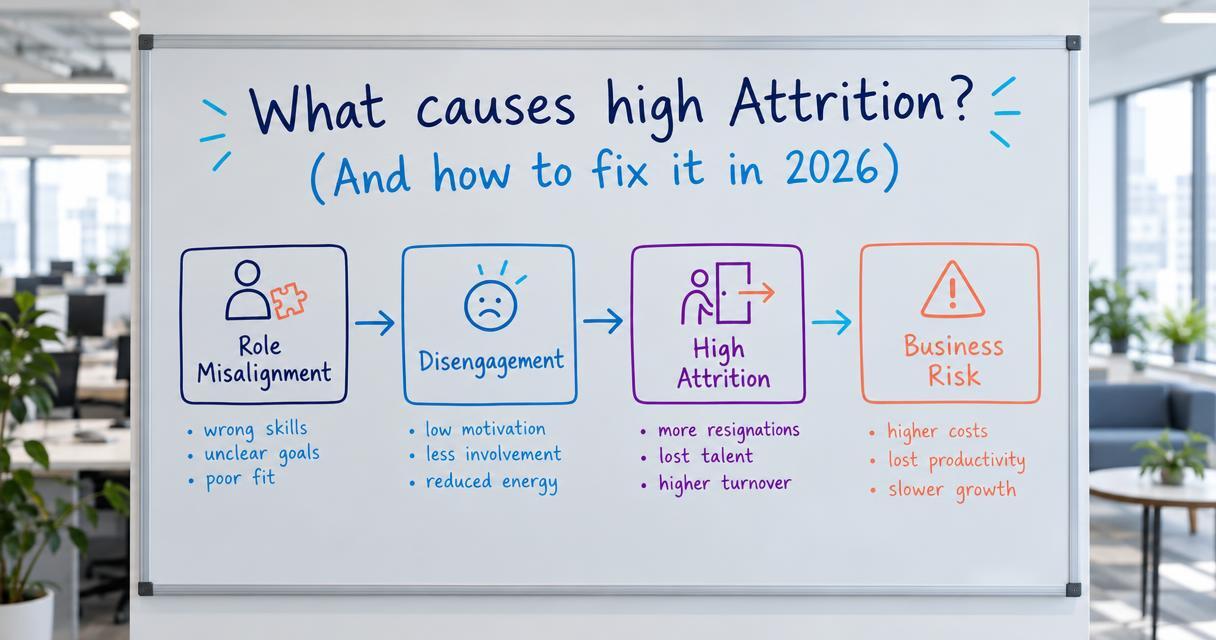
What causes high attrition in modern teams and learn how to identify the warning signs before your best employees leave. Read the complete guide.

The five types of retention software, what each one actually does, and how to tell which will flag turnover risk before people resign.