How to improve employee engagement for modern teams
To improve employee engagement, you must align individual work preferences with team activities and provide clear, consistent opportunities for...
Become the expert on delivering
valid and fair assessments for
your training and education.
Hey Compono helps you understand your personality and how to turn it into your superpower.
First 1,000 users get 10 minutes free.
Just $15 a month after that — cancel anytime.
Connecting your end-to-end hiring to development processes is the most effective way to ensure long-term employee retention and high-performance culture.
By treating recruitment not as a final transaction but as the first step in a continuous growth journey, you can align a candidate’s natural strengths with their future career path from day one. This approach moves beyond simply filling a seat and focuses on building a sustainable workforce where every individual is positioned to thrive in the modern workplace.
Key takeaways
- Effective end-to-end hiring to development requires aligning recruitment data with long-term growth plans.
- Assessing work personality during the hiring phase allows for tailored management and faster onboarding.
- Bridging the gap between talent acquisition and talent management reduces turnover and improves organisational fit.
- Continuous development should begin the moment a contract is signed, not after the probation period ends.
For many people leaders, the transition from recruitment to employee growth feels like a relay race where the baton is dropped between every lap. We spend weeks sourcing the perfect candidate, only to hand them over to a manager who has limited visibility into why they were hired in the first place. This fragmented approach to end-to-end hiring to development often leads to a phenomenon where new hires feel misunderstood or underutilised within their first six months.
When recruitment sits in one silo and development in another, we lose the rich data gathered during the interview process. The insights we gain about a candidate’s motivations, their natural work style, and their potential blind spots are often buried in a PDF on a shared drive. To build a truly high-performing team, we need to ensure that the intelligence gathered at the 'hire' stage directly informs the 'develop' stage. This creates a seamless experience for the employee and a clearer roadmap for the leader.
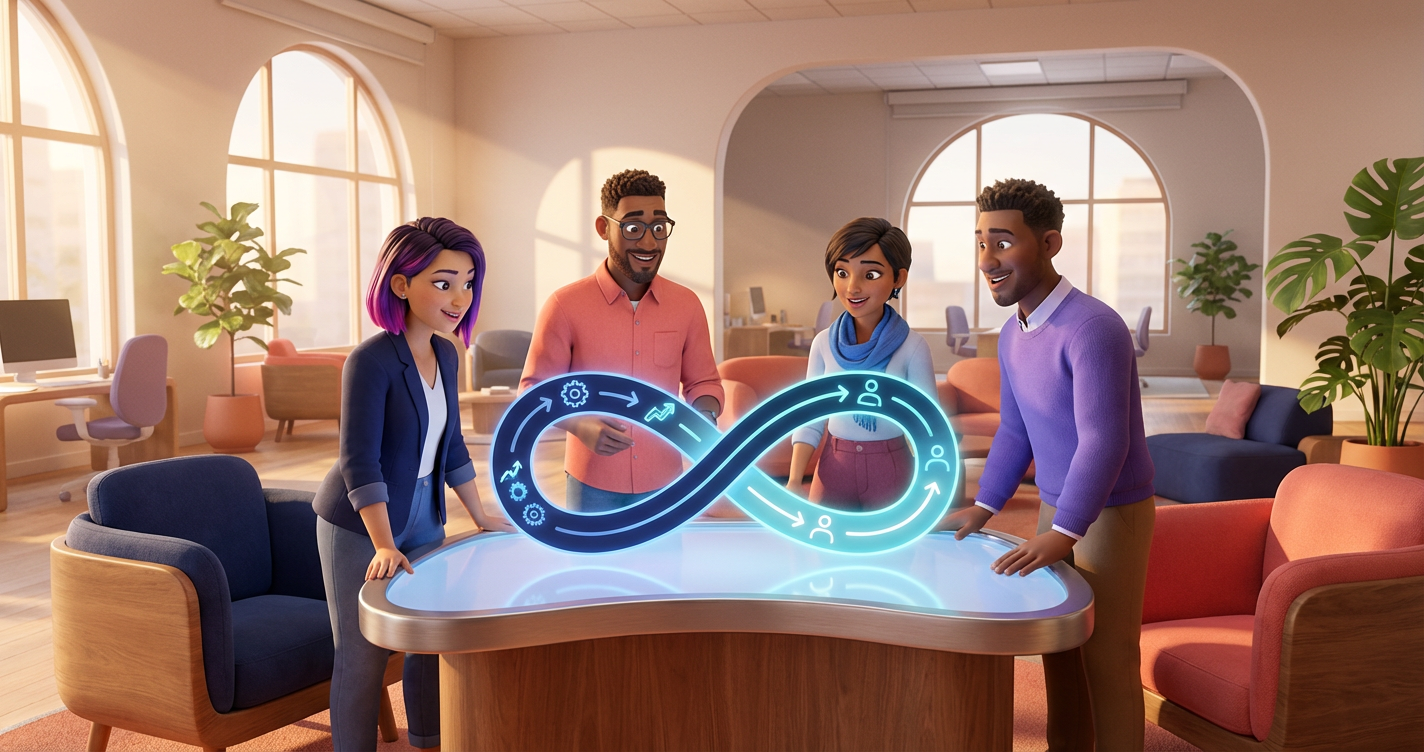
At Compono, we have seen that the most successful organisations are those that view the employee lifecycle as a single, unbroken loop. By using a unified Business Platform, leaders can ensure that the 'why' behind a hire becomes the 'how' behind their growth. This connection is what transforms a standard recruitment process into a strategic talent advantage that lasts for years, not just months.

The first step in a successful end-to-end hiring to development strategy is understanding the 'who' behind the 'what'. Skills and experience are essential, but they only tell half the story. To understand how someone will actually perform within your specific team dynamic, you need to look at their work personality. This provides a deep understanding of their natural tendencies – whether they are driven by detail, big-picture vision, or supporting others.
Consider a scenario where you are hiring for a project management role. On paper, two candidates might have identical certifications. However, one might be The Coordinator, who thrives on structure and enforcing deadlines, while the other is The Pioneer, who excels at navigating ambiguity and finding creative workarounds. Both can succeed, but they will require vastly different development paths and management styles to reach their full potential.
By identifying these traits during the hiring phase, you aren't just checking for culture fit; you are pre-emptively designing their development plan. You can identify exactly which areas they will naturally master and where they might need additional support or training. This level of foresight is only possible when your hiring tools and development tools speak the same language, ensuring that the insights from recruitment aren't lost during the onboarding process.
Once a candidate is hired, the data collected during their assessment should be the bedrock of their first 90 days. Most onboarding programmes focus on the logistics – where the kitchen is, how to use the CRM, and who to call for IT support. While these are necessary, they don't address the psychological onboarding required for long-term success. A true end-to-end process uses recruitment insights to help managers understand how to communicate with their new team member from the very first meeting.
For example, if your new hire is The Auditor, they will likely value precision and methodical instructions. Rushing them into a high-pressure, ambiguous brainstorming session on day two might cause unnecessary stress. Conversely, if you've hired The Campaigner, they will thrive on networking and seeing the big picture early on. When we align our management behaviour with the individual’s natural work personality, we accelerate their time-to-productivity and boost their initial engagement.
This is where the power of a connected ecosystem becomes apparent. At Compono, we've spent over a decade researching how these traits interact. Our tool, Compono Hire, allows you to rank candidates based on their organisational fit and personality, providing a clear picture of how they will integrate into your existing team. This data doesn't just help you choose the right person; it gives you the manual for how to lead them effectively once they start their journey with you.

The 'development' part of the end-to-end hiring to development lifecycle is where the real work happens. Retention is rarely about the perks or the office coffee; it is about feeling like there is a clear path forward. When employees feel that their unique strengths are being recognised and developed, they are significantly more likely to stay. This requires a shift from generic training modules to personalised learning paths that acknowledge the individual's starting point.
If you know from the hiring phase that a team member is The Helper, their development should focus on leadership through empathy, mentoring, and team cohesion. Forcing them into a highly competitive sales-focused training programme might not yield the same results as a programme designed to harness their natural perceptive nature. Development is most effective when it feels like an extension of who the person already is, rather than an attempt to change their fundamental nature.
To manage this at scale, HR teams need a way to track these growth journeys without getting bogged down in manual spreadsheets. Using Compono Develop, you can create these personalised pathways, ensuring that the development goals set during the first month are tracked and evolved over the years. This creates a culture of continuous improvement where the employee feels seen and the business sees a tangible return on its talent investment.
High-performing teams aren't just a collection of talented individuals; they are a balanced ecosystem of different work personalities. A team full of Pioneers might have great ideas but struggle with execution. A team of Auditors might be incredibly accurate but slow to adapt to market changes. The secret to end-to-end hiring to development is using recruitment to fill specific gaps in your team's collective personality and then using development to sharpen those specific edges.
When you hire with the intent to develop, you stop looking for the 'perfect' candidate and start looking for the 'right' candidate for the current team dynamic. This strategic approach requires a deep understanding of your existing team's strengths and weaknesses. By mapping your current workforce, you can identify exactly which work personality is missing and target your recruitment efforts accordingly. Once they are on board, your development efforts ensure they remain aligned with the team’s evolving goals.
This holistic view of the talent lifecycle – from the first touchpoint in an ad to the third year of a development plan – is what defines modern HR excellence. It reduces the cost of bad hires, lowers turnover, and creates a more resilient organisational culture. By treating hiring and development as two sides of the same coin, you ensure that your people strategy is as robust and data-driven as your financial strategy.
Key insights
- End-to-end hiring to development is a single lifecycle that requires the seamless flow of data between recruitment and management.
- Using work personality assessments during the hiring phase provides a roadmap for personalised development from day one.
- Retention is significantly improved when employees feel their natural strengths are being developed rather than ignored.
- A connected platform ensures that the intelligence gathered during recruitment is used to build high-performing, balanced teams.
Building a seamless talent journey doesn't happen overnight, but the rewards for your culture and bottom line are substantial. If you are ready to see how a connected approach can transform your team, we're here to help.
By aligning a candidate's natural work personality with their role and future growth path, employees feel more understood and valued. This leads to higher engagement and a significantly lower likelihood of turnover in the first two years.
Recruitment data, especially personality assessments, reveals how an individual prefers to work and communicate. Using this data in development allows managers to tailor their coaching style and provide training that resonates with the employee’s natural strengths.
Absolutely. While it’s ideal to start at the hiring phase, assessing the work personality of existing staff helps you realign their development goals and improve team dynamics, even if they have been with the company for years.
Culture fit is often a gut feeling about whether someone 'belongs', which can lead to bias. Organisational fit – as assessed by Compono – is a data-driven measure of how well a candidate's work personality and values align with the team's needs and the company's goals.
The best way to start is by centralising your talent data. Using a unified platform ensures that the insights gathered during the assessment phase are immediately available to the managers responsible for the employee’s ongoing development.

Compono Hire helps you predict job-fit and team-fit using behavioural science, so you can shortlist with confidence.
Request a demoBuilt for mid-market hiring teams.

Voice-first coaching that adapts to your personality. Get actionable steps you can take this week.
Start freeBuilt by Compono. Not therapy — practical behaviour change.
To improve employee engagement, you must align individual work preferences with team activities and provide clear, consistent opportunities for...
Choosing between Workable vs Compono depends on whether you need a traditional tracking tool or a complete workforce intelligence system that...
A team personality assessment is the most effective way to identify the natural work preferences of your people so you can balance diverse strengths...