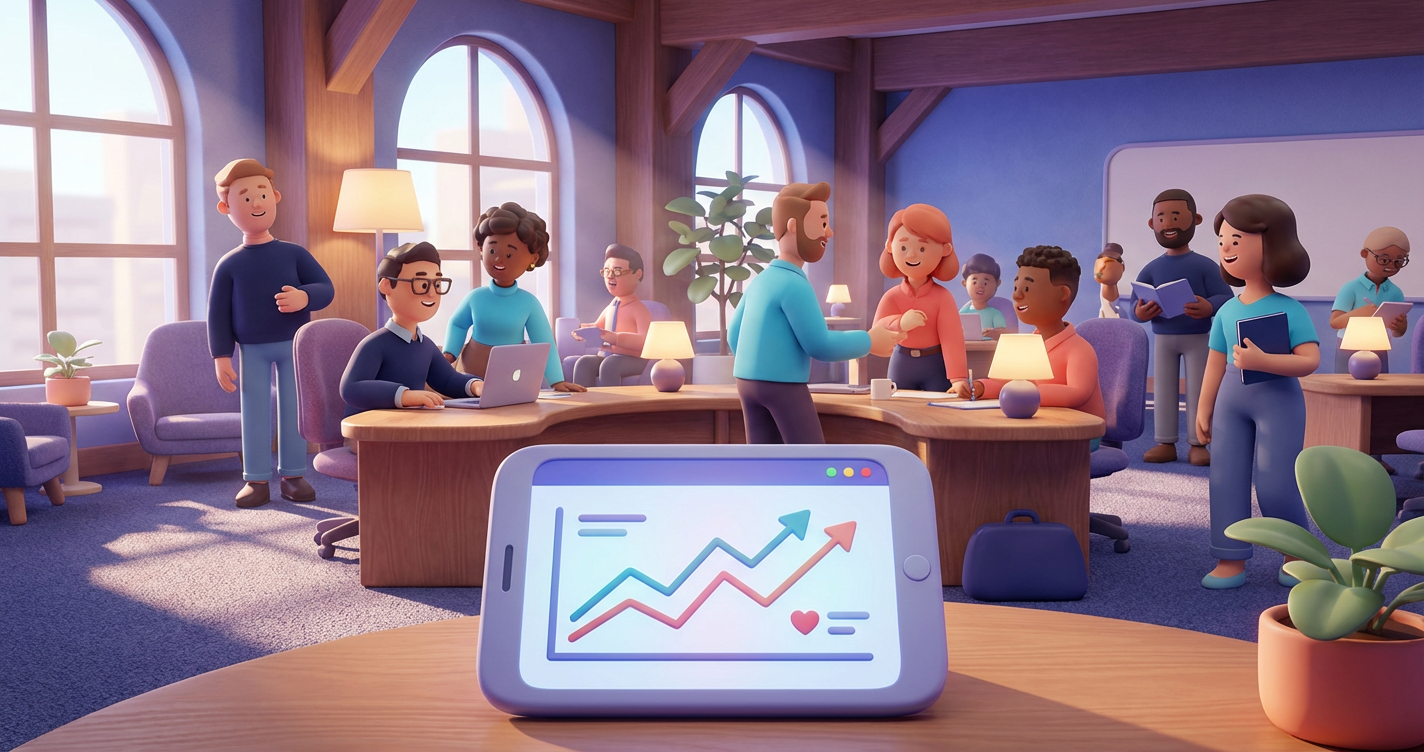
How to improve employee engagement for modern teams
To improve employee engagement, you must align individual work preferences with team activities and provide clear, consistent opportunities for...
Hey Compono helps you understand your personality and how to turn it into your superpower.
First 1,000 users get 10 minutes free.
Just $15 a month after that — cancel anytime.
The AI coach that actually gets you.
First 1000 users get 10 minutes free.
Get Started ≫
Culture fit and employee engagement are the two most powerful drivers of a high-performing workplace because they ensure individuals are motivated by their environment and aligned with team goals.
When people feel they belong and their personal values match the organisation’s mission, they are more likely to invest their full energy into their work. At Compono, we have spent years researching how these elements intersect to create sustainable business success.
Key takeaways
- Culture fit is the foundation of long-term employee engagement and retention.
- Misalignment between individual values and company culture leads to rapid burnout and turnover.
- Measuring work personality helps managers understand how to engage different types of employees effectively.
- Data-driven hiring processes ensure that new starters contribute positively to the existing team dynamic.
- Engagement is not a one-time event but a continuous process of alignment and support.
Many leaders focus heavily on technical skills during the hiring process, only to find that their most talented new starters leave within the first six months. This often happens because the individual – despite being a brilliant coder or salesperson – simply does not mesh with how the team operates. This lack of culture fit is a silent killer of employee engagement, leading to a disconnected workforce and high recruitment costs.
When an employee feels like an outsider, their engagement levels plummet. They might do the bare minimum to get by, but they won't offer the discretionary effort that defines high-performing teams. We see this play out in businesses of all sizes – where the 'wrong' person for the environment creates friction that slows down everyone else. It is not just about having a 'nice' place to work; it is about the practical reality of how work gets done.
The problem is often that culture is treated as something vague or 'fluffy'. In reality, culture is the sum of the behaviours, communication styles, and values that a team lives by every day. If you don't have a clear way to measure these, you are essentially guessing when it comes to hiring and engagement. This is where a more scientific approach to The Compono Culture, Engagement & Performance Model becomes essential for modern HR leaders.

True employee engagement happens when a person's natural work preferences are supported by their surroundings. Imagine a Pioneer who thrives on innovation and risk-taking being placed in a highly rigid, bureaucratic government department. No matter how much you pay them or how many 'employee of the month' awards you give them, they will never be truly engaged because the culture stifles their natural strengths.
Conversely, when culture fit is high, engagement follows naturally. Employees don't need to be 'managed' into being productive because they are intrinsically motivated by the work and the environment. They feel a sense of psychological safety that allows them to speak up, share ideas, and collaborate effectively. This alignment creates a virtuous cycle where high engagement reinforces a positive culture, making the business more attractive to future talent.
At Compono, we believe that understanding a person's work personality is the first step in this journey. By identifying whether someone is a natural Helper or an Evaluator, managers can tailor their leadership style to keep that individual engaged. It is about moving away from a one-size-fits-all approach and towards a more nuanced understanding of human behaviour in the workplace.
To improve employee engagement, you must start at the very beginning of the employee lifecycle: the recruitment phase. Traditional interviews are notoriously poor at predicting culture fit because candidates often tell you what they think you want to hear. To truly understand if someone will thrive in your team, you need objective data that looks beyond the CV.
This is where modern workforce intelligence tools change the game. By using assessments that measure organisation fit, job fit, and personality fit, you can predict how a candidate will behave before they even sign the contract. For example, Compono Hire uses these three dimensions to help you identify candidates who aren't just capable of doing the job, but are likely to be highly engaged while doing it.
When you hire for fit, you are essentially 'future-proofing' your engagement scores. You are bringing in people who are naturally aligned with your mission, which means they require less intervention to stay motivated. This approach has been proven to work in high-pressure environments, such as those detailed in The Coffee Club case study, where finding the right people for a franchise environment is key to long-term success.

Once you have the right people on the bus, the challenge shifts to keeping them engaged. This requires a deep understanding of the different work personalities within your team. A Coordinator might feel most engaged when they have clear structure and deadlines, whereas an Advisor might need more collaborative, open-ended discussions to feel valued.
Conflict often arises when these different styles clash, which can quickly erode engagement. If an Auditor feels rushed by a fast-paced Campaigner, they may withdraw and lose interest in the project. As a leader, your job is to act as a bridge between these styles. Recognising that a Doer needs practical tasks while a Pioneer needs 'the big picture' allows you to delegate work in a way that keeps everyone's 'engagement bucket' full.
We have found that teams who use Compono Engage are much better equipped to handle these dynamics. The platform provides managers with real-time insights into team sentiment and individual work preferences, allowing for proactive adjustments before engagement begins to slip. It is about having a finger on the pulse of your team’s cultural health at all times.
High employee engagement is not just a 'nice to have' metric – it is a leading indicator of business performance. Engaged teams are more productive, more innovative, and significantly more loyal. In an era where the 'war for talent' is more intense than ever, your company culture is your greatest competitive advantage. It is the one thing your competitors cannot easily replicate.
Investing in culture fit and engagement also has a massive impact on your employer brand. When your employees are genuinely engaged, they become your best recruiters. They speak highly of the business on social media and refer their talented friends to open roles. This organic growth is far more effective – and cheaper – than any traditional recruitment campaign. It all starts with a commitment to understanding the human element of your business.
Key insights
- Engagement is the natural byproduct of a strong culture fit between an employee and their workplace.
- Using objective personality assessments reduces the risk of 'bad hires' that damage team morale.
- Leadership must be adaptable, shifting styles to meet the needs of different work personalities within the team.
- Data-driven insights allow for proactive management of team engagement rather than reactive firefighting.
The best way to remove bias is to use objective assessments that measure core values and work preferences rather than relying on a 'gut feeling' during an interview. Using a structured framework ensures every candidate is evaluated against the same cultural benchmarks.
While core personality traits are relatively stable, an individual's alignment with a company can shift as the organisation grows or changes direction. This is why regular engagement check-ins are vital to ensure the fit remains strong as the business evolves.
While technical skills get the work done, culture fit determines how long the person will stay and how well they will work with others. For long-term engagement, both are necessary, but skills are often easier to teach than cultural alignment.
The fastest way is to improve communication between managers and their teams. When managers understand the natural work personality of their staff, they can provide the right kind of support and recognition that truly resonates with each individual.
Culture fit should not mean 'hiring people who are exactly the same'. It means hiring people who share the same core values and mission, even if they have diverse backgrounds, experiences, and ways of thinking. True culture fit embraces cognitive diversity.

Compono Hire helps you predict job-fit and team-fit using behavioural science, so you can shortlist with confidence.
Request a demoBuilt for mid-market hiring teams.

Voice-first coaching that adapts to your personality. Get actionable steps you can take this week.
Start freeBuilt by Compono. Not therapy — practical behaviour change.
To improve employee engagement, you must align individual work preferences with team activities and provide clear, consistent opportunities for...
To keep top performers, you must align their natural work personality with roles that offer autonomy, clear purpose, and opportunities for meaningful...
A team fit assessment is a method of evaluating how well a candidate aligns with your existing team’s culture, work styles, and collective goals to...