

.webp)

 Mathan Allington


Best Employee Engagement Platform Australia 2026: A Buyer's Guide
 Mathan Allington
How to evaluate employee engagement platforms in Australia: what to measure, which features change retention and culture, and what to ask vendors.

An employee engagement survey provider in Australia equips organisations with the software, behavioural science, and data analytics required to measure workforce sentiment, identify cultural gaps, and drive actionable performance improvements.
Key takeaways
- Modern survey providers move beyond simple satisfaction scores to measure deep psychological drivers of performance and alignment.
- Organisations that regularly measure and act on engagement data see significantly higher retention rates and employee advocacy.
- Australian businesses must prioritise platforms offering local data sovereignty, compliance tracking, and continuous listening capabilities.
- The traditional annual survey is being replaced by agile, pulse-based feedback loops that provide real-time insights to leadership.
- Choosing the right provider means looking for actionable dashboards, behavioural science foundations, and strategic HR integrations.
The modern Australian workplace is undergoing a seismic shift. As we navigate 2026, the expectations employees place on their employers have evolved dramatically. A competitive salary and a few office perks are no longer enough to secure loyalty or discretionary effort. Today's workforce demands psychological safety, clear alignment with company purpose, and a culture that actively listens to their feedback. This is where finding the right employee engagement survey provider in Australia becomes a critical strategic decision for HR leaders and executives.
For years, companies relied on the traditional annual engagement survey, a lengthy, cumbersome questionnaire that took weeks to complete and months to analyse. By the time leadership received the results, the data was already stale, and the employees who had raised concerns had often already resigned. This lagging approach to employee sentiment is fundamentally broken. Modern teams require continuous listening, real-time analytics, and actionable insights that equip managers to make micro-adjustments to their team culture before minor frustrations escalate into major retention crises.
In this comprehensive guide, we will explore everything you need to know about selecting an employee engagement survey provider in Australia. We will unpack the undeniable link between engagement and business performance, dissect exactly what a modern survey should measure, and provide a clear framework for executing a successful engagement strategy that drives measurable results.
It is a common misconception that employee engagement is simply a measure of employee happiness. While happiness is certainly a positive byproduct of a healthy workplace, engagement is a much more solid commercial metric. Engagement measures an employee's emotional commitment to the organisation and its goals. It is the difference between an employee who clocks in to do the bare minimum and an employee who actively looks for ways to improve processes, support their colleagues, and deliver exceptional outcomes for clients.
The commercial impact of this discretionary effort cannot be overstated. Research consistently shows that organisations that prioritise and accurately measure engagement reap significant financial rewards. For instance, companies with highly engaged workforces outperform their peers by 147% in earnings per share. This staggering statistic highlights that engagement is not just a soft HR metric, it is a core driver of profitability, productivity, and market competitiveness.
When you partner with a sophisticated employee engagement survey provider in Australia, you are not just buying a tool to collect feedback; you are investing in a diagnostic system for your business engine. Engagement surveys act as an early warning system, identifying pockets of burnout, misalignment, or toxic leadership before they impact your bottom line. By correlating engagement data with performance metrics, HR leaders can build a compelling business case for cultural initiatives, proving to the executive board that investing in people directly translates to investing in the company's financial success.
organisations that measure engagement regularly and act on the results report significantly lower voluntary turnover and higher employee advocacy. In a talent-tight market, your employer brand is your most valuable asset. Engaged employees become your best recruiters, naturally advocating for your organisation within their professional networks. Conversely, ignoring engagement data leads to a silent exodus of your top performers, taking their institutional knowledge and client relationships with them.

If you are evaluating an employee engagement survey provider in Australia, you need to look closely at their underlying methodology. A platform that only asks "On a scale of 1 to 10, how happy are you?" is not going to provide the depth of insight required to enact meaningful change. To truly understand the health of your workforce, your surveys must measure a complex matrix of psychological and environmental factors.
First, a solid survey must evaluate Leadership and Management Alignment. Employees rarely leave companies; they leave managers. Your survey should measure whether employees feel supported by their direct supervisors, whether they receive constructive feedback, and whether they trust the senior leadership team's strategic vision. This data is critical for identifying which managers need coaching and which leadership communication strategies are falling flat.
Second, the survey must assess Role Clarity and Enablement. Even the most motivated employee will disengage if they do not understand what is expected of them or if they lack the tools required to do their job effectively. Questions in this domain should explore whether employees feel their workload is manageable, whether they have access to the right technology, and whether their daily tasks align with the broader objectives of the organisation.
Third, Psychological Safety and Inclusion are non-negotiable metrics in 2026. Employees need to feel safe to voice dissenting opinions, admit mistakes, and bring their authentic selves to work without fear of retribution. A quality survey provider will include validated questions that measure the inclusivity of your culture and the degree to which diverse perspectives are valued.
Finally, the survey must measure Growth and Development Opportunities. High-performing individuals are naturally ambitious. If they cannot see a clear career trajectory within your organisation, they will seek it elsewhere. Your engagement platform should gauge whether employees feel their skills are being used, whether they have access to meaningful learning opportunities, and whether they feel their career progression is supported by the business.
To capture these complex nuances, many HR leaders turn to platforms like Compono Engage. This module acts as a continuous listening platform, allowing you to move beyond basic sentiment and gather deep, actionable insights into the specific drivers of your team's motivation and performance.
For decades, the annual engagement survey was the gold standard for HR departments. However, in today's agile business environment, this approach is fundamentally flawed. The primary issue with the annual survey is its infrequency. Business moves too fast to rely on data that is collected once every twelve months. If a major cultural issue arises in February, but your survey isn't deployed until November, you have lost nine months of productivity and likely several key employees.
annual surveys are notorious for inducing survey fatigue. When employees are presented with a 100-question monolith, they often rush through the responses just to get it off their desk, leading to compromised data quality. This "tick-the-box" mentality defeats the entire purpose of the exercise. Employees also suffer from a recency bias, when asked to reflect on the past year, they will typically heavily weight their responses based on the events of the past two weeks.
This is why the best employee engagement survey provider in Australia will champion a continuous listening approach. Continuous listening involves replacing the annual mega-survey with frequent, targeted pulse checks. These short, 3-to-5 question surveys can be deployed weekly, fortnightly, or monthly, taking less than a minute for an employee to complete. This agile methodology provides leadership with a real-time dashboard of workforce sentiment, allowing them to track trends over time and measure the immediate impact of new company initiatives.
By breaking the feedback loop down into bite-sized interactions, you respect your employees' time while simultaneously gathering more accurate, timely data. It transforms engagement from a retrospective reporting exercise into a proactive management tool.
Having the right software is only half the battle. The success of your engagement initiatives relies heavily on how the survey is implemented and communicated. When partnering with an employee engagement survey provider in Australia, you should follow a structured, transparent process to ensure maximum participation and meaningful results.
Step 1: Strategic Design and Alignment.
Before a single question is asked, HR and executive leadership must align on the objectives of the survey. What specific cultural hypotheses are we trying to test? What metrics are most important to our current business goals? During this phase, you will select the specific question sets and demographic filters, such as tenure, department, or location, that will allow you to slice the data meaningfully later.
Step 2: Transparent Pre-Communication.
The biggest barrier to survey participation is a lack of trust. If employees believe their responses will be used against them, or if they believe the survey is a meaningless HR exercise, they will either not participate or they will provide falsely positive answers. Leadership must clearly communicate the purpose of the survey, guarantee absolute anonymity, and explicitly commit to taking action on the results.
Step 3: Agile Deployment. Use your chosen platform to deploy the survey via the channels your employees actually use, whether that is email, Slack, Microsoft Teams, or an internal portal. Ensure the user interface is mobile-friendly, as a significant portion of the modern workforce will complete the survey on their smartphones during their commute or downtime.
Step 4: Rapid Analysis and Dashboarding. Gone are the days of waiting weeks for a consultant to build a PowerPoint deck. A modern employee engagement survey provider in Australia will offer real-time dashboards that automatically aggregate the data, highlight key trends, and use natural language processing to categorise qualitative text comments. This allows HR to immediately identify the core themes emerging from the workforce.
Step 5: Action Planning and Follow-Through. This is the most critical step. If you ask your employees for feedback and then do nothing with it, you will actively damage your culture and guarantee low participation rates in the future. Leadership must acknowledge the results, both the good and the bad, and outline 2-3 specific initiatives they will implement in response. Progress on these initiatives must be communicated regularly to prove that employee voices are truly valued.
When evaluating engagement data, context is everything. An engagement score of 65% might be cause for celebration in a highly volatile industry, while the same score might trigger alarm bells in a stable, well-resourced sector. This is why benchmarking is a vital feature of any comprehensive survey platform.
In Australia, we have solid examples of large-scale engagement measurement. For instance, the APS Employee Census is an annual confidential survey that provides an incredibly detailed look into the workings of the public sector. This census covers a massive array of metrics, including employee engagement, wellbeing, performance, leadership, communication, and innovation.
Because the APS Employee Census is so comprehensive, it serves as a powerful benchmark for both public and private sector organisations. It demonstrates the value of measuring a whole-of-business range of workplace factors rather than just basic job satisfaction. Private sector companies can learn a great deal from how large government agencies structure their questioning around diversity, inclusion, and ethical leadership.
Whether you are a fast-growing tech startup or an established manufacturing firm, your employee engagement survey provider in Australia should be able to provide you with relevant industry benchmarks. Knowing how you stack up against your direct competitors for talent is essential for refining your employer value proposition and ensuring you remain an attractive destination for top-tier professionals.
While we often think of engagement surveys in terms of culture and motivation, they also play a critical role in corporate governance and risk management. In Australia, the regulatory environment surrounding workplace health and safety (WHS) has expanded significantly, particularly with the introduction of psychosocial hazard regulations. Employers now have a legal obligation to identify and mitigate risks to their employees' mental health.
This is where your survey provider becomes an essential compliance tool. As noted by industry experts, many organisations use their platforms for WHS, wellbeing and compliance surveys where results must be defensible. By regularly surveying your staff on issues related to workload stress, bullying, harassment, and general wellbeing, you create a documented audit trail that proves your organisation is proactively monitoring and addressing psychosocial risks.
A high-quality employee engagement survey provider in Australia will ensure that this data is collected securely, maintaining strict anonymity while still allowing HR to identify high-risk departments or locations. This data-driven approach to wellbeing allows you to target your Employee Assistance Program (EAP) resources effectively and intervene before stress turns into burnout or workers' compensation claims.
The HR technology market is flooded with survey tools, ranging from free, basic form builders to highly sophisticated enterprise platforms. To ensure you select the best employee engagement survey provider in Australia for your specific needs, you must evaluate vendors against a strict set of criteria.
Data Sovereignty and Security: For Australian businesses, data privacy is paramount. You must ensure that your chosen provider hosts their data onshore in Australia, complying with all local privacy regulations and the Australian Privacy Principles (APPs). Ask potential vendors detailed questions about their encryption standards, data retention policies, and how they guarantee employee anonymity.
Behavioural Science Foundation: Anyone can write a list of questions, but writing questions that accurately measure psychological constructs requires expertise. Look for a provider whose survey templates are built on validated behavioural science and organisational psychology. The questions should be carefully worded to avoid leading the respondent and to accurately capture the nuances of workplace motivation.
Advanced Analytics and NLP: The real value of a survey lies in the qualitative comments, the open text fields where employees explain the "why" behind their numerical scores. Reading through thousands of comments manually is impossible for large organisations. Your provider must offer Natural Language Processing (NLP) capabilities that automatically scan text for sentiment (positive, neutral, negative) and categorise comments into themes like "work-life balance" or "management communication".
Actionable Dashboards for Managers: HR should not be the bottleneck for engagement data. The best platforms democratise data, providing direct line managers with secure, role-based access to their specific team's results. the platform should offer automated, actionable recommendations based on the scores. If a team scores low on "recognition", the dashboard should immediately suggest specific, proven strategies the manager can use to improve in that area.
For organisations looking to measure company culture beyond sentiment, finding a platform that integrates smoothly with your broader HR set-up is essential. By connecting engagement data with performance reviews, learning outcomes, and recruitment profiles, you can build a truly whole-of-business view of your workforce's lifecycle.
It can be tempting for budget-conscious organisations to use generic, free survey tools to run their engagement initiatives. However, this approach almost always costs more in the long run through lost productivity, poor data quality, and a lack of actionable insights.
A basic survey tool simply collects data. It gives you a spreadsheet of numbers and leaves you to figure out what they mean. A true employee engagement survey provider in Australia acts as a strategic partner. They provide the analytical engine that translates raw data into a compelling narrative about your culture.
Top providers differentiate themselves through their focus on actionability. They understand that measuring engagement without taking action is worse than not measuring it at all. Therefore, their platforms are designed to bridge the gap between insight and intervention. They provide the frameworks, the coaching prompts, and the integration capabilities required to turn survey results into tangible cultural improvements.
When you invest in a dedicated workforce intelligence platform, you are investing in the behavioural architecture of your business. You are giving your leadership team the x-ray vision required to see the underlying dynamics of their teams, equiping them to build environments where high-performance is not just encouraged, but inevitable.
Choosing the wrong employee engagement survey provider in Australia, or worse, choosing not to measure engagement at all, carries a severe financial penalty. Disengaged employees are less productive, more prone to absenteeism, and significantly more likely to leave the organisation. The cost of replacing a mid-level employee can range from 50% to 150% of their annual salary when factoring in recruitment costs, onboarding, and lost productivity during the ramp-up period.
Conversely, the ROI of getting it right is transformational. When you implement a continuous listening strategy using a sophisticated platform, you create a culture of continuous improvement. Employees feel valued and heard, which directly boosts their intrinsic motivation. Managers are equipped with the data they need to be better leaders. The entire organisation becomes more agile, more resilient, and more aligned with its strategic objectives.
As we look to the future of work, the companies that will thrive are those that treat their culture as their ultimate competitive advantage. By partnering with the right technology provider, you can stop guessing about how your employees feel and start making evidence-based decisions that drive sustainable business success.
Key insights
- Employee engagement is a commercial metric directly linked to profitability, productivity, and reduced voluntary turnover.
- Modern Australian businesses must move away from the annual survey and adopt continuous listening strategies for real-time insights.
- A solid survey measures complex psychological drivers, including leadership alignment, role clarity, and psychological safety.
- Data sovereignty, advanced NLP analytics, and actionable manager dashboards are critical features when selecting an Australian provider.
- Using engagement platforms for wellbeing and WHS compliance helps organisations proactively manage psychosocial risks and maintain defensible records.
Understanding the sentiment of your workforce is the first step toward building a high-performing, resilient culture. By moving beyond basic surveys and embracing continuous, actionable listening, you can identify cultural gaps before they become retention issues and equip your managers to lead with confidence.
If you'd like to talk through how Compono can support your team, we're happy to walk you through it. No pressure, just a conversation.
Related reading
An employee engagement survey provider is a technology vendor that offers software platforms specifically designed to measure, analyse, and track employee sentiment, workplace culture, and psychological drivers of performance. They provide the tools needed to run pulse surveys, analyse feedback, and generate actionable insights for HR and leadership teams.
Using a local provider ensures that your employee data is hosted securely onshore, which is critical for complying with the Australian Privacy Principles (APPs). Local providers also understand the specific nuances of the Australian workplace, including relevant WHS legislation and psychosocial hazard compliance requirements.
The traditional annual survey is largely outdated. Best practice now involves a continuous listening approach. This typically means running short, targeted pulse surveys either monthly or quarterly, supplemented by lifecycle surveys (such as onboarding and exit surveys) to gather real-time, relevant feedback without causing survey fatigue.
Employee satisfaction measures how content an employee is with their job conditions, such as salary, hours, and perks. Employee engagement measures their emotional commitment to the organisation and its goals. An employee can be satisfied (happy to do the bare minimum for their pay) without being engaged (willing to give discretionary effort to help the company succeed).
To boost participation, you must guarantee absolute anonymity and clearly communicate the purpose of the survey. Most importantly, leadership must take visible action on the results of previous surveys. If employees see that their feedback leads to tangible improvements, they will be highly motivated to participate in future surveys.

How to evaluate employee engagement platforms in Australia: what to measure, which features change retention and culture, and what to ask vendors.

Discover the most effective employee engagement survey questions for 2026. Learn how to measure intent to stay, intrinsic motivation, and team...
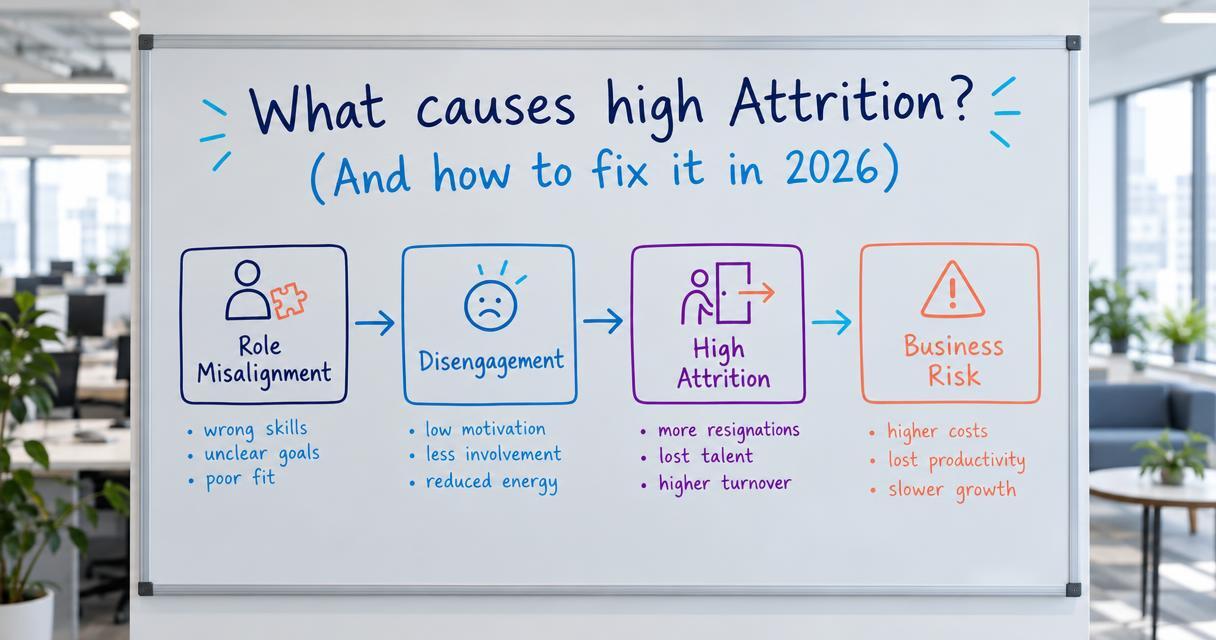
What causes high attrition in modern teams and learn how to identify the warning signs before your best employees leave. Read the complete guide.