

.webp)

 Compono


How to choose the right team collaboration software
 Mathan Allington
Discover how to choose the best team collaboration software for your business. Learn how personality and workflow fit drive high-performing teams.
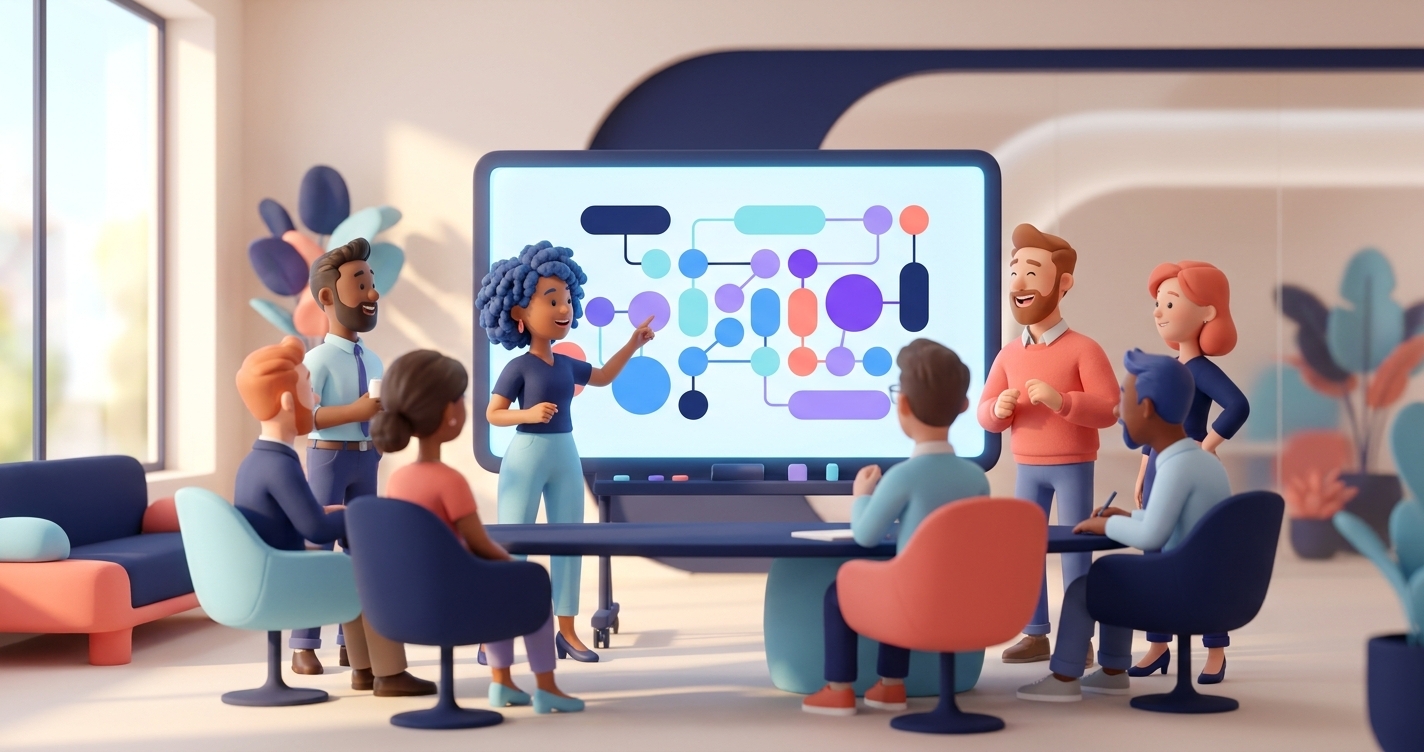
The best CliftonStrengths alternatives for teams provide actionable behavioural data that improves daily collaboration, rather than just delivering individual self-awareness reports.
Key takeaways
- CliftonStrengths is highly effective for individual self-discovery, but modern teams often require tools built specifically for group dynamics and operational alignment.
- Alternatives like HIGH5 offer direct strengths-based mapping, while tools like Everything DiSC and Predictive Index focus on communication styles and enterprise workforce design.
- Evaluating the right assessment depends on whether your primary goal is improving team communication, restructuring roles, or guiding new hires.
- Compono uses the Work Personality framework to map eight core work activities, giving managers immediate insight into how their team naturally prefers to operate.
Many organisations start their team development journey with established assessments. The standard approach involves having employees complete a questionnaire to reveal their natural talents. CliftonStrengths assesses 34 distinct strength themes, providing reports that highlight either a person's top five talents or their complete profile across all 34 areas.
This level of detail is excellent for personal coaching. Employees gain a deep vocabulary for their own natural tendencies. They understand why they prefer certain tasks and avoid others.
The friction occurs when managers try to apply these 34 themes to daily team operations. Memorising the overlapping strengths of 12 different team members requires significant effort. Leaders often find themselves with a folder full of detailed PDFs that rarely influence how work actually gets assigned or how conflicts are resolved. Teams need frameworks that translate individual insights into group action.

Self-awareness is a critical first step in professional development. When an employee discovers their top strengths, they often experience a moment of clarity regarding their past successes and frustrations. However, self-awareness alone does not improve team performance. If a team of highly self-aware individuals lacks a shared vocabulary to navigate conflict or assign work, operational friction remains high.
Team leaders require tools that move beyond individual introspection. They need actionable data that dictates how a project should be structured, who should lead the brainstorming phase, and who should handle the final quality assurance. This shift from introspection to operational design is why many businesses seek CliftonStrengths alternatives for teams.
When evaluating CliftonStrengths alternatives for teams, you need to match the tool's core methodology with your operational goals. Some platforms focus heavily on communication, while others are built for enterprise role design.
If your team responds well to positive psychology and strengths-based development, HIGH5 is a highly accessible option. HIGH5 is a direct CliftonStrengths alternative because it offers a free strengths assessment that identifies your top five strengths from 20 possible strengths.
The reduced number of potential strengths makes the framework easier for managers to remember and apply during weekly check-ins. It maintains the affirmative tone of CliftonStrengths while simplifying the cognitive load for team leaders who need to map out group dynamics quickly.
Miscommunication is a primary driver of team friction. Everything DiSC categorises behaviour into four primary styles: Dominance, Influence, Steadiness, and Conscientiousness. This model is exceptionally practical for resolving interpersonal conflicts and improving how team members deliver feedback to one another.
Because it focuses on observable behaviour rather than internal motivations, employees can easily adapt their communication style to match their colleagues. Everything DiSC is commonly priced at about $70–$90 per person, making it a reliable communication-focused alternative for mid-sized teams.
For larger organisations focused on aligning talent with business strategy, Predictive Index (PI) offers a robust behavioural and cognitive assessment suite. PI is less about personal self-discovery and more about workforce engineering. It helps leaders understand if they have the right behavioural drives in the right roles to execute specific business objectives.
This level of strategic alignment requires a larger investment. Predictive Index is an enterprise option with pricing starting at $4,950 per year for unlimited users, aimed primarily at hiring and team design.
Some teams require tools that focus on peer-to-peer alignment or core values. PrinciplesUs starts at $36 per user per year and is positioned as a free-adjacent team tool with peer comparison built in. This helps colleagues understand how they stack up against each other in specific work scenarios.
Alternatively, VIA for Teams offers a free individual VIA Survey and a team report priced at $15 per person. The VIA model leans heavily into character strengths and virtues, which is highly effective for teams focused on cultural alignment and ethical decision-making.
The most effective team assessments bridge the gap between abstract personality traits and concrete daily tasks. Knowing that an employee has high "ideation" is interesting. Knowing exactly how that trait impacts their ability to coordinate a project or evaluate a risk is actionable.
This is where work personality frameworks provide a distinct advantage. At Compono, we map natural work preferences against eight core activities that high-performing teams must execute: Evaluating, Coordinating, Campaigning, Pioneering, Advising, Helping, and Doing.
When a manager looks at their team through this lens, they immediately see operational gaps. If a team has five Pioneers (people who generate new ideas) but zero Doers or Coordinators, the manager knows exactly why projects are stalling at the execution phase. The data moves from personal coaching to strategic team design.
The success of any team assessment program rests entirely on the shoulders of frontline managers. If a manager cannot quickly interpret the data and apply it to a real-world problem – such as a missed deadline or a conflict between two senior staff members – the assessment loses its value.
Effective alternatives provide managers with team-level dashboards. These dashboards plot every team member on a single visual matrix, instantly highlighting areas of behavioural overlap and potential friction. When a manager can see that their entire team naturally avoids detailed evaluation tasks, they can proactively adjust their management style to ensure quality control processes are strictly enforced.
You can explore various options by reviewing 7 free personality tests for employees to see which methodology resonates best with your leadership group before committing to an enterprise rollout.
Team development should not start after an employee is hired. The most resilient organisations use behavioural data to inform their talent acquisition strategy from the very beginning.
If you know your current marketing team lacks analytical rigour, your next hire should naturally prefer evaluating data and managing risk. By using a unified framework across both recruitment and team development, you create a seamless experience. Candidates are assessed against the same behavioural benchmarks that your internal teams use every day.
Understanding work personality allows you to identify exactly what a candidate will add to your team dynamics before you make an offer. This proactive approach reduces the likelihood of cultural mismatch and accelerates the onboarding process.
Key insights
- Individual assessments often fail to translate into operational improvements because the frameworks are too complex for daily managerial use.
- Cost and scalability are major factors when selecting an alternative – solutions range from free strengths-based tools to enterprise platforms costing thousands annually.
- The most practical assessments map directly to the work activities your team needs to execute, highlighting both strengths and operational blind spots.
- Integrating your chosen behavioural framework into your hiring process ensures you are actively building balanced teams rather than just managing the teams you inherit.
Compono provides leaders with actionable behavioural data that maps directly to the eight core activities required for high-performing teams.
Related reading
CliftonStrengths focuses on identifying an individual's internal talents and motivations across 34 themes. Everything DiSC focuses on observable communication and behavioural styles, making it highly effective for improving interpersonal dynamics and conflict resolution within teams.
Yes, tools like HIGH5 offer a free assessment that identifies a person's top five strengths from a list of 20. Other platforms like VIA for Teams provide free individual surveys, though they may charge a small fee for aggregated team reports.
Work personality assessments map natural behavioural preferences to specific work activities. This allows managers to see if their team has the right balance of idea generators, detail-oriented evaluators, and practical executors, helping them assign tasks more effectively.
Many organisations use behavioural and personality assessments during the hiring process to ensure a candidate's natural work preferences align with the existing team's gaps. It is important to use tools specifically validated for recruitment to avoid bias and ensure fairness.
Frameworks with a high number of themes require significant cognitive load to memorise and apply. Managers overseeing multiple employees often struggle to remember how dozens of different traits interact, leading them to abandon the tool in favour of simpler, more actionable frameworks.

Discover how to choose the best team collaboration software for your business. Learn how personality and workflow fit drive high-performing teams.
Discover how to unlock employee potential through work personality insights, psychological safety, and aligned leadership styles. Boost performance...
Discover the best team personality test for workplaces in 2026. Compare top assessments and learn how to map working styles to improve team...
 Compono