

.webp)

 Rudy Crous


Assessment Design Matters: Choosing the Right Question Type for the Decision You Need to Make
 Rudy Crous
Discover how to choose the right question type for assessments to ensure valid decision-making and effective measurement of skills and attitudes.

This is Part 1 of the 'Better Assessment Design Series:
Why Good Tests Are About More Than Questions and Scores.'
Click here for more in the series.
Most assessments look more objective than they really are.
They have questions, answer options, scores, pass marks, reports and sometimes certificates. That can create confidence. But a score only matters if we understand what the assessment actually tested.
This is where many assessments run into trouble.
They test whether someone can remember information, then treat the result as if it proves understanding, application, judgement or competence.
That is a big leap.
Good assessment design is not just about asking questions. It is about designing evidence. And Bloom’s Taxonomy helps us ask one of the most important questions in assessment design:
Knowing the answer is not the same as understanding the situation
Imagine showing someone a stop sign and asking:
What should you do when you see this sign?
The answer is simple:
Stop.
That is a legitimate question. It tells us whether the person knows what the sign means.
But it does not tell us much beyond that.
Now ask:
You are approaching a stop sign near a school. Children are walking nearby. Why is it important to stop?

This is a different question.
The person now has to explain the reason behind the rule. They may talk about children being unpredictable, reduced visibility, traffic conditions, reaction time, pedestrian safety, and the possible consequences of failing to stop.
Same sign. Same rule. Better evidence.
Now go further:
You are approaching a stop sign near a school at 3pm. It is raining. Children are nearby. A car is close behind you. What should you do?

Now the person has to apply the rule in context.
And if you ask:
What are the main risks in this situation, and which one should you respond to first?
Now they have to analyse and evaluate.
This is the value of Bloom’s Taxonomy. It helps us see that the level of the question changes the quality of the evidence.
|
Bloom’s level |
What it asks |
Stop sign example |
|
Remembering |
Can they recall it? |
What does a stop sign mean? |
|
Understanding |
Can they explain it? |
Why should you stop near a school? |
|
Applying |
Can they use it? |
What should you do in this situation? |
|
Analysing |
Can they break the situation down? |
What hazards are present? |
|
Evaluating |
Can they make and justify a decision? |
What is the safest option, and why? |
|
Creating |
Can they design a new solution? |
How would you make this intersection safer? |
Many assessments stop too early.
They ask people to define terms, identify rules, remember facts, or select the most obvious answer. That may be useful for checking knowledge, but it is not enough if the assessment result is being used to make a stronger claim.
There is nothing wrong with knowledge questions.
The problem is pretending that knowledge questions prove deeper understanding or competence.
A student can define photosynthesis but still struggle to explain what happens to a plant in the dark.
A learner can memorise a safety rule but still fail to apply it when the situation becomes messy.
A person can know what a stop sign means and still make a poor decision at a dangerous intersection.
That is why assessment design should start with the evidence required, not just the content to be covered.
Before writing a question, ask:
If someone gets this right, what have they actually proven?
If they have only proven they can remember a fact, be honest about that.
If they need to prove they understand a concept, ask them to explain it.
If they need to prove they can apply knowledge, give them a situation.
If they need to prove they can make a judgement, give them competing factors.
If they need to prove they can solve a problem, give them a problem worth solving.
Bloom’s Taxonomy is not useful because it gives assessment designers a neat hierarchy.
It is useful because it protects us from overclaiming.
It stops us from saying:
They passed, therefore they are competent.
when the assessment may only show:
They remembered enough information to pass.
That distinction matters.
Because once an assessment result is used to make a decision, the quality of the assessment becomes the quality of the decision.
A better assessment does not just ask whether someone knows the answer.
It asks whether they understand what the answer means, when to use it, why it matters, and how to apply it when the real world is less obvious than the test.
Rudy Crous is a corporate psychologist and the co-founder and CEO of Compono, a people and culture platform that brings hiring, engagement, learning and credentialling together in one place, adding behavioural science to the processes most HR tools only track.
Read the next article in the series.
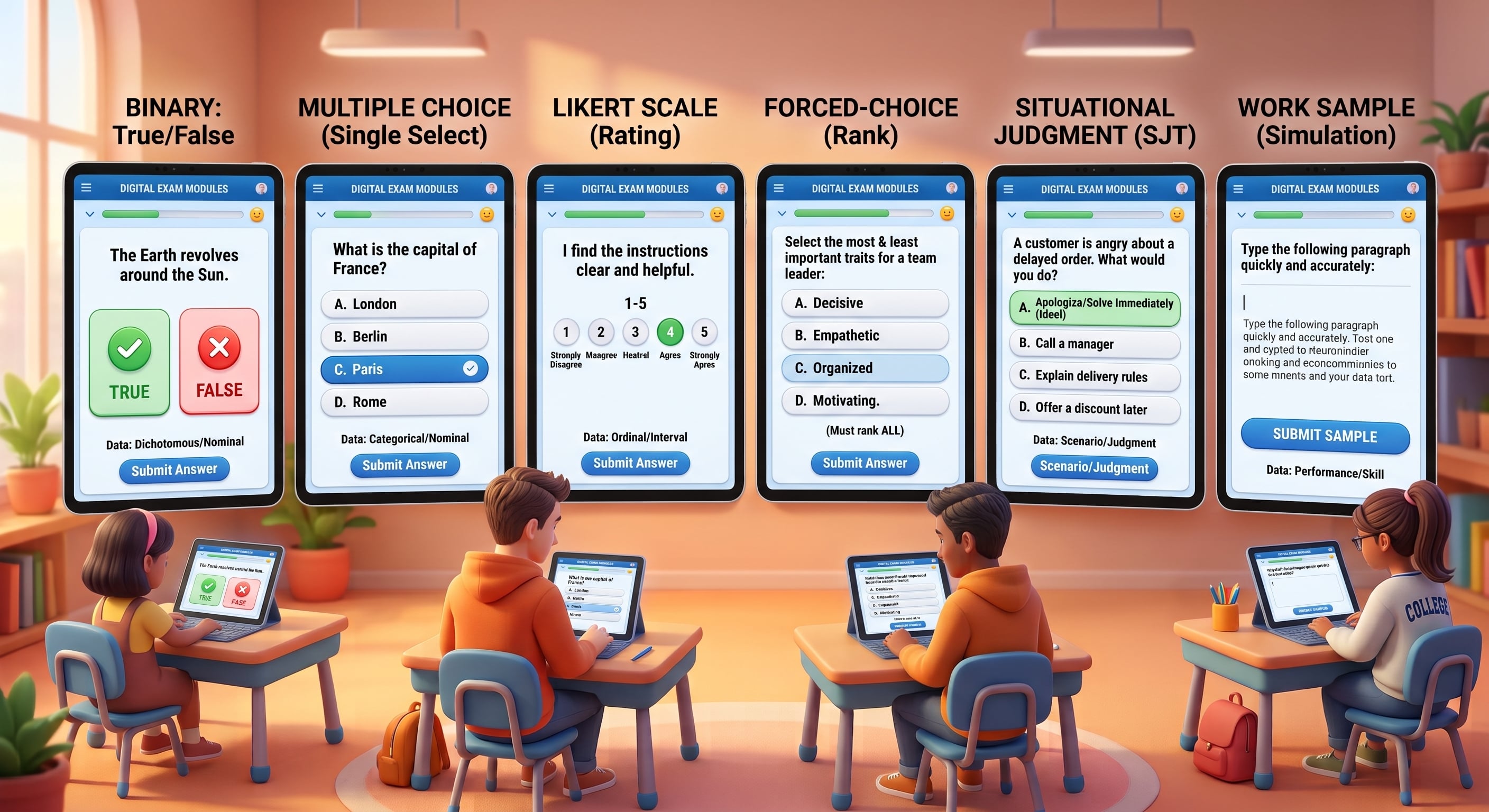
Discover how to choose the right question type for assessments to ensure valid decision-making and effective measurement of skills and attitudes.
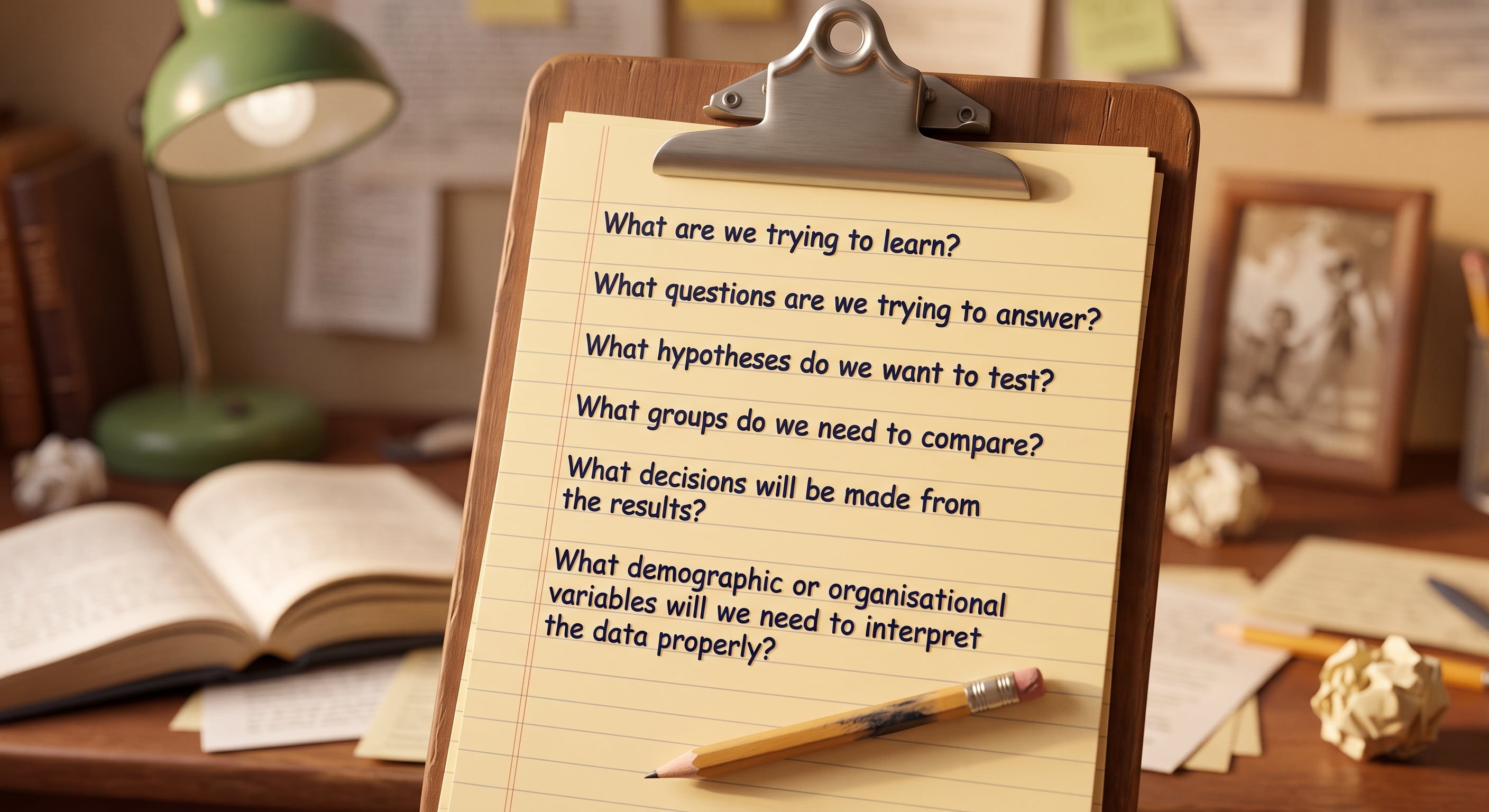
Unlock the potential of assessment design by focusing on the data needed for meaningful insights. Learn how to create assessments that drive...

Discover how fairness in assessments goes beyond equal treatment, addressing hidden barriers and ensuring accurate measurement of knowledge and...