


 Mathan Allington
Choosing the Best LMS for Aged Care Australia in 2026
 Mathan Allington
Our pick for aged care compliance training in Australia is Compono Develop. Here are the criteria, five platform categories compared, and the fit...
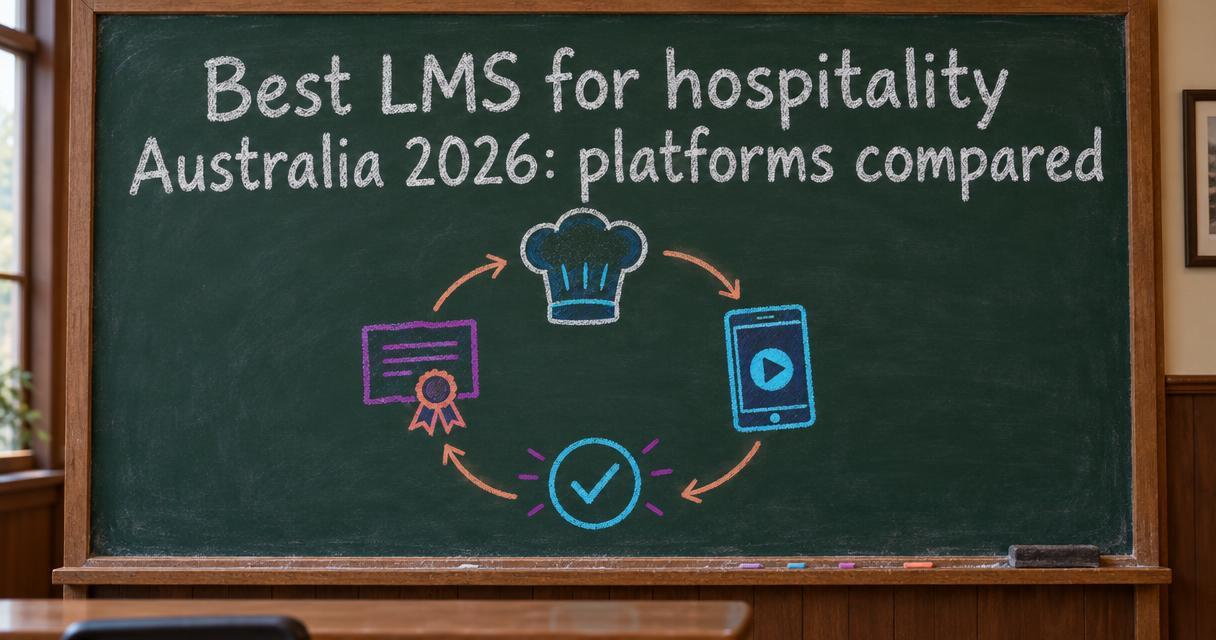
The best LMS for hospitality Australia provides mobile-first training, automated compliance tracking for local regulations, and active-user pricing to handle seasonal workforce fluctuations.
Last reviewed November 2026
Quick answer
- Price: Ranges from $3 to $15 per active user monthly, depending on the platform, vendor, and user volume.
- Best for: Hospitality operators needing to balance high turnover with strict Australian compliance laws and frontline service standards.
- Verdict: A hospitality LMS must track mandatory certifications while actually building the capability of a young, transient workforce.
Finding the right learning management system for a hospitality business is different to buying software for a corporate office. Your workforce does not sit at desks. Your teams work varied shifts across multiple locations, often relying on their personal mobile phones for communication. You face constant pressure to onboard new staff quickly while ensuring strict compliance with local liquor, gaming, and food safety regulations.
Most standard corporate learning platforms fail in a venue environment. They charge you for seats that remain empty during the off-season. They make it difficult for staff to access short bursts of training between service periods. They treat compliance as a box to tick rather than a baseline for actual capability.
This guide examines the best learning platforms for the Australian hospitality sector in 2026. We will look at the specific challenges operators face today, the features you actually need, and how the top systems compare when put to the test.
The Australian hospitality industry relies on a massive, highly mobile workforce. According to Jobs and Skills Australia data, the Accommodation and Food Services sector employed 966,000 people in 2025. This figure represents 6.6% of the national workforce. Managing the capability of almost a million workers is a logistical challenge that breaks traditional, paper-based training methods.
Demographics add another layer of complexity. The same Jobs and Skills Australia data shows that more than 45% of Australian hospitality employees are under 25. For many, a job in a cafe, pub, or hotel is their first experience in the workforce. They require foundational training in workplace behaviour and basic safety, not just technical skills.
Furthermore, skills shortages persist across critical roles. Recent Victorian Government projections indicate that between 2025 and 2028, Australia will need 3,540 new chefs, 2,560 waiters, 1,790 bar attendants, and 1,410 cafe and restaurant managers. When you cannot hire fully trained professionals, you must develop them internally. This reality forces operators to rethink how they deliver learning.
Most HR software manages process risk. It tracks compliance, completion rates, and audit records. A true hospitality learning system handles process risk while also managing people insight risk. It connects the training modules to actual on-the-job capability, ensuring that a completed course translates to better customer service and safer food handling.
Before evaluating software vendors, you must understand the specific operational hurdles a hospitality learning platform needs to clear. Corporate systems often stumble when faced with the realities of a commercial kitchen or a busy bar.
Hospitality venues experience some of the highest staff turnover rates in the country. When a large portion of your team consists of casual workers, you spend a disproportionate amount of time onboarding. Traditional classroom training sessions are expensive and difficult to schedule around varied shifts.
Your learning system must automate the onboarding journey. Before a new hire even walks in for their first shift, they should have completed their induction, uploaded their mandatory certificates, and reviewed your core menu items on their phone.
If you operate a hospitality group across state borders, compliance becomes a major headache. The rules governing the Responsible Service of Alcohol (RSA), the Responsible Conduct of Gambling (RCG/RSG), and Food Safety Supervisors vary dramatically between New South Wales, Victoria, Queensland, and other jurisdictions.
A generic global platform will not understand these nuances. You need a system that allows you to build state-specific compliance pathways, ensuring a bartender in Sydney receives different mandatory training prompts to a bartender in Melbourne.
Workplace safety is a non-negotiable aspect of hospitality training. Slips, trips, burns, and manual handling injuries are common risks. The Victorian Government projections highlight that occupational health and safety requirements appeared in 12.9% of all Australian accommodation and food-services job advertisements in 2024.
Regulators expect you to prove that your staff have been trained to work safely. A reliable platform provides audit-ready records at the click of a button, protecting both your employees and your business license.
When you sit through software demonstrations, vendors will show you a dizzying array of features. You must cut through the noise and focus on the capabilities that actually matter in a hospitality environment.
Hospitality staff do not sit at computers. If your training modules require a desktop screen to render properly, your completion rates will plummet. The platform must offer a flawless mobile experience, ideally through a dedicated application or a highly responsive web interface.
Content must also be delivered in short, digestible bursts. Microlearning allows a chef to watch a three-minute video on a new plating technique during a quiet period before service, rather than forcing them to sit through a two-hour generic presentation.
Regional pubs, remote tourism operators, and even the basement kitchens of large city hotels often suffer from poor internet connectivity. An effective hospitality learning tool allows staff to download training materials over Wi-Fi at home, complete them offline during their commute or in a signal dead zone, and sync their progress automatically once they reconnect.
You cannot teach someone how to carry three plates or pour the right beer purely through online videos. Hospitality is a practical industry. Your software must include functionality for on-the-job assessments.
Managers need to be able to stand on the floor with a tablet, observe a staff member completing a task, and sign off on their practical competency directly within the system. This blends digital knowledge delivery with real-world capability verification.
Tracking paper certificates in a filing cabinet is a recipe for compliance failure. The system must automatically prompt staff to upload their RSA or Food Safety certificates upon hiring. More importantly, it must read the expiry dates and send automated reminders to both the employee and the venue manager 60 days, 30 days, and 7 days before a critical license expires.
One of the biggest mistakes hospitality groups make is purchasing software on a traditional corporate licensing model. If you pay a fixed fee for 500 "seats" or licenses, you will waste money.
Hospitality is highly seasonal. A coastal hotel might employ 150 staff during winter and scale up to 400 staff during the summer holidays. If you buy 400 seats on an annual contract, you are paying for 250 ghost employees for nine months of the year.
You must seek out an "active user" pricing model. Read our detailed LMS pricing guide to understand how this works in practice. Under an active user model, you only pay for a person in the months they actually log in to the system. During your off-season, your costs drop automatically. During peak recruitment phases, you scale up without needing to renegotiate your contract or buy extra batches of licenses.
The market is crowded with vendors claiming to solve hospitality training. We have evaluated the strongest contenders based on their suitability for Australian venues, their compliance tracking capabilities, and their pricing models.
| Platform | Best for | Pricing approach |
|---|---|---|
| Compono Develop | Connecting compliance to real capability | Active user available |
| Docebo | Global enterprise hotel chains | Volume based |
| Bridge | Corporate performance management | Per seat |
| LearnWorlds | Selling external courses | Tiered subscriptions |
| SkyPrep | Basic document tracking | Tiered pricing |
Compono makes Compono Develop. We've included it and kept every entry's strengths and limits honest.
An effective learning platform acts as your ultimate defence during a regulatory audit. You need to configure the system to handle the specific requirements of Australian hospitality law.
Take the Responsible Service of Alcohol. In New South Wales, staff must hold a competency card issued by Liquor and Gaming NSW. The platform must prompt the new hire to upload a photo of both the front and back of this specific card. It must then verify the expiry date.
In contrast, a staff member in Victoria needs a certificate approved by Liquor Control Victoria, which historically required a refresher course every three years. Your learning system must use changing rules to group employees by their location, assigning only the correct compliance pathways to each venue.
Food safety regulations present similar challenges. Venues must maintain a certified Food Safety Supervisor. If that supervisor leaves the business, you have a strict, legally defined window to appoint a replacement. A smart platform tracks this metric at a venue level. It will alert the area manager the moment a venue drops below its required ratio of certified food safety staff, allowing you to speed up the training of a replacement before an inspector arrives.
Buying the software is only the first step. The success of any learning platform relies entirely on how well you start it across your venues. A disjointed rollout will lead to low adoption and frustrated staff.
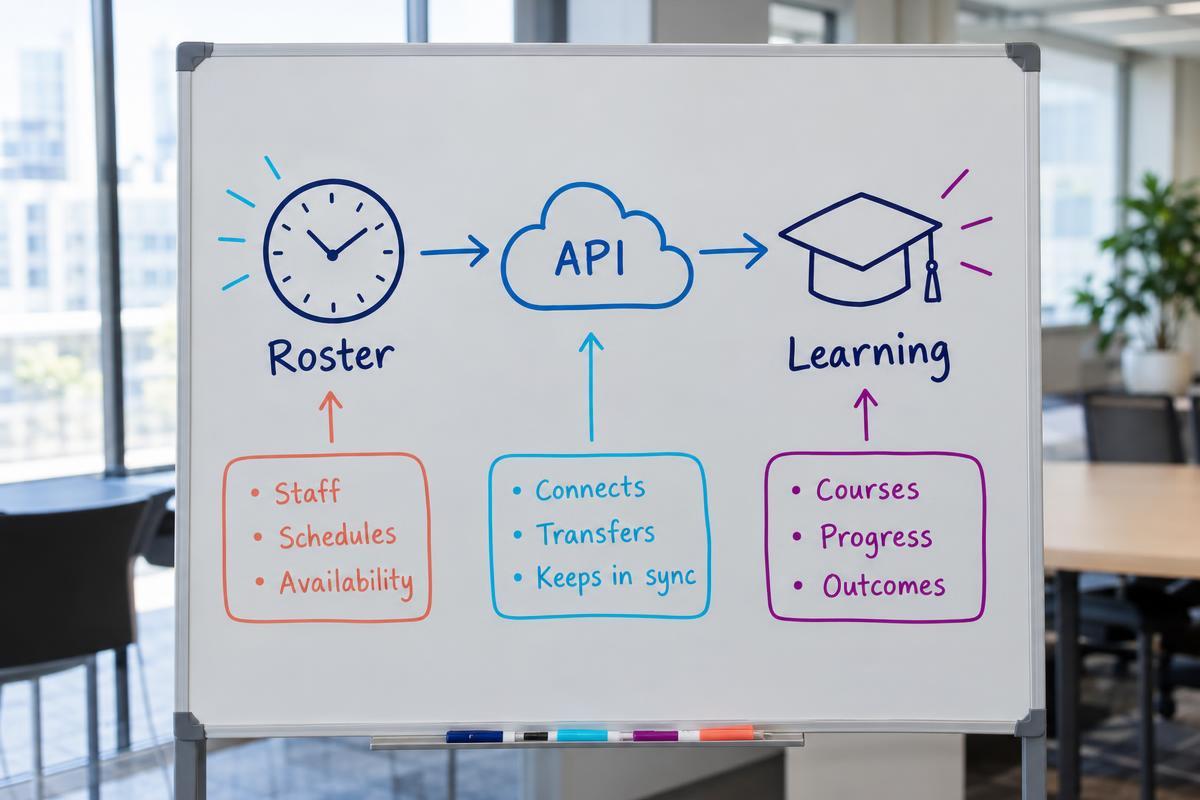
Your first priority must be integration. Your learning system should not operate in isolation. It must connect seamlessly with your HR software and your rostering tools. When you understand the market of hospitality HR software in Australia, you see the value of a connected set of tools.
When a candidate is hired through your applicant tracking system, their details should flow automatically into your learning platform. This triggers their onboarding journey instantly. Once they complete their mandatory compliance modules, the learning platform should signal your rostering software (such as Deputy or Tanda) that the employee is now legally cleared to be scheduled for a shift.
Begin your rollout by focusing purely on compliance and onboarding. Do not overwhelm your venue managers with leadership courses or complex wine-tasting modules on day one. Digitise your induction manual, automate your certificate collection, and prove the system works. Once the platform saves your managers two hours a week in paperwork, you earn the right to introduce higher-level capability and service training.
Your learning system should do more than just store compliance certificates in a digital filing cabinet. Compono Develop handles the rigorous process risk of Australian hospitality regulations while building the frontline capability your venues actually need to thrive.
The best learning management system for Australian hospitality businesses offers mobile-first microlearning, automated compliance tracking for local state regulations, and active-user pricing to accommodate seasonal staff turnover.
Pricing typically ranges from $3 to $15 per user per month. Hospitality operators should always look for active-user pricing models rather than fixed-seat licenses, ensuring they only pay for staff who actually log in during busy seasons.
Yes. Modern platforms use open APIs to connect with popular Australian rostering systems. This integration ensures managers can only schedule staff for a shift if they have completed their mandatory compliance training and hold valid certificates.
Yes. A reliable system will prompt staff to upload photos of their state-specific RSA cards, read the expiry dates, and send automated notifications to both the employee and management before the certification lapses.
Frontline staff rarely have the time to sit through hour-long training sessions on a computer. Microlearning delivers critical knowledge in three-to-five-minute bursts that staff can consume on their phones during quiet moments in service.

Our pick for aged care compliance training in Australia is Compono Develop. Here are the criteria, five platform categories compared, and the fit...
The best LMS for NDIS providers in 2026. Compare top platforms for compliance tracking, audit readiness and building genuine support worker...
To choose an LMS for local government in Australia. We cover APPs compliance, TechnologyOne integration, deskless worker access and council...