
.webp)

 Mathan Allington


Choosing the Best LMS for Aged Care Australia in 2026
 Mathan Allington
Our pick for aged care compliance training in Australia is Compono Develop. Here are the criteria, five platform categories compared, and the fit...
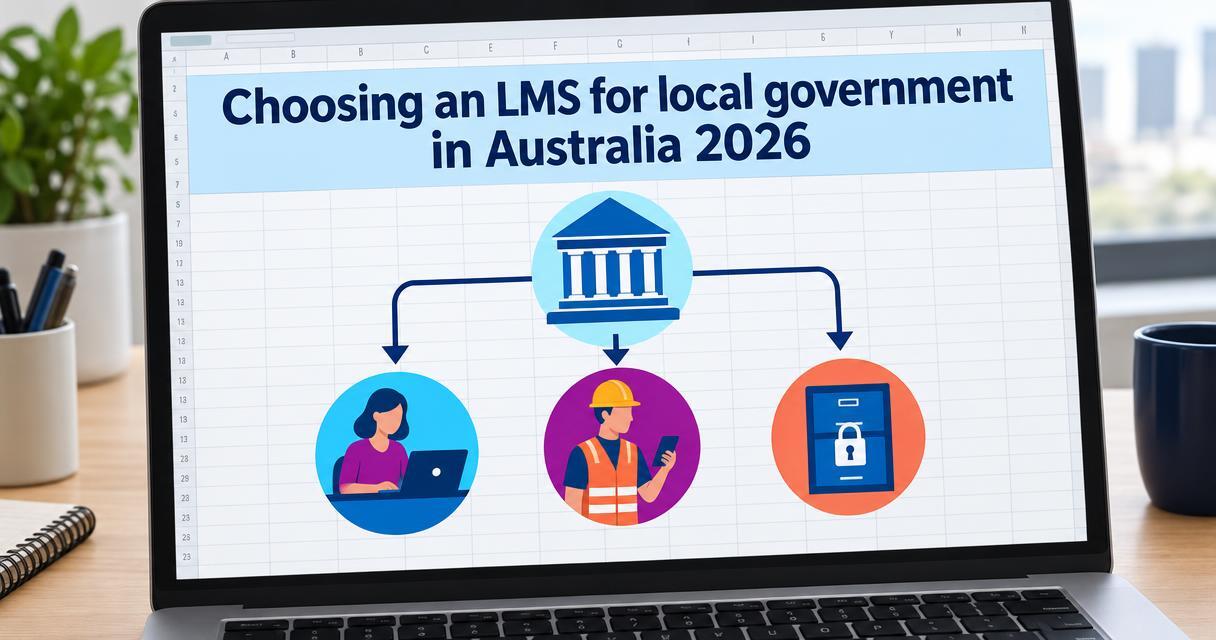
Finding the right LMS for local government in Australia means solving the unique problem of training both desk-bound administrators and field crews while keeping every certification strictly audit-ready.
Last reviewed October 2026
Key takeaways
- Council training must reach field workers on mobile devices just as easily as it reaches office staff on desktop computers.
- Data sovereignty and compliance with the Australian Privacy Principles are mandatory features for any public sector platform.
- Integrating learning platforms with enterprise systems like TechnologyOne or Civica removes manual data entry and reduces administrative errors.
- Using established procurement panels helps councils overcome budget constraints and work through complex public sector tendering rules.
Local councils manage one of the most diverse workforces in the country. On any given day, an organisation must train library staff, civil engineers, waste management crews, child care workers and executive leaders. Delivering consistent learning across such a fragmented group requires software built for the public sector. A standard corporate platform rarely survives the complex demands of council operations.
Many councils rely on outdated spreadsheets or fragmented manual systems to track compliance. This creates massive administrative overhead. According to a recent Council Magazine survey, more than 70 percent of surveyed Australian councils named budget constraints as a major barrier to improving the digital community experience. When budgets are tight, every hour spent chasing staff for missing signatures or expired white cards is a waste of public funds.
Moving to a modern learning management system fixes this resource drain. However, standard business software assumes every employee works at a desk, holds a company email address and operates entirely online. Council platforms must work differently. They need to manage volunteers alongside permanent staff, handle shared devices at remote depots and track high-stakes physical competencies.
The biggest failure point for council software is the deskless worker. Parks and gardens crews, road maintenance teams and waste management workers rarely access a desktop computer during their shift. If a training platform requires a complex login on a large screen, completion rates will plummet and risk exposure will rise.
An effective learning management system reaches people where they are. This means delivering training through a responsive mobile interface that workers can access on their own phones or shared depot tablets. Some systems even offer offline syncing, allowing road crews working in regional areas with poor cellular coverage to complete safety modules and sync their progress when they return to base.
We often see councils struggle to enrol staff who lack formal corporate email addresses. A modern platform solves this by allowing login via mobile numbers, employee ID codes or single sign-on through shared kiosks. When you make learning accessible to the field workforce, you close the largest compliance gap in the organisation.
An isolated software platform creates more work than it eliminates. Council Magazine reports that 61.8 percent of Australian local-government respondents cited integration challenges as a major barrier to improving digital services. When HR teams have to manually update staff records across three different systems, mistakes happen and compliance slips.
Your learning platform must talk to your core enterprise software. Most Australian councils run on heavy enterprise resource planning tools like TechnologyOne, Civica or SAP. When these systems connect with your learning management system, the data flows automatically. A new hire enters the payroll system and their safety induction instantly appears in their training queue. When an employee leaves, their access is revoked everywhere at once.
In fact, the same survey found that modernising and better integrating council systems was the most commonly selected digital priority for the next 12 months, chosen by 50 percent of respondents. Evaluating government training platforms requires asking vendors exactly how their API handles two-way data syncing with your specific payroll and HR software.
Public sector data comes with strict obligations. Councils hold sensitive employee records, medical clearance details and identity documents. A breach is a major public trust issue. This makes data security a primary concern when selecting any software.
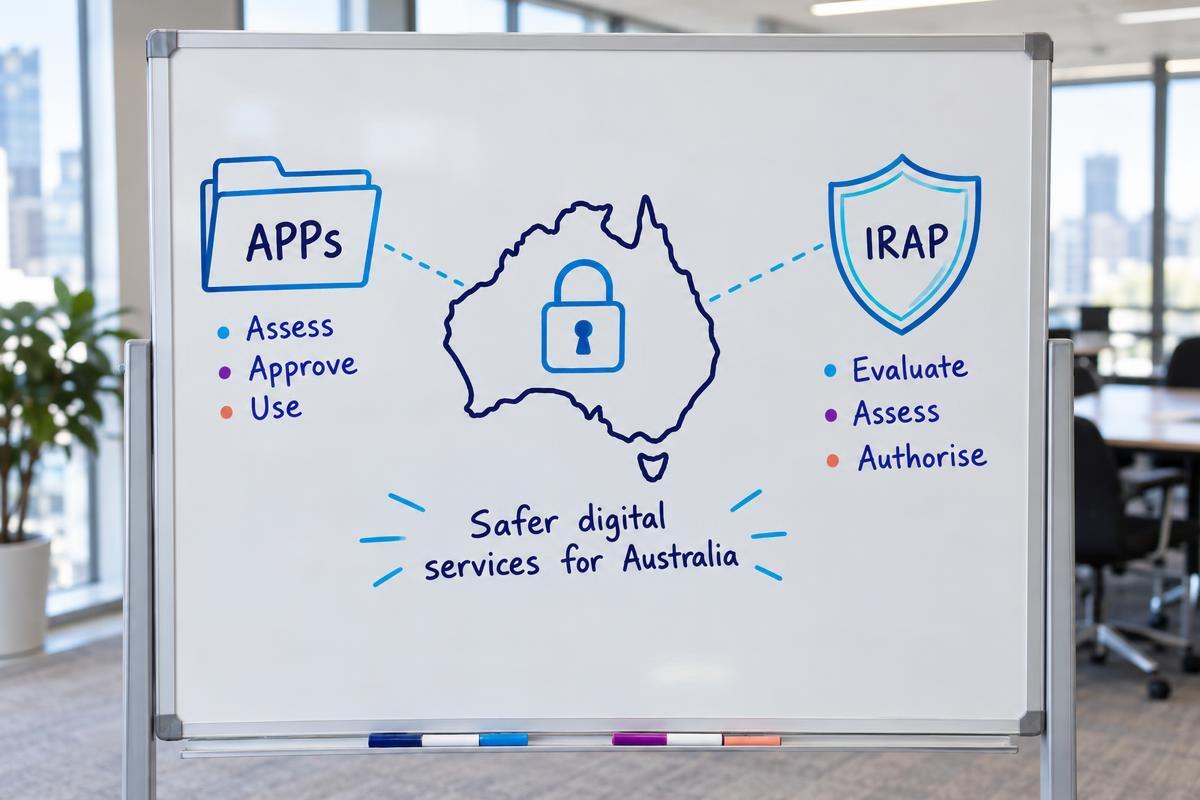
Your chosen platform must comply with the Australian Privacy Principles (APPs). This means knowing exactly where your data lives. Many global software vendors host their data in the United States or Europe, which can conflict with state and federal data sovereignty requirements. Australian councils generally need software that hosts data locally in onshore data centres.
Beyond data residency, the platform needs strong role-based access controls. A depot manager should only see the training records for their direct reports, while the central HR team needs full visibility across the organisation. Systems assessed under the Information Security Registered Assessors Program (IRAP) give councils confidence that the software meets federal cybersecurity standards.
For office workers, a missed training module is usually just an HR headache. For field workers operating heavy machinery, an expired ticket is a legal liability. Councils must maintain a strict, audit-ready record of every qualification, licence and safety certification held by their staff and contractors.
Your platform needs a dedicated certification management engine. This goes beyond simple course completions. It must track external licences, manage expiry dates, send automated warning emails 30 days before a ticket lapses, and generate instant reports for compliance auditors. When applicant tracking systems for local government connect to these learning records, the council can verify qualifications before a new hire even signs their contract.
This is exactly where Compono Assure adds value. It operates as a strict competency engine, mapping qualifications and regulatory requirements to individual roles so nothing expires without the council knowing.
Every dollar spent by a local council faces heavy public scrutiny. Presenting a business case for new learning technology means proving a clear return on investment. The cost savings of a proper system usually appear in reduced administrative hours and lowered risk exposure.
Consider the time spent managing in-person inductions. Coordinating a monthly face-to-face safety briefing for new depot staff requires paying a trainer, taking multiple workers off the tools and managing the paperwork. Moving this to a digital format standardises the learning experience and returns hundreds of productive hours to the council each year.
Furthermore, automated compliance tracking prevents fines and legal disputes following workplace incidents. When an organisation can immediately produce a time-stamped digital record proving a worker completed their specific hazard training, the software pays for itself in risk mitigation.
Buying software in local government is rarely simple. The open tender process is slow, expensive and resource-intensive. For software contracts, writing a detailed specification document and evaluating dozens of responses can take six to twelve months.
Smart councils accelerate this process by purchasing through established government procurement panels. Depending on your state, using frameworks like Local Buy in Queensland or MAV Procurement in Victoria allows you to bypass the open tender phase entirely. These panels feature pre-vetted suppliers who have already passed stringent legal, financial and security checks.
For smaller regional councils, the shared services model is gaining traction. Neighbouring councils can form consortiums to purchase software licences in bulk, reducing the per-user cost and sharing the administrative burden of system implementation. This approach allows smaller municipalities to access enterprise-grade systems they could never afford alone.
Councils need a mix of highly specific local content and broad regulatory training. A good system must handle both seamlessly. You will need a simple authoring tool to build courses covering your specific local by-laws, internal IT procedures and community engagement guidelines.
However, you should not spend public money reinventing standard training. Modules on equal employment opportunity, modern slavery, fire safety and manual handling are universal. When comparing LMS platforms in Australia, look for providers who offer integrated off-the-shelf content libraries for standard compliance topics. This allows your internal learning and development team to focus their energy on council-specific capability building rather than writing basic safety slides.
While compliance is the baseline, modern councils must also develop leadership and technical skills. Council Magazine also noted that 40 percent of surveyed Australian local-government representatives identified AI tools, AI readiness and staff capability building among their top three investment areas for the next 12 to 24 months.
Delivering on this requirement means shifting from a policing mindset to a development mindset. It means using video learning, interactive scenarios and coaching programs to build the next generation of council leaders. This is where Compono Develop acts as a true learning capability engine, delivering structured programs that map directly to the strategic goals of the municipality.
A council that invests in continuous learning improves staff retention. In an environment where the public sector competes heavily with private enterprise for talent, a strong internal development program is a major drawcard for ambitious professionals.
To evaluate potential vendors effectively, you need to understand the gap between typical corporate tools and public sector requirements.
| Feature category | General corporate LMS | Local government LMS requirement |
|---|---|---|
| Access and login | Requires corporate email and desktop PC | Supports mobile access, shared devices and SMS login |
| Integration | Connects to standard business tools | Deep integration with TechnologyOne, Civica or SAP |
| Data hosting | Global servers (US/EU) | Onshore Australian servers meeting APPs and IRAP standards |
| Competency tracking | Records course completion dates | Tracks external licences, high-risk tickets and exact expiry dates |
| Procurement | Direct commercial contracts | Available via Local Buy, MAV or other state tendering panels |
By measuring vendors against these specific public sector needs, you filter out platforms that will fail during field deployment or data security audits.
We build platforms that manage both the daily process of delivering learning and the deep insight required to build real capability across your workforce.
Pricing varies widely based on the size of your council and the features required. Most platforms use a per-user annual subscription model, but exact costs depend on whether you need integrated off-the-shelf content libraries, custom integrations with systems like TechnologyOne, and specific high-stakes competency tracking modules.
Yes. Many modern platforms offer application programming interfaces (APIs) designed to sync data directly with TechnologyOne and Civica. This allows HR teams to manage employee records in one place, automatically creating training accounts when new staff are added to the payroll system.
A system built for the public sector will track external licences. It logs the expiry dates for heavy machinery tickets, white cards and working with children checks, sending automated alerts to both the employee and their manager before the certification lapses.
No. Effective systems use responsive mobile design or dedicated applications so field crews and depot staff can complete their modules on smartphones or shared tablets, removing the need for a corporate email address or a dedicated desk.
Councils can often use pre-approved government procurement panels. Buying through arrangements like Local Buy in Queensland or MAV Procurement in Victoria means the suppliers have already been vetted for financial stability and data security, significantly reducing the procurement timeline.

Our pick for aged care compliance training in Australia is Compono Develop. Here are the criteria, five platform categories compared, and the fit...

How to compare Australian LMS options: compliance reporting, course building, mobile access for shift workers, and what it costs to run at scale.

How L&D teams use competency framework software to map skills, track gaps, assign training and report compliance without chasing spreadsheets.
 Compono