Skip to the main content.

THE AI THAT ACTUALLY UNDERSTANDS YOU.

Hey Compono helps you understand your personality and how to turn it into your superpower.

Get 10 minutes free.

Just $15 a month after that — cancel anytime.

Hey Compono!

The AI coach that actually gets you.

Get 10 minutes free

Get Started ≫

5 min read

Choosing the right applicant tracking system for hospitality

Choosing the right applicant tracking system for hospitality

An applicant tracking system for hospitality is software designed to manage high-volume recruitment, assess candidate culture fit, and speed up the hiring process for cafes, restaurants, pubs, and hotels.

Key takeaways

  • Hospitality hiring requires speed to secure top talent before competitors make an offer.
  • Assessing attitude and work personality is more effective than relying on standard CVs.
  • Multi-venue businesses need centralised systems to share talent pools across locations.
  • Mobile-friendly application processes reduce candidate drop-off rates significantly.

The reality of hospitality hiring

Anyone who has run a venue knows that hiring in hospitality is a different game entirely. You are dealing with high turnover rates, unpredictable seasonal rushes, and a talent pool that moves incredibly fast. When a good chef or an experienced floor manager starts looking for work, they usually have three trial shifts lined up by Tuesday and a job offer by Thursday.

Many operators still rely on a messy combination of email folders, printed resumes pinned to a noticeboard, and hastily written notes on scrap paper. This approach might work when you are opening your first cafe. It breaks down completely when you start scaling up or managing multiple venues.

You lose track of good candidates. You forget to reply to applicants. You end up hiring out of sheer desperation on a Friday afternoon because you are short-staffed for the weekend rush. This cycle of reactive hiring leads to poor cultural fits, which leads right back to high turnover.

A dedicated applicant tracking system for hospitality changes this dynamic. It gives you a central place to capture, review, and communicate with candidates. You stop reacting to staffing emergencies and start building a reliable pipeline of people who actually want to work for you.

Speed is your biggest advantage

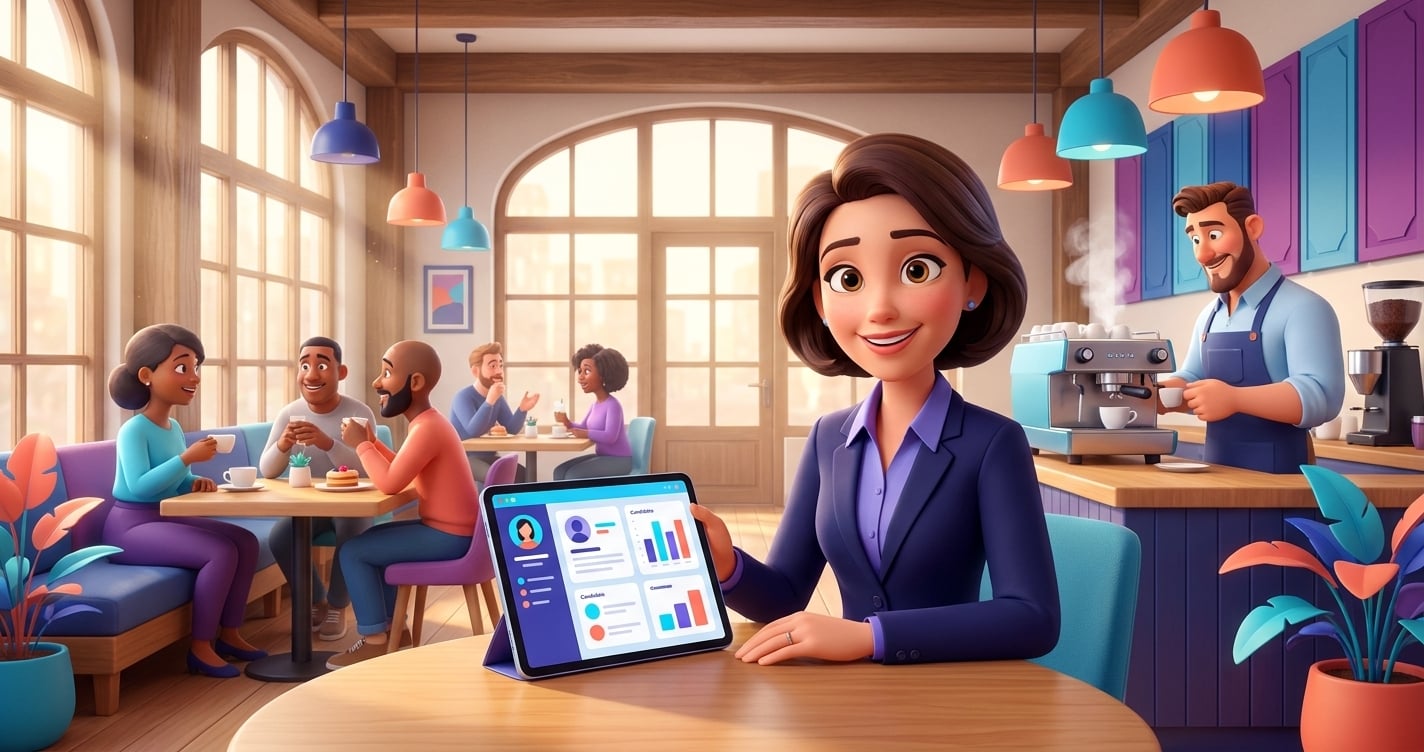
Section 1 illustration for Choosing the right applicant tracking system for hospitality

In the hospitality sector, the best candidates do not wait around. If someone applies for a bartender position on Monday morning, they expect to hear back quickly. If you wait until Wednesday to review your inbox, they have already accepted a role at the pub down the street.

An applicant tracking system helps you manage high application volumes by automating the early stages of communication. When a candidate applies, they immediately receive a branded acknowledgement. If their basic qualifications match your requirements, the system can prompt them to select an interview time or complete a short assessment.

This rapid response shows candidates that you are organised and professional. It respects their time. It also means you secure interviews with top-tier talent before your competitors even open their email.

You can set up templates for interview invitations, rejection emails, and offer letters. Instead of typing out the same message twenty times a week, you click a button. You save hours of administrative work while providing a much better experience for the people applying.

Hiring for attitude over experience

A resume tells you very little about how someone will perform during a busy Saturday breakfast service. It lists previous employers and dates, but it cannot tell you if the applicant stays calm under pressure, works well with a diverse team, or knows how to read a customer's mood.

Hospitality is a people business. Attitude, resilience, and communication skills matter far more than whether someone has used your specific point-of-sale software before. Skills can be taught on the job. A positive, team-focused attitude is much harder to train.

This is where standard hiring processes fail. They force managers to guess a candidate's personality based on a brief interview and a piece of paper. Smart operators are moving towards behavioural assessments to understand how a person naturally prefers to work.

Using a tool like Compono Hire allows you to evaluate candidates across organisation fit, skills, and qualifications. You can identify the 'Work Personality' of your applicants. You might find you need a 'Doer' who thrives on fast-paced, practical tasks for your kitchen, or a 'Campaigner' who loves engaging with people for your front-of-house team. This insight helps you build balanced rosters where people are doing work that suits their natural behaviour.

Managing multiple locations without the chaos

Growing from one venue to three or four is an exciting milestone. It also introduces a massive logistical headache for recruitment. Venue managers often end up competing against each other for the same candidates, or paying for separate job advertisements in the same city.

An applicant tracking system built for hospitality allows you to centralise your hiring. You create a single careers page for your entire brand. When someone applies, they can indicate which locations they are willing to work at.

If the manager at your city location interviews a fantastic barista but does not have enough hours to offer them, they do not just throw the resume away. They can tag that candidate in the system and share their profile with the manager of your suburban location who happens to be looking for exactly that skill set.

This franchise and multi-location approach creates an internal talent pool. You spend less money on external job boards because you already have a database of pre-screened, interested candidates ready to go when a vacancy opens up.

The candidate experience matters

We often forget what it is like to be on the other side of the hiring process. Hospitality workers are usually applying for jobs on their phones while riding the bus or sitting in a break room. If your application process requires them to create an account, upload a formal cover letter, and fill out five pages of employment history, they will simply abandon the form.

Your application process needs to be mobile-first and incredibly simple. Ask for the essentials. Get their contact details, their availability, and their relevant experience. You can gather the deeper details during the interview or screening phase.

A good ATS makes this easy. It parses resumes automatically so candidates do not have to type out information that is already on their CV. It allows them to apply with a few taps on their screen.

Remember that candidates are also your customers. A chef who has a terrible experience applying for a job at your restaurant is unlikely to come in for dinner on their night off. Treating applicants with respect – by communicating clearly and making the process easy – protects your brand reputation in the local market.

Onboarding and the first 90 days

The recruitment process does not end when the candidate accepts the job offer. The first few weeks are when hospitality staff are most likely to quit. They feel overwhelmed by new menus, unfamiliar floor plans, and trying to learn the names of their coworkers.

A strong applicant tracking system flows naturally into your onboarding process. All the information you collected during recruitment – their emergency contacts, their uniform size, their bank details – moves across automatically. You do not have to ask the new hire to fill out the same forms twice.

You can send them an introductory packet before their first shift. This might include the menu to study, a welcome message from the head chef, and clear instructions on where to park and what to wear. When they arrive for their first day, the paperwork is already done. They can focus on learning the job and meeting the team.

When you hire people whose work personality fits the role, and you support them with a clear, organised onboarding process, you see a sharp drop in early turnover. People stay where they feel valued and prepared.

Key insights

  • Speed of communication directly impacts offer acceptance rates in the highly competitive hospitality job market.
  • Behavioural assessments predict on-the-floor success and team harmony better than previous job titles or standard resumes.
  • Shared talent pools across multiple venues reduce external advertising costs and prevent venue managers from competing for the same staff.
  • A mobile-first, simple application process prevents high-quality candidates from abandoning the form halfway through.
Compono

Where to from here?

Ready to see how smarter hiring works in the real world for multi-venue hospitality businesses?


FAQs

What is an applicant tracking system for hospitality?

It is a software platform designed to help venues manage their recruitment process. It collects applications, helps managers screen candidates, automates communication, and tracks where each person is in the hiring pipeline. It is specifically useful for cafes, restaurants, pubs, and hotels dealing with high turnover and large volumes of applicants.

How does an ATS help reduce staff turnover?

An ATS helps you make better hiring decisions upfront. By using behavioural assessments and structured screening, you hire people who are a natural fit for the specific demands of your venue. Better cultural fit and clearer communication during the hiring process lead to higher job satisfaction and lower turnover.

Can an ATS handle hiring for multiple restaurant locations?

Yes. A good system allows you to centralise recruitment across a franchise or multi-venue group. Venue managers can share talent pools, meaning a great candidate who misses out on a role at one location can easily be hired at another location that needs their exact skills.

Why is mobile recruitment important in hospitality?

Most hospitality workers search and apply for jobs using their smartphones. If your application process requires a desktop computer or involves long, complicated forms, you will lose many strong candidates. A mobile-friendly ATS ensures you capture these applicants quickly and easily.

Does an ATS replace the need for face-to-face interviews?

Not at all. The system handles the administrative heavy lifting – sorting applications, sending text messages, and scheduling times – so venue managers can spend their energy conducting meaningful face-to-face interviews and assessing practical skills on the floor.

Related

ATS for local councils: streamlining public sector hiring

1 min read

ATS for local councils: streamlining public sector hiring

An ATS for local councils must balance strict merit-based compliance with the need for a modern, user-friendly candidate experience to attract top...

Read More
ATS for utilities New Zealand: finding the right fit

1 min read

ATS for utilities New Zealand: finding the right fit

The best ATS for utilities in New Zealand must balance high-volume recruitment capabilities with rigorous compliance tracking and local...

Read More
How to evaluate ATS providers on the Gold Coast

1 min read

How to evaluate ATS providers on the Gold Coast

Evaluating ATS providers on the Gold Coast requires looking beyond basic resume sorting to find platforms that assess work personality, manage...

Read More