

.webp)

 Compono


Best CliftonStrengths Alternatives for Teams in 2026
 Compono
Discover the top CliftonStrengths alternatives for teams in 2026. Compare HIGH5, DiSC, Predictive Index, and Compono for actionable behavioural...

When searching for HBDI alternatives, modern HR leaders typically look for tools that offer faster deployment, behavioural insights rather than just cognitive preferences, and platforms that do not require expensive certified practitioners to decode the results.
Key takeaways
- HBDI measures cognitive preferences, whereas many modern alternatives focus on observable workplace behaviour and task alignment.
- The reliance on certified practitioners to interpret HBDI results creates a bottleneck for fast-moving mid-market companies trying to scale their insights.
- Integrating psychometric data directly into your hiring and engagement platforms provides higher utility than standalone assessment tools.
- Behavioural assessments often provide more immediate, actionable data for managers trying to resolve team conflict or improve productivity.
The Herrmann Brain Dominance Instrument (HBDI) has been a staple in corporate training rooms for decades. Based on the Whole Brain Thinking model developed by Ned Herrmann, it categorises how people prefer to think. It is a deeply researched framework that helps individuals understand their cognitive defaults.
Yet, as workplace dynamics shift in 2026, HR leaders are increasingly looking for HBDI alternatives. The demand has moved away from abstract cognitive mapping toward practical, integrated tools that managers can use daily without needing a psychology degree or a certified facilitator in the room.
Understanding the difference between cognitive preferences and workplace behaviour is the first step in finding the right tool for your organisation.
The fundamental difference between HBDI and many of its alternatives lies in what they actually measure. Psychological tools generally fall into distinct categories, and confusing them leads to poor implementation.
As noted by industry experts, HBDI and DiSC measure different things: HBDI focuses on how we think, while DiSC focuses on how we behave. This is a critical distinction for team leaders. You cannot directly observe how someone thinks. You can only observe how they act, communicate, and execute tasks.
The HBDI is a 116-question assessment that measures thinking-style preferences across four quadrants: Analytical, Practical, Relational, and Experimental. It provides a fascinating look under the hood of human cognition. As Ann Herrmann-Nehdi explains, the model shows “how your brain works by default” and “how your brain works when the pressure is on.”
Because HBDI is positioned as a whole-brain thinking tool rather than a behaviour-only tool, it serves a specific purpose in deep leadership development and self-awareness workshops. However, when a manager needs to know why two employees are clashing over a project deadline, abstract thinking styles often provide less immediate utility than clear behavioural profiles.
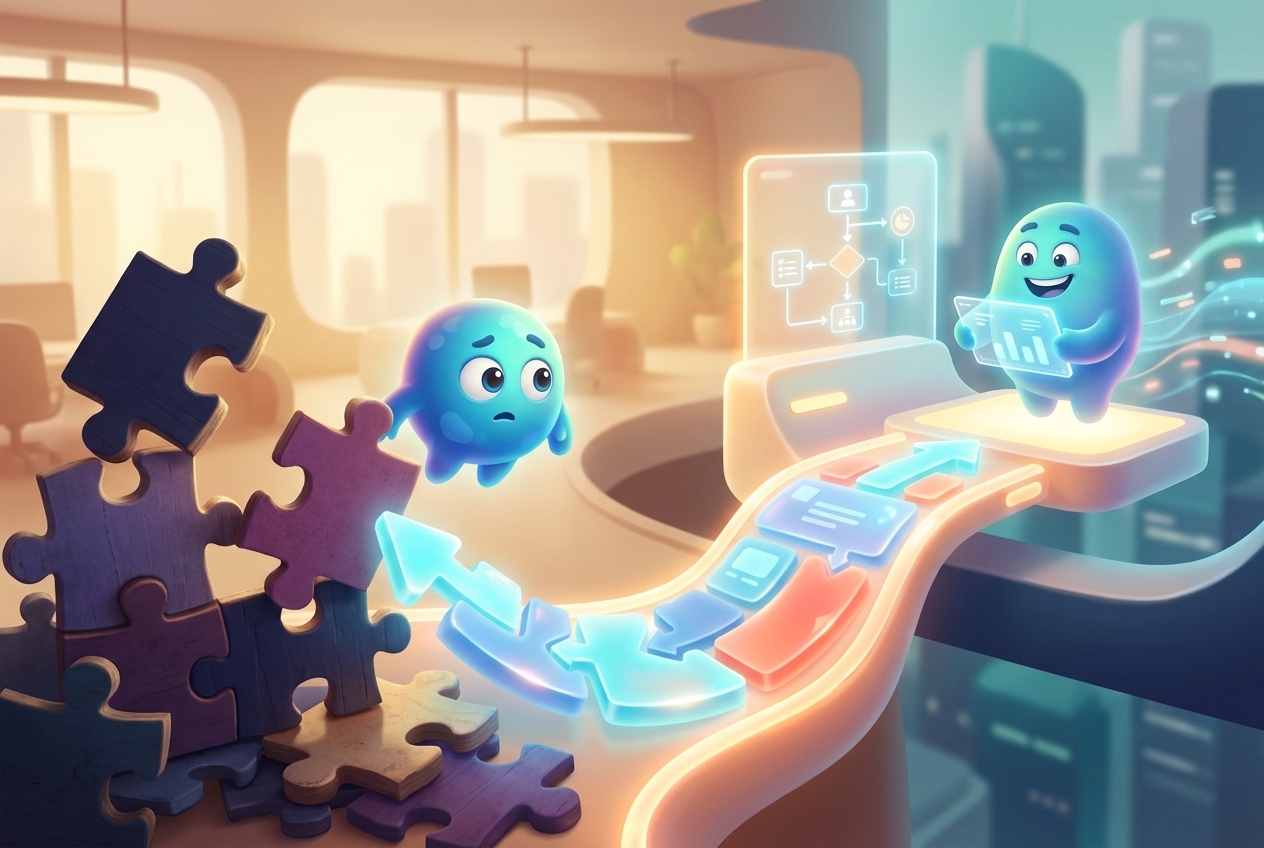
Standalone psychometric assessments often share a common lifecycle in mid-market businesses. A leadership team takes the assessment during an offsite retreat. Everyone receives a colourful profile and spends an afternoon discussing their differences. A week later, the profiles are filed away in a drawer, and the team reverts to its old habits.
This drop-off in utility usually stems from three structural problems.
First, the certification bottleneck. Tools like HBDI rely heavily on certified practitioners to deliver debriefs and interpret results. While this ensures a high quality of initial feedback, it creates a massive barrier to scale. If a manager needs to consult a certified HR business partner every time they want to look at team dynamics, the tool simply will not get used.
Second, the lack of system integration. An assessment that lives in a separate portal from your core HR tech stack is destined to be forgotten. Modern organisations need data that flows directly into their recruitment software and employee engagement platforms.
Third, the translation gap. Knowing that an employee has a strong preference for "Analytical" thinking is interesting. Knowing exactly how that employee prefers to receive feedback, structure their workday, and collaborate with "Relational" thinkers requires translation. Managers need plain-English action steps, not just theoretical labels.
If you are re-evaluating your assessment toolkit, several strong alternatives provide different angles on human performance. The right choice depends on whether you want to measure behaviour, personality, or specific work preferences.
At Compono, our approach to psychometrics bridges the gap between abstract personality traits and actual daily tasks. We map natural work preferences into eight distinct profiles – such as The Doer, The Evaluator, and The Pioneer.
Instead of requiring a certified practitioner to decode the results, the work personality dashboard gives managers immediate, plain-English advice on how to collaborate, manage conflict, and assign tasks. It is built natively into our wider platform, meaning you can use these insights to assess candidates during the hiring phase and manage them effectively once they join the team.
DiSC is perhaps the most direct behavioural alternative to cognitive tools. It categorises observable behaviour into four styles: Dominance, Influence, Steadiness, and Conscientiousness. Because it focuses entirely on how people act and communicate, it is highly practical for sales teams, customer service departments, and general conflict resolution.
Many organisations use a DISC assessment hiring guide to understand how a candidate might interact with an existing team. It is easier to grasp quickly than a four-quadrant cognitive model, though it lacks the deeper intrinsic motivational insights found in comprehensive personality tools.
The Predictive Index measures behavioural drives and needs. It is heavily utilised in the recruitment space because the assessment is notoriously fast – often taking less than ten minutes to complete. It plots individuals across four primary drives: Dominance, Extraversion, Patience, and Formality.
Familiarising yourself with a Predictive Index results types guide reveals that PI is excellent for role-benchmarking. It allows hiring managers to define the behavioural requirements of a job and match candidates against that benchmark. The trade-off for its speed is that the results can sometimes feel overly deterministic compared to more nuanced cognitive tools.
Formerly known as StrengthsFinder, this tool flips the traditional assessment model on its head. Instead of categorising people into quadrants or colours, it ranks an individual's top talents out of 34 possible themes. The philosophy is simple: focus on developing what you are already naturally good at, rather than trying to fix your weaknesses.
CliftonStrengths is exceptional for individual career development and coaching. However, it can be unwieldy for team design. With 34 different themes, it is difficult for a manager to hold the team's entire dynamic in their head or quickly map out conflict resolution strategies.
The true value of any assessment tool is measured by what happens after the results are delivered. Generating a report is easy. Changing behaviour is hard.
When evaluating HBDI alternatives, look closely at how the platform supports ongoing development. Does the tool provide managers with specific interview questions based on a candidate's profile? Does it offer coaching tips for 1-on-1 meetings? Can you overlay multiple team members on a single dashboard to identify gaps in your project group?
Organisations that treat psychometrics as an integrated business tool consistently outperform those that treat it as a once-a-year team-building exercise. The goal is to embed workforce intelligence directly into the daily workflow of your managers.
If a manager is preparing for a difficult performance review, they should be able to glance at their dashboard and see exactly how that employee processes critical feedback. If a recruiter is looking at two candidates with identical resumes, they should have data showing which candidate naturally prefers the specific tasks required by the role.
The era of siloed, manual assessment debriefs is ending. Modern teams move too fast to wait for a certified facilitator to explain why a project is stalling. They need systems that democratise data, making it accessible, secure, and immediately useful to the people leading the work.
By shifting the focus from cognitive theory to practical work preferences, businesses can remove the friction from team collaboration. You stop asking "how does this person think?" and start asking "what kind of work energises this person, and how can we align our goals to match?"
Key insights
- Assessments must integrate with your daily HR systems to maintain long-term utility.
- Behavioural and work-preference tools offer faster, more practical conflict resolution than purely cognitive models.
- The best alternative for your team depends on whether you are trying to solve a hiring problem, a leadership development problem, or a team execution problem.
We built our platform to give business leaders the deep insights of traditional psychometrics without the bottleneck of certified practitioners. By mapping natural work preferences directly to daily tasks, we help you hire smarter and manage better.
Related reading
HBDI measures cognitive preferences and how you process information, while DiSC measures observable behaviour and communication styles. HBDI explains the "why" behind your thinking, whereas DiSC explains the "how" of your actions.
It depends on the tool. Legacy systems often require certification to interpret the complex reports. Modern platforms like Compono are designed with plain-English dashboards that managers can use immediately without formal psychological training.
Using purely cognitive or personality assessments for hiring can be risky if they are not validated against specific job requirements. The best approach is to use tools that measure Organisation Fit and Role Fit based on validated behavioural and work-preference data.
Companies typically switch when they need to scale their insights across the whole organisation. The cost and time required for practitioner-led debriefs make it difficult to use HBDI for every new hire or team restructure, prompting a move to integrated software solutions.
While older cognitive tools can take 30 to 45 minutes to complete, modern behavioural and work-preference assessments are highly optimised. Most candidates can complete them accurately in under 10 minutes, significantly improving the candidate experience.
Discover the top CliftonStrengths alternatives for teams in 2026. Compare HIGH5, DiSC, Predictive Index, and Compono for actionable behavioural...

The most scientifically validated MBTI alternatives for the workplace in 2026, and how to use behavioural assessments for hiring and team building.

Modern psychometric alternatives to Hogan assessments, with the validity evidence to ask for and without the enterprise pricing or certification.