Myers Briggs hiring: why work personality matters more
Myers Briggs hiring is often the first thing people leaders think of when trying to understand team dynamics, but it was never designed for...
Become the expert on delivering
valid and fair assessments for
your training and education.
Hey Compono helps you understand your personality and how to turn it into your superpower.
First 1,000 users get 10 minutes free.
Just $15 a month after that — cancel anytime.
A DISC assessment hiring process allows you to identify a candidate's natural behavioural style so you can predict how they will communicate, handle conflict, and contribute to your team culture.
By understanding whether a person leans toward Dominance, Influence, Steadiness, or Conscientiousness, you can move beyond the resume to see how they actually perform in a real-world work environment.
Key takeaways
- DISC assessments provide a framework for understanding candidate behaviour and communication preferences.
- Integrating personality insights into recruitment helps reduce bias and improves long-term employee retention.
- While DISC is valuable, high-performing teams require a balance of diverse work personalities to avoid groupthink.
- Modern platforms like Compono allow you to map these traits to specific job requirements for objective scoring.
We have all been there – a candidate looks perfect on paper, interviews brilliantly, and then struggles to adapt to the team's actual rhythm within three months. This happens because traditional recruitment often focuses heavily on skills while overlooking the behavioural traits that dictate how those skills are applied. Without a structured way to measure personality, hiring remains a bit of a guessing game based on gut feel and subjective impressions.
When you rely solely on intuition, you risk hiring people who are exactly like you. While this feels comfortable at first, it often leads to teams that lack the necessary cognitive diversity to solve complex problems. A DISC assessment hiring strategy provides a common language for your hiring managers, allowing them to discuss candidate fit based on data rather than just 'vibes'.
At Compono, we believe that understanding the human element is the secret to building high-performing teams. By using objective assessments, you can identify the gaps in your current team and specifically look for candidates who bring the missing pieces to the puzzle. This proactive approach to team design ensures that every new hire adds value to the collective culture.

The DISC model categorises behaviour into four primary types, each offering unique strengths to a business. Dominance (D) types are typically results-driven and direct, making them strong candidates for roles requiring quick decision-making. Influence (I) types thrive on social interaction and persuasion, often excelling in sales or communication-heavy positions. These individuals bring energy and optimism to a team, helping to build strong internal and external networks.
Steadiness (S) types value cooperation and sincerity, providing the dependable foundation that many operational teams need. They are often the 'glue' that holds a group together during stressful periods. Finally, Conscientiousness (C) types prioritise quality and accuracy, making them ideal for roles where precision is non-negotiable. In a DISC assessment hiring framework, the goal is not to find the 'best' type, but the 'right' type for the specific job and team environment.
However, it is important to remember that most people are a blend of these quadrants. A candidate might be high in both Steadiness and Conscientiousness, suggesting they are a methodical worker who takes great pride in the accuracy of their output. Recognising these nuances allows you to tailor your onboarding and management style from day one, ensuring the person feels supported and understood.
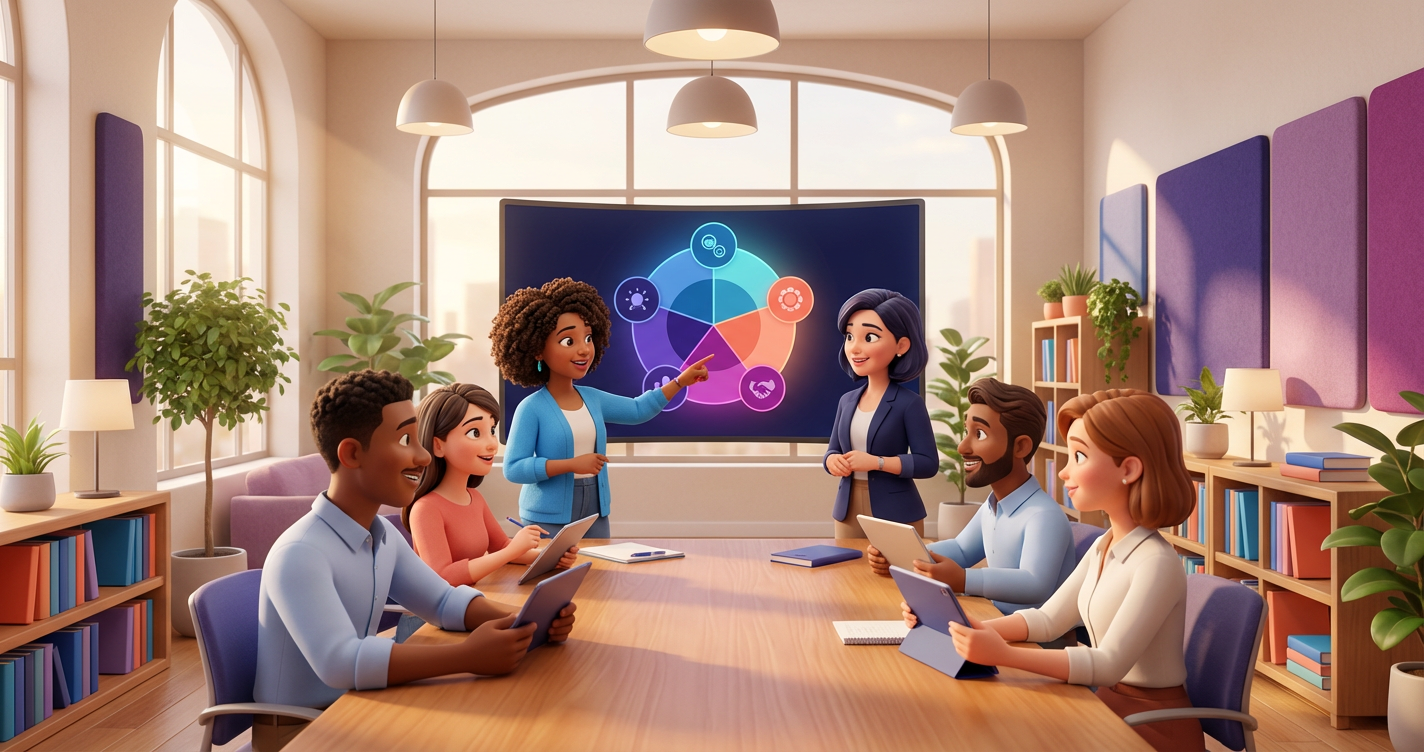
While DISC is a fantastic foundational tool, modern teams often need more granular insights to truly thrive. At Compono, we have evolved this concept into what we call work personality. This model takes academic research and maps it to eight specific work actions that define high-performing teams – such as The Evaluator, who provides logical analysis, or The Coordinator, who ensures efficient workflows.
By looking at these specific roles, you can see exactly how a candidate will influence your team's output. For example, if your team is full of visionary Pioneers but struggles to hit deadlines, you might specifically look for The Doer to help drive execution. This level of detail transforms a standard DISC assessment hiring process into a strategic team design exercise.
Using the Compono Hire module, you can automatically score and rank candidates based on their alignment with the specific work personality your team needs. This doesn't just save time – it ensures that the candidates you interview are already a strong behavioural match for the role. This objective data helps remove the unconscious bias that often creeps into the early stages of the recruitment funnel.

To get the most out of DISC assessment hiring, you must integrate it early in the process. Waiting until the final interview to assess personality is a missed opportunity. When you use assessments at the top of the funnel, you can use the insights to shape your interview questions. If a candidate's profile suggests they may struggle with ambiguity, you can ask for specific examples of how they handled a project with shifting requirements.
It is also vital to share these results with the candidate. Most people enjoy learning about their own work personality and appreciate a company that takes the time to understand them as an individual. This transparency builds trust and sets a positive tone for the employee experience before they even sign the contract. It shows that you value their unique contribution and are committed to their long-term success.
Finally, ensure your hiring managers are trained to interpret these results. Personality assessments are not a 'pass or fail' test; they are a guide for understanding how to get the best out of a person. A high 'D' profile might be perceived as blunt, but with the right context, a manager can see this as a valuable asset for driving projects forward. Understanding these dynamics is the bedrock of The Compono Culture, Engagement & Performance Model.
The ultimate goal of DISC assessment hiring is to create a balanced team where different styles complement one another. A team made up entirely of high-influence individuals might be full of great ideas but lack the follow-through to finish them. Conversely, a team of high-conscientiousness individuals might produce perfect work but struggle to adapt to rapid changes in the market. Diversity of thought is what drives innovation.
When you use the Compono Engage platform, you can visualise the entire 'personality map' of your team. This allows you to see where your strengths lie and where you might have collective blind spots. If you notice a lack of Helpers, you might find that team morale is suffering because no one is naturally focused on the emotional well-being of the group. Filling these gaps is how you move from a collection of individuals to a truly cohesive unit.
By making personality a core part of your talent strategy, you are investing in the long-term health of your organisation. People who are in roles that match their natural preferences are more engaged, more productive, and less likely to leave. In a competitive talent market, this focus on fit is a significant advantage that helps you attract and retain the very best people.
Key insights
- Traditional hiring methods often fail because they ignore the behavioural 'how' behind the technical 'what'.
- DISC and work personality assessments provide an objective framework to measure candidate fit and reduce hiring bias.
- Strategically hiring for 'missing' personality types within a team prevents groupthink and boosts innovation.
- Integrating assessments early in the recruitment process allows for more targeted, insightful interviewing.
- A balanced team of diverse personalities is more resilient and adaptable to change than a homogenous one.
Building a high-performing team starts with the right data. If you are ready to move beyond gut feel and start making smarter hiring decisions, we can help.
No, there is no such thing as a 'bad' DISC profile. Assessments are designed to help you understand a candidate's natural work style and how they will fit into your specific team and role requirements.
Modern assessments, like those used at Compono, are designed to be quick and engaging. Most candidates can complete their profile in just a few minutes, providing immediate insights for the hiring team.
While people can try to answer how they think you want them to, high-quality assessments are designed with consistency checks. More importantly, faking a profile usually leads to a poor job fit, which isn't in the candidate's long-term interest either.
It is incredibly valuable for both. For existing teams, understanding each other's styles improves communication and reduces conflict. For new hires, it ensures they are entering an environment where they can thrive.
Yes. By moving away from subjective 'culture fit' (which often means 'people like us') to objective behavioural data, you can build teams that are truly diverse in how they think and work.

Compono Hire helps you predict job-fit and team-fit using behavioural science, so you can shortlist with confidence.
Request a demoBuilt for mid-market hiring teams.

Voice-first coaching that adapts to your personality. Get actionable steps you can take this week.
Start freeBuilt by Compono. Not therapy — practical behaviour change.
Myers Briggs hiring is often the first thing people leaders think of when trying to understand team dynamics, but it was never designed for...
Finding the right applicant tracking system (ATS) often feels like searching for a needle in a haystack, except the haystack is made of expensive...
Science-backed hiring is the practice of using objective data, psychological research, and standardised assessments to predict a candidate's future...