

.webp)

 Mathan Allington


How to choose the right talent management software
 Mathan Allington
What talent management software covers across hiring, engagement and development, the features that matter, and the questions to ask before you buy.
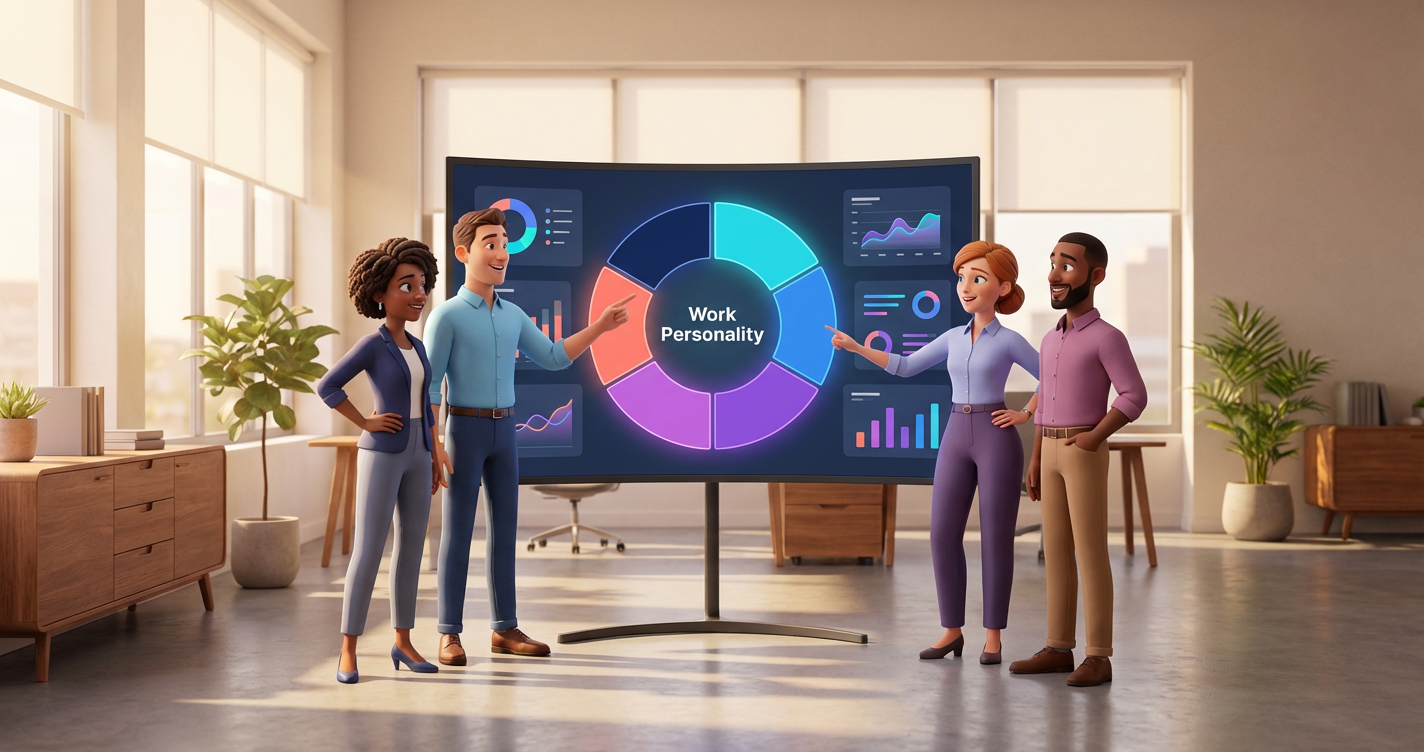
Hiring intelligence is the use of behavioural science and outcome data to predict how a candidate will perform and how long they will stay, instead of inferring it from a resume and an interview. A hiring intelligence platform is the software that does the work: it assesses every applicant against the role and the team they would join, then keeps learning from who actually worked out.
Last reviewed September 2026
The phrase turns up in product names far more often than it turns up in plain definitions. This guide covers what hiring intelligence means, how it differs from recruitment intelligence, what vendors mean when they say adaptive, and how to tell a real platform from an applicant tracking system with a personality quiz bolted on the side.
Hiring decisions have leaned on two documents for decades. A resume records what someone has done and a cover letter records how they describe it. Neither says much about how the person will work inside your team, which parts of the week will drain them, or who they will quietly clash with by month three. Businesses hire for skills and part ways over fit, and the cycle repeats because nothing in the process measures fit.
Hiring intelligence closes that gap by collecting four kinds of evidence on every applicant and weighing them together:
Standardising that across every applicant also does something an interview panel cannot. It gives every candidate the same questions and the same scoring, which takes a good deal of the accidental bias out of the first cut. A shared school or a familiar accent stops carrying weight it was never entitled to.
The terms get swapped around in vendor copy and they do overlap. In practice, recruitment intelligence usually points at the funnel: where applicants come from, what each channel costs, where people drop out, how long each stage takes. Hiring intelligence points at the decision: which of these people should get the offer, and on what evidence.
A recruitment intelligence report tells you your job board spend is producing volume without quality. A hiring intelligence platform tells you the candidate sitting fourth on years of experience is the one most likely to still be there in two years. Most talent teams want both, and several products carry both under one banner. What matters at evaluation is which questions the software answers from data it holds, and which ones it hands back to you as a chart to interpret. The talent intelligence platform buyers guide works through that split in more detail.

Adaptive is worth pinning down, because it carries two meanings and they are not equally useful.
The first is an adaptive assessment. The questions a candidate sees change according to how they answered earlier ones, so the tool reaches a reliable result in fewer items. That is a measurement technique borrowed from psychometrics, and for the applicant it mostly shows up as a shorter, less tedious experience.
The second is an adaptive model. The platform compares what it predicted against what actually happened to the people you hired, then adjusts the weighting for your organisation. That version is harder to build and far more valuable, and it depends on something buyers routinely underestimate: a consistent record of your own hiring outcomes, kept long enough to mean something.
So ask which one a vendor means. Then ask how many hires it takes before the model reflects your business, and what the product does in the months before that point.
Category labels blur at the edges, and a lot of buying confusion comes from two products describing the same screen in different words. Reading them side by side helps.
| Tool category | What it manages | The question it answers | Where it stops |
|---|---|---|---|
| Applicant tracking system | Applications, stages, candidate communication, compliance records | Where is every candidate up to, and is the process defensible? | Sorts on keywords and recency, not on fit or likely tenure |
| Recruitment intelligence and sourcing analytics | Channels, funnel metrics, advertising spend | Where do applicants come from and what does each one cost? | Says nothing about which applicant to hire |
| Standalone assessment tool | One test and one report per candidate | What is this person like? | Sits beside the workflow, so results often land after the shortlist is set |
| Hiring intelligence platform | Assessment, ranking and selection evidence inside the hiring workflow | Which of these people will perform in this role and stay? | Needs a defined role profile and honest outcome data to be worth much |
| HRIS or core HR | Employee records, pay, leave, org structure | Who works here and on what terms? | Built for employees, not for choosing between candidates |
The boundary that causes the most trouble is the first one. Our guide to how an ATS differs from an HRIS covers where each system should own the record, which is the same question in a different frame.
Software cannot predict success against a definition of success you have never written down. Four things make the difference between a useful score and an expensive one:
None of that is glamorous, and all of it is cheaper than the alternative. If you want a sense of what the alternative costs in your own numbers, the cost of a bad hire calculator puts a figure on a single mis-hire, including recruitment and the ramp-up time before a replacement is productive.

Most hiring starts with a vacancy and ends with a replacement. Teams that perform well behave more like balanced systems, and the useful question before you write the job ad is which kind of work is currently going undone.
Compono's research describes eight ways of working that a strong team needs covered: Doer, Auditor, Helper, Advisor, Pioneer, Campaigner, Evaluator and Coordinator. A team stacked with Pioneers generates ideas faster than anyone can finish them. A team without an Auditor ships work nobody checked. Mapping the work personality of the people you already have turns the next hire into a deliberate choice rather than a like-for-like swap.
The data also keeps earning after the offer. Someone hired through an assessment arrives with a documented view of how they prefer to receive feedback and where their blind spots sit, which is a far better start to onboarding than a first-week guess.
Demos all look similar. These questions separate the products quickly:
Compono Hire scores and ranks candidates on organisation fit, skills and qualifications inside the hiring workflow, with reports written for managers rather than psychologists. Compono is rated 4.8 out of 5 on Capterra. Worth saying where it fits: if you hire a handful of senior specialists a year and already know every candidate in the market personally, a measurement layer adds less than it does when you are hiring at volume or into teams whose shape you cannot see.
Compono Hire profiles every candidate against the role and the culture around it, so shortlists arrive with evidence attached.
Talk to usIt is hiring on measured evidence about a person rather than on impressions. A hiring intelligence platform assesses every applicant the same way, scores them against the role and the team, and uses what happened to your previous hires to sharpen the next decision.
An applicant tracking system (ATS) runs the process: applications, stages, scheduling and compliance records. A hiring intelligence platform adds the selection evidence, assessing candidates for work personality and organisation fit so the ranking reflects likely performance rather than keyword matches.
It means one of two things. Either the assessment adapts its questions to the candidate's earlier answers to reach a reliable result faster, or the model adapts its weighting to your organisation as your own hiring outcomes come in. Ask a vendor which one they mean, because the second one needs your outcome data before it does anything.
They overlap but answer different questions. Recruitment intelligence is usually about the funnel, covering where applicants come from and what each stage costs. Hiring intelligence is about the selection decision itself. Plenty of platforms sell both, so check which data the product actually holds.
No. A well-built platform translates the psychology into plain-language reports, so a hiring manager can see a candidate's strengths and likely blind spots without accreditation or training.

What talent management software covers across hiring, engagement and development, the features that matter, and the questions to ask before you buy.

What brokers and insurance firms need from an ATS: compliance-ready records, structured assessment to cut bias, and a candidate experience that holds...

What counts as strategic HR software, how it differs from admin tools, and the capabilities mid-market leaders need to tie people decisions to...