


 Mathan Allington

Employee engagement and culture trends 2027 for Australia and NZ
 Mathan Allington
Seven employee engagement and culture trends for Australian and NZ HR, from the manager slump to psychosocial risk, and what to do first on each.
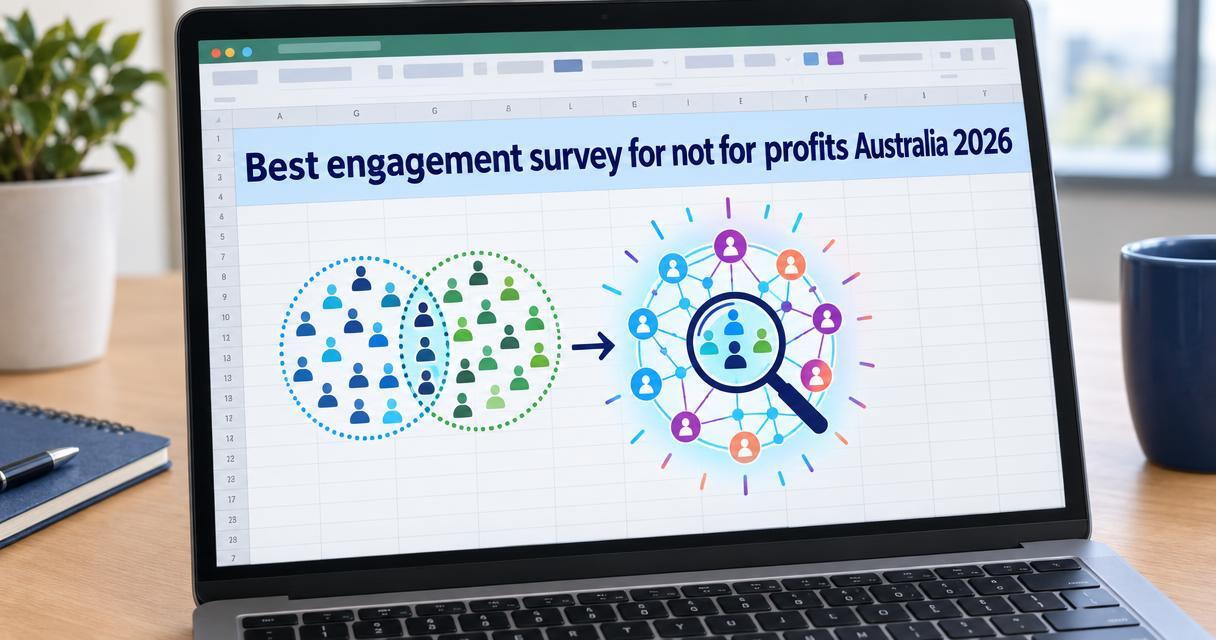
Choosing the best engagement survey for not for profits in Australia requires a platform that measures both paid staff and volunteer sentiment while tracking psychosocial risks under Safe Work Australia regulations.
Last reviewed November 2026
Quick answer
- Price: Mid-market pricing varies by vendor; most providers offer specific charity or not-for-profit pricing upon request.
- Best for: Measuring dual workforces (paid staff and volunteers) and linking sentiment to actionable behavioural drivers.
- Verdict: Compono Engage provides the deep culture measurement required to address burnout, retain volunteers, and manage compliance in the Australian not-for-profit sector.
The Australian not-for-profit sector operates on a fundamental tension. Employees and volunteers are highly motivated by the mission, yet they face severe resource constraints and high emotional loads. This changing creates a unique challenge for human resources leaders trying to measure and improve workplace culture.
Standard corporate surveys often misread this environment. They flag high mission alignment as a sign of a healthy culture while missing the systemic exhaustion lurking underneath. Australian charities employed 1.6 million people in 2024, which is equivalent to 11% of the national workforce, according to the Australian Charities and Not-for-profits Commission. These people do difficult, necessary work, often with limited funding and inadequate support systems.
The sector also relies heavily on unpaid labour. The same report notes that Australian charities engaged 3.9 million volunteers, averaging 2.5 volunteers for every paid employee. When you manage a dual workforce of paid staff and volunteers, measuring engagement requires a nuanced approach. A one-size-fits-all survey will fail to capture the distinct motivations and frustrations of each group.
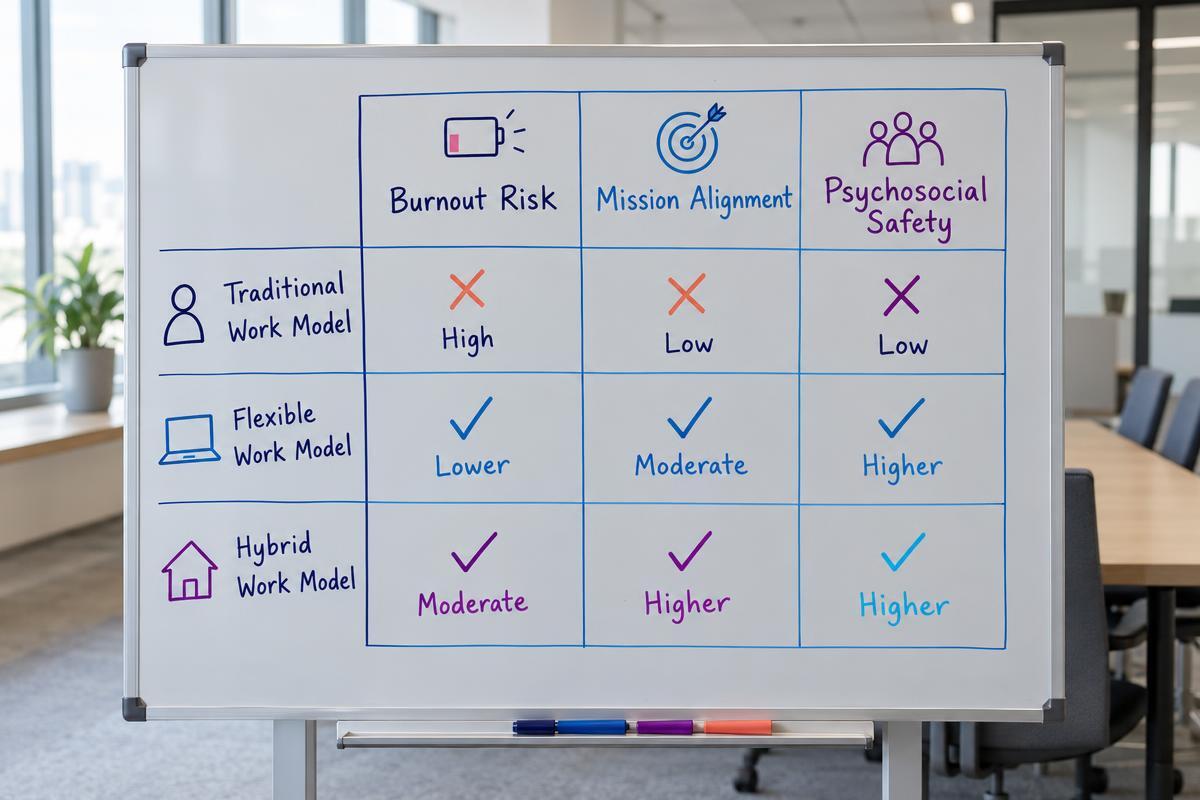
Most HR technology manages process risk well. It will send the survey, collect the data, and generate a generic dashboard. However, it ignores people insight risk, which is the danger of misunderstanding why your people act the way they do. In a charity or community service organisation, ignoring people insight risk leads to critical talent loss.
A major blind spot for traditional surveys is the mission tax. This is the unspoken expectation that staff will accept lower pay and higher stress because they are working for a good cause. In fact, 58% of Australian NFPs and charities prioritised clients and the community over the mental wellbeing of their own staff and volunteers in 2023, as reported by Community Directors. When the mission always comes first, the workforce inevitably breaks down.
This changing explains why 29% of people who left Australian NFP roles in 2025 cited burnout as the main reason, up from 21% in 2024. If your engagement survey only asks people if they believe in the company goals, you will get artificially high scores right up until the day your best people resign from exhaustion.
Any effective engagement survey for not for profits Australia must handle complex organisational structures. You cannot send the exact same questionnaire to a full-time social worker and a weekend volunteer. Their experiences of your organisation are fundamentally different.
According to the Australian Charities and Not-for-profits Commission, 53% of Australian charities operated without paid staff entirely during the 2024 reporting period. For these organisations, volunteer retention is the only metric that matters. Volunteers leave when they feel unappreciated, when their time is wasted by poor administration, or when they feel disconnected from the actual impact of their work.
When selecting an employee engagement survey provider in Australia, ensure the platform allows you to segment your audience and tailor the question sets. For paid staff, you need to measure career development, compensation fairness, and workload manageability. For volunteers, you should focus on role clarity, recognition, and connection to the cause.
The regulatory market for Australian workplaces shifted significantly with the introduction of strict rules around psychosocial hazards. Safe Work Australia now requires organisations to manage risks to mental health just as rigorously as they manage physical safety risks. For not-for-profits, this is a major compliance challenge.
Roles in aged care, disability services, and crisis support carry a high emotional load. Workers frequently experience vicarious trauma and aggressive behaviour from clients. An engagement survey is no longer just a tool for measuring happiness. It is a critical diagnostic instrument for identifying psychosocial hazards before they result in workers compensation claims.
Despite these challenges, the sector is showing resilience. Employee engagement in Australian not-for-profit organisations rose from 81% in 2024 to 84% in 2025, based on data from more than 50,000 employees surveyed by Your Say Survey. Furthermore, favourable employee wellbeing scores increased from 73% to 77% in the same period. These improvements suggest that targeted interventions work, provided leadership has the right data to guide them.
When evaluating platforms, you need a system that goes beyond simple sentiment tracking. The right tool will help you understand the behavioural drivers behind the feedback. Here is a ranking of the top options available for Australian charities in 2026.
| Platform | Best for | Not-for-profit focus |
|---|---|---|
| Compono Engage | Dual workforces and behavioural intelligence | High |
| Culture Amp | Large corporate benchmarking | Medium |
| Humanforce | Shift-based staff and rostering alignment | High |
| intelliHR | Core HR data with engagement features | Medium |
Compono makes Compono Engage. We've included it and kept every entry's strengths and limits honest.
Compono Engage is an employee engagement platform that gives you both sentiment data and the behavioural intelligence to act on it. While most surveys only tell you that staff are unhappy, Compono Engage maps organisational culture across 12 dimensions to show you exactly why they are unhappy. This is important for NFPs that need to separate passion for the cause from frustration with daily operations.
Culture Amp is a strong, widely recognised tool with excellent reporting capabilities. It offers vast libraries of template questions and detailed analytics. However, its primary design caters to standard corporate environments. Not-for-profits often find they pay for advanced corporate features they do not use, while struggling to adapt the platform to manage complex, unpaid volunteer segments effectively.
For community service providers managing complex NDIS rosters, Humanforce is a highly complementary tool. It excels at connecting shift data with employee feedback. When you want to know if unpredictable rosters are driving staff turnover, Humanforce provides clear visibility. We position Compono as working alongside platforms like Humanforce, adding deep psychological insights to their strong operational foundation.
intelliHR provides a solid platform for continuous listening and performance management. It allows HR leaders to keep all employee data in one place. While it offers good pulse survey functionality, it lacks the deep behavioural science frameworks required to diagnose complex cultural issues, such as the mission tax or vicarious trauma in frontline workers.
The questions you ask dictate the quality of the insights you receive. Avoid generic corporate templates that ask about shareholder value or competitive market position. Instead, focus on the unique reality of the community sector. Use an employee engagement survey questions template specifically adapted for your context.
Inclusion is a growing priority for the sector. Inclusion scores among Australian NFP employees increased by approximately seven percentage points in 2025, with more employees reporting that they felt valued and part of a cohesive team, according to Your Say Survey. To maintain this momentum, your survey must ask direct questions about psychological safety, belonging, and the fairness of internal processes.
Ensure you ask questions about workload capacity. Because NFP workers are highly dedicated, they will often take on unreasonable workloads without complaining formally. A well-designed survey will ask if employees have the resources and time necessary to perform their roles safely, providing an early warning system for impending burnout.
The most dangerous thing an HR leader can do is run a comprehensive survey and then do nothing with the results. This destroys trust rapidly. However, taking action in a not-for-profit is difficult when budgets are tight and funding is tied directly to client outcomes.
If you cannot fix the problems with money, you must fix them with culture. When an engagement survey says fine but people keep leaving, the issue is rarely just base salary. It is usually a lack of role clarity, poor management support, or excessive administrative burden. Addressing these issues costs time, not cash.
Start by addressing the easiest friction points. If your volunteers report that the sign-in process is frustrating, fix the process. If frontline NDIS workers report feeling isolated from head office, start a structured communication rhythm. These micro-decisions improve the daily experience of work and prove to your team that their feedback leads to tangible change.
Remember that hiring also plays a massive role in engagement. You need people whose behavioural profiles match the reality of the work. Incorporating behavioural hiring for not-for-profits ensures you bring in staff and volunteers who have the resilience and the right work personality to thrive in a high-pressure, mission-driven environment.
Compono Engage gives you the tools to measure culture across your entire workforce, separating the unique needs of your paid staff from those of your volunteers. We help you move beyond basic sentiment tracking to understand the behavioural drivers affecting retention, psychosocial safety, and team performance.
A healthy response rate for paid staff in the not-for-profit sector is between 70% and 80%. For volunteer workforces, response rates tend to be lower, often sitting between 40% and 60%. If your participation drops below 50% for paid staff, it usually indicates a lack of trust in the process or survey fatigue.
Running a comprehensive culture assessment once a year is standard practice, but relying on a single annual event is risky. Supplement your annual survey with short pulse checks every quarter. Keep these brief, focusing on immediate operational challenges, role clarity, and general wellbeing.
You can use free forms for very basic feedback, but they carry significant risks for mid-market organisations. Free tools cannot guarantee the anonymity required for honest feedback, they offer no benchmarking data, and they cannot map responses to validated culture dimensions. They also create a heavy manual reporting burden for your HR team.
Engagement surveys serve as a diagnostic tool to identify psychosocial hazards in the workplace. By asking structured questions about workload, management support, bullying, and emotional demands, you create a documented record of risk identification. This data forms the foundation of your psychosocial risk management plan.
No. While you can share a core set of questions regarding organisational mission and general culture, you must branch the survey for specific groups. Paid staff require questions about remuneration, career progression, and line management. Volunteers require questions regarding shift flexibility, recognition, and connection to the cause.

Seven employee engagement and culture trends for Australian and NZ HR, from the manager slump to psychosocial risk, and what to do first on each.
The best engagement survey for hospitality staff in 2026. Compare top platforms to measure frontline sentiment and reduce hotel and restaurant...
Compare the best staff engagement survey platforms for aged care in 2026. Learn how to measure frontline culture, reduce turnover, and improve...