

 Mathan Allington
Choosing the right employee survey software in New Zealand means finding a platform that complies with local privacy laws, bills in NZD, and measures what actually drives workplace culture.
Last reviewed November 2026
Quick answer
- Price: Pricing on request across the leading mid-market platforms.
- Best for: Mid-market New Zealand businesses that need to measure both surface-level engagement and deep organisational culture.
- Verdict: If your current software only tracks how people feel without explaining why, you need a system of intelligence like Compono Engage to connect feedback to actual performance.
The state of employee engagement in New Zealand
Understanding how your team feels about their work is no longer a luxury for HR departments. It is a fundamental operational requirement. According to Gallup, 23% of New Zealand employees were engaged at work in 2025, while 68% were classified as not engaged. This means the majority of the local workforce is showing up to complete their required tasks without bringing any discretionary effort to the table.
Many organisations try to solve this by sending out more surveys. The global market reflects this rapid technology adoption. The Mordor Intelligence report shows the global employee pulse survey and listening platform market was estimated at US$2.45 billion in 2025 and is projected to reach US$5.40 billion by 2031. Organisations are buying software at record rates, yet engagement figures remain stagnant.
This disconnect happens because most platforms manage process risk rather than people insight risk. They make it very easy to distribute a questionnaire and collect answers. Cloud-based platforms accounted for 68.45% of the employee pulse survey and listening platform market in 2025 according to Mordor Intelligence.
However, gathering data is only half the picture. If your software tells you that morale dropped in the Wellington office last month but cannot tell you if the root cause is poor role clarity or a clash of leadership styles, the tool is incomplete.
New Zealand workers require a deeper connection to their work to thrive. A recent report found that 65% of New Zealand workers were somewhat or extremely happy at work in 2025, up from 62% in 2024, and purpose was the leading driver of workplace happiness for New Zealand employees according to the SEEK New Zealand Workplace Happiness Index. To measure purpose, connection, and culture, businesses must look beyond basic satisfaction scores.
What New Zealand businesses must look for in survey software
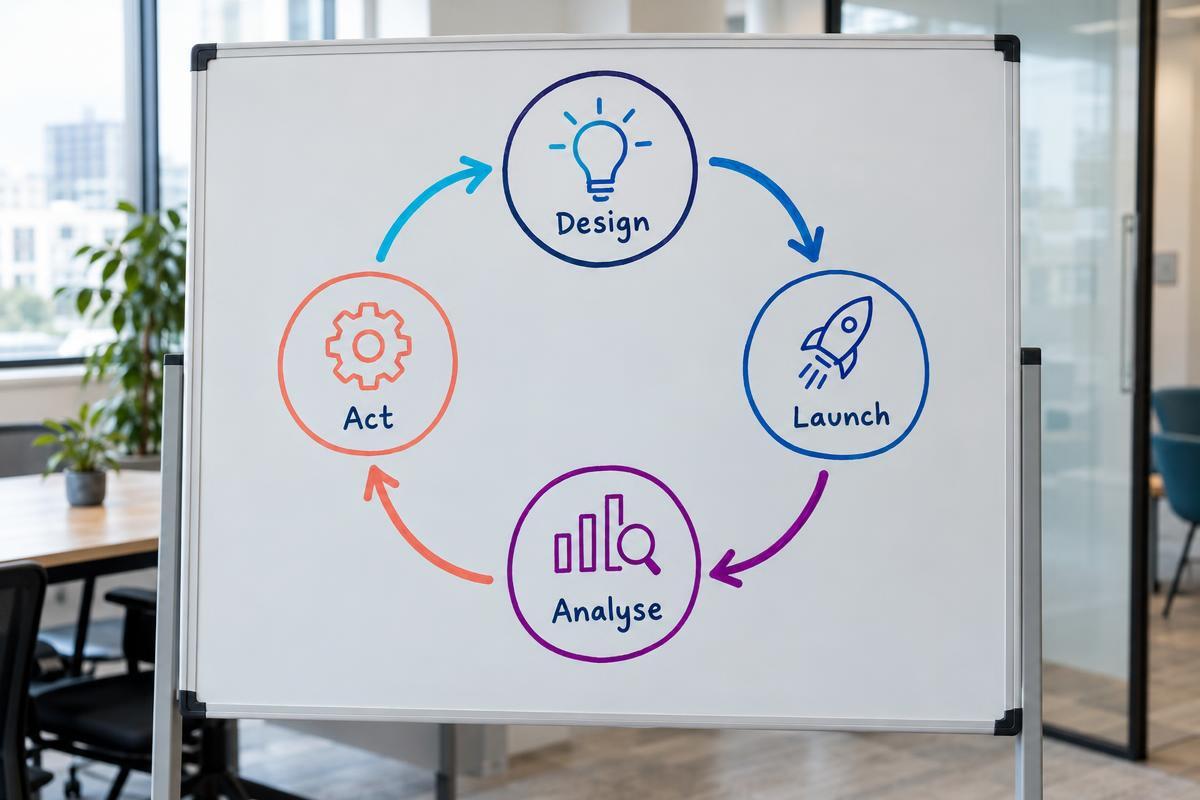
Buying HR software NZ leaders can trust requires evaluating platforms against local requirements. A global tool built for massive American enterprises often fails to connect with a mid-market business in Auckland or Christchurch.
Privacy Act 2020 compliance and data sovereignty
Employee feedback is highly sensitive data. When staff share their thoughts on leadership, compensation, and workplace culture, they expect complete confidentiality. New Zealand organisations must ensure their chosen platform complies with the Privacy Act 2020. You need to ask vendors where their data is hosted and how they handle cross-border data transfers. Software that hosts data locally or within approved jurisdictions ensures you remain compliant while building trust with your workforce.
Alignment with Te Ao Māori principles
Workplace culture in Aotearoa often integrates principles like Whanaungatanga (connection and relationship building) and Manaakitanga (care and respect). A survey platform should allow you to customise questions to reflect these values. If your software forces you to use rigid, globally standardised templates that sound overly corporate, you will struggle to get genuine responses from your team. You need a platform that supports tailored Employee Engagement Survey Questions Template designs that connect with local staff.
Actionable insights over basic reporting
Most basic pulse tools deliver a dashboard showing a single engagement score out of ten. This is useful for a board report, but it gives HR leaders nothing to actually fix. The best survey software maps engagement against specific cultural dimensions. It shows you the relationship between how people feel and how your business actually operates. When you can see that a drop in engagement correlates directly with a lack of innovation or poor communication, you can build a targeted action plan.
Local support and transparent billing
Currency fluctuations make US-priced software unpredictable for local budgets. You need a platform that offers clear pricing in NZD. Furthermore, when you run an important company-wide survey and hit a technical roadblock at 2:00 PM on a Thursday, waiting for a North American support team to wake up is unacceptable. Local support during New Zealand business hours is a non-negotiable requirement for mid-market teams.
Top employee survey software for New Zealand businesses
The market is crowded with options ranging from simple feedback apps to complex enterprise systems. We have evaluated the top platforms based on their ability to deliver genuine workforce intelligence for local teams.
- Compono Engage
- Culture Amp
- BambooHR
- Employment Hero
Compono Engage
- Price: Pricing on request
- Best for: Mid-market businesses that want to map their culture and drive performance, not just track sentiment
- Limits: Designed for comprehensive culture and engagement measurement, so it may be too detailed for a company that only wants a simple annual questionnaire
Most engagement tools stop at measuring how happy people are. Compono Engage is an employee engagement platform and culture assessment tool that measures both engagement and the underlying organisational culture. It reduces process risk by automating feedback collection, and it reduces people insight risk by revealing how your teams actually work.
The platform maps organisational culture across 12 distinct dimensions, giving you scientifically validated insights into what drives performance. Instead of guessing why a team is underperforming, the software shows you exactly what to fix with clear next steps. By combining qualitative feedback with reliable analytics, it provides the workforce intelligence that modern HR leaders need to justify strategic decisions to their executive teams.
Culture Amp
- Price: Pricing on request
- Best for: Large global enterprises needing extensive benchmark data across international markets
- Limits: Can be highly complex to start and often carries a premium price tag that stretches mid-market budgets
Culture Amp is a heavyweight in the engagement space. It offers deep analytics, massive data sets for benchmarking, and a wide array of survey templates. For a multinational corporation with thousands of employees and a dedicated people analytics team, it is a powerful tool.
However, local mid-sized businesses often find the platform overly complicated. The sheer volume of data can cause analysis paralysis for lean HR teams who need fast, actionable insights rather than endless reporting options. If you are comparing Culture Amp against other tools, consider whether you have the internal resources to manage it.
BambooHR
- Price: Pricing on request
- Best for: Small to medium businesses looking for basic survey capabilities bundled into their core HR system
- Limits: The survey functionality is a secondary feature, lacking the depth required for true culture mapping
BambooHR is a popular single human resources information system that includes employee satisfaction surveys (eNPS). The main advantage is having your survey data sit alongside your payroll and performance records. It is highly convenient and easy to use. The drawback is that the survey tool is relatively basic. It measures satisfaction well, but it does not dive into the specific behavioural drivers or cultural dimensions that explain why employees score the way they do.
Employment Hero
- Price: Pricing on request
- Best for: Businesses seeking an integrated HR and payroll solution with built-in pulse surveys
- Limits: Focuses heavily on operational compliance and process management rather than deep behavioural science
Employment Hero has a strong presence in the local market, primarily due to its reliable payroll and administrative features. It includes functional pulse surveys that allow managers to check in on their teams quickly. While it is excellent for managing process risk and keeping employee records tidy, its approach to engagement is largely transactional. It treats engagement as a metric to track rather than a complex human changing to understand and improve.
| Platform | Best for | Approach to engagement |
|---|---|---|
| Compono Engage | Mid-market NZ businesses | Maps 12 culture dimensions alongside engagement metrics |
| Culture Amp | Global enterprises | Deep analytics with extensive international benchmarking |
| BambooHR | Core HR administration | Basic eNPS surveys embedded in a broader HRIS |
| Employment Hero | Payroll-first businesses | Transactional pulse surveys linked to operational HR |
Compono makes Compono Engage. We've included it and kept every entry's strengths and limits honest.
The implementation playbook for New Zealand teams
Buying the best engagement platform in Auckland or Wellington is only the first step. The technology handles the distribution and data collection, but how you design and manage the survey process determines your success. You need a structured approach to turn raw feedback into sustained cultural change.
Phase one: survey design and communication
Do not surprise your staff with an unannounced survey link. Pre-communication is critical. You must explain why the survey is happening, what the business intends to do with the results, and exactly how anonymity is protected. In a small New Zealand market where industries are tightly knit, anonymity concerns are real. Staff need to know that their honest feedback will not result in subtle workplace retaliation.
When designing the survey, keep it focused. Ask questions about job engagement, job satisfaction, turnover intention, and overall workplace climate. Limit the number of open-ended text boxes, as too many will cause survey fatigue. Instead, use a mix of quantitative rating scales and targeted qualitative questions to get the full picture of the employee experience.
Phase two: launch and monitor
Keep the survey window tight. Two weeks is generally the ideal timeframe to collect responses. Any longer, and the data becomes disjointed as the business environment changes. Send gentle reminders through the platform to those who have not completed it, but avoid badgering your team. The goal is to capture a genuine snapshot of how people feel right now.
Phase three: analysis and contextualisation
When the results come in, do not just look at the headline score. If your overall engagement sits at 72%, you need to dig deeper. Slice the data by department, tenure, or location. You might find that your sales team is highly motivated while your customer support team is actively disengaged due to burnout. This is where choosing the best HR software in New Zealand pays off, as a true system of intelligence will highlight these hidden fractures automatically.
Phase four: action planning and follow-through
The fastest way to destroy trust is to run a comprehensive survey, present the results at an all-hands meeting, and then do absolutely nothing. Survey fatigue does not come from answering too many questions; it comes from answering questions and seeing no change. You must pick two or three key focus areas based on the data. Communicate these priorities to the company, assign clear owners to each initiative, and track progress openly. When staff see their feedback driving real business decisions, their willingness to participate in future surveys increases dramatically.
How Compono can help with culture and engagement
If you are ready to move past basic sentiment tracking and start understanding what actually drives your team's performance, you need software that handles both the process of surveying and the science of human behaviour.
Frequently asked questions
How often should we survey our employees?
The ideal frequency depends on your business rhythm and your ability to act on the data. An annual deep-dive survey is useful for mapping broad cultural dimensions, but it should be supplemented with shorter pulse surveys every quarter or month. The rule is simple: never survey your staff more frequently than you can realistically start changes based on their feedback.
How do we guarantee survey anonymity for our staff?
True anonymity requires strict data thresholds. Good survey software prevents managers from viewing demographic breakdowns if a group has fewer than three to five respondents. You must communicate these technical safeguards clearly to your team before the survey launches. When employees know the software physically blocks leadership from identifying them, they provide much more accurate and honest answers.
What is a good survey response rate?
For a company-wide culture survey, a response rate between 70% and 80% is considered healthy. If your rate drops below 50%, the data may not accurately reflect the whole organisation. Low participation usually indicates a lack of trust in the process or a belief that leadership will not act on the results. High response rates are built over time by consistently proving that feedback leads to positive action.
Can we customise survey questions for our local context?
Yes, the best platforms allow you to blend scientifically validated core questions with custom additions. This is important for local businesses that want to ask specific questions about recent structural changes, local leadership initiatives, or cultural values unique to their workplace. However, altering core validated questions can break your ability to benchmark against industry standards, so customisation should be handled carefully.
Does survey software integrate with our existing HR systems?
Modern platforms integrate directly with your core human resources information system or payroll software. This allows the survey tool to automatically update employee lists, reporting lines, and demographic data. When someone joins or leaves the company, the survey software syncs the changes, removing the manual process risk of updating spreadsheets and ensuring your data segments are always perfectly accurate.