


 Justin Coutts


How to use industry culture benchmarks to drive performance
 Mathan Allington
Industry culture benchmarks can flatter or mislead. What they show, what they hide, and how to measure culture against your strategy instead.

Desired culture tells you where your people want to go. Current culture is where a new hire will actually work from their first day. Hire someone who would only thrive in the culture you want, drop them into today's team, and you set them up to be welcomed for being different, then worn down for it.
That's why we benchmark candidates against current culture, and use desired culture for a different job. Edan Haddock recently gave us a good reason to explain our thinking.
Quick answers
- Hiring benchmarks work best when they come from current culture, because that's the environment a new hire joins.
- Desired culture is evidence of where people want to go. It isn't an environment anyone works in yet, and it isn't automatically right.
- Before hiring for a culture gap, compare desired culture with the team's Work Personality coverage to see how hard the change will be.
- Check climate and engagement to see whether the team is ready to support someone who works differently.
- Then decide whether the role needs a similar, adjacent or deliberately different profile, and plan the support before the offer.
In Episode 8 of his Movember series, Edan spent time with me and Mathan Allington, our Head of Marketing. He pushed us on something I've heard from plenty of HR leaders. If a platform tells you who fits your culture, how does that sit with diversity? Couldn't it just give you more of the same?
It's a fair challenge, and I agree with most of the diagnosis. Gut-feel hiring pulls people towards the familiar. "Culture fit" can become a more professional way of saying "I'd have a beer with them". And a risk-averse business that keeps hiring people who are comfortable with its risk-averse habits shouldn't be surprised when its innovation strategy stalls.
The obvious fix is to flip the benchmark. Measure where the team wants to be and hire for that. It's a reasonable idea, and we've thought about it a lot. But I don't think it works, for two reasons.
Organisational psychology gives us a simple chain to work from. Personality predicts behaviour. Behaviour repeated over time becomes culture. Culture creates the work environment every new person walks into.
Current culture is the accumulated habits of everyone already there: how decisions really get made, what gets rewarded, what gets quietly discouraged. Desired culture is a picture of where people would like those habits to go. That picture is useful. But nobody works in it yet.
So when a benchmark comes from desired culture, you're scoring candidates against an environment that doesn't exist. Someone can look like an ideal match on paper and then join a team that behaves nothing like the benchmark suggested.
Edan described what happens next better than I could. The person "becomes the outsider. They're the difficult one." They're invited in because they're different, then slowly punished for being different. I've watched versions of this play out many times across my years in agency and internal recruitment. The new person rarely changes the culture on their own. More often the culture wears them down until they conform or leave, and the team decides the experiment didn't work.
That's why we build hiring benchmarks from current culture. A benchmark can answer one question well: will this person be able to work effectively in the environment they're actually joining? Asking it to also predict the future is asking too much of it.
There's a second reason, and it gets less attention. Desired culture is what people say they want. That's valuable evidence, but it isn't a verdict.
When we interpret culture results with clients, one of the mistakes we warn about is assuming the desired culture is automatically the right culture. A gap between current and desired can mean several different things:
Each of those needs a different response, and only some of them involve hiring. Point the benchmark at desired culture and you've acted on an answer before anyone checked the question.
Desired culture still matters a great deal. We use it to frame the hiring decision rather than to score candidates. Before a team hires for a culture gap, we look at a few things together.

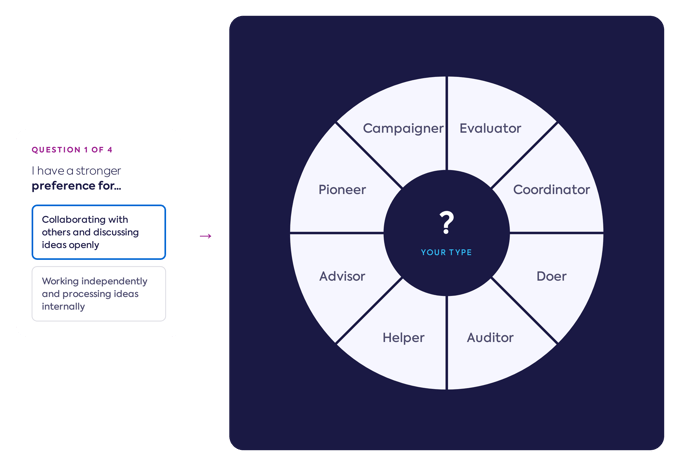
Our Work Personality model describes eight types, from Pioneer and Campaigner through to Auditor and Evaluator. The goal isn't one person in each. It's whether the team has enough behavioural range to do the work in front of it.
Lay desired culture over that coverage and you learn how hard the change will be. If a team wants more innovation and already has Pioneers whose ideas aren't being heard, a hire probably isn't the answer. The behavioural ingredients are there. The issue is more likely permission, process or a leader who needs to make room.
If the same team is heavily weighted towards Doers and Auditors, the gap is partly behavioural, and a hire who brings different range could help. But the data is also telling you that this person will be working against the team's natural preferences every day. That doesn't mean it can't work. It means the change needs deliberate design and support.
Edan's episode included a good example of what happens without that design. A client's strategy was built on new ideas and growth, but the team was weighted towards execution. The one Pioneer in the group said they felt like a lone wolf, and their ideas kept getting shut down. Hire a second Pioneer into that team without changing anything else and you'll most likely end up with two lone wolves.
Climate and engagement tell you how people feel about the environment they're in now. They're the best readiness signal we have. Culture shows what needs attention. Climate shows how urgent it is and how much change the team can absorb.
When climate is positive, the team has trust and energy to work with, and a different hire has a good platform. When climate is neutral, the team is at a turning point and people are watching to see whether leaders act. When climate is poor, the first job is to stabilise. Bringing someone in specifically to challenge a strained, low-trust team asks one new person to carry a change the organisation hasn't committed to.
As Edan put it, if you're hiring someone to challenge the team, the team needs to be ready to be challenged. Climate is how you check.
We frame the final call as similar, adjacent or different.
A similar profile makes sense when the team is performing well, climate is healthy, culture is aligned and the strategy isn't changing much.
An adjacent profile suits a mostly healthy team that needs some extra range without major disruption. In my experience this is the most common right answer: someone who can work well in today's culture and leans towards the desired end on the dimensions that matter most.
A deliberately different profile is worth considering when the strategy has shifted, the gaps are significant and widely shared, and the role is senior enough to influence direction. Seniority changes the risk. A senior leader can be hired to shift a team. A junior person with a very different work style usually needs far more support and protection to succeed.
Different can create real value. It can also create real conflict. If you choose it, plan the support before you make the offer, not after the first clash.
Put together, the approach is fairly simple. Benchmark against current culture. Use the gap between current and desired culture to work out what the team is missing. The hiring question then becomes more specific: on the dimensions where the gap is biggest and most widely shared, which candidates lean towards the desired end and can still do well in the team as it is today?
From there, use the interview to explore the difference rather than discover it six months later. If a candidate's preferred environment looks quite different from the team's, raise it and talk about it before anyone decides.
Mathan shared a good example in the episode. He deliberately hired someone who was close to his opposite, to cover his own blind spots. Because he knew that going in, he changed how he managed them, with clearer expectations, different communication and more deliberate conversations. Four months in, the person was doing well.
That's culture add working as intended. The difference was chosen on purpose, and the team was set up to use it.
Edan ends his episode with a better question than "will they fit?" He asks: what does this team need that it doesn't already have?
I'd add one more. Is the team ready to hold what it's asking for?

A desired culture describes the future. A hire has to succeed in the present. The organisations that get culture add right treat it as a decision about the whole team (its range, its climate, its leadership) and not only about the candidate. I'd much rather see a well-supported adjacent hire than a bold one who's left to fend for themselves.
If you're curious how we bring culture, climate and Work Personality together in practice, there's more on our Compono Engage page.
Not as the benchmark. Benchmark candidates against current culture so they can work well from day one, then use desired culture to decide what a hire should help add and whether the team is ready for it.
Current culture is the environment a new hire actually joins. Desired culture describes where people want to go, which no one works in yet. Benchmarking against it can produce hires who look right on paper but struggle in the real team.
Culture fit asks whether someone will work well in the existing environment. Culture add asks what someone brings that the team is missing. Good hiring looks at both, and culture add works best when the team has the climate and support to take on a different perspective.
Look at climate and engagement, whether the team broadly agrees on its desired culture, and whether the manager has a plan for onboarding and supporting someone with a different work style. If climate is poor, stabilise the team first.
Justin Coutts is Head of Talent Solutions at Compono, an Australian people and culture platform that combines hiring, culture, and learning with people insight.

Industry culture benchmarks can flatter or mislead. What they show, what they hide, and how to measure culture against your strategy instead.

How to hold culture together while headcount doubles: write the values down, hire against them, and track engagement by team rather than company wide.

Run a free culture check on your own organisation with Compono's Culture-Candidate Checker®. See what your employer brand signals and which...