

.webp)

 Compono


Why does hiring software matter for modern teams
 Compono
Where manual hiring breaks as headcount climbs, what an ATS fixes first, and the effect on time to hire, culture and how long people stay.

We’ve all been there. A key team member hands in their resignation, and suddenly, the frantic scramble begins. You post a job ad, sift through hundreds of unqualified resumes, and pray that a unicorn candidate appears before the workload crushes the remaining team. It is reactive, stressful, and frankly, a bit exhausting for everyone involved.
In 2026, the Australian labour market has shifted. We are no longer in an era where you can simply 'post and pray'. To stay competitive, savvy HR leaders and business owners are moving away from reactive hiring and embracing a more proactive approach. This is where understanding what a talent pipeline is becomes your greatest competitive advantage.
Instead of starting from zero every time a vacancy opens, imagine having a curated pool of engaged, qualified professionals ready to step in. It is the difference between digging a well when you are already thirsty and having a sophisticated irrigation system ready to go. Let’s dive into how you can build this for your organisation.

At its core, a talent pipeline is a proactive recruitment strategy that involves identifying and nurturing a pool of potential candidates before a specific role even becomes available. Unlike a traditional database of past applicants, a pipeline is a living, breathing ecosystem of talent. These individuals might be active job seekers, but more often, they are passive candidates who have expressed interest in your brand or possess the specific skills your business will need in the future.
Think of it as a long-term relationship rather than a one-night stand. You are not just looking for someone to fill a seat today; you are building a community of professionals who align with your values and mission. This approach allows you to engage with talent over time, sharing insights about your company culture and keeping them 'warm' until the right opportunity arises.
By shifting your focus from 'hiring for now' to 'cultivating for later', you significantly reduce the time-to-hire and improve the quality of your intake. When a role does open up, you aren't introducing yourself for the first time; you are simply continuing a conversation that has already begun. This is why the Compono platform emphasises the importance of early engagement and data-driven matching.

It is common to hear these terms used interchangeably, but in the world of modern HR, they serve different purposes. A talent pool is essentially a wide net. It is a large database of people who might be suitable for a range of roles. They could be former applicants, people who signed up for your newsletter, or individuals you met at a networking event. It is a great starting point, but it lacks the specificity and engagement of a pipeline.
A talent pipeline, on the other hand, is highly structured and segmented. It is organised by specific skill sets, seniority levels, or departments. Whilst a pool is passive, a pipeline is active. You are regularly communicating with these individuals, providing them with value, and assessing their fit for future needs.
Think of the talent pool as your library of ingredients and the talent pipeline as the specific meal you are currently prepping. One is a collection; the other is a process. To be successful in 2026, you need both, but the pipeline is where the real magic happens for your recruitment ROI.
The Australian recruitment landscape has become increasingly complex. Skills shortages in key sectors mean that the best talent is often already employed and not actively looking at job boards. If you only look for talent when you have a vacancy, you are missing out on the top 70% of the market. Here is why a pipeline is no longer optional:
First, it drastically reduces your cost-per-hire. Recruiting in a rush is expensive. You end up spending more on urgent advertising, headhunter fees, and potentially settling for a 'good enough' candidate who might not stay long. A pipeline allows you to hire with intention rather than desperation.
Second, it protects your company culture. When you have time to nurture a relationship, you can truly assess whether a candidate aligns with your organisational DNA. You can use tools like Compono Hire to screen for both technical skills and cultural alignment long before an offer letter is even drafted. This leads to better retention and a more cohesive team environment.
Finally, it provides business continuity. Knowing that you have a 'bench' of talent ready to go gives leadership the confidence to grow and scale. It removes the fear of a key person leaving because the replacement process is already well underway. It turns a potential crisis into a smooth transition.
Building a pipeline doesn't happen overnight, but the process is straightforward if you are methodical. It starts with workforce planning. You need to look at your business goals for the next 12 to 24 months. Are you expanding into a new territory? Are you launching a new product line? Identify the roles that will be critical to that success.
Once you know who you need, you can start sourcing. This isn't just about LinkedIn searches. Look at internal candidates who are ready for a promotion, silver medallists from previous recruitment rounds (the ones who were great but just missed out), and industry leaders you've met through professional associations. Diversifying your sources ensures a more robust and inclusive pipeline.
The most critical step, however, is engagement. You cannot just put a name on a list and forget about them. You need a communication strategy. This could include inviting them to company webinars, sharing 'behind the scenes' content about your team, or even just a quarterly check-in to see how their career is progressing. The goal is to remain top-of-mind so that when they are ready for a change, you are their first phone call.
As with any business strategy, you need to track your progress. You should be looking at metrics like 'pipeline conversion rate'—how many people in your pipeline actually end up being hired? Another key metric is 'source of hire'—which channels are providing the highest quality candidates for your pipeline?
You should also monitor the 'time-to-fill' for roles where a pipeline was in place versus those where you started from scratch. In 2026, data is your best friend. By analysing the behaviour of your candidates, you can refine your messaging and ensure you are providing the right information at the right time. This level of insight is what separates a world-class HR function from a standard one.
Remember, a talent pipeline is an investment in your company's future. It requires time, effort, and the right technology, but the payoff is a resilient, high-performing workforce that can adapt to whatever the market throws your way. If you are ready to stop the reactive cycle, it is time to start building.
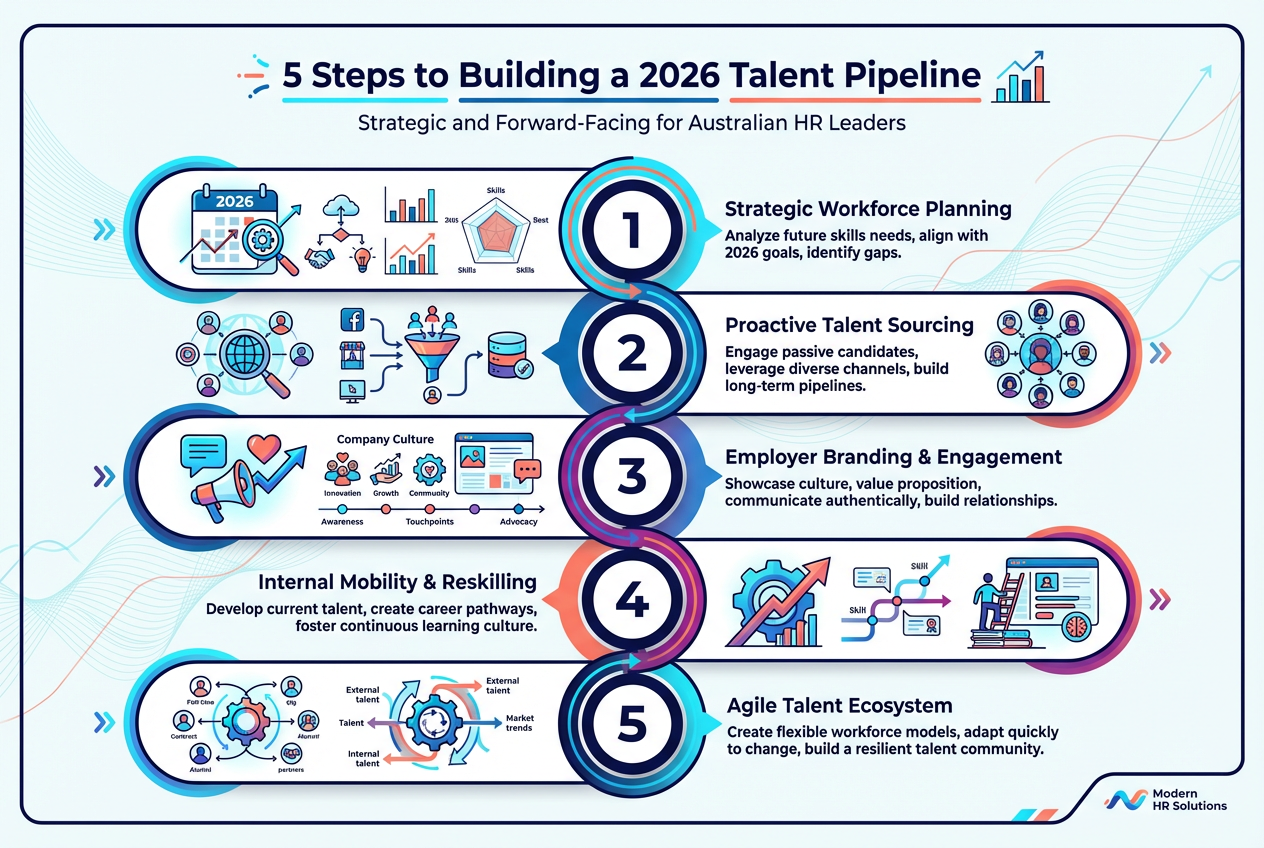
The future of work in Australia belongs to the prepared. By investing in your talent pipeline today, you are ensuring that your organisation remains agile, innovative, and ready for whatever 2026 and beyond might bring. Don't wait for the next resignation to land on your desk—start building your community of future stars now.
Ready to transform your recruitment from reactive to proactive? Our team of experts is here to help you navigate the complexities of talent pipelining. Whether you need better data, improved engagement tools, or a more streamlined hiring process, we have the solutions to help you thrive. Reach out to book a demo today and see how we can help you secure the talent your business deserves.

Where manual hiring breaks as headcount climbs, what an ATS fixes first, and the effect on time to hire, culture and how long people stay.

Choosing talent acquisition software in Wellington: applicant tracking, shortlisting that uses behaviour data, and how local needs sit with global...

What an ATS tool does, the features worth paying for, and how fit-based candidate ranking turns faster hiring into better hiring.
 Mathan Allington