
.webp)
.png?width=383&height=200&name=team%20(1).png)
 Daryl Ning


1 min read
Stop hiring the same salesperson at every phase of growth
 Justin Coutts
When most companies think about hiring salespeople, they picture the same type of person. Confident. Persuasive. Energetic. Relationship-driven....
.jpg)
Acquiring a new customer costs more than keeping the one you've got — that's just how SaaS economics work. This principle drives Customer Success (CS) departments to ensure clients are healthy, engaged, and deriving optimal value.
However, many HR departments operate in a perpetual "transactional loop." They
disproportionately focus their resources on "acquisition" (hiring) while neglecting "churn" (employee turnover), an oversight that costs businesses millions.
If the goal is to build a high-performing and resilient team, leaders must shift their
perspective: stop thinking like a recruiter and start thinking like a Customer Success
Manager (CSM). By applying these three core pillars of Customer Success to the workforce, organisations can dramatically improve employee retention.
In CS, instead of simply awaiting a subscription cancellation email, the focus is on
proactively monitoring health scores. This allows for an understanding of customer issues well before they escalate into a churn risk. However, a customer expressing general "unhappiness" is merely a symptom; you need to determine the cause of the relationship breakdown. This might involve identifying issues, such as, a software workflow problem, a missing feature or capability, or inadequate support response times. Knowing the specific areas for improvement is key to repairing the relationship.
Many HR teams attempt to emulate this proactive approach with generic pulse surveys, but these often only capture the current "mood" without revealing the underlying why. To effectively close this knowledge gap, leaders should leverage behavioural science. This involves systematically mapping the disconnects between how employees prefer to work and the actual design and operation of the organisation, i.e., its culture.
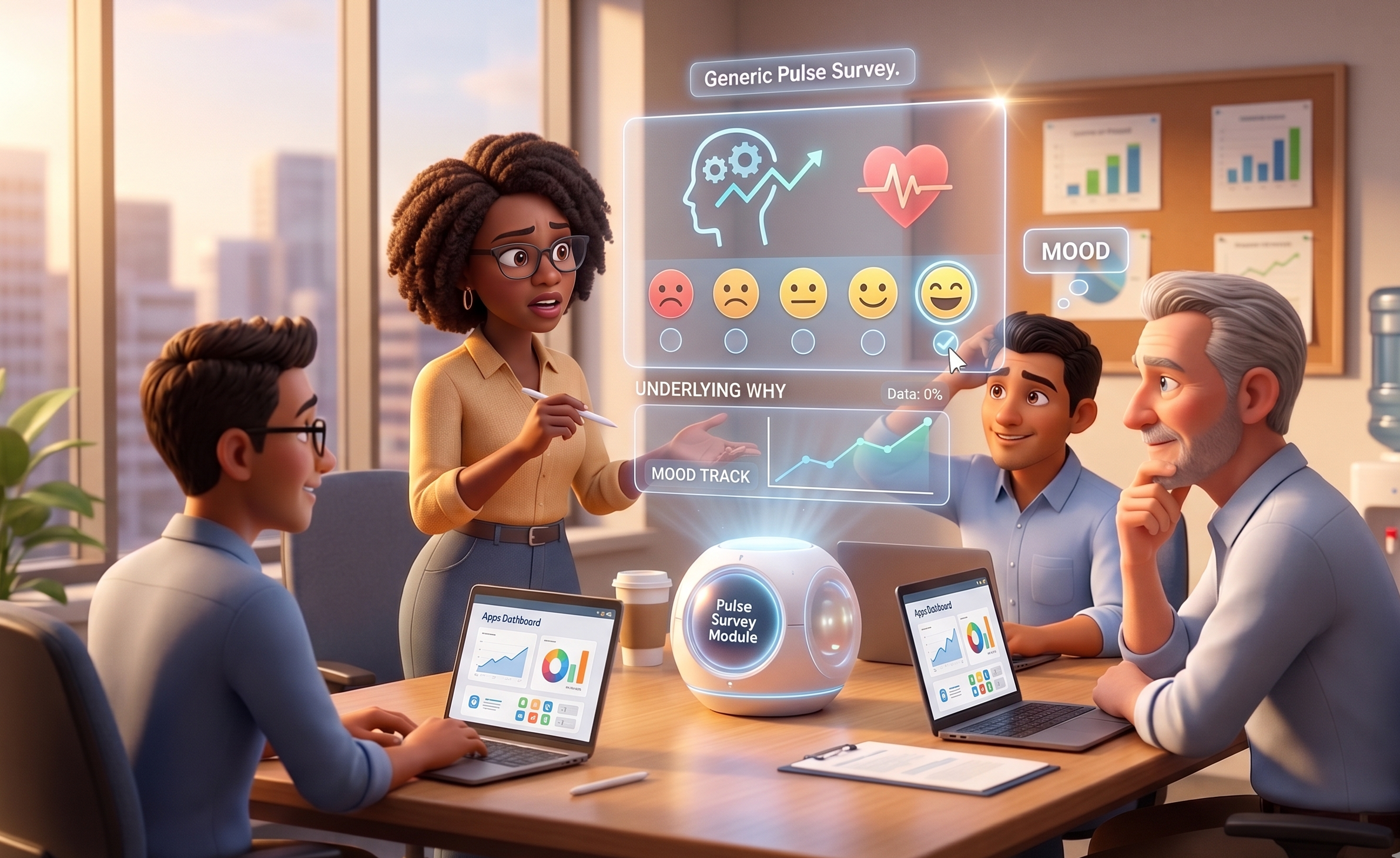
This offers a crucial distinction: moving beyond an employee complaint to pinpointing the exact cultural misalignment. Understanding the why is essential for making strategic decisions that genuinely enhance employee sentiment and engagement. And improved engagement leads to improved performance.
A key function of an excellent CSM is to bridge the gap between the customer and the
development team. This role ensures the product offers a superior user experience. For
instance, if the intended users face difficulties navigating the platform, a CSM does not blame the users for being "incompetent." Instead, they pinpoint where the software's design conflicts with the users' natural workflow, and relay this crucial feedback to the
development team. The software can then be modified to better align with user needs, significantly improving their overall platform experience.
In HR, the "product" is the design of the role and team, and the "user" is the employee.
Leaders must understand individual work personalities to effectively match people with the right types of projects. Assigning a project that demands precision and methodical detail (suited for an "Auditor") to an employee who thrives on spontaneous, conceptual exploration (a "Pioneer") is a common mistake that can lead to failure.
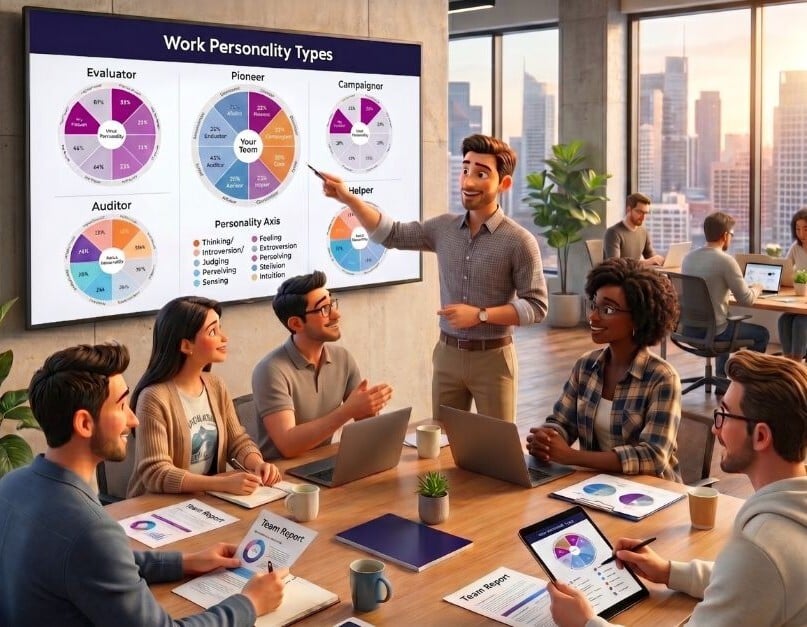
When high-performing employees start to show signs of "churn" or burnout, it often
indicates a fundamental misalignment between their daily tasks and their natural work preferences. As a CSM for your people, the HR role involves translating this behavioural
data into necessary role adjustments. This ensures the work environment genuinely aligns with the person operating within it.
Proactivity is a defining trait of a Senior CSM, as highlighted in point 1. Instead of waiting for a crisis, you actively seek out warning signs. For instance, a decline in account usage should prompt immediate action, as it could signal customer frustration or product difficulties. A strategic intervention, offering necessary coaching, must be launched immediately to resolve these issues before the customer considers churning. Ignoring these signals is not an option.
In the workplace, that “warning sign” may be employee friction or misaligned communication styles. These situations are commonly ignored, because they often lead to difficult conversations. But avoiding these situations allows them to fester and worsen until they lead to a sudden resignation.
Unlike coaching customers on software use, intervening in human conflict is complex and may require the assistance of a professional. But traditional coaching is often too slow for the pace of work. It usually relies on scheduled sessions, structured check-ins and homework. But the real coaching moments happen in between, when an employee is facing a decision, a difficult conversation or a performance challenge.
Good coaching still needs structure, rigour and evidence-based foundations. But it also needs to be available in the moment. The real opportunity is continuous, on-demand coaching that supports micro-improvements every day, not delayed advice weeks after the moment has passed.
Your people aren't problems to be controlled; they are potential to be unlocked. When you start treating your employees with the same strategic rigor you'd apply to your best customers, you don't just reduce churn - you drive high performance.
Daryl Ning is a Customer Success Specialist at Compono, an Australian people and culture platform that combines hiring, culture, and learning with people insight.
.jpg)
1 min read
When most companies think about hiring salespeople, they picture the same type of person. Confident. Persuasive. Energetic. Relationship-driven....
.jpg)
1 min read
Imagine it is Sunday night. You have fourteen tabs open in your browser. You’re reading through multiple blogs and Reddit threads. You’ve...
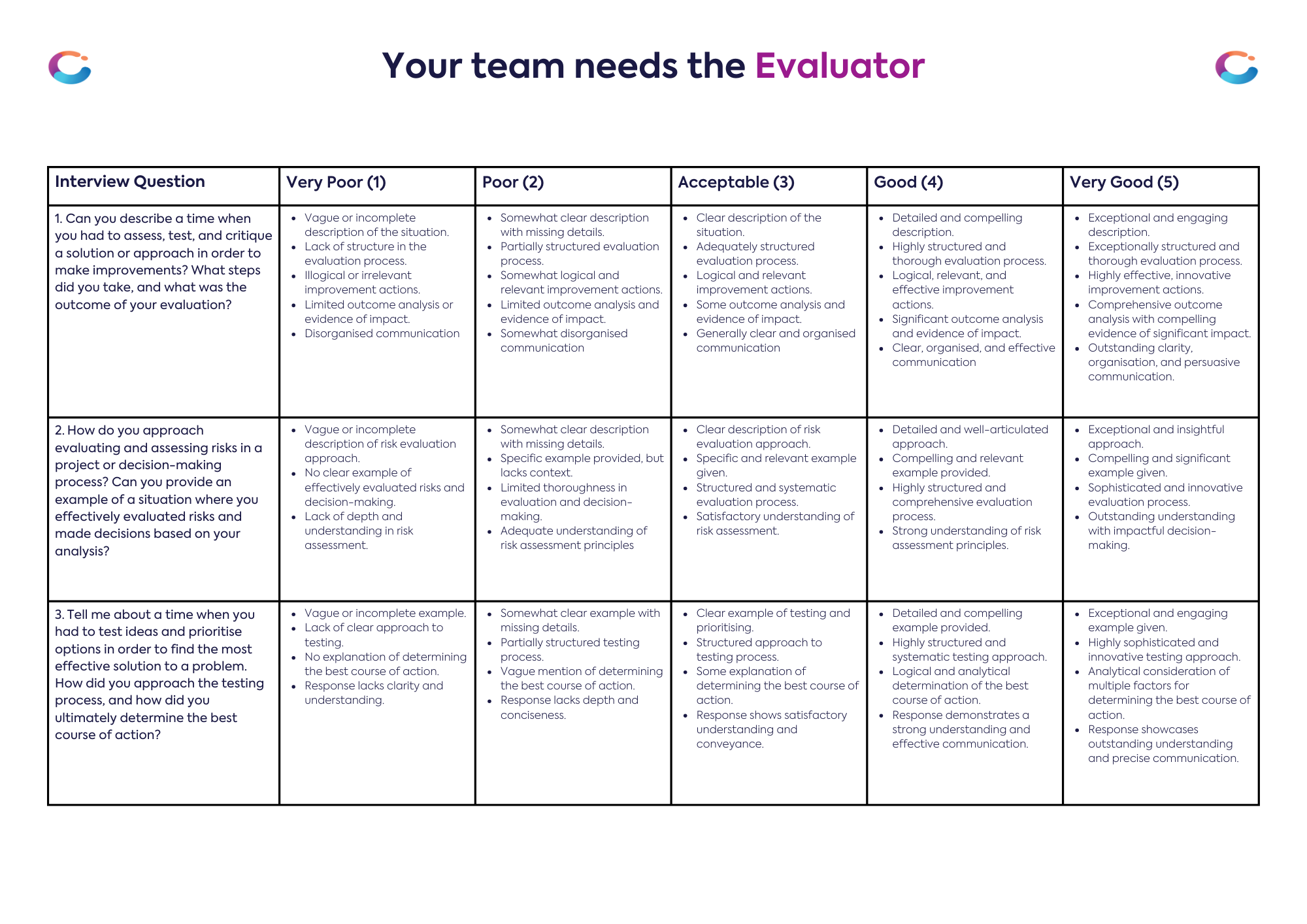
1 min read
A scoring key is a documented framework that rates every candidate against the same weighted criteria, so hiring decisions rest on evidence rather...
 Daryl Ning
 Mathan Allington