


 Mathan Allington

Litmos Pricing 2026: Costs, Plans, and Hidden Fees Explained
 Compono
Discover the true cost of Litmos in 2026. We break down active user pricing, content bundles, hidden fees, and median contract values for mid-sized...
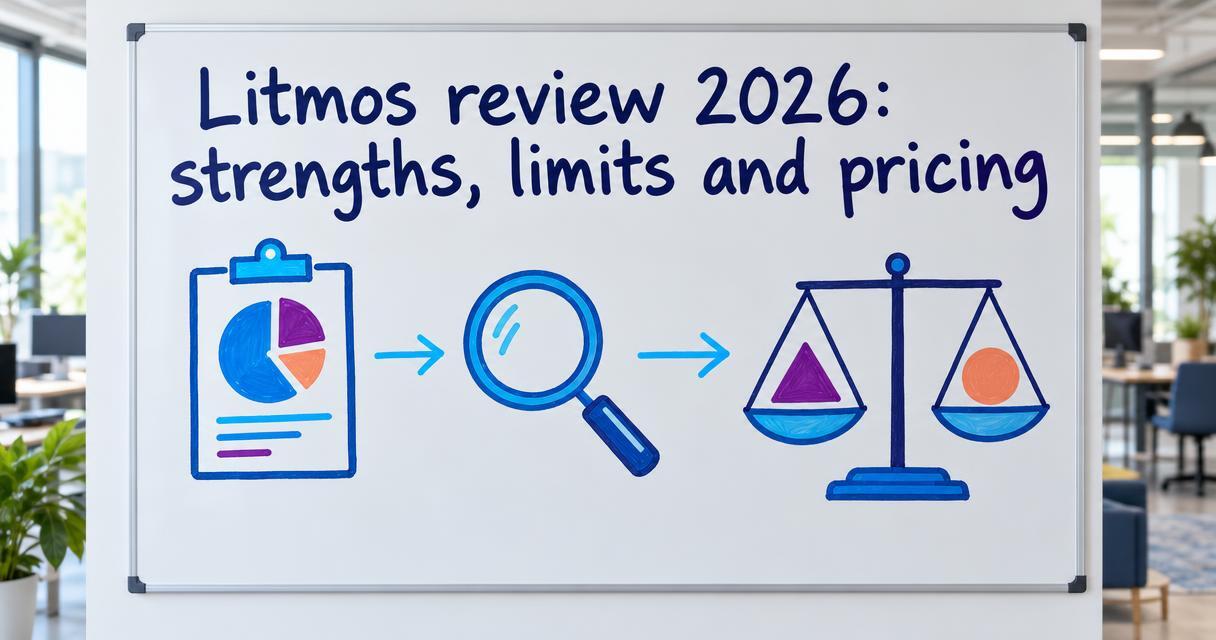
Litmos is a capable learning management system that excels at course delivery, though user reviews suggest its reporting tools require careful configuration to extract deep insights.
Last reviewed November 2026
Quick answer
- Price: Published pricing starts at $8,000 per year for Foundation and $15,000 per year for Platinum.
- Best for: Organisations looking for a user-friendly platform with strong native integrations and straightforward course creation.
- Verdict: Litmos is a solid choice for delivering compliance and standard training content, but teams needing advanced capability tracking might find the reporting restrictive.
A learning management system (LMS) sits at the centre of how you build your team. Traditional platforms treat learning as a compliance exercise. Modern HR teams know that tracking attendance is only part of the puzzle. The real challenge is ensuring your people acquire the capability they need to perform safely and effectively.
When you evaluate any learning software, you must weigh whether it just serves content or actually builds competence. A thorough review requires looking past the feature list and understanding how real users experience the platform on a daily basis.

Litmos earns consistent praise for its accessibility and scale. According to G2, the platform holds a 4.3 out of 5 overall rating from 681 reviewers. Users specifically highlight its user-friendly interface, straightforward course creation, and intuitive learning-path setup, noting these features in several G2 and G2 comparison reviews. This makes it a popular choice for organisations that need to deploy training quickly without extensive technical overhead.
For large enterprises, the scale is evident. Hewlett Packard Enterprise reports processing more than $200 million in training revenue through Litmos over four years, including over $50 million in training registrations, according to a Litmos case study. The platform also offers more than 50 native integrations, including Workday, ADP, BambooHR, Salesforce, Microsoft Teams, Zoom, Okta, and Microsoft Entra ID, as listed by Litmos. If you are choosing an LMS in Australia or New Zealand, these strong integrations ensure the system fits smoothly into your existing human resources architecture.
While delivering content is a clear strength, extracting detailed insights can be more demanding. Reviewers on G2 report that Litmos’s reporting tools require substantial configuration, particularly when managing custom fields and analysing specific learner data. Some users also cite occasional search and reporting issues as drawbacks of the platform, according to G2 feedback.
This reporting limitation highlights a common issue in HR technology. Most systems are built to manage process risk. They track who clicked a module, who passed a quiz, and who holds a certificate. However, they often miss people insight risk. If your reporting requires heavy configuration just to understand basic capability gaps, you might struggle to see whether a learner actually understands the material or simply clicked through it. True workforce intelligence requires clear, accessible data on both compliance and behaviour.
Budget transparency is important when reviewing software. Published pricing starts at $8,000 per year for the Foundation tier and $15,000 per year for Platinum, while the Platinum AI tier uses custom pricing, according to Litmos documentation.
Depending on your volume, the cost per user can scale efficiently for large organisations. For example, USA Volleyball reports that its training costs are approximately $0.18 per user per year using the platform, as noted by Litmos. We break down the platform's value proposition further in our Litmos pricing 2026 guide.
When you rely solely on standard tracking metrics, you expose your organisation to unseen risks. We call this the Two-Risk Framework. Process risk involves the administrative side of HR, ensuring that workflows are completed and compliance boxes are ticked. Most traditional HR systems, including many popular learning platforms, handle this well.
People insight risk is what happens when someone completes a course but still fails to grasp the culture or the practical application of the skill. When your reporting tools are difficult to configure, you lose visibility over this second risk. You might know an employee finished their onboarding module, but you do not know if they possess the capability to perform under pressure. The best learning systems solve both sides of this equation by integrating behavioural insights with rigorous assessment design.
Litmos is a strong contender for businesses that want a reliable engine for standard content. Compono Develop takes a different approach by focusing on capability and behavioural science. We believe that an LMS must do more than deliver a video. It must prove that an employee is ready for the real world.
Our platform is built on decades of psychometric research, delivering a 4.7 out of 5 rating across millions of learners. We focus on high-stakes capability and compliance. For instance, our technology helped the Department of Transport Victoria save $34 million in operational costs over two years with digital licensing. If you are exploring the wider market, our Litmos alternatives guide covers a broader range of platforms. Below is a quick summary comparing Litmos directly with Compono Develop.
| Platform | Best for | Key limitation |
|---|---|---|
| Litmos | Delivering compliance content at scale with strong native integrations. | Reporting tools require heavy configuration for deep analysis. |
| Compono Develop | Linking learning directly to capability, real-world compliance and behavioural insights. | Not designed for teams that only want a basic video repository. |
Compono makes Compono Develop. We've included it and kept every entry's strengths and limits honest.
If your learning management system cannot tell you whether your people are actually building capability, it is only doing half the job. Compono Develop goes beyond content delivery to track real competence, keeping your organisation compliant and your team growing.
As of 2026, Litmos publishes a starting price of $8,000 per year for its Foundation tier and $15,000 per year for Platinum.
Yes. Litmos offers more than 50 native integrations, connecting with popular platforms like Workday, ADP, Salesforce and BambooHR.
Reviewers generally praise the platform for its user-friendly interface and straightforward course creation process, making it accessible for new administrators.
Some users note that extracting detailed learner insights can be difficult, as the reporting tools and custom fields often require substantial configuration to yield meaningful data.
Discover the true cost of Litmos in 2026. We break down active user pricing, content bundles, hidden fees, and median contract values for mid-sized...
Compare the best iSpring Learn alternatives in 2026. Explore pricing, features and how to choose an LMS that builds real workforce capability. See...
The true cost of LinkedIn Learning pricing for business in 2026. Compare the Teams and Enterprise plans with alternatives for your organisation.
 Mathan Allington