

.webp)

 Compono


1 min read
Leadership Styles and Your Personality
 Mathan Allington
Your work personality shapes your default leadership style. Evaluators, Coordinators and Doers tend toward directive leadership, Campaigners, Helpers...

The most effective ways to improve self awareness at work involve mapping your natural work personality, seeking behaviour-based feedback, and tracking how you respond to workplace stress.
Key takeaways
- Understanding your baseline work personality helps you identify blind spots and communication preferences.
- Requesting specific feedback on your behaviours provides an objective view of your workplace impact.
- Tracking your stress responses allows you to manage your reactions before they affect team dynamics.
- Analysing how you handle conflict reveals opportunities to improve collaboration with different personality types.
- Adapting your leadership approach requires a clear understanding of your default management tendencies.
Many professionals operate on autopilot. We react to emails, manage projects, and navigate meetings using our default habits. This lack of conscious reflection often leads to miscommunication and friction within teams.
Without self-awareness, leaders might unknowingly micromanage their direct reports. Team members might avoid necessary conflict or dominate discussions without realising it. Improving your self-awareness bridges the gap between your intentions and your actual impact on others.
When you understand your natural tendencies, you can make deliberate choices about your behaviour. You can adapt your communication style to suit your audience and manage your reactions during high-pressure situations. This adaptability is the foundation of emotional intelligence and effective collaboration.

Every professional has a default way of approaching tasks and interacting with colleagues. Identifying this baseline is the first step in building self-awareness.
People generally fall into specific behavioural profiles. Some individuals thrive on big ideas and future possibilities. Others prefer logical, data-driven decision making. Knowing where you sit on this spectrum helps you understand why certain tasks energise you and why others feel draining.
For example, The Doer is practical and action-oriented, preferring clear direction and immediate results. On the other hand, The Advisor is flexible and collaborative, focusing on team harmony and open-ended problem solving. When these two types work together, their differing approaches can cause frustration if neither is self-aware.
At Compono, we use a framework that categorises these preferences. Taking the Work Personality assessment gives you immediate insight into your major characteristics, work preferences, and potential blind spots.
Stress alters how we behave at work. A highly organised professional might become rigid and controlling under pressure. A supportive team member might withdraw entirely to avoid conflict.
You can improve your self-awareness by tracking these shifts. Keep a private log of moments when you felt frustrated or overwhelmed during the week. Note the specific trigger and how you reacted in the moment.
Reviewing this log helps you spot patterns. You might notice that tight deadlines make you dismissive of your colleagues' ideas. You might find that ambiguous instructions cause you to procrastinate.
Once you know your default stress response, you can consciously choose a different approach. The next time pressure mounts, you can pause and adjust your behaviour before it negatively impacts your team.
We are notoriously bad at evaluating our own performance. To get an accurate picture of your workplace impact, you need external perspectives.
Asking a colleague a broad question usually results in vague praise. People naturally want to be polite, so they avoid giving critical feedback unless prompted specifically.
Instead, ask targeted questions about recent situations. You might ask how clearly you communicated a project goal during yesterday's meeting. You could ask how well you handled a recent disagreement with a client.
Focusing on observable behaviours makes the feedback actionable. It removes the guesswork and highlights exactly where your self-perception misaligns with reality. When you receive this feedback, practice listening without defending your actions.
Workplace conflict often stems from clashing communication styles rather than actual disagreements. A practical team member who wants immediate action will naturally clash with an analytical colleague who needs time to review the details.
Pay attention to how you deliver and receive information. Notice if you tend to dominate meetings or if you hold back your opinions to maintain harmony. Adjusting your communication style to match your audience requires high self-awareness.
Consider how you approach disagreements. Do you focus entirely on logic and efficiency, ignoring the emotional impact on your team? Do you avoid the conversation entirely because you dislike tension?
Understanding these dynamics helps you navigate disagreements productively. When you know your communication defaults, you can adapt your approach to ensure your message lands effectively.
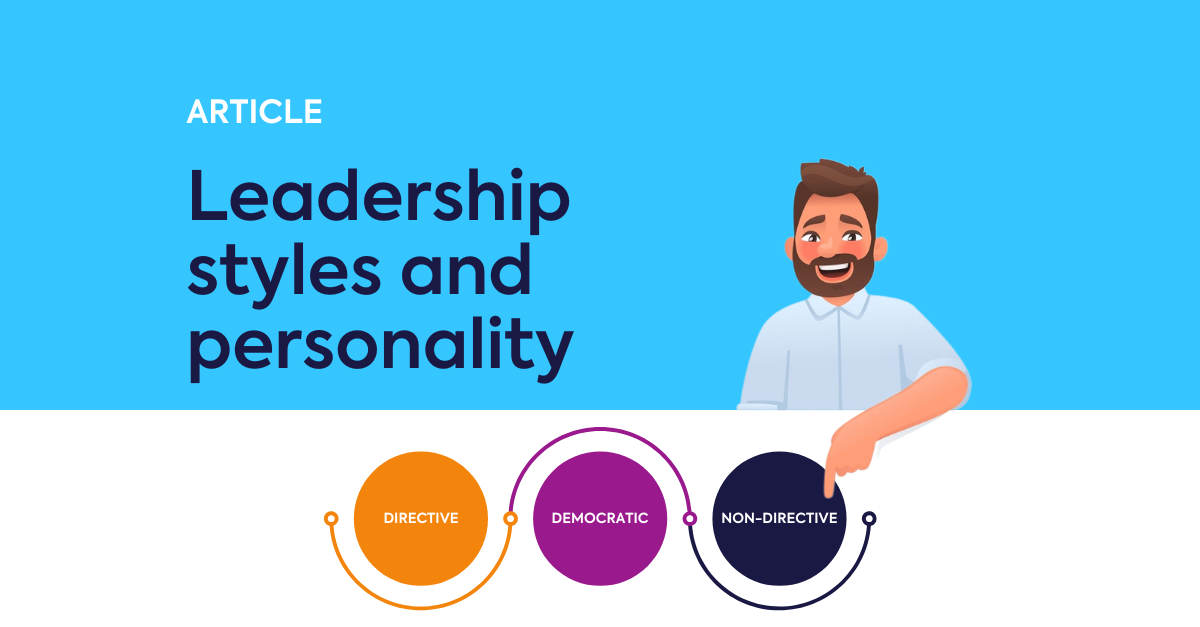
Your personality heavily influences your default leadership style. Some leaders naturally lean toward directive leadership, providing clear instructions and maintaining tight control over processes. Others prefer a democratic approach, focusing on collaboration and shared decision making.
Self-awareness allows you to see when your default style is failing. A directive approach works well in a crisis, but it can stifle innovation when managing a team of highly experienced specialists. A non-directive, hands-off approach equips creative teams, but it can cause chaos if the team lacks experience.
Effective leaders know how to shift their approach based on the situation. They recognise their natural inclination to control a project and consciously step back when the team needs autonomy.
Evaluating your leadership tendencies helps you identify these gaps. You can then practice applying different management styles to suit the specific needs of your team members.
Every strength comes with a corresponding weakness. A professional who excels at big-picture thinking will likely struggle with routine administrative tasks. A meticulous planner might freeze when forced to make a spontaneous decision.
Self-awareness means acknowledging these blind spots without judgment. If you know you struggle with detail-oriented work, you can build systems to double-check your output. You can partner with a colleague who excels in the areas where you are weak.
Ignoring your blind spots leads to repeated mistakes and team frustration. Embracing them allows you to design your workflow around your actual capabilities rather than an idealised version of yourself.
Regularly ask yourself what tasks you consistently avoid or delay. These areas of resistance usually point directly to your professional blind spots.
Self-awareness requires dedicated time for reflection. Moving immediately from one project to the next leaves no room to process what worked and what failed.
Schedule a short review session after completing a major task or making a significant decision. Ask yourself what drove your choices and how your biases might have influenced the outcome.
Consider whether you rushed a decision because you felt impatient. Reflect on whether you delayed a project because you were afraid of receiving negative feedback.
This habit forces you to pause and evaluate your cognitive processes. Over time, this reflection builds a stronger understanding of your professional judgment and decision-making patterns.
Key insights
- Self-awareness begins with understanding your baseline work personality and natural preferences.
- Tracking your stress triggers helps you manage your reactions and maintain professional relationships.
- Specific, behaviour-based feedback provides the objective data needed to correct your self-perception.
- Regular reflection builds the habit of evaluating your decisions and communication styles objectively.
Building self-awareness starts with understanding your natural tendencies and how they impact your team.
Self-awareness helps you understand your strengths, weaknesses, and communication preferences. This understanding allows you to collaborate more effectively, manage stress, and adapt your leadership style to different situations.
You can discover your work personality by taking a psychometric or behavioural assessment. These tools evaluate your natural preferences and provide a detailed report on how you operate in a professional environment.
The best approach is to ask specific questions about recent events. Instead of asking for general feedback, ask a colleague how you handled a specific meeting or presentation to get actionable, behaviour-based insights.
Stress often amplifies our default personality traits. For example, an analytical person might become overly critical, while a supportive person might avoid necessary conflict. Recognising these patterns is a key part of self-awareness.
While you have a natural preference, you can absolutely adapt your leadership style. Self-awareness allows you to recognise when your default approach isn't working so you can consciously choose a more effective method for the situation.
1 min read
Your work personality shapes your default leadership style. Evaluators, Coordinators and Doers tend toward directive leadership, Campaigners, Helpers...

1 min read
A work personality test for enterprise is a scalable assessment that maps exactly how thousands of employees naturally prefer to work, collaborate,...
1 min read
Implementing a work personality test takes four steps: choose a test that is validated for workplace use, set clear objectives and prepare your team,...
 Compono