

.webp)

 Mathan Allington


Product Update August 2024
 Manisha Bullen
What's new? Our product team has been bolstering features to provide you with valuable people insights, at the click of a button. We've got new ways...

Turnover in a high-performing team is almost never about pay. It happens when the work quietly changes shape and stops matching what the person is good at, when the strongest performers absorb the overflow from everyone else, when a manager's style suits half the team and grates on the other half, and when a team gets so good that nobody in it can see a next step. Every one of those is visible months before the resignation lands, if you are measuring the right things.
Last reviewed September 2026
This guide covers why strong teams still lose good people, how to work out whether your turnover is genuinely high, the signals that show up before someone starts looking, and how to build a team that holds together in the first place.
A high-performing team is a magnet for extra work. Projects get routed to the group that delivers, and the people who deliver most reliably end up carrying the largest share of it. For a while that feels like recognition. Then it feels like a tax on being good at your job, and the person who has never complained hands in a resignation that the manager describes as coming out of nowhere.
The second cause is drift. Someone is hired for a role that suits them, the business changes, and eighteen months later two thirds of their week is work they would never have applied for. Nobody made a decision to do that. It accumulated. Pay rises do not fix it, because the problem is not what the job pays; it is what the job now consists of.
The third is the manager. The old line about people leaving managers rather than companies holds up, though it is usually less dramatic than it sounds. A leader who gives detailed direction will keep a new team steady and drive an experienced one out the door. A leader who leaves people alone will delight the autonomous and abandon the ones who needed a structure.
A fourth cause gets less attention. A team that performs well tends to be stable, which means nothing above it opens up, and the most ambitious person in the room works out that the only available promotion is at another company. That one is uncomfortable because the fix often involves letting someone move sideways out of a team you would rather keep intact.
Exit interviews catch all of this too late. By the time someone is willing to say it, they have already signed somewhere else and have no reason to be precise about why.
Before diagnosing anything, get the number, because "high" is a judgement and the figure is not. The standard calculation divides the number of people who left during a period by the average headcount over that period.
Worked example, illustrative numbers only. A team averages 60 people across the year and 9 of them leave. That is 9 divided by 60, which is 0.15, or a 15 per cent annual turnover rate. If 6 of those 9 were people you wanted to keep, your regrettable turnover is 6 divided by 60, or 10 per cent.
The second figure is the one that matters. Total turnover mixes the departures you engineered with the ones that hurt, and a team can look stable on paper while losing exactly the wrong people. Splitting them takes ten minutes and changes the conversation. The definitions sit in our glossary entry on the employee turnover rate, and the cost of employee turnover calculator converts your own numbers into a dollar figure that includes recruitment and the ramp-up time of whoever replaces them.
Comparison to an industry benchmark is less useful than comparison to yourself. Two teams in the same business on the same pay bands with very different turnover is the finding worth chasing.

None of these prove anything on their own. Two or more of them in the same person in the same month is worth a conversation.
| What you notice | What it often means | What to try |
|---|---|---|
| A reliable contributor stops volunteering for anything new | Capacity is gone, or interest is gone, and neither is being said out loud | Ask what they have dropped to keep up, rather than whether they are okay |
| Someone becomes hard to reach on the parts of the job they used to own | The work has drifted away from what they signed up for | Rewrite the role against what they actually do, then decide if it still fits |
| A strong performer goes quiet in meetings they used to run | They have stopped believing the input changes anything | Close the loop on their last three suggestions, whatever the answer was |
| Friction between two people who used to work well together | Different working preferences under pressure, read as a personality problem | Name the difference in how each prefers to work and split the handover points |
| Annual leave stops being taken, or is taken in single days | The team cannot absorb their absence, which is a workload signal not a loyalty one | Fix the coverage gap before it turns into a resignation |
Sentiment tools help here because they catch the pattern across a group rather than one manager's read of one person. Compono Engage surfaces where support is thin and where friction is building, so the intervention happens while it is still a conversation. The fit boundary is worth stating: measurement shows you where to look, and it will not have the conversation for you.

Retention is mostly a design problem, and the design happens before anyone is hired. A team performs when the work it has to do is covered by people who are naturally drawn to that kind of work. When it is not covered, someone does it anyway, badly and resentfully, and that person is your next resignation.
Compono's research describes eight ways of working a team needs between them: Doer, Auditor, Helper, Advisor, Pioneer, Campaigner, Evaluator and Coordinator. A group of Pioneers will generate more ideas than it can finish. A group without an Auditor will ship work nobody checked. A group without a Helper will hit its numbers and feel awful doing it.
Four things make the difference in practice:
Our longer piece on what makes a high-performing team goes into the composition question in more detail, including what to do when you cannot hire and have to rebalance with the people you already have.
Two moves cover most of it. First, run a workload check on your best two performers, not your weakest, and be honest about what they have absorbed since the last restructure. Second, ask each person which part of their week they would keep if they could only keep half of it, then compare the answers to how their time is actually allocated. The gap between those two lists is your attrition risk, stated in the employee's own words.
Continuous, smaller check-ins beat an annual survey for this, because the thing you are watching for is a change in someone rather than a score. If you are weighing up how to measure it, the comparison between engagement surveys and culture measurement covers what each one can and cannot see.
Self-awareness in a leader is worth more than any single technique. A manager who knows their own default can flex deliberately: directive during a crisis, and hands-off with people who have earned it. The failure mode is running one style at everyone and reading the mismatch as an attitude problem in the people it does not suit.
That is learnable, and it is also measurable. Once a leader can see their own tendencies alongside the preferences of the people reporting to them, the adjustment stops being guesswork and becomes a short list of specific things to do differently with specific people.
Compono Engage shows where support is thin and friction is building, team by team, while it is still fixable.
Talk to usBecause strong performers attract extra work, and because roles drift away from what the person was hired to do. Both build slowly and neither is solved by pay. The people who leave are often the ones who never complained.
Divide the number of people who left during the period by the average headcount over the same period, then multiply by 100. Run it twice: once for everyone, and once for the departures you would have prevented if you could. The second number is the one to act on.
It depends on the industry and the type of work, so the more useful comparison is internal. Two teams in the same business on the same pay bands with very different turnover tells you something a benchmark never will.
When the work someone does each day matches the kind of work they are naturally drawn to, they spend less energy on tasks that drain them. That mismatch is a common driver of the slow disengagement that ends in a resignation.
Regularly and briefly beats annually and thoroughly. You are watching for a change in a person rather than an absolute score, and small frequent check-ins catch that while an annual survey reports it after the fact.
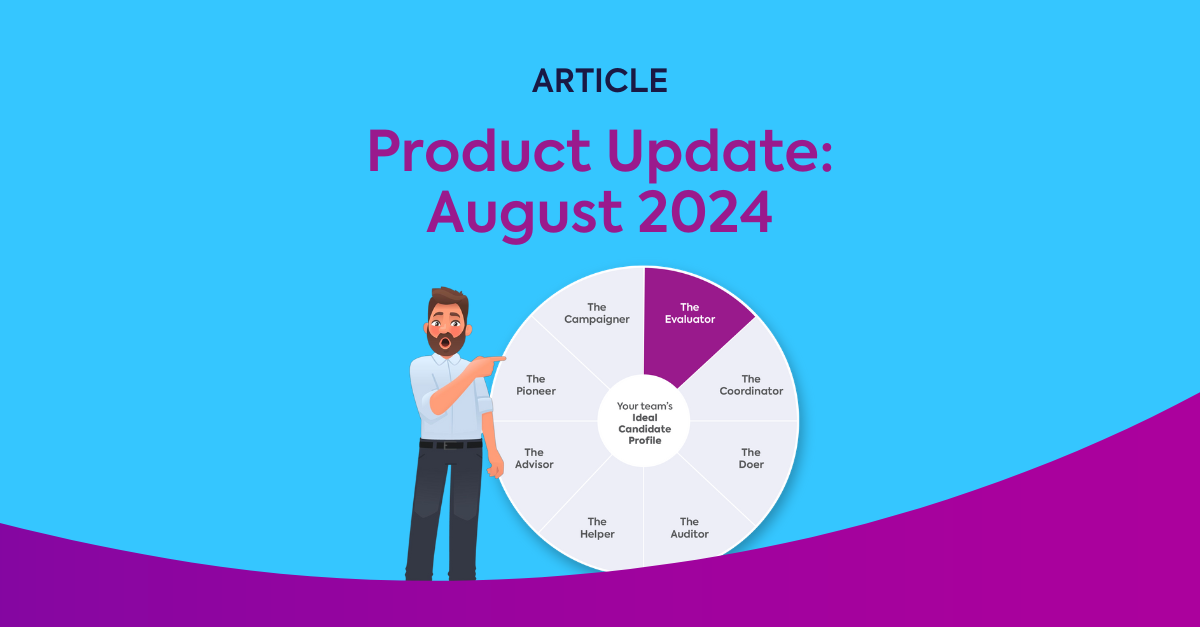
What's new? Our product team has been bolstering features to provide you with valuable people insights, at the click of a button. We've got new ways...

How employee motivation software helps managers drive engagement using work personality insight, not generic perks. See what keeps teams motivated.

How learning and development managers use work personality tests to build stronger teams and tailor growth plans for each person.
 Mathan Allington
 Compono