

.webp)

 Mathan Allington
1 min read
SaaS HR platform: why modern teams need more than just software
 Mathan Allington
SaaS HR software is human resources software you reach over the internet and pay for by subscription, rather than install on servers you own. The...
People management software is the set of tools a business uses to hire, develop, engage and get the best from its staff, covering recruitment, onboarding, learning, feedback, performance and team insight. It sits next to an HR information system rather than replacing it: the HR system holds the records, while people management software supports the decisions a manager makes about the people in front of them.
Last reviewed September 2026.
The term covers more ground than most software categories, which is why two vendors can both call themselves people management platforms and share almost no features. At the administrative end it means leave, contracts, org charts and compliance records. At the other end it means understanding how a team works: who is engaged, who is stretched, where the capability gaps are, and why a group of capable individuals is not performing as a group.
Almost every business already owns part of this. Payroll came first, an HR system arrived when headcount made spreadsheets untenable, and a recruitment tool appeared when hiring got busy. What usually comes last is the layer that explains behaviour, which is also the layer that separates a tool your managers tolerate from one they open on a Monday morning.
Knowing which type you are looking at saves a lot of wasted evaluation time, because the categories answer different questions and most organisations end up running two or three of them together.
| Type | What it handles | Best suited to | What it will not do |
|---|---|---|---|
| HR information system | Employee records, contracts, leave, org structure, payroll integration and compliance documents. | Any business past about 30 staff that still keeps people data in spreadsheets. | Tell you why a team is underperforming. It records, it does not diagnose. |
| Recruitment and applicant tracking | Job ads, candidate pipeline, interview scheduling, assessment and offers. | Businesses hiring often enough that email threads have stopped working. | Help you once the person has started, unless it connects to the rest of the lifecycle. |
| Learning and capability | Course delivery, compliance training, capability frameworks and development pathways. | Organisations with mandatory training or a real skills gap to close. | Measure engagement or explain team dynamics. |
| Engagement and culture | Surveys, sentiment tracking, culture measurement and action planning. | Leaders who find out people are unhappy at the exit interview. | Manage the administrative side. It needs a system of record behind it. |
| Performance and goals | Objectives, check-ins, reviews, feedback and calibration. | Businesses formalising how performance conversations happen. | Fix a review process that is broken by design. Software will speed up whatever you already do. |
| Workforce intelligence | Work personality, team composition, culture fit and people analytics across the lifecycle. | Leaders who need to explain and predict behaviour, not just report on it. | Replace payroll, leave or contract management. |
A common mistake is buying the first type when the problem lives in the last. Records were never the reason your project stalled or your best salesperson resigned.
Most of these products are bought by HR and used by managers, and the gap between those two jobs explains most of the adoption failures. HR needs coverage, consistency and a defensible record. A line manager needs to know what to do on Tuesday about the person who has gone quiet in stand-ups.
Software that works for a manager tends to do four things. It shows one team, not the whole organisation, on a single screen. It prompts an action rather than presenting a dashboard to interpret. It fits inside a one-to-one, which means it opens on a phone and closes in a few minutes. And it tells the manager something they did not already know, because a tool that reports back what they said last week gets abandoned inside a month.
When you run the evaluation, put the manager view in front of two or three actual managers and say nothing. If they have to ask what a screen is telling them, the rollout will need training that never quite finishes.
Requirements lists get long quickly and most of the length is decoration. These are the criteria that tend to decide whether the thing still gets used in year two.
Writing those requirements down in a form a vendor can answer is half the battle, and the HR tech requirements builder will produce that list for you if you would rather not start from a blank page.
Almost all of it is priced per employee per month, usually with a minimum number of seats and often with modules charged separately, so the headline number on a website is rarely the number on the invoice. Implementation is quoted as a one-off, annual contracts are the norm, and the price per head generally falls as headcount rises.
Three costs get missed at approval time. Implementation and data migration, which is real work whether the vendor does it or your team does. The support tier, since the responsive one is frequently not the one in the standard quote. And headcount growth, because a per-head price that looks fine at 80 staff deserves a second look at 200. Ask for a three-year total rather than a monthly rate, and ask what a renewal increase has typically looked like.
An HRIS is the system of record. It knows who works here, what they are paid, what they are entitled to and what they have signed. It is designed to be correct, auditable and dull, and those are the right qualities for a record.
People management software is aimed at decisions. Who should we hire into this team. Why is this department losing people. What capability will we be short of next year. Which of these two candidates will still be here in two years. Running both is normal, with the HRIS holding the truth and the people platform reading from it. What matters is deciding which system owns which field before you connect them, because two systems both convinced they own the org structure will reliably disagree. Our guide to how an applicant tracking system differs from an HRIS covers the same boundary on the hiring side.
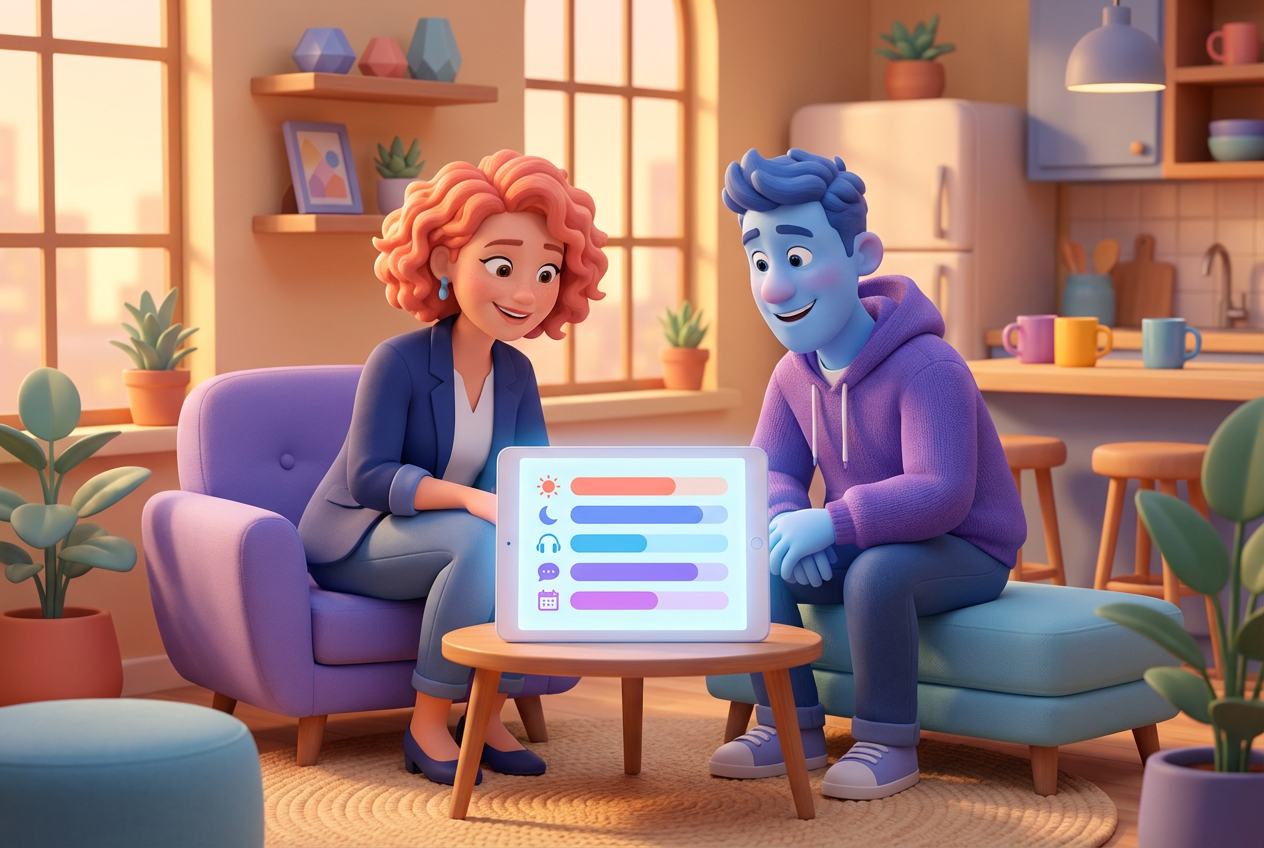
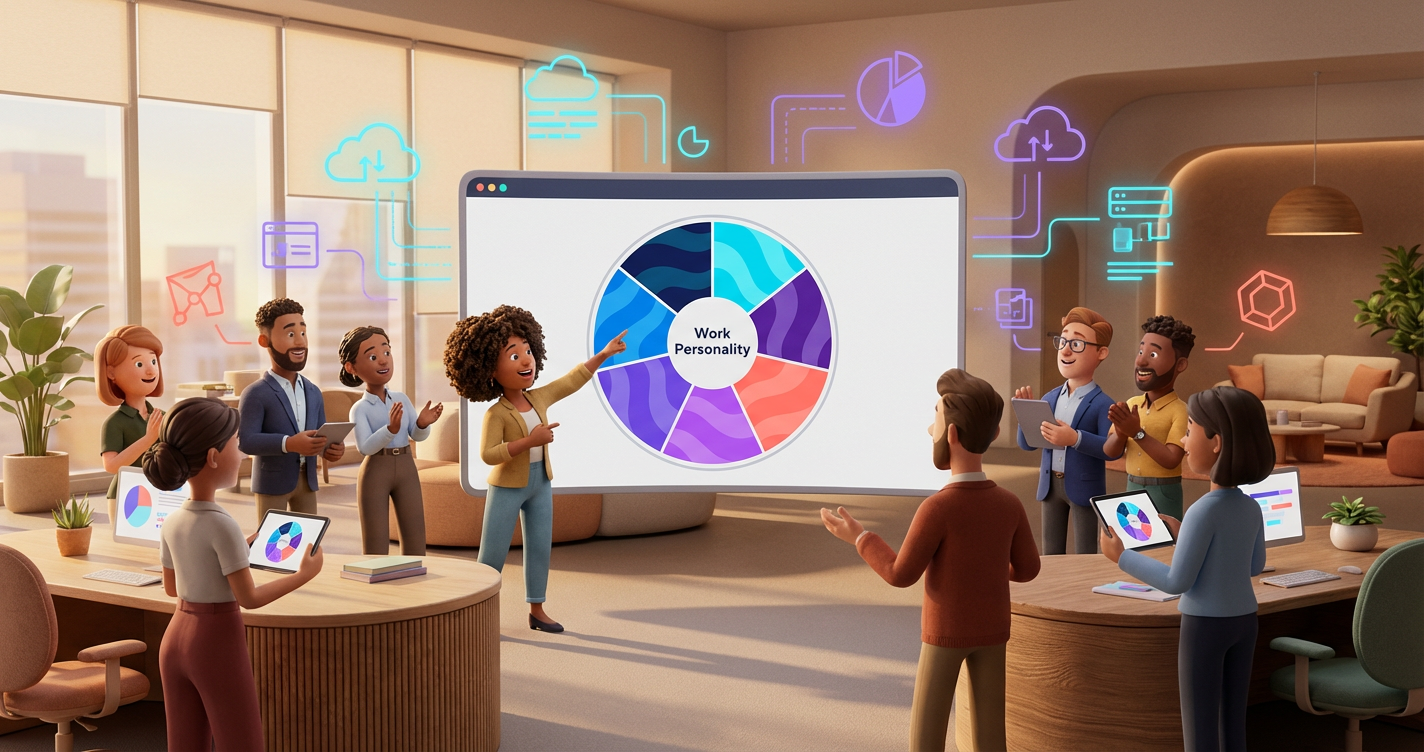
Everyone has a dominant preference for how they like to work. Some people are wired to sell a vision, others find their flow checking data for accuracy, and a team made entirely of one kind stalls in a predictable way. Compono's framework describes eight of these preferences: Doer, Auditor, Helper, Advisor, Pioneer, Campaigner, Evaluator and Coordinator. The value of holding that data in your people management software is not the label on a person, it is the shape of the team.
Consider a Campaigner and an Auditor. A Campaigner tends to thrive on variety, contact and the chase, so a week of repetitive checking work will drain them. An Auditor finds genuine satisfaction in order and accuracy, and gives a fast-moving team the precision that keeps it out of trouble. Neither is better. A team that has one and not the other has a gap it can name and plan around.
That changes the shape of management conversations. Rather than wondering why a project keeps stalling, you can look at team composition and see that nobody in the group naturally picks up coordination, then adjust the plan or hire for the gap. Our glossary entry on work personality explains what the measure is and what it is not.
Compono is a workforce intelligence platform built on more than a decade of research into high-performing teams. Hiring, engagement and development sit on the same data, so a candidate is assessed against the job, the culture and the team they are joining, and the same picture carries through to how they are led and developed once they start. The Coffee Club used Compono Hire to build talent pools that fit its franchise model across hundreds of outlets.
The fit boundary is straightforward. Compono is not a payroll engine, a leave system or a contracts repository, and if that is what you need, buy the HR system built for it and connect the two. If your problem is that you can see what your people are doing but cannot explain why, that is the part we are built for.
For a wider survey of the tools in this space and how they overlap, our guide to HR and people management tools covers the categories in more detail.
See how Compono connects hiring, engagement and development around the way your people actually work.
Talk to usIt is the set of tools a business uses to hire, develop, engage and lead its staff, spanning recruitment, onboarding, learning, engagement, performance and team insight. It supports the decisions managers make about people, while an HR information system holds the underlying records.
An HRIS focuses on the administrative and compliance side of HR, such as payroll, leave and contracts. People management software focuses on the human side: engagement, work personality, team dynamics and development. Many organisations run both, with the HRIS as the system of record and the people platform driving decisions.
A view of one team rather than the whole organisation, a prompt to act rather than a dashboard to interpret, something short enough to use inside a one-to-one, and information the manager did not already have. Test those four with real managers during the trial, not after go-live.
Pricing is generally per employee per month, with a seat minimum and modules often charged separately, plus a one-off implementation fee. Ask for a three-year total at your expected headcount rather than a monthly rate, and check the support tier included in the quote.
Yes. Platforms that connect team data to hiring can show which capabilities and ways of working your team is missing, so you hire for the gap rather than for technical skill alone. That tends to improve retention as well as performance.
It helps a manager assign the right work to the right person, reduces burnout by giving people more time on the activities that energise them, and shows whether a team covers all the kinds of work that high performance needs. It describes preferences, not limits.
1 min read
SaaS HR software is human resources software you reach over the internet and pay for by subscription, rather than install on servers you own. The...

1 min read
People management tools are software that helps managers and HR teams run the whole employee relationship: hiring, onboarding, development,...

1 min read
An HR platform is the system where an organisation keeps its employee data and runs the work of managing people: hiring, onboarding, records, pay,...