

.webp)

 Compono


1 min read
How culture fit hiring works in cafes and restaurants
 Compono
Culture fit hiring in cafes and restaurants works by identifying candidates whose natural work behaviours and values align with the specific energy,...
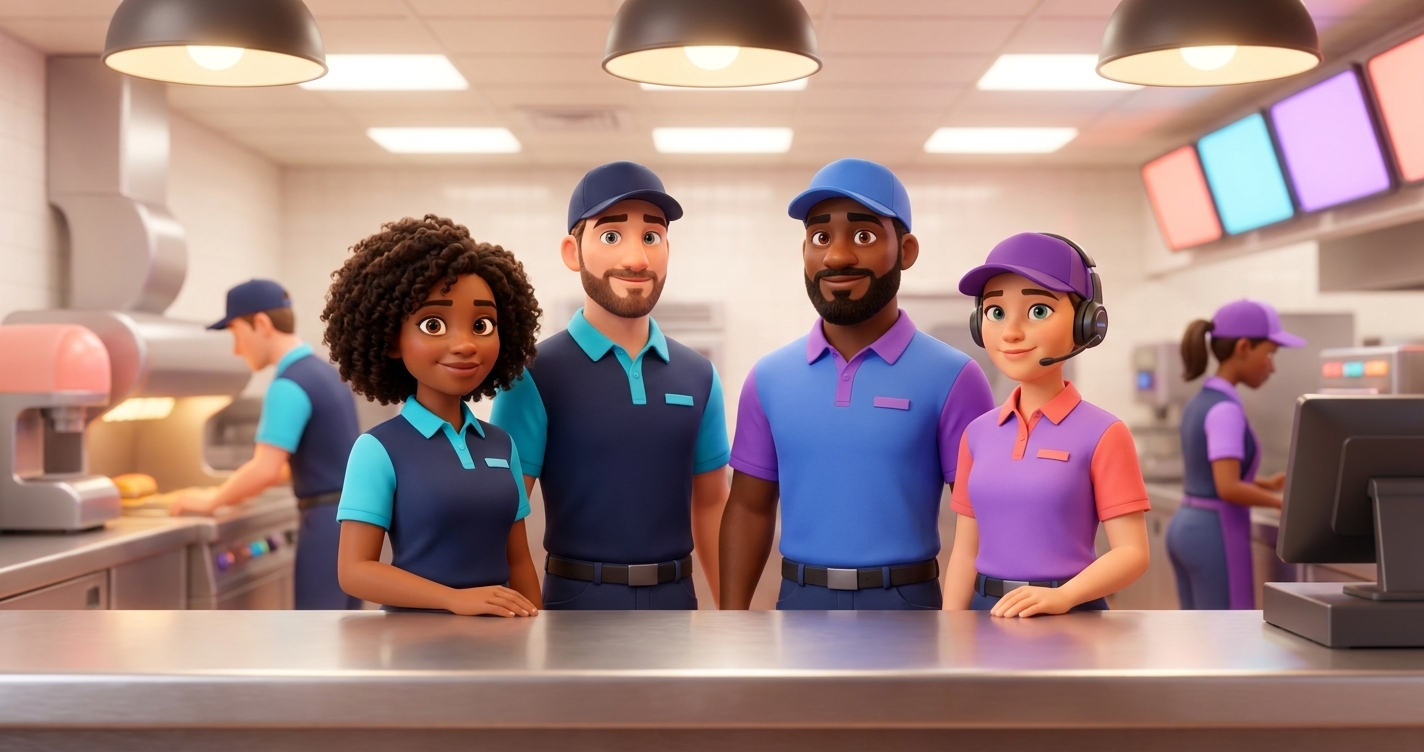
Fast food chains need culture fit hiring because it directly targets the industry's biggest profit leak: chronic staff turnover driven by a mismatch between an applicant's natural work preferences and the high-pressure reality of the restaurant floor.
Key takeaways
- Traditional high-volume recruitment in quick service restaurants leads to massive turnover because it ignores behavioural alignment.
- Culture fit in fast food means finding candidates who naturally prefer structured, fast-paced, and practical work environments.
- Matching work personality to the role reduces training costs and prevents the operational chaos of sudden resignations.
- Automated assessment tools allow multi-location franchises to maintain hiring standards without slowing down the recruitment process.
The traditional approach to hiring in the quick service restaurant sector relies heavily on speed and volume. Store managers often face immediate staffing shortages and react by hiring the first available applicant who shows up to an interview. This "warm body" approach solves the roster problem for the weekend, but it creates a much larger operational headache for the months ahead.
When you hire people without evaluating how they naturally prefer to work, you invite a predictable cycle of churn. A new team member starts on Monday, gets overwhelmed by the noise and pace of a Friday night rush, and simply stops showing up by week three. This constant cycle of recruiting, onboarding, and replacing staff is a massive drain on store profitability.
Many managers assume this is just the reality of the industry. They believe young workers or entry-level staff are inherently unreliable. Our research paints a different picture. When examining why new hires fail, the data shows it is rarely a lack of technical skill. People leave because the reality of the daily work environment sharply conflicts with their natural behavioural preferences.

Staff turnover is expensive in any industry, but in fast food, the costs compound quickly. The obvious expenses include uniform costs, administrative setup, and the direct labour hours spent training a new employee on the point-of-sale system or the grill station.
The hidden costs are often far more damaging to a store's bottom line. When a team operates short-staffed because someone quit mid-shift, the remaining employees absorb the stress. Service times drop. Order accuracy suffers. Customers complain or choose a competitor down the street for their next meal.
Store managers also bear the brunt of this turnover. Instead of focusing on inventory management, local marketing, or coaching their shift supervisors, they spend hours every week reviewing applications and conducting repetitive interviews. This constant firefighting leads to manager burnout, which eventually triggers leadership turnover, a cost that can cripple a location's performance for quarters at a time.
When people hear "culture fit," they often think of tech startups looking for employees who share the same hobbies or want to play table tennis in the breakroom. In a quick service restaurant, culture fit means something entirely different. It is about behavioural alignment with the specific demands of the job.
A fast food kitchen is a highly structured environment. It requires adherence to strict food safety procedures, exact portion controls, and tight timeframes. Some people find this level of structure suffocating. Others find it comforting and easy to navigate.
At Compono, we map these natural behavioural tendencies using Work Personality profiles. For example, individuals who align with The Doer profile thrive in directive environments. They appreciate clear, actionable instructions and enjoy routine. They excel when they know exactly what is expected of them and can focus on practical, hands-on tasks. Hiring a Doer for a structured kitchen role makes sense because their natural preferences match the reality of the work.
Conversely, if you hire someone whose personality profile strongly resists routine or struggles with repetitive tasks, they will inevitably find the environment frustrating. No amount of training or free meals will change their fundamental work preferences. They will eventually leave to find a role that better suits their nature.
The customer experience in a fast food restaurant is directly tied to the competence and demeanour of the staff behind the counter. When a team is composed of individuals who are behaviourally suited to their roles, the entire operation runs more smoothly.
Employees who handle high-pressure situations well are less likely to become visibly flustered during a lunch rush. They can communicate clearly with customers, process orders accurately, and resolve minor complaints without escalating the situation to a manager. This creates a positive atmosphere that customers notice and appreciate.
when turnover drops, the average tenure of the team increases. A floor staffed by experienced employees who know the menu inside out will consistently outperform a floor staffed by trainees who are still trying to remember the register layout. Culture fit hiring creates the stability required to build that essential base of experience.
Implementing a culture fit hiring strategy is relatively straightforward for a single independent café. It becomes a significant challenge when you are managing a franchise network with dozens or hundreds of locations. You cannot expect every individual store manager to become an expert in behavioural psychology.
This is where technology bridges the gap. Modern applicant tracking systems need to do more than just collect resumes. They need to provide actionable intelligence about the people applying. Compono Hire solves this by automatically assessing candidates across Organisation Fit, Skills, and Qualifications as soon as they apply.
Before a store manager even looks at a candidate's work history, they can see a clear score indicating how well that person's behavioural traits align with the specific demands of the role. This allows managers to quickly identify the applicants who are most likely to stick around and perform well, even when dealing with high volumes of applications. We have seen this approach yield massive results for multi-location businesses, as detailed in The Coffee Club case study, where focusing on fit helped simplify recruitment across a massive franchise network.
In the quick service industry, a traditional resume tells you very little about how a person will actually perform on the job. The fact that a teenager has never held a job before does not mean they lack the work ethic or the organisational skills to excel on the fry station.
By shifting the focus toward culture fit and behavioural alignment, fast food chains can tap into a much broader talent pool. You can confidently hire candidates with zero industry experience if their work personality indicates they are highly dependable, task-focused, and comfortable in structured environments.
This approach fundamentally changes the recruitment narrative. Instead of desperately trying to fill empty slots on a roster, store managers can intentionally build teams of people who actually enjoy the style of work the restaurant requires. The result is a more stable workforce, lower operational costs, and a consistently better experience for the customer.
Key insights
- High staff turnover in fast food is largely driven by a mismatch between an employee's natural work preferences and the structured, high-pressure environment of the restaurant.
- Assessing candidates for Work Personality types that thrive on routine and clear direction significantly increases retention rates.
- Stable, behaviourally aligned teams deliver faster service, make fewer errors, and create a better customer experience during peak trading hours.
- Multi-location franchises can scale culture fit hiring by using automated assessment tools that score candidates on organisational fit before the interview stage.
Ready to stop the revolving door of staff turnover and build a more reliable team across your entire network?
In fast food, culture fit refers to how well a candidate's natural behavioural preferences align with the reality of the job. It means finding people who are comfortable with strict procedures, fast-paced work, and repetitive tasks, rather than looking for shared personal hobbies.
When you hire individuals whose work personality matches the role, they experience less daily friction and frustration. They are naturally suited to the environment, which means they are far less likely to quit when the job gets stressful or busy.
Yes. By using automated assessment tools built into the application process, candidates are scored on their organisational fit immediately. Store managers can instantly see which applicants are the best match without having to conduct lengthy behavioural interviews.
Resumes only show past experience, which is often non-existent for entry-level fast food roles. They do not reveal how a person handles stress, follows instructions, or interacts with a team, which are the actual predictors of success on the restaurant floor.

1 min read
Culture fit hiring in cafes and restaurants works by identifying candidates whose natural work behaviours and values align with the specific energy,...
1 min read
Hotels need culture fit hiring because a candidate's natural work style and behavioural preferences dictate how they handle the relentless pressure...

1 min read
Behavioural hiring in cleaning companies works by evaluating candidates for innate traits, like reliability, autonomy, and attention to detail,...