


7 min read
Employee engagement and culture trends 2027 for Australia and NZ
 Mathan Allington
October 26, 2026
The employee engagement trends shaping Australian and New Zealand workplaces in 2027 start with managers, whose engagement has fallen worldwide. Low job mobility is keeping disengaged people in their seats, and engagement scores show that people feel flat without explaining why. Culture measurement, psychosocial risk duties and team shape complete the picture. Organisations that understand what drives engagement, not just its level, will be the first to act.
Last reviewed October 2026. Written for HR leaders in Australia and New Zealand planning engagement and culture work for 2027.
In short
- Managers in Australia and New Zealand still hold a 10-point engagement premium over individual contributors, while global manager engagement fell from 27% to 22% in one year.
- Australia and New Zealand rank near the top of the world for thriving but sit near the global average for engagement.
- Australian job mobility has fallen four years running, so disengaged people are more likely to stay than leave and low turnover says little about culture.
- Survey fatigue is mostly action fatigue: people lose faith when nothing changes after they answer.
- Culture measurement is moving towards comparing how work is done now with how people believe it should be done.
- Under Australia's model work health and safety (WHS) laws, managing psychosocial risk is a safety duty, so climate data becomes an early warning signal.
- With hybrid work settled, the mix of working styles inside a team is a bigger driver of team climate than where people sit.
The exit door has narrowed, so engagement problems in 2027 won't resolve themselves through resignations. They stay on the payroll. Culture has also moved onto the strategy agenda, where a single favourability score won't satisfy a board that wants to know what to change. Our HR trends 2027 roundup covers the wider shifts.
Engagement tools handle the process side well: scheduling surveys, chasing responses, building dashboards and benchmarks. What they miss is people insight risk, the risk of making the wrong calls about teams, behaviour and performance because you can see that people feel flat but not why. Culture problems don't fix themselves. They persist when tools measure how people feel, but don't explain how people work. For the basics, start with our definition of employee engagement.
1. The ANZ manager engagement premium comes under pressure
Managers in Australia and New Zealand (ANZ) are still more engaged than the people they lead. Gallup's 2026 ANZ regional summary puts ANZ managers at 27% engaged against 17% for individual contributors, a 10-point gap. That premium looks fragile, because ANZ managers also report more daily stress than their teams (51% against 48%).
Elsewhere it has already gone. Gallup's State of the Global Workplace 2026 report (2025 data, published April 2026) found global manager engagement dropped from 27% to 22% in a single year and is down nine points since 2022, while non-manager engagement barely moved (20% to 19%). In Gallup's words, managers "are increasingly only as engaged as those they lead."
Our take: An engagement report that shows a manager's team score but tells you nothing about the manager is half a picture. When one team runs warm and the next runs cold, the answer usually sits in how each manager works and what they overlook. In 2027, ask managers about their own experience as a separate group, using manager effectiveness survey questions.
2. Engagement stays flat while wellbeing stays high
Gallup has Australia at 21% engaged and New Zealand at 23% engaged (2025 data), against 20% globally. The same ANZ summary ranks the region among the highest in the world for thriving (55%), yet 49% of ANZ employees reported a lot of stress the previous day, nine points above the global average.
People here rate their lives well and their workdays poorly. That gap suggests the drag sits in the work environment itself (how decisions get made, how much control people have). Our roundup of employee engagement statistics for Australia has the wider numbers.
Our take: Another wellbeing perk is the easiest response and the least likely to work. The cause sits in how work gets done, and you only find it by reading culture data next to climate data, team by team.
3. Disengaged people stay instead of leaving
The Australian Bureau of Statistics found 7.2% of employed Australians changed employer or business in the year to February 2026, the fourth annual fall in a row (from 9.6% in 2023). The Australian HR Institute's Quarterly Australian Work Outlook for the March quarter 2026 put average turnover at 14% for the 12 months to December 2025. Meanwhile Gallup's ANZ summary shows 66% of employees are not engaged.
When fewer people leave and most aren't engaged, more disengaged people stay, and the cost shows up as presenteeism instead of resignation letters.
Our take: Turnover was always a blunt, lagging proxy for engagement, and in a low-mobility market it says more about the labour market than your culture. If your board reads a falling attrition rate as cultural health, put a number on what disengagement costs with the cost of disengagement calculator so the conversation stops anchoring on exits.
4. Survey fatigue turns out to be action fatigue
Survey fatigue usually gets blamed on survey length and frequency. We think the bigger driver is what happens afterwards: people give feedback, nothing visibly changes, and the next survey gets fewer and flatter answers.
Our take: More frequent pulses on the same incomplete data only speed up the cycle of asking and not acting. Fewer, better questions that point towards a cause, followed by a visible response each time, will do more for trust in 2027. Our guide on how often to run engagement surveys covers cadence.
5. Culture measurement moves beyond sentiment
Deloitte's 2026 Global Human Capital Trends found 65% of organisations believe their culture needs significant change because of AI, and 34% say their culture is holding back their AI goals. Once culture is a strategy question, a sentiment score can't carry it.
Sentiment shows whether people feel good about the place. Comparing current with desired culture shows how work gets done and how people believe it should be done. Rudy Crous, Compono's CEO and co-founder and an organisational psychologist, built Compono's Engage interpretation method on that comparison and on one principle: "Data without context is reporting. Context without data is opinion."
The method reads gaps in two directions: "Large gaps may show the destination. Small gaps may show the best starting point." A team asking for more delegation, less hierarchy, more questioning and more autonomy is usually describing one theme (decisions sitting too high), not four separate problems.
Our take: Culture reported as a single favourability number is engagement under another name. In 2027, measure culture across defined dimensions, such as the 12 dimensions of organisational culture assessment, compare current with desired, and read the result next to climate. The difference between engagement surveys and culture measurement matters more once the board is asking.
6. Psychosocial risk makes climate a safety matter in Australia
Under the model work health and safety (WHS) laws, a person conducting a business or undertaking (PCBU) must eliminate psychosocial risks or, if that isn't reasonably practicable, minimise them so far as is reasonably practicable, according to Safe Work Australia. Its list of common psychosocial hazards includes low job control, poor support, lack of role clarity and poor organisational change management, all conditions a culture and climate survey can surface. Its model Code of Practice (August 2022) has legal effect only where a jurisdiction has approved it, so check with your regulator.
Safe Work Australia's Key Work Health and Safety Statistics Australia 2026 (released October 2026) shows the cost. Mental stress caused 17,000 serious workers' compensation claims in 2024-25 (preliminary data), with a median 35 weeks off work and median compensation of $69,400, against 8.2 weeks and $19,000 across all serious claims. Harassment or bullying (31.6%) and work pressure (26.5%) were the most common causes. AHRI's December quarter 2025 Work Outlook found the share of employers citing stress as a driver of unscheduled absence rose from 42% in 2023 to 57% in 2025.
Our take: An engagement survey is not a psychosocial risk assessment, and treating it as one is a process-first shortcut. Climate data is still the earliest warning most organisations get. Test where you stand with the psychosocial risk readiness calculator and take professional WHS advice for your jurisdiction. These duties are Australian, so New Zealand employers should seek local advice.
7. Team shape becomes a driver of team climate
The ABS found 36% of employed Australians usually worked from home in August 2025, almost unchanged from 36.3% a year earlier (59% of managers and professionals against 21% of other occupations). With hybrid settled, the question for 2027 is how teams with different working styles get work done together.
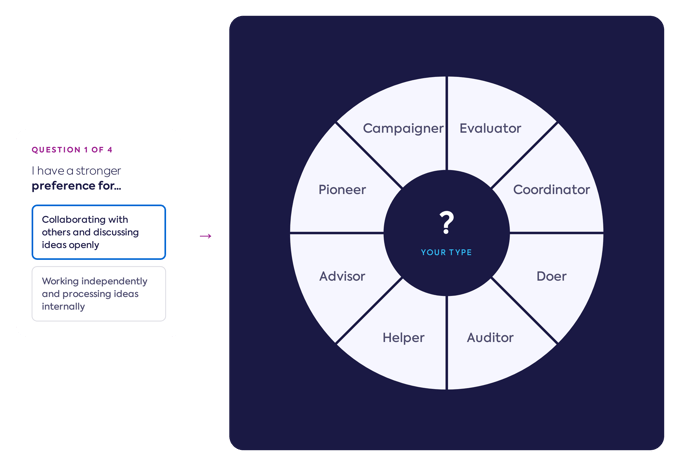
Compono's Work Personality framework describes 8 ways of working: Doer, Auditor, Helper, Advisor, Pioneer, Campaigner, Evaluator and Coordinator. Teams concentrated in a few of them tend to overdo some work and overlook other work, which shows up in climate as friction or fatigue. Compono's Work Personality data (a self-selected sample of people who took our free assessment between July 2024 and July 2026, with one large single-organisation cluster excluded) finds executive leaders lean Campaigner, at 30.7% against 17.6% overall, with Doers at about half the overall rate. A leadership group with that shape may reward momentum and persuasion and miss follow-through.
Our take: Most team problems blamed on a manager or a personality clash are really a type of work nobody is doing. Ask what type of work may be missing before you ask who is the problem, and map the mix with the free Work Personality assessment (4 questions, about 2 minutes).
Engagement trends 2027 at a glance
| Trend | What changes in 2027 | What to do first |
|---|---|---|
| Manager premium under pressure | Managers set the climate and are under strain | Survey managers as their own group |
| Flat engagement, high wellbeing | Stress sits in how work is done | Read culture and climate together |
| Low job mobility | Disengaged people stay | Cost disengagement, not just exits |
| Action fatigue | Trust in surveys erodes | Act visibly after every survey |
| Culture beyond sentiment | Boards want to know what to change | Compare current and desired culture |
| Psychosocial risk | Climate links to WHS duties | Check readiness, get WHS advice |
| Team shape | Work style mix drives friction | Map which work is missing |
Measure the mood, understand the personality
If culture is an organisation's personality, engagement is its mood. In 2027 engagement scores will keep telling HR that something is off. What HR also needs to know is which part of how work gets done is causing it, and in which team. Go beyond the process, understand your people and make decisions you can defend. Keep the survey process, and add the insight behind it. Then build it into your 2027 HR plan. Compono Engage is an employee engagement platform and culture assessment tool that shows how people work, not just how they feel, by reading culture, climate and Work Personality together. See how it works.
Measure engagement and understand what drives it
Compono Engage reads culture, climate and Work Personality together, so you know where to act in 2027.
Talk to usFrequently asked questions
What are the biggest employee engagement trends for 2027?
For Australian and New Zealand employers, the biggest 2027 trends are falling manager engagement, flat engagement despite high wellbeing, low job mobility keeping disengaged people in their roles, action fatigue after surveys, culture measurement moving beyond sentiment, psychosocial risk duties, and the mix of working styles inside teams shaping team climate.
Is employee engagement falling in Australia?
Gallup's State of the Global Workplace 2026 report puts Australia at 21% engaged in 2025, two points below its prior three-year average, and New Zealand at 23%, unchanged. Both sit close to the global 20%. The region ranks among the world's highest for thriving, so the weak spot is how people experience work.
What is the difference between culture and engagement?
Culture is the way work gets done in an organisation: how decisions are made, how people collaborate and what gets rewarded. Engagement, or climate, is how people feel about that environment at a point in time. If culture is an organisation's personality, engagement is its mood. Reading them together shows what needs to change and how urgently.
Can an engagement survey help manage psychosocial risk?
An engagement survey can't replace a psychosocial risk assessment, but it can surface early warning signs such as low job control, poor support and unclear roles, which Safe Work Australia lists among common psychosocial hazards. Under the model WHS laws, a PCBU must eliminate or minimise psychosocial risks so far as is reasonably practicable. Take professional WHS advice for your jurisdiction.
How often should you run an engagement survey in 2027?
Run surveys only as often as you can act visibly on the results. If people can't point to a change from the last survey, the next one will tell you less. A practical pattern is a deeper culture and engagement survey once or twice a year, with short pulses in between to check whether agreed changes are landing.
Better hiring decisions, before the interview
Compono Hire helps you predict job-fit and team-fit using behavioural science, so you can shortlist with confidence.
Request a demoBuilt for mid-market hiring teams.

Practise your next tough conversation
Voice-first coaching that adapts to your personality. Get actionable steps you can take this week.
Start freeBuilt by Compono. Not therapy — practical behaviour change.