

.webp)

 Mathan Allington


Culture survey software: how to measure what matters
 Mathan Allington
What culture survey software measures, how it differs from engagement surveys, and how to turn results into visible change your team trusts.

Culture survey software measures how work actually gets done in your organisation: the values, behaviours and unwritten rules that shape performance. Engagement tools tell you how people feel this month, culture tools tell you why they feel that way, and culture management platforms add the tracking that keeps both moving between survey cycles. This guide covers what the category measures, how culture survey tools differ from culture management software, what to look for when you compare them, and how to turn results into something a manager can use on Monday.
Last reviewed September 2026.
For years the HR industry has been focused on the mood of the workforce, spending heavily on pulse surveys and sentiment analysis to find out whether people are happy. Mood is fleeting and engagement is a lagging indicator. By the time your engagement score drops, whatever caused it has usually been in place for months.
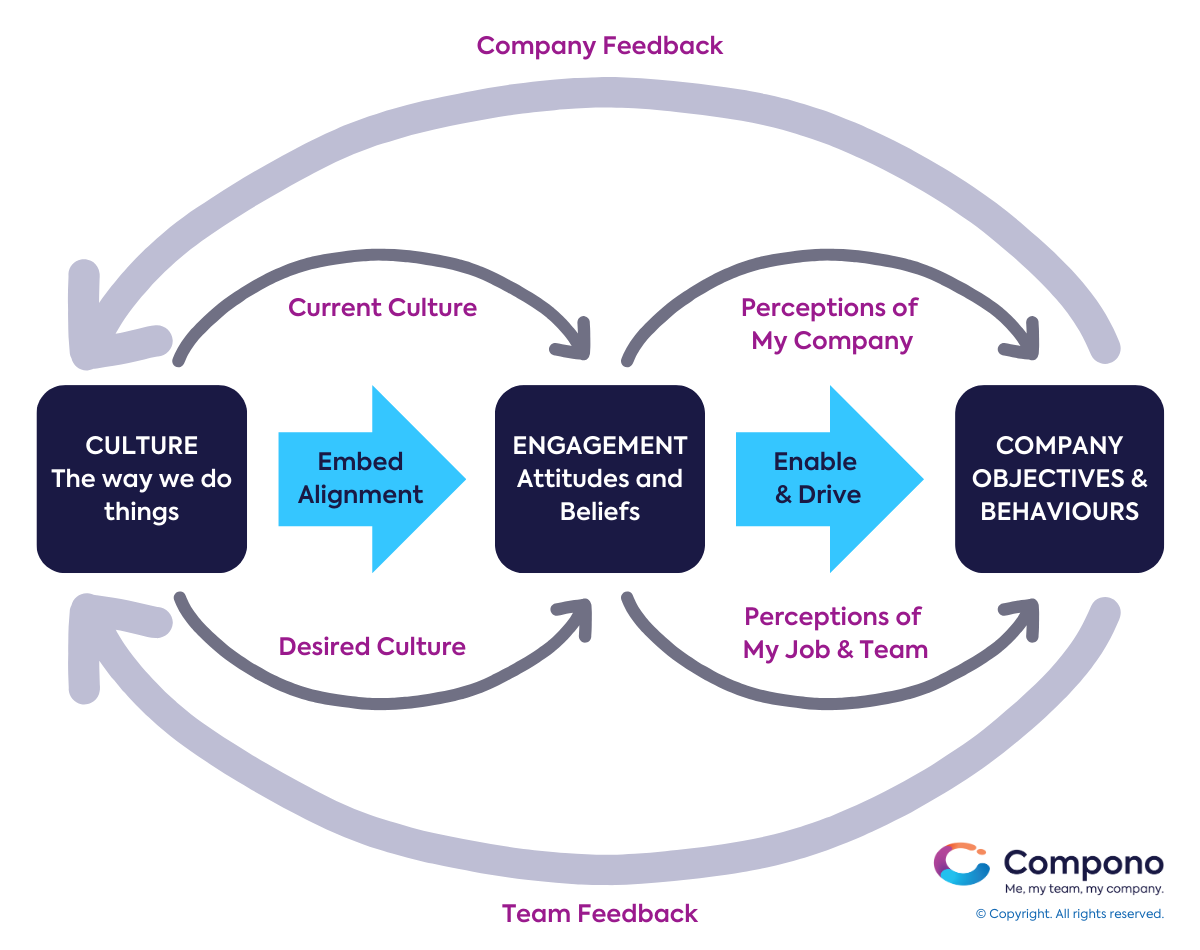
If engagement is the mood of the office, culture is the personality. A good mood can survive inside a difficult personality for a while, but the personality usually wins in the end. Traditional engagement tools tell you that people are disengaged. They rarely tell you why the work environment keeps producing that result. To move performance you need to see the decision rights, values and behaviours that sit underneath the score.
That is the shift culture survey software makes possible. The question changes from "are you happy?" to "how do we do things around here, and does that support what we are trying to achieve?" A fuller treatment of where the two measurement approaches diverge is set out in our guide to engagement surveys versus culture measurement.
Culture is the upstream driver: the unwritten rules, the way decisions get made, where power actually sits. A culture survey maps those dimensions and tests whether they support your business goals. Employee engagement is the bridge, the emotional connection people have to that culture. If the way your organisation works is process-driven while your people want an environment that rewards new ideas, the gap creates friction, and the friction is what shows up as a low score in your pulse tool.
Measuring both together lets you name the cause of turnover and flat productivity instead of treating the symptoms. Organisations that attend to the personality of the business rather than the mood of the week tend to hold their gains for longer, which is why the Compono Engage model connects cultural alignment directly to lagging measures like retention.
Buyers searching for culture management software are usually after something wider than a survey instrument. A survey tool is a measurement event: you design questions, collect responses, and produce a report. A culture management platform is the operating layer around that event, holding the cadence, the actions and the follow-through so culture work does not stall between cycles.
In practice the difference shows up in four places. Survey tools own question design, sampling and reporting. Management platforms add ongoing tracking against the ways of working you have committed to, action plans assigned to named leaders with dates on them, and a link into the people processes where culture is actually set or eroded, such as hiring, onboarding and promotion. Most serious products now do some of both, so the useful question in a demo is which half the product was originally built for, and how much of the other half you are being sold as roadmap.
If your organisation has never measured culture, start with the survey half and get one clean baseline. If you already have three years of survey results and nothing has changed, the missing piece is the management layer, not another questionnaire.
Workplace culture tools are easy to compare on feature lists and hard to compare on what they will actually change. These are the checks that tend to separate a purchase people still value in year two from one that quietly lapses.
Most mid-market and enterprise buyers end up looking at a few familiar names. Each has a legitimate place, and the right choice depends on whether you mainly want to measure what has already happened or shape what happens next.
| Platform | Built around | Best fit | What to plan for |
|---|---|---|---|
| Culture Amp | Engagement measurement, sentiment tracking and benchmarking | Large enterprises comparing engagement scores against many other companies | Its centre of gravity is the engagement survey, so teams wanting deeper psychometric insight often supplement it |
| McLean & Company | A structured, research-backed toolkit aimed at HR generalists | Regular organisational health checks run by a small HR team | Less in the way of talent-matching integration, so results stay separate from hiring decisions |
| Compono Engage | Culture dimensions measured alongside validated work personality data | Organisations that want culture results to inform team decisions and hiring | The data names the gap; leaders still have to run the conversations that close it |
Culture Amp is a heavyweight in the engagement space and its benchmarking is genuinely strong. McLean and Company suits teams that want a dependable health check without building an instrument themselves. Compono Engage differentiates on the science of people: the survey is the starting point rather than the product, because psychometric work personality data sits alongside the cultural dimensions, so you see both the organisational pattern and how the individuals inside your teams meet it.
The biggest gap in most culture survey software is the absence of individual context. You might learn that your marketing department finds the culture too risk-averse. Without knowing the work personalities of the people in that team, you are guessing at the fix. Are they Pioneers who feel constrained, or Auditors who prefer the structure and are echoing a vocal colleague?
Compono maps every individual to one of eight work personality types: Doer, Auditor, Helper, Advisor, Pioneer, Campaigner, Evaluator and Coordinator. Overlay that on your culture survey results and the picture gains a dimension. It also changes hiring. Instead of using a survey to learn how people felt last month, you use it to build a cultural benchmark, and when a role opens you can test candidates against the culture your high-performing teams actually have rather than the one on the careers page.
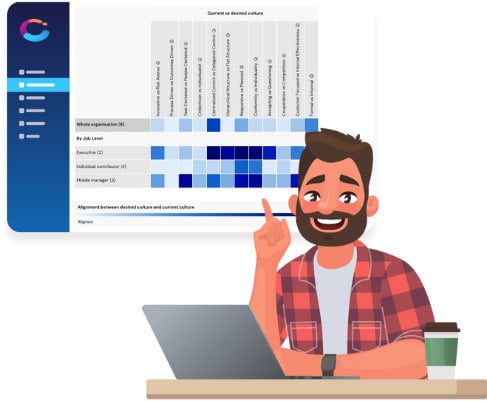
Data without action is overhead. The most common complaint across this whole category is that managers receive a mountain of survey output and no answer to the only question they asked, which is what to do differently on Monday morning. Good culture survey software surfaces hotspots: clear visual markers showing where the gap between current and intended ways of working is widest.
Compono Engage reports the gap across a set of culture dimensions, so if one site shows a deep hotspot on how much control is delegated, leaders know where to concentrate. From there the follow-through is fairly mechanical. Map the gap between current and intended ways of working. Give leaders the work personality profiles of their own teams so they can pitch the change in language each person will actually hear. Assign each hotspot to a named owner with a date. Then adjust onboarding so new starters join the culture you are building rather than the one you are leaving behind. If you are running your first cycle, our step-by-step guide to running a culture survey covers sequencing, communications and response rates.
Compono Engage combines culture surveys with validated psychometrics, so you can see why your people feel the way they do and what to change first.
Talk to usAn engagement survey measures how people feel about their work right now, which is a lagging indicator. A culture survey measures how work actually gets done: the values, behaviours and unwritten rules that produce those feelings in the first place.
It is the layer around the survey. Where a culture survey tool designs questions and reports results, a culture management platform tracks progress against your intended ways of working between cycles, holds action plans with named owners, and connects culture data to the processes that shape it, such as hiring, onboarding and promotion.
Culture Amp is best known for engagement measurement and benchmarking, and it does that well. Its primary strength is sentiment tracking, so organisations wanting deeper psychometric or talent-matching insight often pair it with, or move to, a platform built for that.
It adds individual context. Knowing the work personalities inside a team tells you whether a cultural complaint reflects a genuine mismatch or one vocal voice, and it shows leaders how to communicate change in a way each type will actually hear.
A full culture survey once or twice a year is usually enough, supported by targeted pulses on specific issues. Culture shifts slowly, so the value comes from what you do between surveys rather than from measuring more often.

What culture survey software measures, how it differs from engagement surveys, and how to turn results into visible change your team trusts.

How to design, run and analyse a culture survey for companies in 2026, with 17 essential questions and tips that lift team engagement.

Discover why engagement surveys don't work and how to fix your feedback loop. Learn to move from data collection to real cultural change with Compono.
 Compono