1 min read
The Balance Between Culture Fit and Diversity in Hiring
Yes, you can hire for both culture fit and diversity. The criticism of fit-based hiring is legitimate, though: when "fit" means a hiring manager's...

Voice or text coaching built on psychology. For you, your team, or the candidates you place.
A coach that actually gets you.
Get 10 minutes free, then $15 a month. Cancel anytime.
Get Started ≫
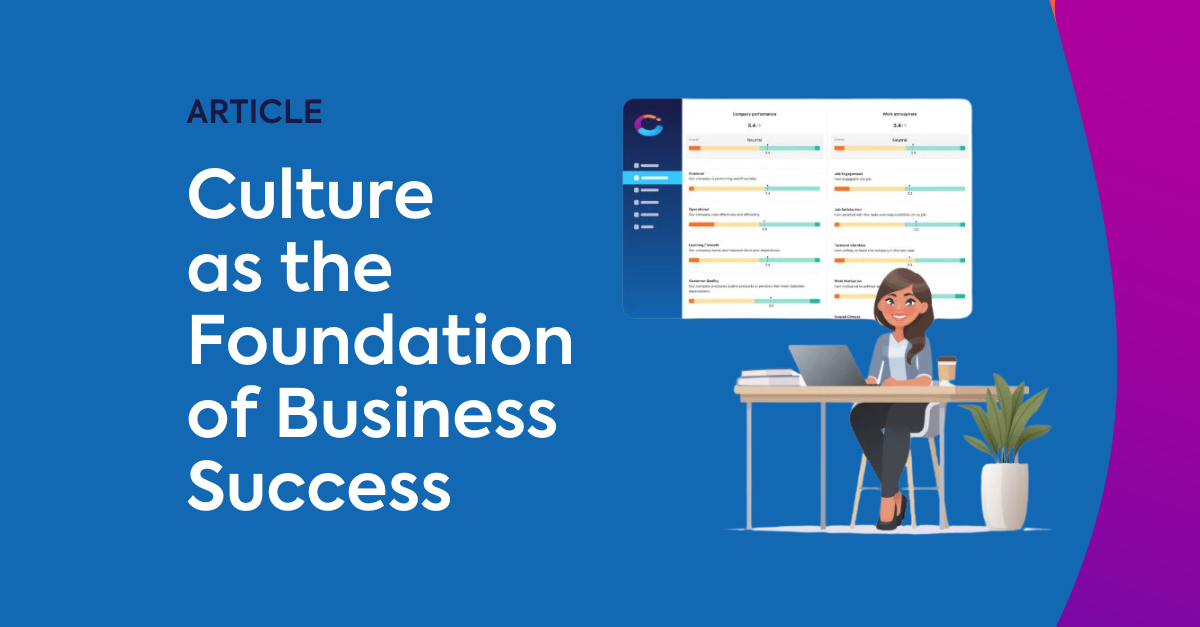
Culture is the foundation of business success because it shapes how decisions get made, how people treat each other, and whether strategy actually gets executed. Organisations that align culture with strategy see stronger engagement, retention and financial performance. Culture can also be measured and deliberately changed, which makes it a management tool rather than an accident.
Last reviewed July 2026.
Every organisation has a culture, whether it was designed or simply happened. The difference between the two shows up in the numbers: engagement, turnover, productivity and ultimately profit. This guide covers what culture actually is, the four recognised culture types, and how to measure and strengthen the one you have.
Culture is the "how we do things around here" of an organisation. It extends beyond workflows and rituals, shaping interactions, decisions and values across the business. Employees bring technical skills and knowledge to the table, but culture is what motivates them to contribute, grow and align with broader goals.
It works like a personality. People who connect with the culture feel a sense of belonging and shared values, and they are happier, more engaged and significantly more likely to stay. When there is a disconnect between people and culture, you get lower engagement, higher turnover, and a workforce unsure of its purpose. Neither outcome is random. Both are the culture doing exactly what culture does, for you or against you.
Culture influences both the tangible and intangible sides of business success. It shapes who joins your team, how long they stay, how they feel about the work and how much they contribute. Companies that align culture with business strategy consistently outperform those that treat it as decoration, with higher profitability, better retention and stronger engagement.
The important shift is treating culture as a quantifiable input, not an abstract concept. If culture is the science of influencing behaviour inside the business, then like any other business system it can be observed, measured and improved. That is the difference between hoping your culture helps and knowing it does.
One useful way to understand workplace culture is the Competing Values Framework, which maps organisational culture across four types. None is "correct". Each carries strengths and trade-offs depending on your goals and market pressures.
Clan culture prioritises collaboration, mutual respect and a shared sense of belonging. It works like a close-knit social group, with open communication, one-on-one meetings and leaders who act as mentors rather than directors. The emphasis on teamwork, development and flat structures tends to produce high satisfaction and retention.
Adhocracy culture thrives where creativity and risk-taking are the point: startups, creative agencies, R&D-heavy industries. The focus is on new ideas and challenging the status quo, which suits fast-shifting markets. The trade-off is a high tolerance for ambiguity and less managerial structure, which can wear on people who need clarity.
Hierarchy culture offers clear objectives, well-defined career paths and structured processes. Industries requiring compliance and precision, such as healthcare and finance, lean this way. It can dampen creativity, but it is excellent for stability, consistency and protecting the integrity of the organisation.
Market culture runs on competition and results, with an external focus on outperforming rivals and hitting commercial goals. People in these environments respond to incentives tied to tangible progress and high-stakes targets. The risk is overlooking the individual level, and the human nuances behind what actually motivates each person.
Most successful organisations blend attributes rather than living purely in one quadrant: the collaboration of clan, the precision of hierarchy and the inventiveness of adhocracy can reinforce each other when deliberately balanced.
Culture shapes employee engagement, satisfaction and performance, but the mechanism is fit. People need to see themselves in the values their workplace promotes. A clan culture creates an experience where collaborators thrive. A hierarchy culture offers the security and certainty that people who value consistency are looking for.
Mismatches cost you. Someone craving autonomy inside a rigid hierarchy will disengage or leave. Creatives in an adhocracy can burn out if constant innovation becomes an unrelenting expectation. Alignment between individual values and organisational culture strengthens commitment and motivation, which is why measuring that alignment belongs in your management routine, not just your onboarding deck.
You cannot strengthen what you have not measured. Start with an honest evaluation using culture assessments that map the core attributes of your current culture, measure employee perceptions and identify the gaps between the culture you claim and the culture people experience. Engagement surveys, feedback loops and leadership insights then track whether the way things get done still matches the human side of the organisation.
Evidence-based models make this repeatable. The Compono Culture, Engagement and Performance Model connects culture type, engagement drivers and performance outcomes, so decisions rest on data rather than instinct: whether a clan culture's shared values are actually resonating, or whether uncertainty avoidance in a hierarchy is quietly blocking new ideas.
Culture is not static. As the business evolves, the culture needs reinforcing or reorienting. That does not mean uprooting the foundation; it means keeping shared goals aligned with strategy and values, and treating the people doing the work as the individuals shaping the organisation's future.
Engage maps culture, climate and engagement together, so you can close the gap between the culture you claim and the one your people experience.
Talk to usBecause culture determines how strategy gets executed. It shapes decision-making, collaboration, retention and motivation, so even a strong strategy fails inside a culture that works against it. Organisations that align culture with strategy consistently outperform those that leave culture to chance.
Under the Competing Values Framework: clan (collaborative and people-first), adhocracy (creative and risk-taking), hierarchy (structured and process-driven) and market (competitive and results-focused). Most successful organisations blend attributes of more than one type.
Yes. Culture assessments map the attributes of your current culture, engagement surveys measure how people experience it, and feedback loops track change over time. Measurement turns culture from an abstract concept into something you can manage deliberately.
Start with an honest assessment of the current culture, then work on four fronts: make values visible in real decisions, align leaders so they embody the culture, invest in engagement and feedback loops, and address subcultures across teams. Change compounds through consistent behaviour, not announcements.

Compono Hire helps you predict job-fit and team-fit using behavioural science, so you can shortlist with confidence.
Request a demoBuilt for mid-market hiring teams.

Voice-first coaching that adapts to your personality. Get actionable steps you can take this week.
Start freeBuilt by Compono. Not therapy — practical behaviour change.
1 min read
Yes, you can hire for both culture fit and diversity. The criticism of fit-based hiring is legitimate, though: when "fit" means a hiring manager's...
1 min read
How would you describe your company’s culture? Collaborative, innovative, fast-paced? Now, how confident are you that your job ads and website...
1 min read
Industry culture benchmarks are standardised data points that let you compare your organisation's cultural health, engagement levels and employee...