


 Mathan Allington

Employee onboarding software: a guide to smarter integration
 Mathan Allington
Employee onboarding software automates admin and speeds up new-hire integration. How to cut early turnover and build belonging from day one.

There is no single best onboarding system in Australia, and the shortlist gets shorter once you decide which job you are actually buying for. If the job is compliance, an onboarding module inside your HRIS will do it. If the job is getting a new starter productive, connected and still with you at month twelve, you need a platform that handles contracts, tax declarations and superannuation choice quietly in the background, then spends its real effort on capability, culture and the manager relationship.
Last reviewed September 2026.
Most onboarding tools were built to move paperwork faster. That matters, but paperwork is rarely the reason a new hire quits at month four. The bigger risks sit in the human layer: a starter who never connects with the team, a manager who communicates in exactly the way the new person finds draining, a role that quietly needs skills nobody checked for. Buy for the risk you actually carry.
Use this as your shortlist filter. A platform worth paying for should cover all six:
If a platform only does the first two, it is a filing system with a welcome email attached.
Australian buyers usually end up choosing between four categories rather than four vendors. The categories behave very differently, and most disappointing purchases are a category mismatch rather than a bad product.
| Type of system | What it does well | Where it falls short | Best fit |
|---|---|---|---|
| HRIS or payroll onboarding module | Digital contracts, tax file declarations, super choice and a single employee record, with no extra integration work. | Usually stops at the forms. Culture content, capability and manager guidance are thin or absent. | Smaller teams whose main exposure is paperwork and record keeping. |
| Dedicated onboarding and pre-boarding tool | Welcome journeys, task checklists and structured contact between signing and day one. | Sits apart from your hiring and development data, so the same context gets re-entered by hand. | Organisations with a solid HRIS and a cold, unstructured first week. |
| Onboarding attached to your applicant tracking system | Carries hiring data straight into onboarding, which shortens the gap between offer accepted and day one. | Often ends around week one, once the starter is in the system and the requisition is closed. | High-volume and seasonal hirers who need offer to first shift to be fast. |
| Capability-led onboarding inside a workforce platform | Links what you learned at hire to a development plan, adapts the first 90 days to the person, and measures retention and time to productivity. | More than you need if compliance is your only goal, and it asks you to define what good looks like in each role. | Organisations where early turnover or slow time to productivity is the expensive problem. |
Onboarding sits on the seam between recruitment and core HR, which is why the category question keeps coming up. Our guide to how an ATS and an HRIS divide the work is the clearest way to work out which of your existing systems should own the first 90 days.
Australian onboarding software should handle Fair Work requirements, tax declarations and superannuation choices digitally, with everything signed before the new starter walks in. That is non-negotiable, and every serious vendor does it. It is also the bare minimum. Measuring onboarding success by how quickly someone signs their tax declaration tells you nothing about whether they will still be with you in a year. Employment obligations change, so treat this section as general information and check the current requirements with the Fair Work Ombudsman or your own employment adviser.
The measures that predict retention are time to contribution and cultural belonging. If your new hire spends their first three days chasing IT for logins, they are not learning how your team solves problems or celebrates wins. Structured onboarding consistently improves retention and productivity, but only when the structure covers the human side as well as the forms.

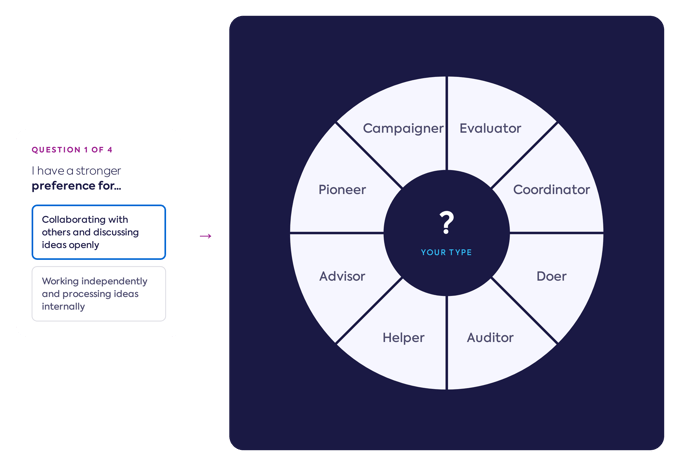
Every new hire arrives with a natural way of working. Compono's framework sorts those preferences into eight types: Doer, Auditor, Helper, Advisor, Pioneer, Campaigner, Evaluator and Coordinator. Some starters are Pioneers who want to jump into big-picture thinking immediately. Others are Auditors who feel most comfortable with a clear, detailed plan to follow. Treat every starter the same and you risk losing a few of them before the end of month one.
Capability-first onboarding separates itself from checklist onboarding here. If you know your new recruit is a Helper, you might prioritise cross-functional introductions early to meet their need for connection. A Doer will appreciate a list of practical wins they can bank in week one. Pairing a high-energy Campaigner with an experienced Coordinator as their buddy gives them energy and structure at the same time. An Evaluator will want to see the reasoning behind a process before they adopt it, and an Advisor will ask who they should be building relationships with. If the idea is new to you, the work personality entry in our glossary explains the model in about a minute.
A good onboarding system lets you branch the journey on this information instead of sending one identical sequence to everyone. Ask any vendor to show you two different starter journeys built from the same template.
Onboarding is your first and best chance to find out what a new hire can actually do versus what the resume implied. Good software surfaces skill gaps early and turns them into a development plan rather than a surprise at the first performance review. That is the job Compono Develop does inside the platform: it maps capability from the start and gives every starter a visible path for growth, so onboarding flows into development instead of stopping at week two.
Larger and multi-site organisations have a different problem. The content is not the hard part. Keeping one standard across sites, brands, entities and award conditions is. If you are buying a corporate onboarding platform rather than a tool for one team, add these to the shortlist filter:
Franchise and multi-brand groups should also ask how brand-specific induction content is managed centrally while still letting each site add its own local detail.
Few vendors publish their onboarding pricing, so you will be comparing quotes rather than list prices. Normalise them before you compare: ask what is counted (employees, active users or new starters a year), what is included in implementation, whether content build is extra, and what renewal looks like in year two.
Then compare it against what onboarding already costs you. Manual onboarding is not free, it is just invisible in the budget. Our cost of onboarding calculator puts a number on the admin hours, manager time and early turnover you are carrying now, which is a far better business case than a feature list.

Many businesses buy onboarding software and never look at the data again. Track 90-day retention, time to productivity and new hire engagement scores. Run surveys at the 30, 60 and 90-day marks, and ask more than how the first day went. Ask whether the role matches what was described during hiring, and whether they have the tools to succeed. Those two questions catch most early turnover risks while there is still time to act. If you need a starting set, we keep a list of 30, 60 and 90-day onboarding survey questions you can lift straight into your own system.
Onboarding treated as a 90-day journey, or longer, rather than a first-week event, shows up in lower turnover and a more connected team. That is the standard to hold any platform to.
Vendor demos are designed to look good. These questions cut through the demo script:
A vendor that answers all five plainly is usually a safer buy than the one with the longer feature list.
Compono Develop turns the first 90 days into a growth plan, spotting skill gaps early and giving every new starter a clear path.
Talk to usThe best system is the one matched to the risk you are carrying. If your exposure is paperwork and record keeping, an onboarding module inside your HRIS is usually enough. If your exposure is early turnover, slow time to productivity or inconsistent experience across sites, you need a platform that personalises the first 90 days and reports on retention, and the compliance piece becomes the entry requirement rather than the selection criterion.
It should handle Fair Work documentation, tax file declarations and superannuation choice digitally, so the legal requirements are completed before the employee's first day. Treat this as the entry requirement for any shortlist rather than a differentiator, and confirm current obligations with the Fair Work Ombudsman or your employment adviser.
An HRIS is the system of record for employee data, payroll inputs and leave. An onboarding system runs the experience of joining: pre-boarding contact, induction content, early training and the first 90 days of check-ins. Many HRIS products include an onboarding module, which covers the documents well and the experience lightly.
At least 90 days. Some organisations extend it to a full year so the employee is supported through their first complete cycle of goals and reviews. The practical test is whether the person has reached the output expected of the role, not whether the checklist is finished.
Most vendors quote rather than publish, and the unit of pricing varies between employees, active users and new starters per year, so two quotes are rarely comparable as written. Ask what is counted, what implementation and content build cost, and what happens at renewal, then weigh the total against what manual onboarding costs you today.
It tells managers how a new hire prefers to receive information and feedback. Knowing whether someone is a Pioneer or an Auditor lets you adjust the first weeks to suit them, which helps people settle and become productive sooner, and it gives the manager something more useful than a generic welcome plan.

Employee onboarding software automates admin and speeds up new-hire integration. How to cut early turnover and build belonging from day one.

The onboarding features that actually cut early turnover, a four-step shortlist method, and what to ignore when you compare onboarding systems.

What talent management software covers across hiring, engagement and development, the features that matter, and the questions to ask before you buy.