

.webp)

 Mathan Allington


Best Deel HR Alternatives 2026: Compare Global EOR Platforms
 Compono
Compare the best Deel HR alternatives in 2026. Discover global EOR platforms for payroll, IT consolidation, and budget-friendly international hiring.

Finding the best HR software for a 200 person company in Australia requires moving beyond basic payroll tools to platforms that handle complex local compliance, advanced talent acquisition, and deep workforce intelligence.
Key takeaways
- Scaling to 200 employees triggers complex compliance requirements in Australia, necessitating software that can handle modern awards and superannuation rules.
- The choice between an single platform and a best-of-breed HR tech stack depends heavily on your existing IT infrastructure and HR maturity.
- Implementation for mid-market HR systems typically takes 6–10 weeks, requiring dedicated project management and change management strategies.
- Modern HR software must go beyond transactional administration to provide behavioural insights, engagement tracking, and predictive workforce analytics.
When an organisation crosses the 200-employee threshold, the human resources environment fundamentally shifts. What worked for a team of 50, spreadsheets, manual onboarding, and standalone payroll software, becomes a massive operational bottleneck. At this size, HR leaders are no longer just managing administration; they are expected to drive culture, forecast talent needs, and protect the business from compliance risks.
In the Australian market, this transition is particularly challenging. Australia’s complex compliance environment includes 121 modern awards and a 12% superannuation guarantee, requiring HR software with deep local legislative support. Choosing the right platform is critical, as a misstep can lead to payroll errors, compliance breaches, and a disjointed employee experience.
This comprehensive guide explores the best HR software for a 200 person company in Australia for 2026. We will dive into the top contenders, evaluate the pros and cons of different tech architectures, and provide a clear methodology for selecting a system that aligns with your strategic goals.
Operating a mid-sized business in Australia today means navigating one of the most highly regulated employment environments in the world. As your headcount grows, so does your exposure to risk. A 200-person company typically has multiple departments, varying shift patterns, a mix of full-time, part-time, and casual staff, and an increasing need for sophisticated performance management.
At this stage, you need a Human Resources Information System (HRIS) that acts as a single source of truth. The system must smoothly connect recruitment, onboarding, performance, learning, and payroll. Fragmentation is the enemy of efficiency. When systems do not talk to each other, HR teams waste hours on manual data entry, increasing the likelihood of errors.
employee expectations have evolved. Today's workforce expects consumer-grade technology at work. They want mobile-friendly self-service portals to check leave balances, access payslips, and complete training modules. If your HR software is clunky or difficult to use, it negatively impacts the overall employee experience and can even hinder your employer brand.
Before evaluating specific software vendors, it is crucial to understand the regulatory environment your chosen platform must navigate. Australian employment law is dynamic, and your HR software must be capable of keeping pace with these changes.
First, the superannuation guarantee has reached 12% as of July 2026. Your HR and payroll systems must automatically calculate and apply this correctly across all employee types. Failure to meet superannuation obligations can result in severe penalties from the Australian Taxation Office (ATO).
Second, the interpretation of modern awards remains a significant challenge. With 121 different awards, each containing complex rules regarding overtime, penalty rates, and allowances, manual calculation is virtually impossible for a 200-person team. The best HR software in Australia integrates solid award interpretation engines that automatically apply the correct rates based on timesheet data.
Finally, recent legislative updates around the "right to disconnect" and psychosocial safety in the workplace mean that HR systems are increasingly being used to monitor working hours, track leave balances to prevent burnout, and document safety training. Your software should provide clear reporting on these metrics to help leaders proactively manage workforce wellbeing.
Evaluating HR technology is not simply about comparing feature lists. Almost every modern platform offers basic leave management and an employee directory. To determine the best HR software for a 200 person company in Australia, we looked at how these platforms solve real-world problems for mid-market businesses.
Our evaluation criteria focused on five key pillars. First, local compliance capabilities, the software must handle the nuances of the Australian industrial relations system. Second, scalability, a 200-person company is often on a growth trajectory, so the system must comfortably support 500 or 1,000 employees without requiring a complete rebuild.
Third, we assessed the user experience for both administrators and employees. High adoption rates are critical for ROI. Fourth, integration capabilities were examined. A modern HRIS must play nicely with your existing payroll, IT, and communication tools. Finally, we looked at the depth of workforce intelligence, does the platform provide actionable insights into employee engagement, performance, and team dynamics?
For a 200-employee Australian company, the strongest HRIS options in 2026 are Worknice, HiBob, and ELMO Software. However, the ideal choice depends entirely on your specific industry, internal processes, and strategic priorities. Let us dive into a detailed review of the top platforms dominating the mid-market space in 2026.
The market is crowded, but a few key players stand out for mid-sized Australian businesses. Here is a closer look at the platforms you should consider for your 2026 shortlist.
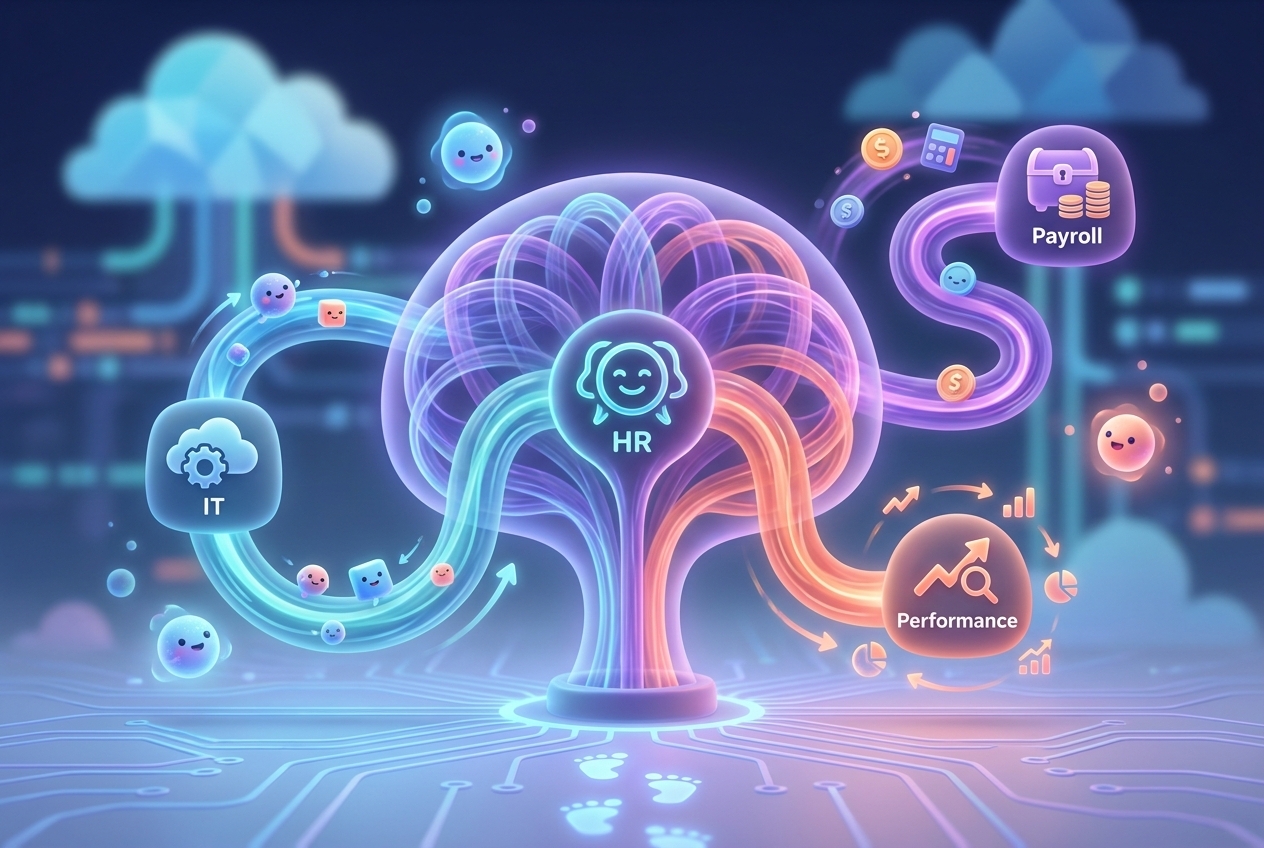
Rippling has made significant waves in the Australian market by unifying HR, IT, and finance. Rippling is ranked the best single HR, IT, and payroll platform for scaling Australian companies in 2026, with 90-second onboarding capabilities. This speed is achieved by automating not just HR tasks, but IT provisioning, automatically setting up a new hire's laptop, software licenses, and access permissions.
For a 200-person company with a lean IT team, Rippling is a big step forward. It eliminates the friction between HR and IT during onboarding and offboarding. However, its expansive feature set can be overwhelming for teams that only need basic HR functionality, and its pricing reflects its comprehensive nature.
HiBob (often just called Bob) has positioned itself as the HR platform for modern, culture-driven organisations. It is particularly popular among technology companies and professional services firms. HiBob holds a G2 score of 4.5 across more than 1,800 reviews, making it a top-rated platform for mid-sized teams in Australia.
HiBob excels in performance management, employee engagement surveys, and compensation planning. Its user interface is highly visual and engaging, resembling a social media feed more than a traditional database. While it is exceptional for managing culture, businesses with complex rostering or highly unionised workforces may find its award interpretation capabilities less solid than local, payroll-first competitors.
Worknice is an Australian-native HR platform that has built its reputation on deep local compliance and a highly flexible architecture. It is designed specifically to integrate smoothly with popular Australian payroll systems like Xero, KeyPay, and MYOB, acting as the strategic HR layer on top of your transactional payroll.
For a 200-person company that already loves its payroll software but needs better onboarding, document management, and performance tracking, Worknice is a compelling option. It offers a "best-of-breed" approach, allowing you to maintain your existing financial infrastructure while dramatically upgrading the HR experience.
ELMO Software is a veteran in the Australian and New Zealand markets, offering a comprehensive suite of modules covering everything from recruitment and onboarding to learning management and succession planning. Its long track record means it has deep functionality tailored to local compliance needs.
ELMO is highly modular, meaning a 200-person company can start with core HR and performance, and add learning or recruitment modules as they grow. While powerful, ELMO's interface can feel slightly more traditional compared to newer entrants, and implementation can be a heavier lift due to the system's expansive capabilities.
Employment Hero is identified as the best single HR and payroll solution specifically for Australian SMEs wanting to move away from fragmented systems. It combines HR, payroll, and employee benefits into a single, accessible platform.
For businesses crossing the 200-employee mark that want to consolidate multiple disparate systems into one unified tool, Employment Hero offers incredible value. It handles award interpretation well and provides a popular employee mobile app. However, as companies scale toward 500+ employees, they sometimes outgrow its performance and analytics capabilities, requiring a shift to more enterprise-grade solutions.
When compliance is your absolute top priority, Sentrient is a strong contender. Sentrient is used by more than 1,000 organisations across Australia and New Zealand and is rated 4.7 on Capterra as the best for compliance evidence. It focuses heavily on workplace policies, online training, and risk management.
While it may not have the flashy engagement features of HiBob or the IT provisioning of Rippling, Sentrient provides unparalleled peace of mind for industries with strict regulatory requirements, such as healthcare, aged care, and financial services. It is often used alongside a core HRIS to bolster compliance capabilities.
For mid-market companies that recognise that talent is their ultimate competitive advantage, standard HR administration is not enough. This is where Compono steps in as a comprehensive Workforce Intelligence Platform. Compono goes beyond digitising paperwork; it applies behavioural science and psychometric data to help you hire, engage, and develop high-performing teams.
When scaling a 200-person company, maintaining culture and ensuring the right people are in the right roles becomes exponentially harder. The Compono platform addresses this through its integrated modules. For example, Compono Hire evaluates candidates across organisation fit, skills, and qualifications, ensuring you bring in talent that aligns with your specific team dynamics. By focusing on objective behavioural data, Compono helps reduce bias and significantly improves long-term retention.
Once talent is onboarded, maintaining motivation is critical. Compono Engage provides continuous listening and advanced analytics to measure team sentiment and uncover the root causes of turnover. Unlike generic survey tools, it links engagement data to work personality profiles, giving leaders actionable insights into how different teams prefer to communicate and collaborate. This level of intelligence is vital for HR leaders looking to move from transactional administration to strategic business partnership.
One of the most significant decisions an HR leader must make is choosing between an "single" system and a "best-of-breed" approach. Both have distinct advantages and drawbacks for a 200-person company.
An single system attempts to do everything, HR, payroll, recruitment, performance, and learning, within a single platform. The primary advantage is data uniformity. There is only one login for employees, one interface to learn, and reporting is generally straightforward because all data lives in one database. However, the trade-off is often depth of functionality. An single system might have a great core HR module, but a mediocre recruitment or learning module.
A best-of-breed approach involves selecting the absolute best software for each specific function (e.g., a dedicated Applicant Tracking System, a separate payroll engine, and a specialised employee engagement platform) and integrating them via APIs. This ensures your team has the most powerful tools available. The downside is the complexity of managing multiple vendors and ensuring data flows smoothly between systems without manual intervention.
For a 200-person company, the ideal approach often lies somewhere in the middle. Many organisations opt for a strong core HR and payroll system, and then plug in specialised tools, like Compono for advanced workforce intelligence and behavioural assessments, to handle complex strategic requirements that the core HRIS cannot manage effectively.
Buying the software is only the first step; implementing it successfully is where many companies stumble. Most 200-person organisations in Australia implement their chosen HRIS within 6–10 weeks. However, this timeline relies heavily on internal readiness and clean data.
The most common cause of implementation delays is poor data hygiene. If your current employee data is scattered across spreadsheets, outdated payroll systems, and paper files, you must invest time in cleaning and standardising this data before migration. Garbage in equals garbage out, a new system will not fix bad data.
Change management is equally critical. Implementing a new HRIS changes how people work. Managers who are used to approving leave via email will need to learn a new workflow. Employees will need to navigate a new self-service portal. Clear communication, comprehensive training sessions, and identifying internal champions are essential steps to ensure high adoption rates across your 200-person team.
When selecting the best HR software for a 200 person company in Australia, different stakeholders will have different priorities. Gaining consensus requires understanding what each leader values most.
The CEO cares about ROI, strategic alignment, and risk mitigation. They want dashboards that show headcount costs, turnover trends, and compliance status at a glance. They will favour platforms that provide clear workforce intelligence to guide business decisions.
The HR Manager or People Director is looking for efficiency and employee experience. They want to eliminate manual data entry, automate onboarding workflows, and run sophisticated performance review cycles. They need a system that frees them from administration so they can focus on coaching and culture.
The IT Director prioritises security, integration, and data architecture. They want single sign-on (SSO) capabilities, solid API documentation, and assurance that the platform meets ISO security standards. They will advocate for systems that integrate smoothly with the company's existing tech stack, such as Microsoft 365 or Google Workspace.
To make the final decision, start by mapping your current HR processes. Identify the biggest problems, is it payroll errors, slow recruitment, or a lack of performance data? Use these problems to create a list of non-negotiable requirements.
Next, issue a targeted Request for Proposal (RFP) to a shortlist of 3–4 vendors. During demonstrations, do not let the vendor drive the entire conversation with a generic pitch. Provide them with specific, real-world scenarios from your business (e.g., "Show me exactly how your system handles a casual employee working a public holiday under the Retail Award") and ask them to demonstrate the solution live.
Finally, speak to reference customers. Ask the vendor to connect you with an Australian company of a similar size and industry. Ask the reference about the implementation process, the quality of local customer support, and whether the system actually delivered the promised ROI.
Key insights
- A 200-person company in Australia requires HR software that deeply integrates local compliance, specifically regarding modern awards and the 12% superannuation guarantee.
- The market offers diverse solutions, from single platforms like Employment Hero and Rippling to culture-focused systems like HiBob and compliance specialists like Sentrient.
- Choosing between an single platform and a best-of-breed tech stack requires balancing the need for simplicity against the need for deep, specialised functionality.
- Successful implementation takes 6–10 weeks and demands rigorous data cleaning, cross-departmental alignment, and a strong change management strategy.
- Strategic HR teams are moving beyond basic HRIS administration by integrating Workforce Intelligence Platforms to use behavioural science and predictive analytics.
Transitioning to a solid HR system is a critical milestone for any growing mid-market business. By moving away from fragmented spreadsheets and investing in intelligent, compliant technology, you equip your HR team to focus on what truly matters: building a high-performing, engaged workforce.
Related reading
The best HR software depends on your specific needs, but top contenders for mid-sized Australian businesses include Worknice for local compliance, HiBob for culture-driven tech teams, Rippling for combined IT and HR management, and ELMO for a comprehensive enterprise suite. Many companies also integrate platforms like Compono to add deep workforce intelligence and behavioural insights to their core HRIS.
For a company with 200 employees, a standard HRIS implementation typically takes between 6 and 10 weeks. This timeline can vary based on the complexity of your data, the number of integrations required, and how quickly your internal team can complete data cleaning and system testing.
An single system is generally easier to manage and provides a unified experience, making it popular for mid-sized businesses looking to consolidate tech. However, if you have complex, specific needs in areas like recruitment or advanced behavioural analytics, a best-of-breed approach, where you integrate specialised tools with a core HR system, often yields better strategic results.
Top-tier Australian HR systems include built-in award interpretation engines. These engines automatically calculate pay rates, overtime, penalty rates, and allowances based on an employee's timesheet data and their specific classification under one of the 121 modern awards, significantly reducing manual payroll errors.
Yes, modern HR and payroll systems designed for the Australian market automatically update to reflect legislative changes, including the increase to a 12% superannuation guarantee. They calculate the correct superannuation amounts per pay run and often integrate with clearing houses to simplify the payment process.

Compare the best Deel HR alternatives in 2026. Discover global EOR platforms for payroll, IT consolidation, and budget-friendly international hiring.
Local HR systems that handle Australian compliance, payroll and workforce intelligence without the US complexity of Rippling.
The 12 best HR software platforms for Australian businesses in 2026, compared on lifecycle coverage, people insight and local fit, with honest...
 Mathan Allington