

 Compono

When your strategy and your team pull in different directions, the gap is usually in team composition, not effort. A strategy built on innovation needs people who naturally generate and test new ideas. If your team is weighted towards execution and checking, those ideas get shut down before they have a chance, however hard everyone works.
The good news is that you don't fix this by replacing half the team. You fix it by understanding what kinds of work your team covers, what your strategy needs, and closing the gap deliberately.
Quick answers
- Team composition and strategy fall out of alignment when a team's natural working preferences don't match what the strategy requires.
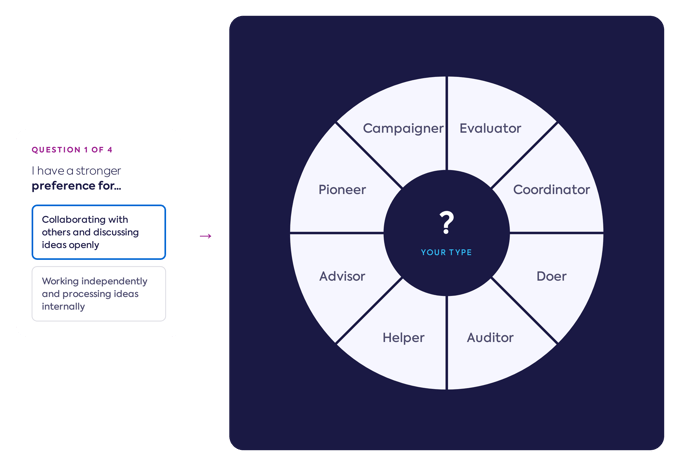
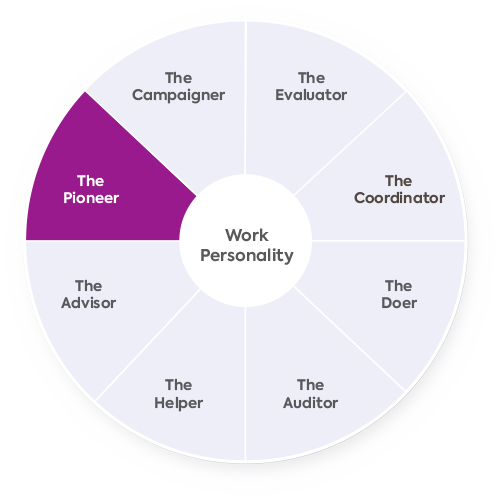
- Compono describes eight ways of work: Pioneer, Campaigner, Advisor, Helper, Coordinator, Doer, Auditor and Evaluator.
- High-performing teams cover all eight kinds of work. That doesn't mean hiring eight people. It means making sure each kind of work has someone who does it naturally.
- When a strategy needs innovation but a team leans towards execution, the lone Pioneer often feels isolated and their ideas get shut down.
- Gaps can be closed through development, process changes and giving the right people space, as well as through hiring.
The lone Pioneer
In Episode 8 of his Movember podcast series, talent leader Edan Haddock shares a story from his time with Compono that stuck with him.
Compono had worked with a client whose strategic priorities were all about new ideas. Growth, development and working out how to use AI. The organisation wanted innovation.

Then they looked at the makeup of the team. Its natural working preferences were close to the opposite of what the strategy needed. People were heavily weighted towards execution: doing, auditing and getting things delivered.
There was one Pioneer in the team. One.
That person said they felt like a lone wolf. Their ideas kept getting shut down.
"I laughed when they told me that, because I've been there," Edan says. "If you've ever been the person constantly saying, what if we tried this? Why do we do it that way? You know exactly how exhausting it becomes when the answer is always, that's not how we do things here."
Why execution-heavy teams struggle with innovation strategies
There's nothing wrong with a team built for execution. As Edan points out, doing, auditing and delivering are "all incredibly valuable".
The problem is the mismatch. If your strategy says you need experimentation and new ideas, but the team is structurally weighted towards delivery, you've got a gap. Every new idea gets measured against how things work today, and today usually wins.
That gap shows up in a few predictable ways:
- Ideas stall early because nobody's natural instinct is to build on them.
- The few innovators burn out from constantly pushing against the current.
- Leadership gets frustrated that the strategy isn't landing, and assumes it's a motivation problem.
- Hiring repeats the pattern because interviewers favour candidates who work the way they do.
That last one matters. Without data, teams tend to recruit in their own image, which widens the gap the strategy is trying to close.
The eight ways of work
Compono's Work Personality model describes eight ways people naturally prefer to work. Each one covers a different kind of work that teams need.
|
Way of work |
What it brings to a team |
|---|---|
|
Pioneer |
Imagination and future focus. Generates new ideas and possibilities. |
|
Campaigner |
Energy and influence. Gets people excited and on board. |
|
Advisor |
Flexibility and collaboration. Brings ideas and people together. |
|
Helper |
Genuine care for others. Supports colleagues and keeps the team connected. |
|
Coordinator |
Organisation and preparation. Plans the work and keeps it on track. |
|
Doer |
Dependable, consistent delivery. Gets the work done. |
|
Auditor |
Thoroughness and accuracy. Checks quality and catches errors. |
|
Evaluator |
Logic and realism. Tests ideas critically before they go ahead. |
No type is better than another. A strategy just needs certain kinds of work more than others at certain times. You can explore each work personality here.
Cover eight ways of work, not hire eight people
Research behind the model identifies eight work activities that high-performing teams do. When one is missing, team performance suffers.
That can sound like you need eight people, one of each type. You don't. What matters is coverage: whether each kind of work has someone in the team who does it naturally, and whether the balance suits what the strategy asks for.
A small team can cover all eight ways of work. A large team can still have big gaps. The lone Pioneer's team almost certainly had plenty of people. It just had most of them clustered at the execution end.
Looking at coverage turns a vague feeling ("we're not innovative enough") into something specific. Which ways of work are covered twice over? Which aren't covered at all? Which does the strategy need more of this year?
How to close the gap without starting again
The answer for Edan's example organisation wasn't to fire half the team. "It was understanding what they had. Understanding what their strategy required. And being more deliberate about closing that gap."
That can happen in several ways, and hiring is only one of them:
- Give existing people more space. The Pioneer you already have may simply need permission and protection for their ideas.
- Change the process. Build stages where new ideas are explored before they're evaluated, so execution instincts don't shut them down too early.
- Develop adjacent strengths. People can learn to do work outside their natural preference, especially with support and clear expectations.
- Hire for the gap. When you do recruit, look for the ways of work the team is missing, not more of what it already has.
If you hire for the gap, make sure the team is ready. Edan warns that people brought in for being different can end up "slowly punished for being different". As he puts it, "If you're hiring someone to challenge the team, the team needs to be ready to be challenged."
Compono Engage is a culture assessment platform that maps your team's work personality coverage alongside its culture, so you can see where strategy and team composition line up and where they don't. When it's time to hire, Compono Hire brings that picture into the hiring decision. See how Compono Engage works.
Key takeaways
- Misalignment between strategy and team is often a composition problem, not an effort problem.
- Compono's model describes eight ways of work, from Pioneer to Evaluator.
- Aim to cover all eight ways of work at team level. You don't need eight people to do it.
- An innovation strategy with an execution-heavy team often leaves a lone Pioneer feeling shut down.
- Close the gap through space, process and development as well as hiring, and prepare the team for difference.
Strategy needs the right mix, not more effort
If your strategy keeps stalling, it may not be a commitment problem. It may be that the work your strategy needs isn't work your team naturally does. Seeing that clearly is the first step to changing it, without losing the people who keep everything running.
Find out which ways of work your team covers
Start with yourself. The free Work Personality assessment shows which of the eight ways of work comes most naturally to you, and it's a quick way to start the coverage conversation with your team.
Take the free assessment Four questions, about two minutes. No cost.
Frequently asked questions
How does team composition affect strategy?
A team's natural working preferences shape which ideas get developed and which get dropped. If those preferences don't match what the strategy needs, the strategy tends to stall.
What are the eight ways of work?
Compono's Work Personality model describes eight: Pioneer, Campaigner, Advisor, Helper, Coordinator, Doer, Auditor and Evaluator. Each brings a different kind of work to a team.
Do you need every personality type in a team?
You need the kinds of work each type covers, not necessarily one person of each type. Coverage and balance matter more than headcount.
How do you align your team with your strategy?
Map the ways of work your team covers, compare them with what your strategy requires, then close the gaps through development, process changes, giving people space and targeted hiring.