

 Mathan Allington
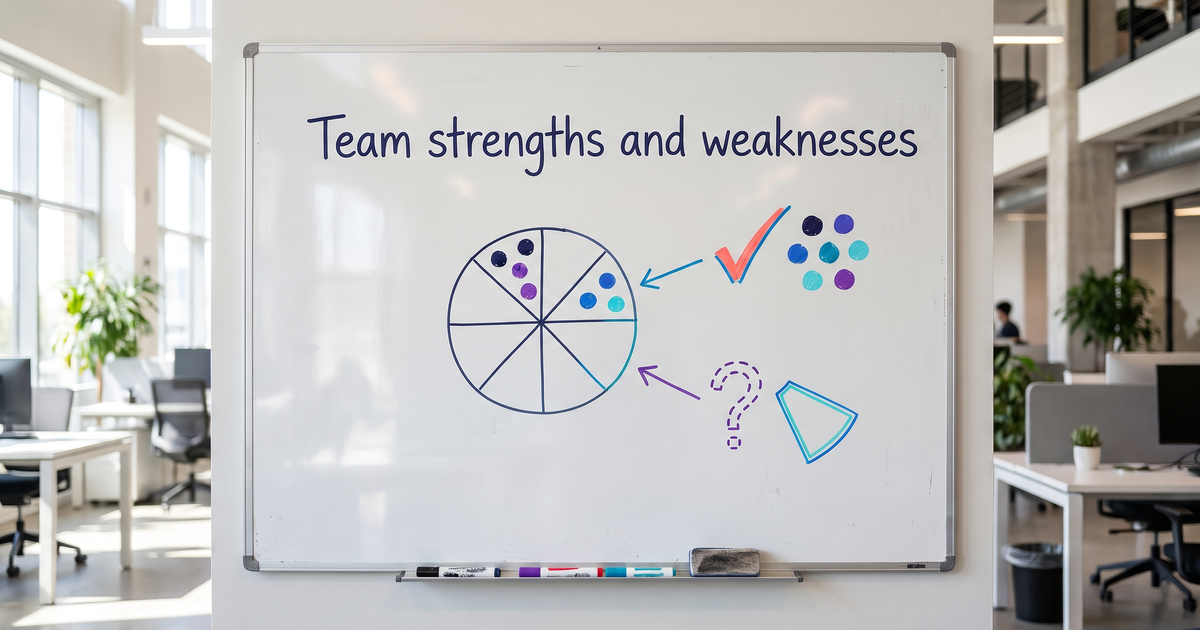
The quickest way to find your team's strengths and weaknesses is to look at the work people naturally prefer, as well as what they can do. Strengths are the work the team gravitates to. Weaknesses are better called gaps: work the team is less likely to prioritise. You can see both in a free team personality report, built from four questions each.
Last reviewed November 2026.
How do I find out what my team is naturally good at?
Ask what work each person prefers to do, then look at the pattern across the team. A team is naturally good at the work most of its people reach for first, because that is the work that gets done first and done most often.
Most methods ask people to rate their own skills, or to list strengths and weaknesses in a workshop. Those are useful, but they measure ability. Preference is different. Someone can be perfectly capable of detailed checking or long-range planning and still put it off every week.
That gap between what people can do and what they choose to do is where teams get stuck. A team may have the skills for a type of work and still leave it undone, because without someone who prefers it, that work tends to wait.
So the useful question for a manager is "what does this team naturally reach for, and what does it leave until last?" The first answer is your strengths. The second is your gaps.
What are the eight types of work every team needs?
Research has identified eight key work activities that high-performing teams do. When one of them is not done to the right level, team performance can suffer, and the team needs a plan to strengthen it.
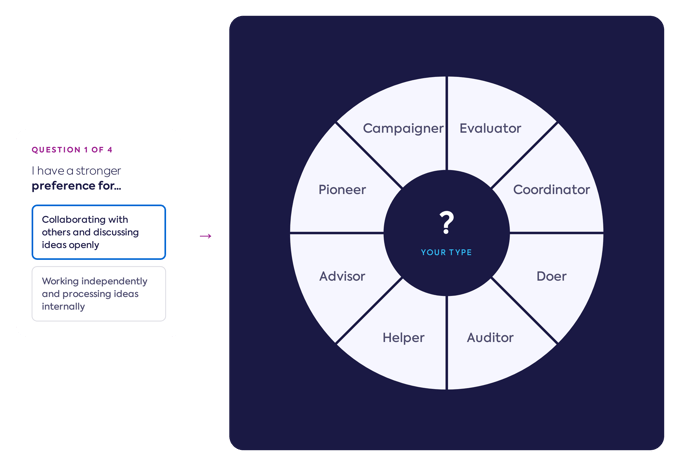
Compono's Work Personality™ framework links each activity to a way of working. Each person has one dominant preference, their Work Personality, and their preference for the other types of work gets weaker the further they sit from it around the wheel. The table follows the order of the wheel.
| Work Personality | The work it leans to | What it contributes to a team |
|---|---|---|
| Evaluator | "Let's weigh up our options" | Clear, logical decisions. Spots risks and sets efficient action steps. |
| Coordinator | "Let's make a plan" | Organises tasks, sets priorities and keeps the team on deadlines. |
| Doer | "Let's get it done" | Practical, reliable work with precision and attention to detail. |
| Auditor | "Let's focus on the details" | Careful, accurate checking that tasks are complete. |
| Helper | "Let's support each other" | Support and team harmony. Understands emotions and keeps the team together. |
| Advisor | "Let's investigate the problem" | Keeps the team flexible and makes sure everyone's voice is heard. |
| Pioneer | "Let's do it differently" | Creative ideas and new approaches. Encourages exploring options. |
| Campaigner | "Let's sell the dream" | Energy and enthusiasm. Builds networks and persuades others. |
If you want your own result first, the Work Personality assessment is free and takes about two minutes.
What is my team missing?
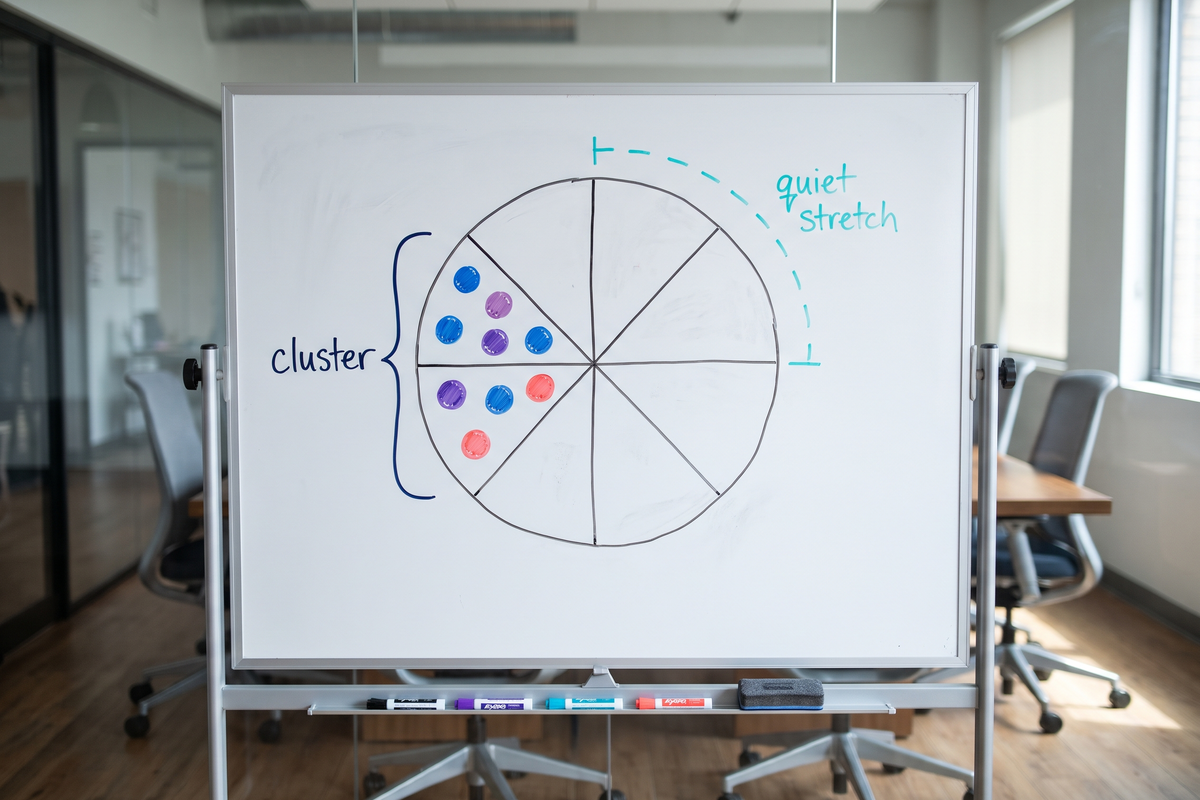
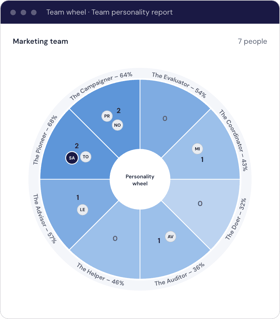
Your team is probably missing the types of work that fewer people on it prefer. Put each person on the wheel and the shape of the team shows up: clusters where several people share a preference, and quiet stretches where nobody does.
A cluster is a strength. If most of your people lean toward getting things done and keeping to a plan, work gets delivered on time and to a standard. A quiet stretch is a gap. If nobody leans toward doing things differently, new ideas may arrive rarely, and the team may keep running the same way long after it should change.
Neither is good or bad on its own. The report shows what the team naturally prioritises, where its biggest gaps are, and how the leader can support the team. A gap only becomes a problem if the work in it matters to your goals and nobody is covering it.
Those quiet stretches are your team's blind spots. They are blind because the people in the team do not notice the work going missing. Nobody is ignoring it on purpose. It just never rises to the top of anyone's list.
Does my team need one of each personality type?
No. A team does not need a person for each type of work. In the report's own words: "You don't need someone with each Work Personality™ to cover all eight types of work, but the team needs mechanisms and processes in place to make sure all eight get done."
This matters most for small teams. A team of four cannot have eight different Work Personalities, and hiring to fill all eight is not the goal. The aim is coverage of the work, whether it comes from a person who enjoys it, a process that makes sure it happens, or a habit the team builds on purpose.
The same eight types of work apply to a team of three and a team of thirty. What changes is how many are covered by someone's natural preference and how many have to be covered by design. For more on how different mixes behave, see how Work Personality types shape high-performing teams.
Why does some work never get done in my team?
Usually because nobody on the team prefers it. Work that nobody gravitates to gets pushed behind work that someone does, week after week, until it becomes urgent or is dropped.
You may recognise the pattern. The follow-up after a project is always late, or the team agrees to try a new approach and then goes back to the old one.
It is easy to read this as a motivation problem. Often it is a coverage problem. The people are doing what comes naturally to them, and the work in the gap is not natural to anyone. That changes the fix: you do not push harder on the same people, you make that work someone's job or build it into how the team operates.
How do I balance different personalities in a team?
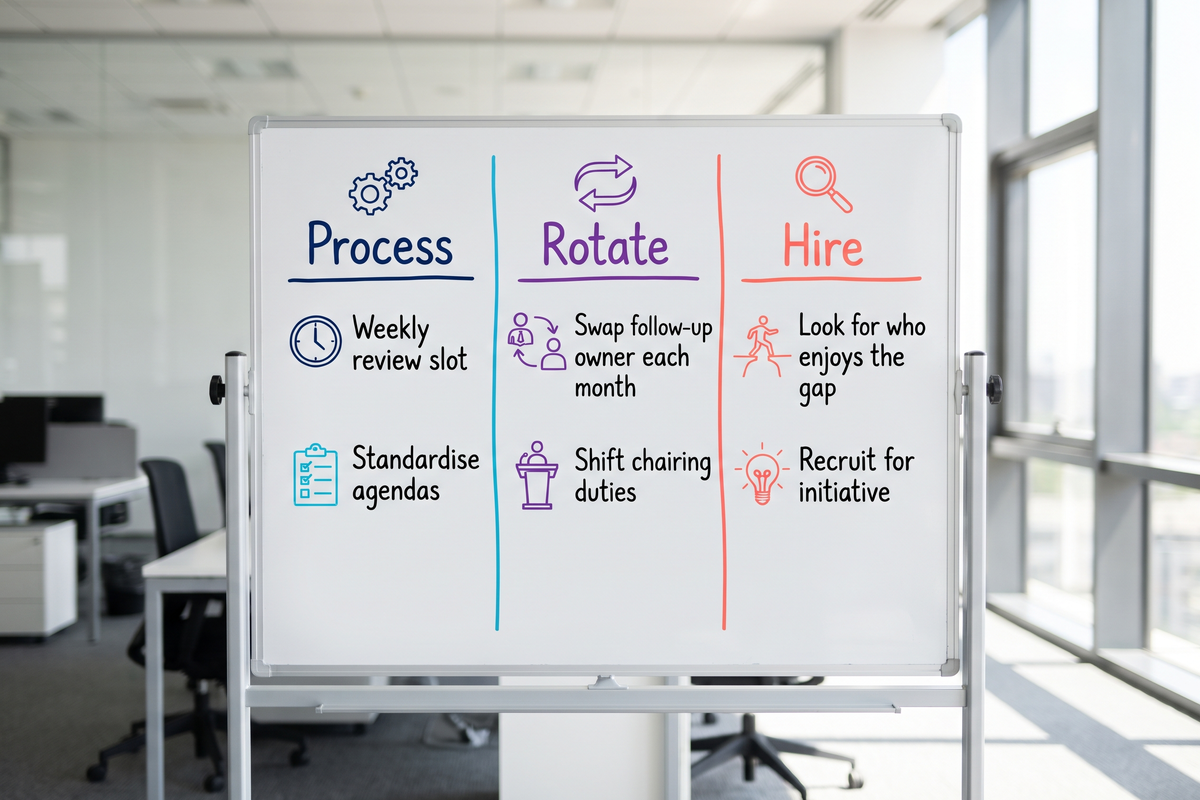
Balance the work, not the people. First find which types of work the team covers naturally and which it does not. Then decide how each gap will be handled, and watch where people who prefer very different work are likely to clash.
There are three practical ways to cover a gap:
- Build a process. Put the work into a routine so it does not depend on anyone's preference. A fixed review slot, a checklist or a standing agenda item all do this.
- Rotate ownership. Give the work to different people in turn, so no one carries it permanently and the whole team gets a feel for it. Pair a person who prefers the work with one who does not.
- Hire with the gap in mind. When a role opens, look for someone who prefers the work your team tends to leave. This is also how you can move someone between teams, when a person who enjoys that work is more useful somewhere else.
Tension is the other half of balance. People who sit far apart on the wheel prefer different work, so they may see each other as slow, careless, rigid or unfocused. Handled well, that friction can help, because each side sees what the other misses. The report shows where this is most likely in your team. If you want a broader view of how teams read these patterns, the team dynamics assessment guide goes further.
How can a manager see the team's blind spots without blaming anyone?
Talk about the work, not the people. Say "this type of work tends to wait on our team" instead of "you never do this". The report shows preferences, which are neither strengths nor faults, and that makes the conversation easier to have.
A few habits help:
- Start with the strengths. Name the work the team does well and show where it comes from. People are more open to a gap once they have seen what the pattern gives them.
- Describe preferences, not labels. A person prefers one type of work most. They are not "a Pioneer" in a box. Everyone has some preference for every type of work, just weaker further around the wheel.
- Include yourself. The leader is on the wheel too. The report is clear on how your own style may affect which work the team prioritises.
- Ask the team where the gap shows up. People usually know which work waits. They may not have said so because nobody asked.
- Agree one fix. Pick one gap and one change, then check it in a month.
Because everyone who answers sees the same report, the discussion starts from shared information instead of the manager's opinion.
How does the free team personality report work?
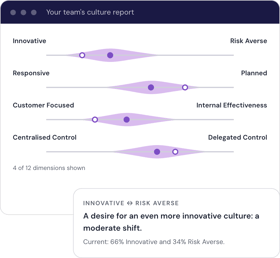
Everyone on the team answers four questions, which takes about two minutes. When the survey closes, everyone who answered gets the same report. It shows the types of work your team naturally prefers, the types it is less likely to prioritise, where tension and conflict may arise, and how you lead this team.
You go first and see your own result straight away, then send one link to the team. The report is free and secure, with access through a verified email. It covers one team at one point in time. Compono shows the same thing across every team and subculture, with practical insight right across the business.
See how your team works
Four questions each, about two minutes. See your team's natural strengths, and the work it's less likely to prioritise.
Get started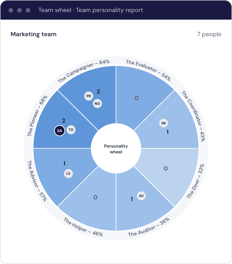
Frequently asked questions
What is a team strengths assessment?
A team strengths assessment shows what a team does well and where it is stretched. Compono's version looks at preferences: each person answers four questions, and the report shows the types of work the team naturally prefers and the types it is less likely to prioritise.
What is the difference between strengths and weaknesses in a team?
Strengths are the work the team gravitates to. Weaknesses, or gaps, are the work it is less likely to prioritise. A gap is not a lack of skill. The team may be able to do the work, but without someone who prefers it, that work tends to wait.
What are team blind spots?
Blind spots are the types of work a team does not notice going undone, because nobody on it prefers that work. They are about the mix of preferences across the team, not about any one person.
How do I balance different personalities in a team?
Balance the work. Find which types of work the team covers naturally, then cover each gap with a process, rotating ownership or a hire who prefers that work. Watch for tension between people who prefer very different work.
Does the report say what people are good at?
No. It shows the work people naturally prefer, not what they can do. A team may have the skills for the work it is less likely to prioritise, but without someone who prefers it, that work tends to wait.
How long does it take?
About two minutes for each person. When the survey closes, everyone who answered gets the report by email.