


 Mathan Allington


Best LMS for hospitality Australia 2026: platforms compared
 Mathan Allington
Compare the best LMS for hospitality Australia in 2026. Discover how to track RSA compliance, train casual staff, and handle high turnover...
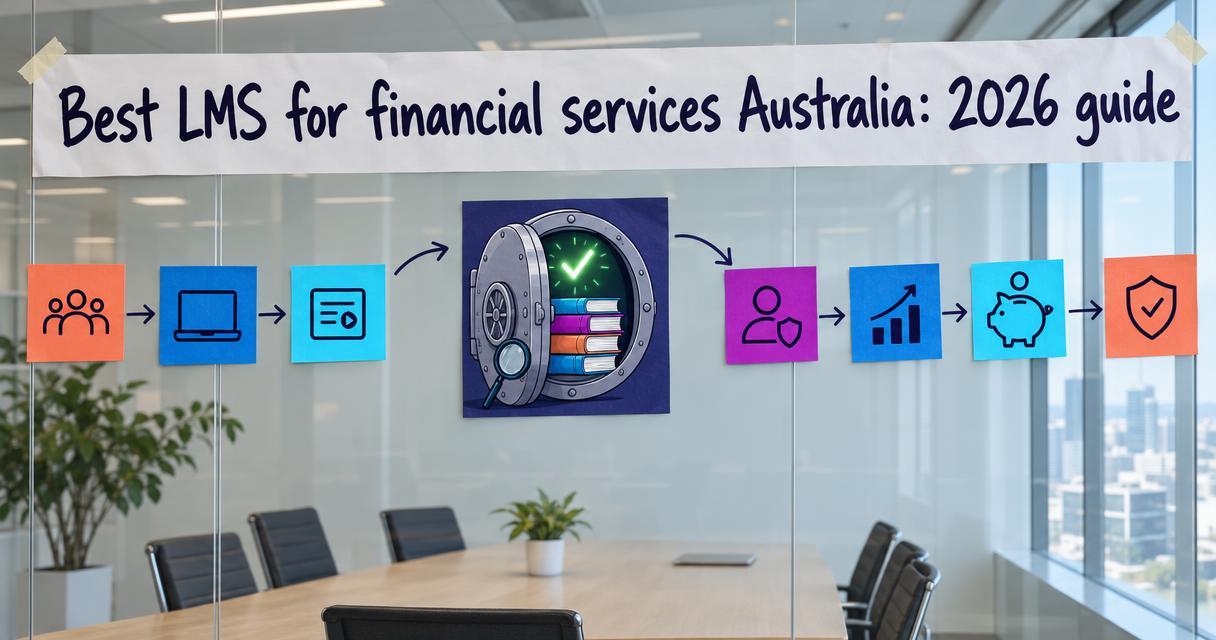
An LMS for financial services in Australia must track compliance against ASIC and APRA regulations while proving your workforce has the capability to apply those rules in practice.
Last reviewed November 2026
Quick answer
- Price: Enterprise platforms range from $5 to $20 per user monthly, with most vendors requiring custom annual contracts based on feature sets.
- Best for: Financial services firms, banks and credit providers needing strict local data sovereignty and audit-ready reporting to meet APRA and ASIC obligations.
- Verdict: Compono Develop leads the market for bridging the gap between mandatory compliance tracking and real capability building, while global platforms like Docebo and eFront offer alternative options for multinational banks.
Managing compliance in the Australian financial sector takes more than a spreadsheet. Regulators expect your organisation to prove that staff understand the law and can apply it correctly. A standard learning management system tracks when an employee clicks through a module. It rarely tells you if they retained the information or if they are ready to advise a client.
This creates two distinct risks for financial institutions. The first is process risk. You face heavy fines if you cannot produce an exact training audit trail during an ASIC investigation. The second is people insight risk. If your employees pass a test by guessing the answers but fail to understand the material, your business carries the risk of their poor judgment.
Financial firms need technology that handles both risks. You need clear reporting to satisfy the regulator and behavioural insights to build a capable team. This guide examines the mandatory features you need and compares the top platforms available in Australia for 2026.
The regulatory burden on financial services has grown significantly. Regulators demand exact records of workforce training and competence. For example, financial advisers completing the professional year must undertake at least 100 hours of structured training and 1,500 hours of work activities over a minimum one-year period.
Tracking these hours manually creates massive administrative overhead for your human resources team. Under the same framework, ASIC identifies monitoring, supervising and training authorised representatives as a core AFS licensee obligation. Your systems must capture every supervised session, every completed module and every assessment result.
The timing of these updates is also heavily regulated. When an employee finishes their required learning, AFS licensees must update the Financial Advisers Register within 30 business days after a relevant provider completes relevant qualifications and training. A platform that delays reporting or requires manual data entry directly increases your risk of missing these statutory deadlines.
Most traditional platforms manage the process risk by recording completion dates. They fall short on people insight risk. They cannot tell you if an employee struggled with the content, required multiple attempts, or passed through sheer luck. To build a competent team, you need a system that connects training completion to actual on-the-job capability.
A generic corporate learning platform rarely survives an audit in the financial sector. The unique demands of the Australian market require specific technical and reporting capabilities. When you evaluate an LMS for compliance training, these features are non-negotiable.
The Australian Prudential Regulation Authority (APRA) enforces strict information security standards under CPS 234. Financial institutions must ensure their third-party vendors maintain strong cybersecurity practices. Your learning platform holds sensitive employee data, performance records and internal company policies.
You must select a vendor that hosts data onshore in Australia. Overseas data hosting introduces jurisdictional risks and complicates your compliance with the Privacy Act. Your procurement team will require the vendor to demonstrate exactly where the data lives, how it is encrypted and how access is controlled.
Continuing Professional Development (CPD) tracking forms the foundation of ongoing financial compliance. Professionals belonging to bodies like CPA Australia or the Financial Advice Association Australia (FAAA) must maintain exact CPD records. An effective LMS automates this process.
The system should assign specific CPD point values to courses, track accumulated points across the financial year, and generate reports that professionals can submit to their associations. Without automation, professionals spend hours reconciling certificates and logging points across different systems.
Anti-Money Laundering and Counter-Terrorism Financing (AML/CTF) obligations require ongoing staff training. AUSTRAC expects reporting entities to maintain an AML/CTF risk awareness program. Your learning platform must deliver this training on a regular schedule and provide immediate proof of completion for every employee.
The platform needs a strong rules engine. It should automatically enrol new hires in AML/CTF training on their first day and trigger refresher courses annually. If an auditor requests the training record for a specific branch manager from two years ago, the system must generate that report instantly.
Choosing a corporate LMS in Australia requires balancing global features with local compliance capability. We have evaluated the top platforms based on their ability to handle Australian financial regulations, data sovereignty and workforce development.
Compono Develop tracks mandatory compliance while building the capability that drives performance. It maps learning pathways to individual behavioural profiles, helping you understand how different team members learn best. Compono Develop holds a 4.7 out of 5 rating across millions of learners. For government clients operating high-stakes environments like VicRoads, the platform delivered $34 million in operational savings over two years through efficient digital licensing and compliance delivery. It hosts data securely in Australia, ensuring full alignment with local privacy and APRA requirements.
Docebo offers a highly configurable platform suited to global financial institutions. It uses AI features to recommend content and automate administration tasks. While it serves the enterprise market well, mid-market Australian firms sometimes find the global feature set heavier than they need for local ASIC compliance tracking.
eFront focuses heavily on security and extreme customisation. It allows large institutions to build specific compliance rules and host the platform on their own servers. This level of control appeals to the largest international banks, though it demands significant internal IT resources to maintain and update.
This table compares the core capabilities of the top platforms evaluated for the Australian financial sector.
| Platform | Best for | Data hosting |
|---|---|---|
| Compono Develop | Capability building and strict local compliance | Australia onshore |
| Docebo | Global enterprise AI learning | Global options available |
| eFront | Extreme enterprise customisation | Private cloud / On-premise |
Compono makes Compono Develop. We've included it and kept every entry's strengths and limits honest.
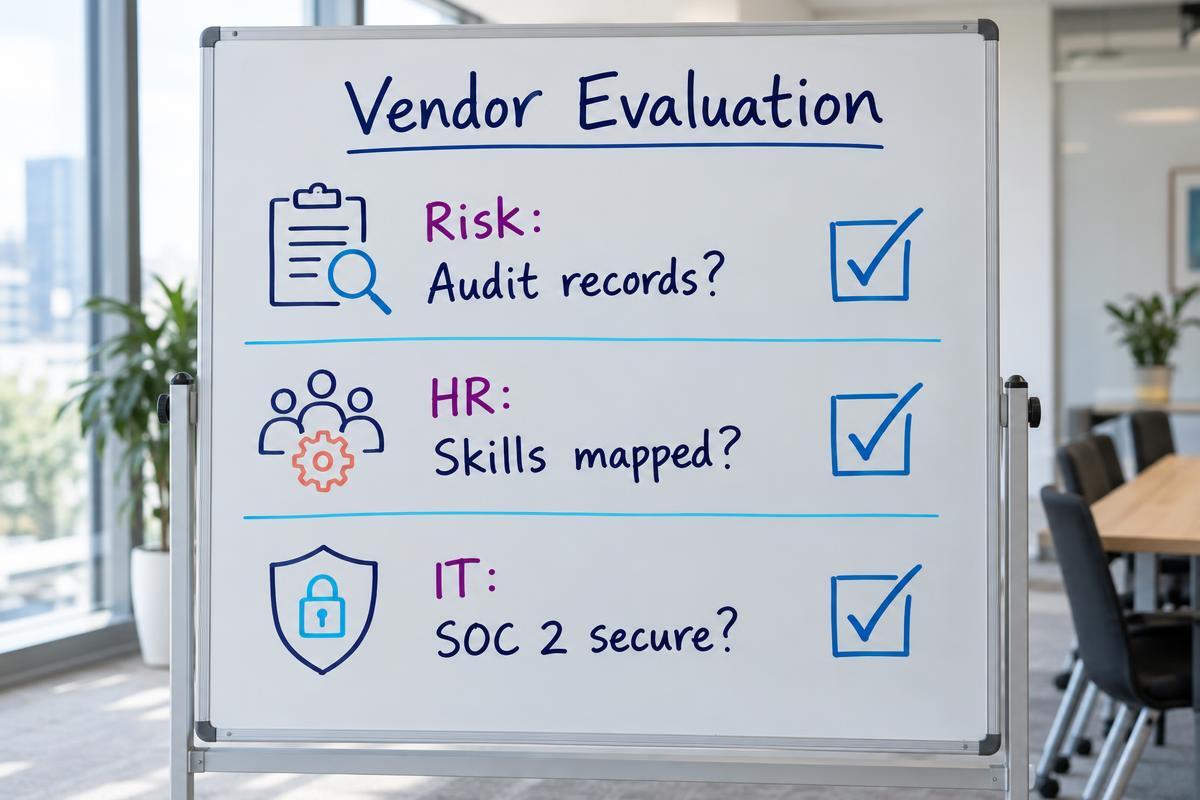
Procuring a new learning platform requires alignment across multiple departments. Human resources, risk and compliance, and IT security all have different priorities. You need to ask vendors specific questions during the evaluation phase to ensure the system meets everyone's requirements.
Your compliance team needs absolute certainty in the audit trail. They view the LMS as a risk mitigation tool. Ask the vendor how the system handles historical data. If an employee leaves the company, the platform must retain their compliance records indefinitely for future ASIC audits.
Check the reporting capabilities for regulatory updates. When ASIC introduces new legislation, the system should allow administrators to push urgent policy updates to all staff and track digital signatures confirming they have read and understood the new rules.
Your HR team wants a system that employees actually use. High completion rates rely on a clean, accessible user interface. Ask the vendor how the platform supports new hire onboarding. The system should automatically load role-specific induction pathways on day one, reducing the time it takes to get a new wealth manager or loan assessor productive.
Examine how the platform handles capability gaps. A strong system identifies when an employee struggles with specific compliance concepts and automatically recommends remedial training before those gaps turn into regulatory breaches.
The IT department will scrutinise the platform's security architecture. Ask the vendor for their SOC 2 Type II certification and details of their penetration testing schedule. Discuss integration capabilities carefully.
The LMS must connect smoothly with your core HRIS and identity management systems. If an employee changes roles or receives a promotion, the HRIS should update the LMS automatically, instantly assigning the new compliance modules required for their new position.
Our platform handles the strict regulatory tracking you need while building the actual capability your workforce requires.
Financial services firms operate under strict regulations from bodies like ASIC and APRA. They require an LMS that provides exact, audit-ready records of compliance training, local data sovereignty for security, and automated tracking for CPD points and AML/CTF obligations. Standard corporate platforms often lack this reporting depth.
Tracking completion simply records that an employee clicked through a training module and answered a quiz. Building capability measures whether the employee actually understood the material and can apply it safely in their daily work. Relying only on completion rates leaves businesses exposed to poor decision-making.
An LMS helps maintain organisational competence by automating mandatory training schedules and capturing exact audit trails. When regulators request proof of training for specific financial advisers, the platform instantly generates reports showing completion dates, assessment scores and total CPD hours.
Hosting data onshore in Australia ensures compliance with the Privacy Act and aligns with APRA's CPS 234 information security standards. Keeping sensitive employee data and performance records within Australian jurisdiction protects the organisation from overseas data breaches and foreign regulatory interference.
Yes. A modern platform connects with your HRIS to automatically assign role-specific training pathways as soon as a new hire is added to the system. This ensures new staff complete all mandatory compliance and induction modules before they begin advising clients or processing transactions.

Compare the best LMS for hospitality Australia in 2026. Discover how to track RSA compliance, train casual staff, and handle high turnover...
The best LMS for NDIS providers in 2026. Compare top platforms for compliance tracking, audit readiness and building genuine support worker...

Our pick for aged care compliance training in Australia is Compono Develop. Here are the criteria, five platform categories compared, and the fit...